Past Newsletters
Vol 11 No 4
| Brewery | Beers Featured |
| Ybor City Brewing Company | |
| Ybor City Brewing Company | Gaspar’s Porter |
| Buffalo Bill’s Brewing Company | Pumpkin Ale |
| Sand Creek Brewing Company | English Style Special Ale |
| Lobkowicz Brewery (Czech Republic) | Lobkowicz Baron |
| Einbecker Brauhaus (Germany) | Ur-Bock Dunkel |
Ybor Brewing Company
In the late 1800s, Ybor City, FL was the cigar capital of the world. It’s location near the coast made shipping supplies up from Cuba relatively simple, and it served as a major conduit between the famed Cuban cigar market and the U.S. demand to have them. In 1886, Vincente Martinez Ybor led the migration of the Cuban cigar industry to a small region located in the Tampa metropolitan area. Ybor City, as it would eventually be known, became a bastion for immigrant workers seeking to leave the violent revolutions in Cuba which would rock the island nation through the end of the century. And for over 40 years, the industry flourished. However, with the hit of the depression in 1929, along with the popularity boom of American cigarettes, the cigar industry rapidly declined.
Naturally, many of the factories were quickly closed, abandoned, and torn down. However one building, the Seidenberg and Company cigar factory, built in 1894, withstood the test of time. Now, you may ask, “What does this have to do with my microbrewed beer of the month?" Well, move ahead 100 years from the date that Seidenberg opened its doors at this location in 1894 and that is when the Ybor City Brewing Company first opened its doors (1994) in this exact same brick building.
Not only is the brewery site rich with history, the company president, Humberto Perez, is a third-generation brewer whose grandfather founded one of the largest breweries in Venezuela—Cerveceria—about 75 years ago. And just like the cigar factory, this brewery keeps some of the same traditions; all the brewing is done by hand. Not a single step of the process is automated! Today they brew a vast line up of Floridian beers, under the larger company name of the Florida Beer Company. Other brew lines include Key West, Hurricane Reef, and La Tropical, for a total of over 13 quality beers.
For more information about the brewery and scheduled tours, call (813) 242-9222, or visit their website at www.floridabeer.com.
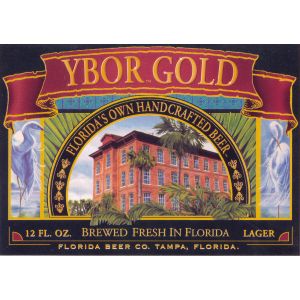
Now, with all that hype about the brewery, you might be curious as to what it looks like. Have a look at the label on this beer and you’ll see a fairly detailed depiction of the ole brick beauty! Ybor's Brown is an English-style brown ale with a distinctively nutty, caramel flavor whose superiority has not gone unnoticed: it took the silver medal at the 1998 World Beer Championships. A complex aroma is comprised of peppery hops sitting atop a solid malt backbone along with earthy, musty notes as well as some dark, stout-like scents and an undercurrent of peat. Got all that? Give it a sniff—they’re all in there. The flavor is also complex, with hops and malts both well stated and a slight vegetal quality and smokiness present toward the finish. Minor notes of coffee and chocolate are present as well, along with a nuttiness that becomes very pronounced as this beer warms. A slightly bitter finish also leaves behind
a litany of flavors blending nut, peat, chicory, pepper and bitter hops. A great match for light-to-medium-bodied, slightly peppery cigars, which is appropriate for this beer considering its roots. Excellent with Thai peanut chicken.
Serving Temperature: 44-48° F
Int'l Bittering Units: 19.0
Alcohol by Volume: 5.3%
Malts: 2-Row Pale, Munich, Caramel, Chocolate
Hops: Nugget, Fuggles
Ybor Gold Gaspar’s Porter
In the late 18th and early 19th centuries, the legendary pirate Jose Gaspar purportedly patrolled the waters of West Florida and terrorized the region. A society columnist with the Tampa Tribune is credited with creating a pirate-inspired festival in 1904 that came to be known as Gasparilla. An annual tradition since 1904, it begins when the world's only fully-rigged pirate ship sails into the heart of Tampa. Built entirely of steel, the black-hulled "Jose Gasparilla" measures 165 feet in length and is topped by three masts that tower 100 feet above deck. Its crew of 700 pirates, with flags flying and cannons booming as the vessel makes its way along Hillsborough Bay, is quite a site. The vessel docks and the unruly plunderers known as the Ye Mystic Krewe of Gasparilla “take over” the City of Tampa and storm the local boulevards. Ybor Gold Gaspar’s Porter was created for the event and... Oh no! Here they
come!! *Crash*Boom*(plundering noises). Arr Matey, ye can be expectin’ malts to storm yer nose first, with slightly spicy hops a followin’ and a smoky note gallivantin ’ with notes o’ plum. This be a porter that’s bound to be a might maltier than yer used to Matey, with its syrupy, yet roasted malt character. Its flavor’s quite smoky and full of yer roasty malts, arr, and it also has an interesting perfumy, floral note, like me favorite beauties oft do. Thar be a plenty of yer dark chocolate flavors rushin’ in at finish with a mightily-hopped, bitter finish that ends smooth and smoky. If ye don’t like this beer, yer just as tasteless as the bilge rats below deck, farin’ as we pirates be concerned…
Serving Temperature: 46-54° F
Int'l Bittering Units: 35.0
Alcohol by Volume: 5.8%
Malts: 2-Row Pale, Munich, Caramel, Dark Chocolate
Hops: Northern Brewer, Fuggles
Buffalo Bill’s Brewing Company
Bill Owens, founder of Buffalo Bill’s Brewing Company, is considered by many to be one of the founding fathers of the U.S. microbrewing renaissance. Opening one of the first brewpubs in the country in 1983, Buffalo Bills Brewery is today the second-oldest surviving brew pub in the nation (the first is Bert Grant’s Brewery Pub in Yakima, WA). In addition to founding the brewpub, he also started two of the beer industries better periodicals, BEER: The Magazine, and The American Brewer. BEER: The Magazine was intended more for beer lovers, aficionados and fanatics, and was written in a flamboyant and colorful style, not dissimilar to Bill’s personality. The American Brewer is more of a trade publication focusing on, as they put it, “The Business of Beer”.
As many brewers do, Bill entered the industry as a homebrewer and began his brewpub with larger batches of his homemade creations. Eventually, he found himself spending increasingly more time writing books and magazines about beer and brewing and decided to sell the brewery to another homebrewer turned professional brewer. Geoff Harries, who had been working with Owens as head brewer at Buffalo Bill’s from 1987 thru 1989, was given the assignment in 1991 of bringing another of Owens’ pubs, located in Fremont, CA, from faltering to salable. For two years he ran the pub and did precisely what was asked of him. But having dreams of starting his own brewery, Harries vowed to never do the same again for someone else’s business. When Buffalo Bill's needed similar assistance, he stuck to his vow and purchased the pub in 1994, complete with the rights to its on-site brewing operation (Owens kept the rights to the bottled beer business).
Harries had much work to do, however. The brewpub really wasn’t regarded as much of a restaurant at the time of purchase, so he drastically revamped the menu, remodeled the interior and launched an ambitious advertising campaign to announce the changes to the area. In less than a year and half, business went from $100 per day to about $3,000, and an additional 30 employees were added to their original pub staff of 2! He has since doubled seating capacity, constructed an outdoor dining patio, and made an entirely new name for the place as a brewpub with great food and fantastic on-site brewed beer. Go Geoff!!
For more information about the brewpub or to make reservations, call (510) 886-9823 or check out their web site at www.buffalobillsbrewery.com.
This Pumpkin Ale is obviously a great brew to enjoy this month. It is made using roasted pumpkins and whole spice. Roasting the pumpkins converts some of their starch to sugars and usable sweetness and provides much more flavor than would come from raw pumpkins. Since pumpkins come in all different sizes, cooking times vary, which highlights the hand-crafted, artisanal requisites of making this beer. Whole spices are actually hung inside the conditioning tanks, after the boil, imparting a robust spiced character in a process that is kind of like dry-hopping. Expect an inviting aroma of cinnamon-infused pumpkin with notes of nutmeg and cloves, and a flavor that can be described as a heavily spiced pumpkin pie in a bottle.
Serving Temperature: 37-42° F
Int'l Bittering Units: 25.0
Alcohol by Volume: 4.8%
Malts: Two Row Pale, Caramel
Hops: Brewer’s Gold
Additional Notes: Also flavored with Cinnamon, Nutmeg and Cloves
Sand Creek Brewing Company
Brewmaster Cory Schroeder began homebrewing in his spare time in the late 1980s and soon realized his knack for creating fine craft-brewed ales. In the late 1990s, he teamed up with partner Jim Wiesender and the two set out to research and build a brewery on the Schroeder family dairy farm. With assistance from family and friends, they converted a large shed into the brewhouse, and made creative use of the materials they could scrounge up to build the brewing facility, like a 32-foot refrigerator semi-trailer which became the beer cooler, and pudding tanks as the mash and brew kettles.
Incidentally, farm brewing may be unusual in the states, but it occupies an important place in the history of beer. Farmers were very often brewers in much of Europe, producing table ales for family use using anything from laundry wash basins to feeding troughs to make their brews. In the same spirit, though assuredly better sanitation, Schroeder and Wiesender assembled their brewery, though their intent was not simply to brew for the farmhands.
In 1999, the Sand Creek Brewing Company was officially up and running with the first marketable brewing of Sand Creek Golden Ale, followed in 2000 by their rich, malty English Style Special Ale. Soon after, they began marketing these ales in local taverns and restaurants and via promotion at beer festivals throughout Wisconsin, all the while working to expand and upgrade their brewing facilities.
Additional beers followed in the form of seasonal brews including their strong Special Imperial Stout and a traditional German wheat beer Hefe Weisen. All of their beers were at first only available on draft until March of 2001 when Schroeder and Wiesender began bottling Sand Creek ales in half-gallon "growler" bottles.
Eventually, the brewing business began to take off, ushering in the end of a 100-year era of family farming at the 400-acre site. In March of 2004, only a matter of months ago, the Sand Creek Brewing Company acquired the historic Pioneer Brewing Company in Black River Falls, WI and has relocated to their facility. The move expanded their beer line up to over 29 different products on a proprietary and contract level. Pioneer Brewmaster Todd Krueger has remained as Head Brewmaster and is now a partner in the new brewery operation. He is a three time World Beer Championship gold medalist—quite an asset to the brewery.
For more information about the brewery and scheduled tours, call (715) 284-7553 or check out their web site at www.sandcreekbrewing.com.
Sand Creek was named for nearby Sandy Creek, a small stream that winds through an area of rolling sandstone hills, bluffs and small springs. It is fed by the same springs from which the original farm brewery drew its wells. Their English Style Special Ale is a full-bodied, hearty ale whose complex flavors further emerge as it approaches room temperature. You can expect a very malty aroma and flavor, with just traces of spicy hops in the background. Look for gentle English hop aromas to surround deeply sweet, lightly toasted malts. Notes of honey and plum abound but overall, this is one malty brew. The finish is slightly dry, lightly bitter, and brief, with minimal hop bitterness. Actually makes a good dessert beer, or, throw caution to the wind and enjoy it with buttermilk pancakes doused with maple syrup. A great way to kick off the day, if you ask us!
Serving Temperature: 54-62° F
Int'l Bittering Units: 25.0
Alcohol by Volume: 4.5%
Malts: Briess Pale, Victory, Special Roast
Hops: Cascade, Tettnang
Lobkowicz Brewery—Vysoky Chlumec, Czech Republic (Central Czech Republic)
The long history of the land today known as the Czech Republic provides many chapters relevant to the annals of brewing; from their prized hop growing regions that were at one point so revered that the penalty for removing the plant for purposes of foreign cultivation carried a penalty of death, to their current status as the nation with the highest per capita annual beer consumption. This is truly a region that has long recognized the value, both culturally and financially, of beer and brewing. Our first international beer selection comes to us from the Central region of the Czech Republic, in the town of Vysoky Chlumec, located about 25 miles due south of Prague. The Lobkowicz Brewery here was established in 1466 by one of the most inveterate aristocratic families in Europe; a family that has played an important role in Bohemian and European politics and culture for centuries.
The Lobkowicz family dates back to the 14th century, making them one of the oldest Bohemian noble families. Members of the Lobkowicz family have played hugely important roles, including Princes of the Holy Roman Empire, High Chancellors of Bohemia, Dukes of various Bohemian provinces, Princes of High Chlumec, and have repeatedly been bestowed the Order of the Golden Fleece, the highest honor of the Holy Roman Empire. They also have a long history as benefactors of music and the arts. Beethoven dedicated numerous works to Josef Maxmillian Lobkowicz (1772-1816) including the 5th, 6th and 3rd Symphonies (a.k.a. Eroica), which were performed at the Lobkowicz Palace in Vienna by the master himself. And their wealth and status over the centuries enabled them to develop extensive and unique collections of artwork, vast libraries, important musical manuscripts, and instruments, all compiled over the centuries.
Their brewery in Vysoky Chlumec, Czech Republic, was established in 1466. Though they were not the original founders of the brewery, the Lobkowicz family purchased the facility in 1474 and for nearly half a millennium (465 years to be exact) the family brewed their beers uninterrupted. It wasn’t until the 20th century that they began experiencing disruptions; with the Nazi invasion in 1939 and the confiscation of the brewery, the family was forced into exile. They fled to Great Britain until after World War II, where they held important official roles such as Ambassador to Great Britain for the Czechoslovak government in exile. After the war, they returned to their home Czechoslovakia to reopen their brewery, but experienced yet another major crisis. Almost immediately upon their return in 1948, the Communist Party seized and nationalized the brewing industry, including, of course, the Vysoky Chlumec facility. Once again, they were forced to flee.
After the fall of communism, Martin and William Lobkowicz, the eldest son and grandson of Maxmillian, returned to Czechoslovakia. Thanks to the results of the Velvet Revolution of 1989 and the passage of restitution laws designed to repair the injustices of the previous 41 years, the brewery was returned to the family in 1992, along with nine illustrious castles and chateaus. The brewery serves roles of cultural importance that are quite obvious, while the castles and chateaus continue the Lobkowicz family tradition of patronizing the arts by remaining open to the public, offering permanent collections as well as special exhibits.
For more information about the Lobkowicz Brewery, check out their web site at www.lobkowicz.cz.
Lobkowicz Baron
The Lobkowicz Baron we’ve sent you is a true to style Munich Dunkel Lager with a distinct Czech flavor provided by the use of authentic Czech-grown Saaz hops. This style evolved from regions of Germany long associated with and known for their dark beers such as Franconia and parts of Bohemia across the border in the Czech Republic. Germany borders the Czech Republic to the west, but over the centuries, the regions have been part of singular aristocracies and governments (so if you were momentarily confused as to how a Czech beer could be an authentic “Munich” Dunkel Lager, there’s your answer.) While the beers produced in this style today are still dark, they are no longer ales but are produced using lagering techniques. The lager yeast produces a clean roundness of flavor. Lobkowicz’s brewmaster starts with pure water from the brewery’s artesian wells and Bohemian barley that is malted in their
own malthouse. He brews the lagers in traditional copper brewing vats, adding the famous, aromatic, Czech-grown Saaz hops by hand. Open fermentation enhances the unique character of their beers, and the months spent in 600 year old lagering cellars imparts balance and a mellowed, flavorful finesse. Each small brew is released only after the brewmaster has personally tasted the result of his craftsmanship. Rated “Exceptional” by the Beverage Testing Institute and the recipient of the Silver medal in 2000 at the Beer of the Czech Republic competition, the Lobkowicz Baron has a lightly smoky nose with notes of aromatic hops. Expect a medium-bodied dark lager with caramel and chocolate qualities on the palate and look for a finish with pronounced hoppiness. Great with roast beef on rye sandwiches with pickled onions and spicy mustard.
Serving Temperature: 48-52° F
Alcohol by Volume: 4.7%
Einbecker Brauhaus—Einbeck, Germany (Northern Central Germany)
As a member of our international beer club, you may already be familiar with the bock style of beer. These are strong beers, originating in Germany around the 14th century. They are traditionally served from fall through spring as a winter warmer and the richer examples are frequently enjoyed as desert beers. Traditional Bocks are made with all malt and are strong, quite malty, medium-to-full-bodied, bottom fermented beers with moderate hop bitterness. Hop flavor is typically low and hop aroma should be very minimal. Bocks can range in color from deep copper to dark brown. These descriptions of the style have their genesis in the centuries of brewing since their inception, with hundreds of breweries around the world making minor changes to the original concoctions. And speaking of original, it just so happens that this month’s second featured selection is from the very town that created the style.
According to their slogan, which is more truthful than many of those used by other breweries, “Without Einbeck, there would be no Bock beer.” Einbeck was once the most famous brewing city in all of Europe, with a tradition of brewing since at least the 13th century. It was unique in its beer brewing faculties; while in most other cities commercial brewing was carried out by royal court brewmasters or in abbeys, the citizenry of Einbeck were permitted to brew beer for sale. When a batch was ordered made, privileged citizens were paid a visit from the town’s brewmaster who would bring all the necessary equipment, including a large traveling brewing kettle. In fact, evidence of this can be seen in the original homes that have survived to today—very high archways mark the doorways of these structures, as this permitted the entrance of the brew kettle during the brewmaster’s visits, and large lofts for the storage of grain and sizeable cellars for the maturing of beer are also evident in some homes. Upon completion of the brewing, residents would carry out fermentation in their own cellars. This dispensation was more than just an honor, it equated to a tax break as compensation for their efforts. As you might imagine, this was a welcomed event, and every spring a festival was held during which a drawing took place to determine the order in which the famous tax-levying kettle would visit the citizens’ homes. The beer served at these festivals is said to have been the first May Bock or Maibock, a style of beer unto its own.
The name bock comes from a corruption of Einbeck. The southern-accented inhabitants of Bavaria eventually became fans of the style and put their own spin on the title by pronouncing it “Oanpock”, which eventually became known simply as “bock” or “bock bier”. Since bock means billy-goat in German, this animal is often associated with the style, appearing on many a beer bottle label. And because this creature is also the emblem for Capricorn, whose astrological period straddles Christmas, the style has also been associated with the holiday season, frequently made available in gift packages and making a more pronounced appearance in many stores around the same time. And while it may seem odd that there’s a Christian holiday associated with beer, the connection isn’t all that strange when you consider that the great German reformer Martin Luther praised the "Ainpöcksche Bier" (old German for Einbecker Beer) as “The best drink known to man”
during his fasting for the Diet of Worms in 1521. Today, Einbecker’s Ur-Bocks are still the most popular and most consumed Bockbier in Germany.
For more information about the Einbecker Brauhaus, check out their web site at www.einbecker-brauhaus.de
Ur-Bock Dunkel
Through the ages since brewing became commonplace in Einbeck, brewing has occurred at literally hundreds of sites, namely, the homes of local residents. However, resident brewers were only permitted to produce beer for their own consumption—everything in excess of this amount was purchased by the town council. The city council would purchase the excess beer and then managed the sale and marketing of the malty home brew, distributing throughout Germany as well as abroad from Amsterdam in the west to Tallinn in the east. This residential-commercial brewing scheme held for over 300 years, but eventually a public brewery was constructed in 1794. This facility was replaced in 1844 by a more modern rendition which was powered by steam. This brewery was rebuilt yet again, on the same site, between 1967 and 1975. The brewery is today known as the Einbecker Brauhaus. They currently produce at least three bock beers, all bearing
the prefix ‘Ur-’. You may be familiar with the prefix; it means ‘original’ or ‘source of’ in German and a synonymous word is seen in the original pilsner beer, Pilsner Urquell. The Einbecker Ur-Bock Dunkel is brewed from dark malt and is characterized by a strong-earthy taste. The aroma is mild with nut and light cocoa on the nose, along with a slightly musty scent, as many true German brews present. The flavor is very smooth, nearly creamy and dry with intense malt character, balanced by a light hop bitterness in the finish. Excellent alongside cooked carrots, ham and split pea soup or seared salmon, although you might consider a different dish as this is one of the few beers that match well with tomato-based sauces. Enjoy!
Serving Temperature: 45-52° F
Alcohol by Volume: 6.5%
ASK MURL
Hey Murl,
I’ve done some pretty stupid things while drinking... pretty funny to think back on, but then I think of you and say, “why can’t I be more responsible, cool, calm and collected like Murl—he’s probably never been a drunken mess and done stupid stuff…” But then I start thinking—well, you can’t get as wise and experienced as you are without making some mistakes along the way, right? So tell me Murl, do you have any funny stories from days of drinking in your youth?
Tyrone Gerrity
Whittier, CA
Yo-Rone!
First of all, what do you mean ‘funny stories from… [my] youth?’ This dog’s got plenty of time left in him—and while I am wise, don’t confuse this with being old—I may be 70 years old my friend… but that also means that I’m only 10, depending on how you look at it… OK man, I have to admit, this malty dog has had his share of embarrassing experiences while on the sauce… like this one time, I was getting’ pretty friendly with this fine lookin’ little French poodle named Antoinette, and before I knew it, we were… wait, can’t tell that story after all, no way am I reopening that paternity suit can o’ worms… OK, here’s a great one! Me and my buddies Rocko and Fritz were hangin’ out drinking beers near the dog pound, when we decided to… wait, my lawyers have advised that I shouldn’t discuss this one either… OK, here’s one that’s tame enough for ya, but I must include the disclaimer
that you not try this yourself at home! Once, at a particularly jumpin’ party, my buddies and I ran out of cold beer… we had another case in the garage, but we weren’t keepin’ tabs on the supply and ran out of cold ones from the fridge without restocking with our backup case… we needed to get some cans of beer cold in a hurry, so we put ‘em in the freezer… to kill the time, we starting drinking some liquor instead… remembered about an hour or two later that the beers were chillin’ in the freezer, and rushed to remove them, but it was too late—they were frozen… So then we needed to thaw ‘em real quick, so in a stroke of genius, we decided to just sit them on the outdoor grill over a low flame for a few minutes… guess what… we seem to have forgotten about those too (it was a heck of a party, tons of distractions if ya know what I mean—I’d tell ya, but the censors won’t allow it)… when we realized 30 minutes
later that they were still cookin’, were rushed out and played hot potato with ‘em, grabbing them off the hot grill and dropping them because they were too hot for our paws to hang onto… dropped ‘em right onto the cool backyard grass… and about 30 seconds later, with more than 12 cans of truly abused beer cans laying around on the yard… they began exploding violently due to the rapid temperature change, one by one, popping with a raucous fury and raining down beer from the heavens in what was at once the meteorological event we had waited our entire lives for, and a colossal waste of beer… It was simultaneously one of the scariest and most hilarious moments of our lives, something we hadn’t seen before, and agreed not to intentionally see again… Stupid? Yes. Dangerous? Uh-huh. Smooth? Nah… But it became one of those moments none of us will ever forget, and a lesson learned.
Woof!
Murl
Norm’s Corner
Sam: What do you say, Norm?
Norm: Any cheap, tawdry thing that’ll get me a beer.
For Members Only
Give Your Friends FREE Beer, Wine, Cheese, Chocolate, Cigars & Flowers!
Through our Customer Appreciation Program
Your name has real value to your friends, co-workers, and family members! Every time a friend, family member, or anyone else you know joins any one of our clubs, [or gives a gift] for 3 months or longer, we'll give them 50% off of their first month, but only when they mention your name. And we'll also give you 50% off your next month too which can either be applied towards your current membership or you can try one of our other Clubs out! (We can add one more month to your order at 50% off for prepaid memberships!)
The Fine Print: Members giving gift memberships do not qualify for referral credits and you can't give yourself a gift to qualify! This Program is mutually exclusive of any other promotions.
|
Members can re-order their favorite beers either online or toll free at: 8 0 0 - 6 2 5 - 8 2 3 8 |
|
DOMESTIC
|
|
12 PACK: $24.95
FULL CASE: $49.95 |
|
INTERNATIONAL
|
|
12 PACK: $32.95
FULL CASE: $59.95 (Mixed assortments are available upon request) |
Membership Q & A
Q: What can I do if I'm having difficulty receiving my shipment at home?
A: You should consider having our discrete box delivered to your work location or to a neighbor 21 yrs. of age that can receive it for you. As your shipment requires and adult signature to receive, it's always best to ship it to a location where someone will be there to receive it for you. The box is brown corrugated cardboard and doesn't say "Beer" on it anywhere.
Q: What should I do if I'm moving or want to extend my membership?
A: Please call us prior to the 5th of the month to make all account related information changes such as address changes, membership extensions & terminations, or gift accounts desiring to continue their memberships. Address changes made after that time may require a repackaging and re-shipping charge of $12.00. Additionally, if your box is re-routed by UPS from an address different than what was originally specified, you may incur a $5.00 re-routing charge.
Q: What happens if my shipment is damaged?
A: If your shipment arrives damaged, please call us immediately toll free at 1-800-625-8238 and report the incident for a prompt resolution.
Q: What happens if my credit card is declined?
A: We will send you a courtesy notice asking for an alternative payment method, and will also attempt two more times to process the charges. If we cannot secure
payment and have not been contacted by you, the order will be temporarily suspended.
Q: What happens if I join under a special incentive program and don't stay a member for the entire term committed?
A: Not a problem. Although we want to do everything we can to keep you as a member, we will allow you to cancel your subscription early; however, you will be responsible to pay for the item that was given to you as part of the promotion. If you received a discount based on a specific term, the amount discounted will be charged to your card.