Past Newsletters
June 2006
Brewery
|
Beers Featured
|
| Dock Street Brewing Company | Philadelphia Amber |
| Millstream Brewing Company | Generations White Ale |
| Dock Street Brewing Company | Bohemian Pilsner |
| Millstream Brewing Company | Colony Oatmeal Stout |
| Giants Brewery (Belgium) | Goliath |
| Giants Brewery (Belgium) | Ducassis |
Dock Street Brewing Company
Our first featured microbrewery is one of America's oldest and most respected. When their beers first hit the scene, they were among the small handful of small upstart brewing companies to ignite the microbrew revolution across the United States. Back in the mid-80s, the only choices for premium beer drinkers were imports and a few recognized microbrewed brands, such as Sam Adams in Boston, Sierra Nevada (and a handful of other small breweries in the Pacific Northwest), and Dock Street in Philadelphia. These brews helped to set the standards for all-malt, high quality American beers, and Dock Street's offerings were among those that redefined the public's perception of beer.
After hitting a milestone annual sales mark in excess of $7 million, with distribution to 23 states from coast to coast, Dock Street was sold in 1998. With the surge of new microbrews flooding the market, the brand suffered a bit, until 2001 when it was re-acquired by one of its founders, Rosemarie Certo. In 2004 she began the process of restoring Dock Street as the number one specialty beer producer in the region. We're happy to help her spread the word about these handcrafted, historically significant brews.
A bit of trivia here for ya... Dock Street beers are TV and movie stars, receiving product placements in feature films such as "Philadelphia" and "Leaving Las Vegas" as well as the syndicated television series "Thirty Something". Now, how many microbrews do you know that have graced the television and silver screens?
For more information about the Dock Street beers, call (610) 642-2699 or check out their web site at http://www.dockstreetbeer.com/.
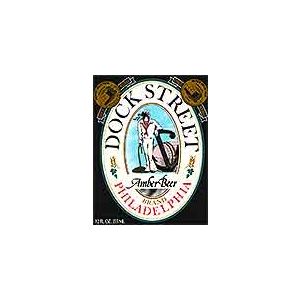
Dock Street Philadelphia Amber
Crafted in the tradition of the great beers of early Philadelphia, this beer was among the first eastern US-brewed beers created after Prohibition with a pre-prohibition oomph. On the nose, look for notes of fresh baked bread and fruity aromas (apples and oranges) as well as citrusy Cascade hops. The flavor begins with a caramel malty sweetness that transitions to a lightly peppery hop bite before segueing to the mildly bitter finish. As it warms, caramel notes are unmistakable. The finish is particularly interesting in this beer; notice the evolving character, from sweet to bitter, back to malty sweetness, and then around again. A nicely balanced beer that will go well with pretty much anything off the grill (dust that thing off and get to it if you haven't already--it's finally summer!)
Serving Temperature: 42-48 degrees F
Int'l Bittering Units: 25.0
Alcohol by Volume: 4.2%
Suggested Glassware: Pint Glass
Malts: 2 Row, Caramel
Hops: Cluster, Cascade
Other: Dry Hopped with Cascade hops
This beer was rated as one of the top 50 greatest beers in the world in 1997 and described as "One of the finest Pilsners in the United States... as aromatic and soft as the best from Bohemia" by world beer guru Michael Jackson. The lynchpins of this beer are the costly Bohemian Saaz hops and imported pale malts used to brew it. Note a pleasant floral hop nose and gentle bitterness in this light-to-medium bodied pilsner. The body begins with a bitter tanginess and offers a clean, soft, complex malty flavor and a note of pear in the back. True to style, Dock Street's Pilsner ends with a long, dry finish. Overall, a significant example of a difficult style to brew. Partners with just about all foods, from spicy Mexican to savory Persian kebabs.
Serving Temperature: 40-45 degrees F
Int'l Bittering Units: 13.3
Alcohol by Volume: 5.0%
Suggested Glassware: Pilsner glass or Flute
Malts: North American Pale
Hops: German Tettnang (hand selected)
Millstream Brewing Company
If ever there was a place long overdue for a new brewery, it was Amana, IA. Until the Millstream Brewing Company opened their doors in 1985, the area had not been graced by the presence of a brewery for over 100 years. Why it took that long to get a brewery going in Amana, we don't know. What we do know is that the Millstream Brewing Company, founded by brothers James and Dennis Roemig and Carroll F. Zuber, was born out of a love for the finest European ales & lagers and the will to brew great, handcrafted beers locally. Oh, another thing we know... 21 years after their beers hit the market, they just keep getting better!
To help kick things off, they hired one of the country's most accomplished masterbrewers, Joseph Pickett Sr., to develop their recipes. Joe formulated their initial three offerings, which remained the brewery's primary line up until about 6 years ago when it was sold to Chris Priebe, Aaron Taubman, and Teresa Sly Albert. As you might expect, along with the new owners came new brews; the new threesome added a German Style Pilsner, Oatmeal Stout, and several other fantastic seasonals. Chris and Aaron both trained at the Siebel Institute of Brewing Technology, so rest assured, their brewing skills make the cut on paper... But hey, paper doesn't taste all that great, so get to the tasting notes below and pour a couple of their beers for the real proof behind their brewing prowess!
For more information about the brewery and scheduled tours--call (319) 622-3672 or check out their web site at www.millstreambrewing.com.
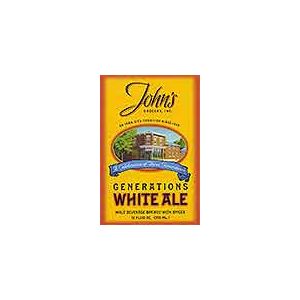
White Ales, or "witbiers" as they're known in Belgium, get their name from the light-colored cloudiness contributed by the wheat and yeast left in the unfiltered beer. To properly enjoy this beer, you should pour the first 2/3rds into your glass, then swirl the bottle vigorously to stir up the wheat sediment, and pour the last third into your glass roughly in order to mix the unsettled haze into your beer and get the true-to-style, brilliantly white, voluminous head to rise up to proper proportions. A fine example of the style, this white ale is particularly easy to drink. Expect prominent notes of fresh oranges in the nose and in the flavor, with an herbal quality coming from the hops and coriander. A slight twinge of tartness comes from the use of bitter orange peel. Finishes extraordinarily smooth with notes of mandarins, white pepper, and a touch of zesty, lemon-like, herbal hops. The witbier style is known for its thirst-quenching character and makes for a great summer beer drinking morning, noon or night. Seriously, as many Belgians would attest, this is a beer you could start your day off with, in place of O.J. (well, maybe just on weekends). Great with white fish heavily spritzed with lemon, or any variety of spicy dishes.
Serving Temperature: 45-50 degrees F
Int'l Bittering Units: 14.0
Alcohol by Volume: 5.2%
Suggested Glassware: Pint Glass or Glass Mug
Malts: 2 Row Brewers, Red Wheat, Flaked Wheat, Flaked Oats
Hops: Tettnanger
Other: Sweet & Bitter orange peel, Coriander
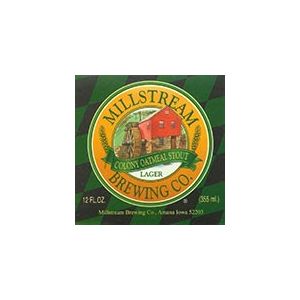
Stouts are traditionally top-fermented ales. However, the folks at Millstream Brewing Company wanted to combine the smooth, clean, easy-drinking qualities of a lager beer with the rich flavor characteristics of a full-bodied stout, thus, we have their Colony Oatmeal Stout "Lager". Expect a roasted malt aroma with notes of chocolate milk and creamed coffee. A slight chicory note is complemented by the oatmeal scents. Flavor quite closely parallels the nose, with the clean, smooth finish one expects from the lagering process. 10% of the grains used to brew this beer are oatmeal, which contribute to the full-body, while the lager yeast make for a very clean, crisp finish in this well-balanced stout.
Serving Temperature: 50-55 degrees F
Int'l Bittering Units: 22.0
Alcohol by Volume: 5.1%
Suggested Glassware: Pint Glass, Mug or Stein
Malts: 2 Row Brewers, Caramel, Bonlander Munich, Chocolate, Flaked Oats, Black, Roasted Barley, Red Wheat
Hops: Tettnanger, Hersbrucker, Northern Brewer
Additional Tasting Notes:
After you've tried each of the Millstream beers independently, give this a shot... You've heard of a Black & Tan, but how about a Black & White? While it might sound crazy, adding Generations While Ale to an equal measure of Colony Oatmeal Stout is actually quite tasty. Start by pouring the stout, then, slowly & gently add the white ale. Don't expect them to stay layered like a true black & tan; nonetheless, the two complement one another nicely. Enjoy your first Black & White!
Brasserie des Géants (Giants' Brewery)--Irchonwelz (Ath), Belgium (Southwestern Belgium)
Yes, this is a beer club, so it won't be a shocker that the Wallonian region of Belgium, wherefrom our featured international brewery hails, is known for its beer. No doubt, the entire country is renowned for its amazing malty libations. But what you might not know is that the area of Ath is home to more than our featured brewery... This is the land of the Giants! In fact, Ath is known for its annual Parade of Giants in which Goliath, locally known as "Gouyasse", leads brass bands and fellow colossal-sized kinsmen through the streets, towering above carnival floats and groups of more ordinary-sized citizens in customary costumes. This tradition dates back to the Middle Ages and has been repeated here ever since. Hence the name chosen for the brewery that was started here in 2000: Brasserie des Géants (a.k.a. the Giants' Brewery).
Not only do they produce colossal beers that live up to the brewery's name, their digs are rather sizeable as well. Incorporated into the remarkably well-preserved remains of the thirteenth century Castle d'Irchonwelz, the site is an amalgamation of quaint charm and indomitable fortitude. And, as they're quick to point out on brewery tours (yes, they are open for tours--get there if you can), their entry gate is hung high enough to permit the occasional giants who may wish to stop in for a quick pint--well, make that a keg--of beer.
The brewery was founded, built, and is run by a young couple, Pierre Delcoigne and Vinciane Wergifosse. Pierre, a graduate of the famed Brewing Engineering program of the Louvain School of Brewing, has been brewing strong for years now. In 1997, he and Vinciane acquired the Castle d'Irchonwelz in order to develop their ambitions of creating the Giants' Brewery. After two full years of construction and set up, the brewery opened. Their first brew, known as "Gouyasse" (Goliath in the local dialect), went on sale in August 2000 (perfect timing, as the annual festival of Giants is held during the fourth weekend of August).
Their brewing equipment is comprised of old world items, such as their cast iron 1930s boiling vessel and 1890s mash tun, as well as state of the art components like their double skinned, temperature regulated, cylindro-conical stainless steel fermenters. The result is a careful blending of old-world tradition and modern day brewing science that yield truly sublime beers, fit for giant thirsts--and Giants--alike.
For more information about the brewery, check out their web site: http://www.brasseriedesgeants.com.
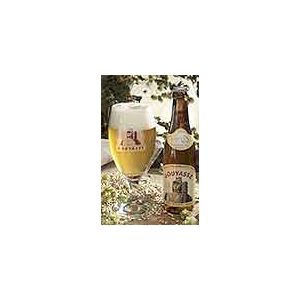
Interestingly, this Brobdingnagian brew had fairly modest beginnings. Originally, Gouyasse, as this beer was first known in Belgium, was brewed at a respectable 6% ABV. However, the US distributors felt that a 6% beer carrying the name Goliath was a bit oxymoronic, especially with the surge of big-bodied, bold-flavored beer that have made waves in the states since the late 90s. So they suggested that Pierre come up with a stronger, more intimidating beer better suited to carry the name of the mythical giant. The result was the beer you now have before you, and it's become quite a hit for the brewery since its reformulation. They still make the original Gouyasse, but "Goliath Tripel", as it's known in Belgium, has become their biggest local seller. Made without the addition of sugar, this is the only Tripel in Belgium that is made using only malt as a sugar source for our yeasty friends. This means the beer will start out a bit sweeter when young, but over time in the bottle, the flavors become more dry and the hops counter-balance the sweetness more firmly. We've been told that 6-months in the bottle appears to be where this beer really shines, but of course, this is one of those beers that is good for at least four years of laying down. We encourage you to set aside a bottle or two and check in on this sleeping giant about once a year. Look for notes of honey on the nose, with apple, vanilla, pear, oranges and pepper also appearing. Expect some zesty hops which contribute notes of wild flowers (akin to lavender), that characteristic Belgian yeastiness, and a subtle tartness. The flavor contains much of the above notes, but with a slight spice and peppery quality. Adding the yeast during the pour lends a mango-like character to this brew. Expect a fairly dry finish (considering the original sweetness), with orange peel and Saaz hop bitterness rounding out peppery hop notes. A big beer befitting of the name it carries. Pair with a sharp blue like Colston Basset or Roaring 40s Blue (both of which we feature in our Gourmet Cheese of the month club--see below for more details).
Serving Temperature: 48-55 degrees F
Alcohol by Volume: 9.0%
Suggested Glassware: Snifter or Goblet
Another unique brew from one of Belgium's newest breweries, Ducassis is more delicate than Goliath, but the two have one very important thing in common: neither was made with the addition of sugar. It's a particularly frequent practice for Belgian brewers to use sugars to kick up the alcohol content of their beers without fattening up the mouthfeel, which tends to happen when higher ABVs are attained using malts alone. Pierre uses real blackcurrant berries in creating this brew, and ferments it using an ale yeast. The natural fruit flavors are retained in a fairly subtle fashion, without the over-the-top sweetness or overtly tart quality of many fruit beers. These flavors are mellowed together during an extensive cold-aging process. After a full month of cold-conditioning, this beer is re-conditioned in the bottle for an additional 3.5 months, where additional flavors and complexity develop. On the pour, notice the striking pinkish-plum color of this beer. If you choose to rouse the sediment when pouring your bottle conditioned beers, then expect a deeper shade of plum-mauve. If not, purplish-pink is the color that rests beneath a pink-hued head. Note the fruitiness in the aroma, mild and not overpowering. Look for notes of raspberry currants, boysenberry jam, a touch of caramel, hints of grape, and a slightly detectable tartness. Expect subtle fruit notes in the flavor profile, most notably grapes, with a champagne-like body, and the slightest bit of hop bitterness mingling with a gentle tartness in the finish. This is a great beer to kick off early summer, going down easy--bottle after bottle. Complemented by softer cheeses, some of which you can have sent right to your door by becoming a member of our Gourmet Cheese of the Month Club (www.cheesemonthclub.com), or garden salads drizzled with raspberry vinaigrette. Here's to great beer and a great summer--Cheers!
Serving Temperature: 45-50 degrees F
Alcohol by Volume: 5.7%
Suggested Glassware: Mini Tulip or Flute