Past Newsletters
Vol. 12 No. 5
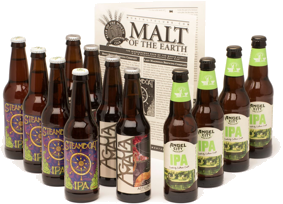
Bringing You The Best Domestic Microbrews for 12Years Now!!
Brewery
|
Beers Featured
|
| Snake River Brewing Company | Pale Ale |
| Matt Brewing Company | Saranac India Pale Ale |
| Snake River Brewing Company | Lager |
| Matt Brewing Company | Saranac Black and Tan |
| Sudbrack Brewery - Brazil | Eisenbahn Dunkel |
| Sudbrack Brewery - Brazil | Eisenbahn Pale Ale |
Snake River Brewing Company
The Snake River Brewing Company opened its doors in March of 1994 in skiers haven Jackson Hole, Wyoming. The debut of their establishment marked the appearance of the first licensed brewpub in the state of Wyoming. Not only are they the oldest microbrewery and brewpub in the state, they are the most award winning microbrewery in America since 1994. In fact, when we were looking over all of their awards, we considered skipping the brewery write up and just printing the awards they’ve won and letting their long list of accolades speak for themselves. But guess what? The list was too long! Seriously, visit this webpage if you don’t believe us: http://www.snakeriverbrewing.com/opawards.htm. We’d literally have to add another full page to this newsletter, and the big cheeses here would rather spend the extra money on procuring top-notch beers than adding another page to the newsletter… Which makes sense, it is all about the beer after all.
The Snake River Brewery/Brewpub operation is the brainchild of Al Upsher, a former Wall Street broker, and his wife Joni who had once taught school and worked in public relations. The spacious pub is a converted cinderblock warehouse that combines the industrial design of a brewery with the lavish splendor of mahogany wood finishes while offering a casual atmosphere and fantastic views of the town ski area. The focal point of the kitchen is a massive wood-burning oven which has never been turned off since the opening of the brewpub. Fueled by applewood imported from Washington, it is used not only for pizza, but also for smoking meats and vegetables for pasta dishes.
And while their food is a hit, their beer is internationally acclaimed. In both 2000 and 2001 they were named Small Brewery of the Year and Brewmaster Chris Erickson was named Brewmaster of the year at the Great American Beer Festival. No other microbrewery has repeated the honor of grabbing both distinctions in consecutive years. Yes, these folks are that good!
For more information about the brewery, brewpub and/or scheduled tours, call (307) 739-BEER or check out their web site at www.snakeriverbrewing.com. And if you’re ever in Jackson Hole, Lander, or the Historic Train Depot in Cheyenne, Wyoming, stop in for a pint or four. Their original location in Jackson Hole rotates through a selection of about 25 beers throughout the year—so there’s something there for everyone!
Winner of the World Beer Cup Gold in 1996 and GABF Silver Medals in 1994 and
1995, this markedly hoppy beer presents a very floral nose with some citrus
and fruity notes. Look also for a firm grain profile akin to toasted bread.
With its big aroma we found it far easier-drinking than expected. Expect a
flowery bitterness to hold through the finish with grains and sweet malt tones
nicely offsetting the very perfume-like hop qualities. The finish is crisp,
mildly bitter and fairly long-lasting. Fantastic with lime-spritzed fish tacos.
Serving Temperature: 42-48° F
Int’l Bittering Units: 40
Alcohol by Volume: 5.7%
Suggested Glassware: Pint Glass
Malts: Pale, Carastan, Munich
Hops: Magnum, Cascade (additional dry-hopping with Cascade)
This amber Vienna-style lager has earned no less than 3 Silver and 3 Gold Medals from WBC and GABF. The aroma presents some malty sweet characteristics (like candied caramel) and a bit of that characteristically German mustiness. Note the mouthfeel—quite round and filling—perfect for the style. Expect a mildly sweet and malty flavor profile with subtle notes of apple. Finish is crisp, non-intrusive, clean, lightly sweet and expertly balanced by several hop varieties. Wienerschnitzel (veal) or schweineschnitzel (pork) make the perfect meal complements for this beer.
Serving Temperature: 40-45° F
Int’l Bittering Units: 22
Alcohol by Volume: 5.0%
Suggested Glassware: Pint Glass or Mug or Stein
Malts: Pale, Vienna, Munich, Caramel
Hops: Liberty, Vanguard, Tettenang
Matt Brewing Company
Originally from the Black Forest region of Germany, Francis Xavier Matt I chose to settle in the Adirondacks where he founded what is today one of the oldest breweries in the United States. He arrived in the U.S. in 1878 (a mere 13 years after the conclusion of the American Civil War!) and put in several years of brewing experience at the already established Bierbaur Brewery. By 1888, “F.X.” as he liked to be called, reorganized the floundering brewery to create The West End Brewing Company which quickly became one of the largest and most successful breweries in the Northeastern U.S.
Today known as the Matt Brewing Company, the brewery has survived numerous world-altering events, from World War I (1914-1918), to Prohibition (1920-1933), to World War II (1939-1946). After the days of Prohibition had passed, F.X., then 74, was joined by his sons Walter and Frank, and a tradition of family brewing ensued. Under the leadership of the third and fourth generations of the Matt Family (Nick and Fred, respectively), the Brewery has earned a reputation as one of the most respected specialty brewers in the country, producing a variety of distinctive, flavorful beers.
Management of the brewery spans four generations—a rare feat in the world of U.S. microbrewed beers since most were founded within the past 30 years. This practice of family run breweries is more common to the master breweries of Europe, such as those found in Bavaria, and is a tradition that F.X. Matt I clearly brought with him to the states.
It’s been more than a century since F.X. created the first of his brewery’s malty treasures and set in motion the legacy that is the Matt brewing tradition. Today, each of their brews is a flavorful testament to time-tested recipes and their literally generations of experience.
For more information about the brewery and scheduled tours, call 800-765-6288 or check out their web site at www.saranac.com.
To the Iroquois, native people of the Adirondacks, the word Saranac means "Cluster
of Stars". Some might consider the varied selection of Saranac beers to
be a cluster of stars in the microbrew world. Saranac IPA has a great balance
of hops and malts, unlike many aggressively hopped interpretations of this
style. On the nose, expect to be greeted with ample floral hop scents, some
pepperiness, grains and caramel malt scents. Look for flavors that closely
parallel the aroma, with an unexpected champagne-like note. The finish is dry
and very well-balanced. The brewery recommends pairing this beer with seafood,
pizza or Mexican.
Serving Temperature: 50-55° F
Int'l Bittering Units: 46.0
Alcohol by Volume: 5.8%
Suggested Glassware: Pint Glass, Chalice or Mug (clear)
Malts: North American 2-row, English Pale Malt, Caramel; Others
Hops: Cascade; Others
Like any good B&T, the distinct flavors from both components—Saranac Irish Stout (Black) and Amber lager (Tan)—hold their own while also complementing one another quite well. Expect distinct stout notes, with a roasty bitterness in the aroma that blends with the strong malt aroma supplied by the German-style amber lager. The flavor is quite malty with roasted espresso notes, a touch of dark cocoa, and a bitterness in the finish that fades to sweet malt aftertaste. If you’re not a fan of the full-bodied, full-flavor of a regular Irish stout, this would be a good starting point from which to work up from as it retains the distinct roasty character of the stout while taming it with a German-style sweetened amber lager malt. Goes nicely with steaks, hearty stews, soups or clams/oysters.
Serving Temperature: 55-64° F
Int'l Bittering Units: 35.0
Alcohol by Volume: 5.1%
Suggested Glassware: Pint Glass, Mug or Stein
Malts: Chocolate, Black Roasted Barley, Caramel; Others
Hops: Willamette, Others
Cervejaria Sudbrack Ltda.—Blumenau, Santa Catarina, Brazil (Southeastern Brazil)
The microbrew renaissance of the 1980s and early 90s has swept throughout this great nation of ours. Domestically, Americans now have literally thousands of choices—and that’s just Pale Ales alone! Not since pre-prohibition days has a similar degree of diversity been available. For true lovers of real beer, life, as they say, is good. The craft brewer spirit has spread outward from the US as well—which is not to say we started it; craft brewers have been doing their thing in parts of Europe since at least the 11th century (in fact, the oldest continuously operating brewery in the world is a German establishment known as Brauerei Weihenstephan). But, some efforts in the US have actually led to the resurrection of styles of beer that were lost to history—such as porter, which disappeared entirely (no pun intended, for those true beer geeks out there (ok, we’ll clue you in: porter was once known as “entire”). Gotta love the beer geek humor!).
It’s true—back in the 1970s, porter had vanished, only to be revived during the craft brew movement. And styles of ancient brew, like mead (honey beer) are now available in a variety of places in the US. Truly, there can be no doubting the contagiousness of microbrewed beer through the country—for that matter—across the continent. But, what about our southerly neghbors? Well, truth be told, the craze has yet to really take hold. While there are some true brew craftspeople in South America, pilsner beer (or the cheap, adjunct version of it) is still king. Hey, let’s not kid ourselves—the same is true in the states, sadly. But thanks to a handful of truly dedicated brewers, better beer is getting noticed down there. Take the folks at Cervejaria Sudbrack, brewing quality ales & lagers in accordance with traditions of European masters. Their true-to-style beers so closely emulate the greats of Britain, Belgium and German beers, you’d be shocked to discover they came out of Brazil. But, interestingly, the region of Blumenau, in which they make their home, is no stranger to European tradition.
Beginning with the Portuguese Azors, who colonized the land many centuries ago, European traditions were brought to this region of South America. These early settlers certainly left their mark (just check out the brewery’s website (listed below)—it’s in Portuguese, the national language of Brazil). Immigrants from the heartland of beer-culture, Germany, also took up residence here in the 1800s when they colonized the region. They too left their mark; Blumenau, in the province of Santa Catarina, Brazil, where the brewery is located, is home to the world’s second largest Oktoberfest (outside of Munich that is).
Despite the beer-loving roots firmly planted here some 200 years ago, craft-brewed beer is difficult to find. As the co-founder of Cervejaria Sudbrack, Juliano Mendes puts it, “[Brazil is] twenty-five years behind where the United States is today. The US has already created a relatively large group of interested and educated consumers of craft beer. In Brazil, we are only the beginning of the ‘craft beer revolution and we have a lot of work in front of us in order to create this type of ‘craft beer culture’”. To hammer home the point, consider this: today, craft brewers in Brazil hold about 0.05% of the market (the figure hovers around 4% in the US, and 8-fold difference).
While studying in Boston, and taking inspiration from the craft brewed beers made by Samuel Adams (Boston Beer Company), Juliano and his brother decided that they’d return to Brazil and start a brewery. In 2002, Juliano, his brother, father and a fellow associate founded Cervejaria Sudbrack. Aided in no small part by a contracted brewing engineer who was educated in Berlin, and their brewmaster who studied at the legendary Brauerei Weihenstephan (mentioned above), the brewery has developed full-bodied, character-loaded brews that are quickly garnering critical acclaim.
Last month we got a chance to feature a beer indigenous to South America by shipping you XINGU, a native South American style black beer. While reviewing South American beers a few months ago, we had the chance to evaluate quite a few, and were very pleasantly surprised when we tasted those made by Juliano Mendes & company. In fact, we’ve got our eyes on these folks, as their beers are really world class in a country where top-notch, craft-brewed beers are difficult to come by. We were floored by how well made their beers are, not to mention how true to style their Belgian- and German-inspired beers are.
For more (Portuguese) information about the brewery, visit www.eisenbahn.com.br. Believe it or not, these folks actually have a theme song—you can listen to it by visiting this URL: www.eisenbahn.com.br/mp3/01_Hino_Eisenbahn.mp3.
Here’s some exciting news: members of our Beer of the Month Clubs will be some of the first folks in the U.S. to have access to these hard to find Brazilian beers. As it turns out, our order will be among the first fulfilled in the US as the beers of Cervejaria Sudbrack (which are all marketed under the label “Eisenbahn”) begin their distribution in the states. In fact, the samples we reviewed a few months ago didn’t even have the US labels on them—they were in Portuguese and looked quite different that what you’re holding in your hands right now. As we write this newsletter, they’re busy slappin’ on the English-printed labels down there in Brazil! Membership does have its privileges, eh?
For this true-to-style German Dunkel beer, expect chocolate and roasted malt notes to drive the nose, with German-like mustiness coming from the yeast as well as some biscuity, breaddy tones. Also look for a gentle hop aroma evident as a distinct dryness. The flavor showcases a malty backbone with quick spikes of sweet and juicy malts, but mainly dry, roasty, chocolate and light coffee notes. Expect a clean, very dry finish with a lightly bitter, chalky, roasty finish. Try this one with a Greek or Mediterranean salad loaded with Feta cheese.
Serving Temperature: 42-48° F
Alcohol by Volume: 4.8%
Suggested Glassware: Snifter or Tulip Glass, or an Oversized Wine Glass.
A South American beer brewed in strict accordance with the German Reinheitsgebot of 1516? It would seem so, but this sucker tastes more Belgian than German. S.A.P.A. stands for South American Pale Ale, which is an interesting title considering the fact that this is actually a Belgian-style Pale Ale. The word Eisenbahn is German for railroad, and the original Brazilian labels for the Eisenbahn beers depict classic train engine cars. The new U.S. labels embody the South American spirit, capturing an animated train car cutting through a vibrantly colored landscape of dense forest as it trailblazes its way out of South American (en route to the US beer market no doubt).
If you’re expecting a classic Pale Ale, you’re in for a shock. We didn’t know what to expect when we popped these babies open for review. Here’s an excerpt from one of our beer panel reviewer’s notes: “Absolutely unexpected Belgian yeastiness strikes me instantly. This pale ale smells like a witbier or fruity hefeweizen with its big bubblegum notes and notes of candied banana bread. A major departure from the US Pale Ale, and distinctly Belgian.” Expect Belgian yeast flavors (banana, cloves) as well as a real horsiness, similar to a farmhouse ale (also known as “Saison”). The finish is a mix of sweetness, cereal graininess, smokiness and yeastiness. We found that this dark lager paired well alongside a meal of fried mushrooms and lightly spiced, roasted chicken.
Serving Temperature: 45-50° F
Alcohol by Volume: 4.8%
Suggested Glassware: Flute or Pilsner Glass (or pour two bottles into a very
large Stein)