Past Newsletters
July 2006
Brewery
|
Beers Featured
|
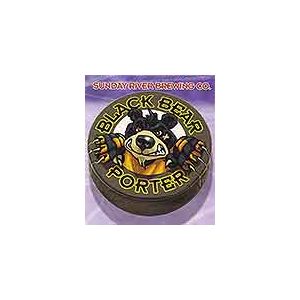
| Stone Coast Brewing Company | Black Bear Porter |
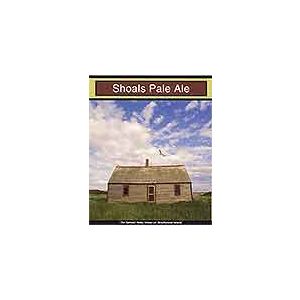
| Smuttynose Brewing Company | Shoals Pale Ale |
| Stone Coast Brewing Company | 420 IPA |
| Smuttynose Brewing Company | Summer Weizen |
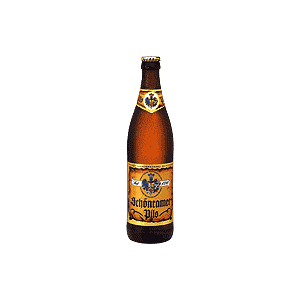
| Private Landbrauerei Schönram (Germany) | Schönramer Pils |
| Weissbierbrauerei Hopf (Germany) | Hopf Helle Weisse |
Stone Coast Brewing Company
The roots of the Stone Coast Brewing Company go back to 1992 when their founders conceived of the Sunday River Brewing Company—a very successful brewpub nestled at the base of Maine's Sunday River ski area. With their dedication to creating great microbrews and serving them with good food and fantastic service, they've become well known in their region.
In 1995, the company owners expanded by creating the Stone Coast Brewing Company in downtown Portland. Under the stewardship of Grant Wilson, an entrepreneur known for his love of great music, great beer and baseball (specifically, the Red Sox), the Stone Coast Brewing Company experienced a number of important milestones and continues to contribute to the local community. For one, the Portland location was for many years host to some of the best up-and-coming music acts of the region, doubling as a small-to-moderate capacity performance hall. Wilson also owns the State Theater, a downtown Portland building dating from the 1920s that hosts musical performances on a regular basis. His nurturing of local music acts probably had something to do with the genesis of the "theme song" for their 420 IPA—which you can hear by visiting their website (URL below).
In 2003, they expanded again, building their own full-scale, state of the art brewery. In 2004, brewmaster Tom Kostovick and operations man Skip Hopkins got a new canning machine to play with (which made them one of the first microbreweries in the country to can beer, something we expect to see more of in the coming years). And another major milestone we should mention—one of the Stone Coast beers, Knuckleball Bock, is now served in a sports bar which is housed in the basement of Fenway Park—certainly the realization of a dream of Wilson's (as a Red Sox fan).
If you're ever in the Portland area of Maine, we encourage you to check out both the Sunday River Brewing Company brewpub in Bethel ((207) 824-4235), and the Stone Coast Brewing Company restaurant in downtown Portland ((207) 773-BEER). And of course, if you're interested in taking a tour of the Stone Coast brewery, they start on Friday afternoons at, not surprisingly, 4:20pm.
For more information about the brewery, check out their web site at http://www.stonecoast.com/.
This complex, big roasty porter is just the sort of thing we like to have in summer months as a counterpoint to all the wits, hefeweizens and pale ales more commonly sought this time of year. On the nose, expect chocolaty notes of fudge and cocoa blended with raisins, condensed milk, the slightest bit of citrusy hops, and a noticeably vinous note reminiscent of a big cabernet. Along with these rich aromas, look for the soft, dry, chalky roastiness intrinsic to the style. The flavor begins with a bitterness upfront, but notice how the flavor seems to blossom as it goes down. There's an evolution that starts with faint notes of chicory and light & sweet coffee, and some fig-like notes, almost like raisinettes rolled in crushed coffee beans. Roasted malts are prominent but well balanced by the sweeter notes, rounded out by the overall bitterness. Recommended with chocolate fudge brownies or Mexican Chicken Mole.
Serving Temperature: 48-55° F
Int'l Bittering Units: Not Calculated (estimated 25-35)
Alcohol by Volume: 5.0%
Suggested Glassware: Pint Glass or Stein
Malts: 2-Row, Caramel, Wheat, Black, Chocolate, Roasted
Hops: Chinook, Willamette, Cascade
While the "blazin'" fiery sunburst image and the name might imply references to a certain illegal substance, the label states "we tried 419 batches before this one". The brewery also makes an "840 Imperial I.P.A.", brewed with 840 oz. of hops (that's 52.5 lbs!). However, we have our doubts that the "420" referenced on this beer comes from the hop dosing, which is not to say that it isn't loaded with hops—it is. Expect some very peppery hops as well as a sweet, caramel backbone sturdy enough to balance the big Pacific Northwest hop aromas. Some "resinous" pine tones and alcohol-soaked citrus notes round out the nose. Look for bitterness to strike early with malty grains quite evident as they tame what would otherwise be a very unruly display of hop prowess. Hops are slightly floral on the palate, but mainly herbal with faint tea- and lemon-like notes. The finish is tremendously bitter, targeting and sticking to the back of the tongue and throat (quite like grapefruit skins), leaving a floral and herbal quality behind as the slightly sweet malts give up their struggle against the bitter hops. Great with hot wings or grilled burgers topped with spicy Monterey jack cheese.
Serving Temperature: 42.0° F
Int'l Bittering Units: 60.0
Alcohol by Volume: 6.0%
Suggested Glassware: Pint Glass
Malts: 2-Row, Munich, Caramel
Hops: Chinook, Liberty, Mt. Hood
Smuttynose Brewing Company
Peter Egelston, the owner and founder of the Smuttynose Brewing Company is quite well known in the New England brewing community. Not only did he start one of the two original New England brewpubs (The Northampton Brewery), he has also succeeded in opening the Granite State's first brewpub (The Portsmouth Brewery), and a brewery (the critically acclaimed Smuttynose). His beer career started in 1986 when his sister Janet and her boyfriend convinced Peter to quit his teaching job in Brooklyn, New York and move to Massachusetts to open a brewpub. Peter stayed in Massachusetts until 1991, at which point he opened New Hampshire's first brewpub, the Portsmouth Brewery. With two successful brewpubs under his belt, Peter was ready open his first brewery.
Smuttynose Brewing opened in 1994 in Portsmouth, New Hampshire. In their 12 years of brewing excellence, they've taken home more medals than we can count (we tried, seriously, there were too many… but we welcome you to try for yourself, there's a listing at their website at: http://www.smuttynose.com/pages/awards.html). Their attention-grabbing name comes from Smuttynose Island, one of the isles of Shoals, a small archipelago of nine islands which lies nine miles off the coast of New Hampshire and Southern Maine. Legend has it that mariners in the 1600s named the island for the nose-shaped smutch of seaweed on the southeast corner of the island.
Today, a lone structure remains on the island: the Haley House (pictured on the Shoals Pale Ale label). Made infamous by the grisly murders which occurred there in 1873 in which two women were hacked to death at the hands of a crazed, axe-wielding fisherman. Recently, the murder weapon was unearthed, rekindling a macabre interest in the killings.
Murder and mystery aside, there is today another reason to remember the Smuttynose name and that is the magnificent brews created by the Smuttynose Brewing Company. If you're not lucky enough to be in one of their distribution areas, don't fret—you can always reorder brews we've featured by contacting us at 800-625-8238.
For more information about the brewery or scheduled tours, call (603) 436-4026, or visit their website at www.smuttynose.com.
This American interpretation of a classic English ale was awarded a silver medal at the 2005 World Beer Championships, not to mention another silver at the Great British Beer Festival in the same year. Hey, if the Brits are bestowing silver medals upon the brewery, you know this must be a great interpretation of an English Ale. Our panel was quite impressed with this rich copper-colored, unfiltered, medium-bodied ale. Note a complex hop profile comprised of Galena, Cascade, and Chinook hops. Look for a tangy fruitiness at the start, with an assertive hop crispness and a big malty mouth feel brimming throughout. Overall, a complex, well balanced ale that is bursting with flavor. Its assertive hoppy character will complement rich, full-flavored foods nicely, yet its complex flavors are subtle enough to accompany lighter, more delicately flavored selections. The perfect companion for a summer evening with friends.
Serving Temperature: 42-50° F
Int'l Bittering Units: 41.0
Alcohol by Volume: 5.0%
Suggested Glassware: Pint Glass or Glass Mug
Malts: 2-Row Pale, Dark Carastan, Dark Crystal, Wheat
Hops: Cascade, Galena, Chinook
Not to toot our own horns, but we couldn't have picked a better domestic beer to send you this month. This appropriately named brew is not only great tasting, it's a real thirst quencher that goes great with warm weather. The nose has some added complexity compared to other domestically produced weizens, due to the Belgian wit yeast used during fermentation. Look for notes of pepper, spice (coriander), spicy cloves, bananas, wheat, and a heftier dose of aromatic hops than is typical for the style (but is oh so typical of the Smuttynose beers). Toward the finish, expect the lemony, Czech Saaz hops to peak through, with a moderate acidity and tanginess developing late. Remarkably versatile with food pairings, anything from Indian cuisine to German pork sausage will work well with this beer.
Serving Temperature: 40-45° F
Int'l Bittering Units: 20.0
Alcohol by Volume: 5.1%
Suggested Glassware: Weizen Glass or Pint Glass
Malts: 66.5% 2-Row Brewers Malt & 33.5% Wheat
Hops: Willamette, Czech Saaz
Private Landbrauerei Schönram—Petting/Schönram, Germany (Southeastern Germany)
About 60 miles southeast of Munich lies the small village of Schönram. It was in 1780 that farmer Jakob Koellerer created the private land brewery of Schönram. Directly beside his brewhouse were a restaurant and stables, which served as an important resting point for post office transport between Salzburg and Munich. This brewery, with its 225+ years of brewing history, is particularly noteworthy in our books because their brewmaster is not a German native… he's from Wyoming!
The Schönram beers are different from many European beers in that they are brewed with an increasingly rare form of barley that is considered less desirable by many in the industry due to its lower yields. Another important distinction is their exclusive use of "aroma" hops, which possess a lower concentration of alpha acids (the bittering agent in hops), meaning that they must use 2-4+ times as many to get the required bitterness in their beers. The purpose is to impart a more refined, less abrasive, smoother bitter quality to the beers than that provided by widely available, high alpha-acid, high-yield, cheap hops. The overall effect is a superb drinkability that, even after 3-4 beers, never "clogs" or tires the palate. As our panel will attest, the Schönram beers are some of the most drinkable German brews they've ever sampled (and sampled, and sampled…)
For more information about the brewery, check out their web site: http://www.brauerei-schoenram.de.
Schönramer Pils is a brilliant session beer that brims with character. Notice that this is a very pale beer, yet as you'll experience, it has major presence and character. Expect clean malty highlights—similar to fresh-baked bread—and light, lemony hops. The hops become more spry and tingly in the nose as the beer continues to warm. The use of aroma-only hops in order to bitter the beer results in a very late breaking but firm bitterness that sort of effervesces as it fades, leaving a wake of aromatic noble hop tones on the palate. Look for the lemony zestiness to be present at the start, slipping away in the middle as the grains surge a bit, then picking right back up again as the bitterness washes across the palate. A true work of art in the Pilsner world, this beer is excellent with so many foods, it's almost arbitrary for us to suggest just one dish—we tried it alongside Thai coconut curry chicken and loved it, but it's great with just about anything, or on its own.
Serving Temperature: 40-46° F
Alcohol by Volume: 5.4%
Suggested Glassware: Pilsner or Pint Glass
Weissbierbrauerei Hopf—Miesbach, Germany (Southeastern Germany)
Nestled in the foothills of the Alps in a town called Miesbach, about 30 miles south of Munich, is the Weissbierbrauerei Hopf. Here, as you might have gathered from their name, owner Johann Hopf and his forefathers exclusively produce wheat beers, and have for generations created some of his country's finest. Famed for the distinctive and elegant aroma of its beers, the Weissbierbrauerei Hopf is profoundly aware of the need to reinforce the traditional values and brewing practices that have served their beers so well through their first century of operation. All of the Hopf wheat beer specialties are brewed according to the German Purity law with just five ingredients: wheat malt, barley malt, water (originating from the alps), yeast and hops.
The brewery, founded in 1910 and presently run by the third generation of the Hopf family, is currently producing eight different types of wheat beers, each as unique as the picturesque village that the brewery resides in. Recently, the brewery was awarded the most prestigious of German brewing industry awards, the "Prize for the Best of the Best", in recognition of the high-quality, consistently award-winning beers.
The prize product of the brewery, Hopf Helle Weisse (featured below), is held in very high regard because of the powerfully fruity, banana-like flavors that predominate the character of the beer. To professional brewers, the exacting task of consistently achieving such poignant character from very subtle manipulation of the fermentation conditions is what is so exceptional about this brew. We invite you now to experience this very distinctive brew for yourself—we're confident you'll have tasted nothing quite like it.
For more information about the brewery, check out their web site: http://www.hopfweisse.de
Given the aroma and flavor of this beer, you might fight it surprising that no fruits or additives were used to impose the banana-like aromas—they're purely a natural result of Hopf's wheat and proprietary yeast strain. Note the characteristically bright white, thick-as-cappuccino-froth head which is retained indefinitely. In addition to the obvious banana aromas, look for notes of lemon meringue with additional clove spiciness. The flavor closely parallels the nose, with big banana and clove notes combining with thirst-quenching wheat flavors, along with orange notes. This beer finishes remarkably clean considering all the banana and fruit notes, and finishes with a fairly stern acidity. In Bavaria, this beer is commonly served as a mid-morning refresher, particularly in warm weather months. We suggest pairing it with veal sausage, or, once you've experienced the beer on its own, adding about 2 oz. of champagne to create a Helle-mosa (Mimosa-inspired beer cocktail). Cheers!
Serving Temperature: 43-50° F
Alcohol by Volume: 5.3%
Suggested Glassware: Weizen Glass, Flute or Tulip