The Microbrewed Beer of the Month Club

Past Newsletters

July 2007

Brewery
Beers Featured
Wild Goose Brewery India Pale Ale
Abita Brewing Company Fleur-de-lis Restoration Ale
Wild Goose Brewery Oatmeal Stout
Abita Brewing Company Turbo Dog Brown Ale
Bavik Brewery (Belgium) Premium Pilsner
Klášter Brewery (Czech Republic) Premium Lager

Wild Goose Brewery

The U.S. microbrewery renaissance didn't really pick up steam until the early-to-mid 1990s, so it's rare to find domestic microbreweries, particularly from the east coast, that were around in the 1980s (this month we happen to have two!). The breweries that did kick things off were pioneers of sorts, laying the foundation for the tremendous selection of top notch microbrews we currently enjoy. One such brewery was the Wild Goose Brewery.

Since opening in 1989, their traditional British-style beers have been recognized as some of the finest east of the Rockies. Over the years, they've gained the praise of beer lovers nationwide. Their original brewmaster trained with industry legend Alan Pugsley, the man behind the design and set up of some of the best microbreweries in the United States including Shipyard, Geary's, and Old Nutfield, just to name a few.

Many of the original recipes created in their early days are still produced exactly the same way today, but they're brewed by a new generation of microbrewing zealots; the entire Wild Goose beer line was ultimately acquired by a worthy successor: Frederick Brewing Company of Frederick, MD. Named one of America's Top 20 Breweries by Food & Wine magazine, they faithfully continue to brew the outstanding Wild Goose line in homage to the great beers that helped usher in a new era of beer drinking in the states.

For more information about the Wild Goose Brewery / Frederick Brewing Company, call (888) 258-7434 or check out their web site at www.wildgoosebrewery.com.

Wild Goose India Pale Ale

Wild Goose India Pale AleThis brew is a Silver Medal winner at the '96 World Beer Championships, Gold '97 & in the same year, declared a festival "World Champion Ale". Enough said? Well, we'll continue anyway. Given the current amount of IPA "hop bombs" out there, you might find this beer a bit tame by comparison. Wild Goose's IPA is a true-to-style English IPA, without the intense piney/grapefruit-like bombastic aromatics of many Pacific Northwest IPAs. Note the balance of bread-like grains to grassy hops in the aroma. Citrusy hops present apricot notes, with a hint of talcum. Bitterness comes on strong up front, but drifts away temporarily, leaving room for a sweet malt and apricot and orange peel-like citrus note, fresh baked bread flavor and some floral, leafy hop notes. Expect some characteristic Ringwood yeast mustiness too as it finishes with a moderately bitter citrus and flower petal note and a touch of grassiness. A good brew to pair with cheese: try Edam, Brick or Asiago.

Serving Temperature: 45-50° F
Int'l Bittering Units: 50.0
Alcohol by Volume: 6.18%
Suggested Glassware: English Pint Glass or Stange (tall, slender cylinder)
Malts: Crystal, Munich, Cara-pils, 2-Row Pale
Hops: Warrior, East Kent Goldings, Willamette

Wild Goose Oatmeal Stout

This beer is a deep brown color with a tan head. Yes, it's actually brewed with oats, and if ya put the 'ol schnoz in yer glass, them oats will be quite obvious. Of all the oatmeal stouts we've tried, this beer's "oat notes" are the most prominent, really poking through the roasty chocolate and coffee influences. The grains smell fresh, like fresh wert (the pre-fermented sweet liquid that eventually becomes beer) and the roasted barley is very prominent. The flavor manages to bring a lot along for the ride, with coffee, roasty, chocolate and caramel notes, without hitting you over the head with them all. This beer finishes mildly bitter with a lingering roasty character: a solid brew. Let it warm up to experience the smooth, warming finish. Try it with chocolate-covered pretzels or better yet, chocolate fondue.

Serving Temperature: 60° F
Int'l Bittering Units: 32.0
Alcohol by Volume: 5.91%
Suggested Glassware: Pint Glass, or Mug
Malts: Caramel, Chocolate, Black, Roasted Barley, Munich, Oats, 2-Row Pale
Hops: Warrior, East Kent Goldings

Abita Brewing Company

Abita Brewing Company, established in 1986, is the oldest craft brewery in the southeast. Located about 30 miles north of New Orleans in Abita Springs, LA, by 1994 they outgrew their original site (which is now their 100 seat brewpub) and moved up the road where they now brew over 62,000 barrels of beer annually. Despite their impressive growth, they still brew in small batches. Their protected wells deliver water so pure that it comes straight from the ground and goes right into their brewkettle (many breweries have to first chemically prepare their water to eliminate chlorine or other impurities before it's fit for brewing).

Considering their proximity to New Orleans, it was miraculous that the Abita Brewing Company was spared major damage from Hurricanes Katrina and Rita. Their ties and loyalty to the area led them to launch a major initiative to help raise funds for all those people whose lives have been devastated by the storms. One component of this initiative has been their Fleur-de-lis Restoration Ale, with $1 from the sale of every six pack donated to the Louisiana Disaster Recovery Foundation (LDRF). To date, sales of this beer have contributed over $550,000 to the recovery effort. Your membership in our club has enabled us to purchase a large quantity of this brew and kick in a share to the kiddy. If you want to do more, you can give us a call at 888-625-8238—remember, you can reorder any beer we've ever featured, so if you want more Fleur-de-lis Restoration, give us a ring; you're not only helping yourself to a solid microbrew, you're helping others.

For those of us not near New Orleans, it might seem that the recovery effort is over by nearly two years after the storms. Sadly, this is not the case. There is much to do; many people still have not returned to the area, and many of those who have continue to struggle. The other major component of Abita's recovery contributions is their line of Fleur-de-lis t-shirts, hats, ribbon pins and car magnets. One hundred percent of the net proceeds from the sale of this merchandise will go directly to the LDRF. A third effort was undertaken in 2006 when Abita celebrated 20 years of making Louisiana's favorite beer by throwing a huge bash. Thousands turned out and helped ABC raise $20,000 for the Louisiana Restaurant Association's Employee Relief Fund. The fund was established to help displaced food service workers come home and return to their jobs.

For more information about the brewery, brewpub and/or scheduled tours, call (985) 893-3143 or check out their web site at www.abita.com. For additional details about the LDRF, visit www.LouisianaHelp.org. To lend support to the Louisiana Disaster Recovery Foundation, consider ordering some of Abita's Fleur-de-lis merch. Hey, good cause, good gear, how can ya go wrong with that?

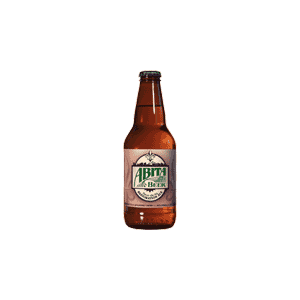
Fleur-de-lis Restoration Ale

Fleur-de-lis Restoration AleAbita B.C. began crafting the new beer the first day the brewing facility reopened after the hurricane. The Fleur-de-lis name and symbol were selected for this very special beer with a dual purpose in mind. It's a well recognized symbol of New Orleans, but it is also a symbol of light and life. The Fleur-de-lis was adopted long ago by ancient warriors who safely found their way through treacherous waters by following the water lilies. This golden ale's label is decorated with purple and green, combining the three colors historically representing justice, hope and generosity. Expect a citrusy hop nose with a clean, crisp edge coming from the pils malts and the California Ale yeast used to ferment this brew. Expect notes of apples, some pear, and a touch of honey, with a snappy fresh citrus hop flavor. Finishes mildly bitter—cleansing as it restores (no pun intended) the palate to enjoy another sip. It's a fine beer to enjoy while mowing the lawn on a hot summer's day.

Serving Temperature: 42-47° F
Int'l Bittering Units: 22
Alcohol by Volume: 5.0%
Suggested Glassware: Pint Glass
Malts: Pale, Pils, Caramel
Hops: Cascade

Turbo Dog Brown Ale

This canine-inspired brew is no mongrel. It was originally crafted as a specialty beer to celebrate the company's fourth birthday back in 1990. It met with such enthusiasm that it has since become one of Abita's five flagship brews. In August of 2005 it was ranked by Stuff magazine as the #1 beer made in the USA. Look for a sweet malty (and wet) nose followed by chocolate and toffee flavors. You won't find many hops while lapping this tasty nectar, but you will encounter plenty of flavor. Overall, a full-flavored, medium-bodied malty dog that will play best friend to your favorite beef or lamb dish.

Serving Temperature: 43-50° F
Int'l Bittering Units: 30
Alcohol by Volume: 5.5%
Suggested Glassware: Pint Glass, Mug or Stein (or lapping bowl)
Malts: Pale, Caramel, Chocolate
Hops: Willamette

Bavik Brewery (Brouwerij Bavik)—Flanders, Belgium (Northwestern Belgium)

In 1894, Flemish farmer Adolphe De Brabandere requested authorization to build a brewery in a small village named Bavikhove (meaning "the farm of the people of Bavo"), originally founded around 1120 AD by a collection of farming families gathered around what is today south of Western Flanders. Like most farmers of his day, Adolphe knew how to brew beer. Four generations later, the Bavik Brewery remains a family-based operation.

Their first principal brewer (as a company) was Adolphe's son, Joseph De Brabandere. In 1894 the number of smaller ale-focused breweries in Belgium was already in decline as a result of the hugely popular Pilsner style of beer. A true entrepreneur and wise businessman, Joseph capitalized on this new trend in beer drinking and became the most important Pilsner brewer in his region.

The family business enjoyed its successful standing in the region until 1914, when the German army invaded the region and confiscated the brewery, forcing its closure during World War I. Incredibly, after the war's devastation, Joseph was able to restart the brewery. But the outbreak of the Second World War jeopardized the brewery's fate once again. Joseph's wife Gabrielle was actually able to convince the Germans to keep the brewery open during World War II. Eventually, the brewery passed to Joseph and Gabrielle's children, who developed the brewery further through modernization and market expansion. Today the Bavik Brewery is the largest brewery of West Flanders, brewing over 80,000 barrels of beer per year.

For more information about the Bavik Brewery, check out their web site at http://www.bavik.be.

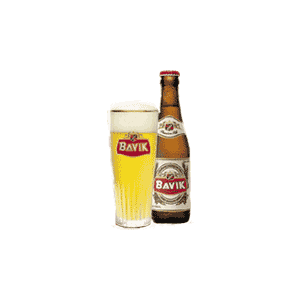
Bavik Premium Pilsner

Bavik Premium PilsnerIn the late 1800s the newly created Pilsner style spread across Europe with great fervor. Affordability, the novelty of a new type of beer, and the newly industrialized process of producing cheap glassware—which enabled everyday citizens to actually SEE what they drank—were all major factors in the success of the style. Bavik Premium Pilsner is a German-style Pilsner with a distinctly Belgian influence, evident in the nose, which presents a sweeter, slightly spicy note. Its unique character earned it a "Belgium's Best Pilsner" nod by that country's beer equivalent of Consumer Reports, beating out over 60 other Belgian Pilsners. Expect aromas of fresh barley, accentuated by a light mustiness, and some spicy, citrusy hops and fruity esters presenting whiffs of apricot, overripe apple and a touch of grape skin. Look for an herbal, almost zesty bitterness to offset but never overpower the sweeter notes. One of the most versatile beers for meal pairing—try this with just about anything. Experiment! But be sure to save some to do a side-by-side comparison of this pilsner with the Czech pilsner featured this month.

Serving Temperature: 42-46° F
Alcohol by Volume: 5.2%
Suggested Glassware: Pilsner Glass or Flute

Klášter Brewery (Pivovar Klášter)—Klášter Hradište nad Jizerou, Czech Republic (Northern Central Czech Republic)

The Klášter Brewery's roots go back to 1144 when the existence of a village at the meeting of the Zabrdka rivulet and the Jizera River in the northern Czech lands was first recorded. A few years later a Benedictine Monastery was founded there and in 1240 a massive gothic church erected. Though the church and cloister were destroyed by fire during the Hussite invasion of 1420, the property was later purchased and a brewery eventually founded on the site in 1560. Klášter, meaning both 'monastery'and 'cloister', reflects the brewery's respect for the site's cultural and spiritual heritage, a message worth hearing; hey, it's got us going to "church" just about every day!

The family of brewers currently installed there got involved with the brewery in 1947 when the current owner's father, Josef Pelant began his tenure. In 1963 he became the head brewer. In 1969, his son (and the current brewer), Vladimir Pelant joined the company. With 30 years of experience under his belt, he was named Belgium's "Best Brewer of the Year" brewing "The Best Beer of the Year" in 1999. Much of the unique flavor profile of the Klášter beers is attributable to their use of a cave-aging process where fermentation occurs at a depth of 60 feet. These and even deeper caves were dug by monks centuries ago at the original monastery site. In 1999 (a big year for them!), Klášter opened a unique restaurant & pub in one of the deepest caves dug centuries ago. Now that's our kind of place to have a brew! The pictures in their photo gallery online are a MUST SEE! http://www.Klaster.com/picture_gallery.htm.

If you'd like more information about the Klášter Brewery, check out http://www.Klaster.com.

Klášter Premium Lager

On the nose, expect intensely breaddy, sweet malt notes with a slight creaminess and a flourish of citrus hops among lightly musty, Saaz hop notes. The hops are noteworthy in that they are less herbal/lemony than expected for the style. We found the flavor began smooth and easy with an apple skin note and some sweetish malts, but then the bitterness—practically heroic in stature—just goes for it! Note this brew is quite a bit more bitter and bold than many of the watered down mega-pilsners coming out of the Czech Republic these days. Expect the hops to contribute slightly flowery, grassy notes, delivering far more bitterness than what's implied by the bouquet. The sweetness of the malts is prominent to start, but just barely manages to hold the balance in check (another unintended pun) while the bitter hops really surge in. It finishes quite dry. As it warms, it gets a bit boozy in the finish (hints of scotch). It is a bold yet easy to drink medium-bodied Czech Pilsner. As we like to say, "a session with substance". Admirable that this Pilsner is as dark and robust (for the style) as it is, and that they have not resorted to labeling this a "pilsner" for marketability. It's a "Premium Traditional Czech Lager" according to the label. We'll say. Enjoy with another and then another, then pair with some spicy Indian food.

Serving Temperature: 45-48° F
Alcohol by Volume: 5.0%
Suggested Glassware: Pilsner Glass, Flute or Stein

Bavik vs. Klášter—Side by Side Tasting Notes:

With pilsners from different countries being featured this month, we saw an opportunity to do side-by-side tasting notes to point out some of the qualities unique to each country's interpretation of the style. Keep in mind that neither of these beers is the prototypical pilsner—while the Bavik is billed as a German-style pilsner, its Belgian-heritage is undeniable, and the Klášter is not your average Czech pilsner either. Keep in mind too that even the same style of beer from the same country may taste quite different when brewed at different breweries. Nonetheless, it's always interesting and usually educational to run a comparison of the same style of beer to pick out some of the regional (or other) differences—one can never underestimate the impact of local brewing traditions on local beer palates. Plus, you get to drink two beers at once… So here we go:

Note: Be sure to pour, with equal intensity, the same amounts into equally sized beer glasses (pilsner glasses are best, but pint glasses will suffice). When you pour, note how each beer presents—how much head results? How long does the head persist? How are the colors of the head and beer different? In the case of these brews, notice that Bavik is much lighter in color than Klášter, running more of a golden straw to Klášter's amber-honey. The Bavik has a frothier, less sticky, soapier, white head— Klášter's is darker and stickier, likely influenced by its heavier-handed dose of hops. In both appearance and aroma, Bavik tends to display the more common elements associated with pilsners. It also has more yeasty mustiness typically associated with German pilsners (but less so than many German pilsners). Klášter's nose is more present by comparison—it's heartier, almost meaty relative to the sweeter notes from the Bavik. Compared with most macrobrewed "pilsners", both give off more prominent grain notes (because they're brewed with all barley malt rather than corn or rice) and lack the sulphury/skunky quality associated with most macro "pilsners". But neither is straight down the middle in terms of traditional aroma. Note also that Bavik has an atypical haziness—so while it is more in line with the expected liquid & head coloration, it's got an unexpected haze, whereas the Klášter is darker in liquid and head but is crystal clear. When it comes to bitterness in flavor and finish, Klášter is king, which is characteristic of Czech pilsners. The Klášter bitterness is near the top of the chart for any European pilsner, while Bavik is only mildly bitter, with some untraditional sweet "Belgian-style" notes. Overall, rather different beers, each presenting some of the hallmark features of their representative countries, but striking out on their own by putting their brewery's unique stamp on the brew.
C&H Internationals Logo Since 1994
Join Our Club
Gift Memberships

Membership Renewals
Reorders
Home Page
More Information
Current Selections
Past Selections
Testimonials
Other Gourmet Clubs
Corporate Gifts
Wedding Gifts
Brewery Search
Style Guide
Beer Fun Section
Industry Resources
Festivals
Print a Gift Card
Send a Virtual Brew
Refer a Friend
Send a Hint
E-Promos
Contact Us
Link to Us

1 - 800 - 625 - 8238
(Outside US call: 949-206-1904)
P.O. Box 1627, Lake Forest, CA 92609