The Microbrewed Beer of the Month Club

Past Newsletters

October 2007

Brewery
Beers Featured
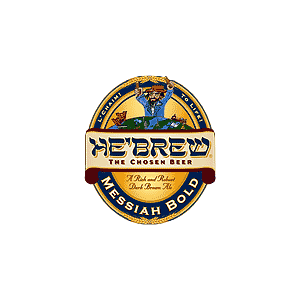
Shmaltz Brewing Company HE’BREW Messiah Bold
Uinta Brewing Company King's Peak Porter
Shmaltz Brewing Company HE’BREW Genesis Ale
Uinta Brewing Company Monkshine
Cervejaria Sudbrack Ltda. (Brazil)
(Sudbrack Brewery)
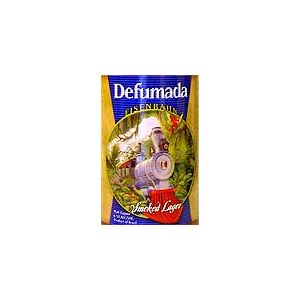
Eisenbahn Defumada
Cervejaria Sudbrack Ltda. (Brazil)
(Sudbrack Brewery)
Eisenbahn Escura

This month we've got a Genesis, a Messiah, a Monk, a King, a Smoker and a Dark character —a regal, spiritual, varied line up to be sure—enjoy!!

Shmaltz Brewing Company

Few beer brands have the chutzpah to carve out a niche for themselves with the sort of irreverence that the HE'BREW beer brand has (brewed by the Shmaltz Brewing Company, based in San Francisco, CA, brewed in Saratoga Springs, NY), but Stone Brewing Company's Arrogant Bastard ale comes to mind. Not that there's any arrogance included in Shmaltz's shtick (well, maybe just a hint), but there is plenty of pushing the proverbial envelope—to the point of appearing gimmicky. Take the tag line for all the HE'BREW beers: "The Chosen Beer", or that found on their Messiah Bold's label: "It's the Beer You've Been Waiting For", or the name of their 9th anniversary celebration beer: "Jewbelation 5766".
Truth is, there's no gimmick here—their beers are truly solid, superbly well-crafted offerings. The labels may go to extremes to attract attention, and there's an undeniable comedic element, but bottom line—this is good beer.

The brand actually got its start as an inside joke among founder Jeremy Cowan and friends who, while drinking one night in 1987, started brainstorming crazy marketing ideas for Jewish merchandise. The idea for a Kosher, Jewish-American, high holy days celebration beer called "HE'BREW", with the tag line "Don't Pass Out, Passover!" was born. While originally a concept borne out of jest, the idea remained a viable option Jeremy's mind. Eventually, in 1996, he brewed 100 cases of his first commercial batch with the goal of selling them for the Hanukah holiday; HE'BREW Genesis Ale was sold out of the trunk of his grandmother's Volvo—all 100 cases. In 1997 he quit his day job to dedicate more time to the brand, and by 2001 he was selling 5,000 cases per year; by 2004, 22,000 cases were moved! Since their founding in the year 5757 (per the Jewish or Hebrew Calendar) it has become a respected brand, distributed in 22+ states.

Microbrewed beer already caters to a niche market, making up less than 5% of total domestic beer sales, but a gourmet Kosher celebration microbrew? That's as niche as it gets. Takes a lot of chutzpah to market such a brew—and despite the shtick, the beer represents a genuine effort to participate in Jewish tradition. That being said, you needn't be a Jew to dig this brew! It's downright mishigas if you don't like it. L'Chaim!

For plenty more good schtick, check out their web site at www.shmaltz.com.

HE'BREW Messiah Bold

HE’BREW Messiah Bold"It's the beer you've been waiting for!" HE'BREW Messiah Bold not only has a bold tag line, it's got a bold flavor. Notice the tightly bubbled, immortal head. On the nose, expect a roasty character, a touch of toffee, apricot & citrus notes. The flavor is rich, roasty, malty, with a hint of espresso & lemon peel, rounded out by caramel nuttiness in the finish. Pari with chicken molé.

Serving Temperature: 45-50° F
Int'l Bittering Units: 25.0
Alcohol by Volume: 5.3%
Suggested Glassware: Pint Glass or Mug
Malts: 2-Row, Carapils, Dark Crystal, Caramel, Dark Chocolate, Victory
Hops: Warrior, Cascade, Mt. Hood

HE'BREW Genesis Ale

Five malts give this beer a rich, robust backbone, while five hop varieties provide a hoppy oomph that'll knock ya on your toches! The aroma gives off a great blend of sweet, fruity notes and lightly peppery hops. Expect grapefruit & generalized citrus tones—apricot (slight), red berry and a tropical punch-like note—with a light toasty character as well. Aggressively hopped, but well balanced. The panel noted that it begins quite mellow and a bit toasty, with some fresh barley/grain notes, but then surges with juicy, citrusy notes and moderately bitter hops—a very nice two-fold approach in the flavor. Finishes moderately bitter & aromatic with a citrus, fruit finish. Try with spiced carrot salad (visit this site for a recipe: www.jewish-food.org/recipes/spiccarr.htm).

Serving Temperature: 40-48° F
Int'l Bittering Units: 31.0
Alcohol by Volume: 5.4%
Suggested Glassware: Pint Glass or Mug
Malts: 2-Row, Caramel, Dark Crystal, Munich, Wheat
Hops: Warrior, Centennial, Cascade, Fuggle, Willamette

Uinta Brewing Company

The Uinta (pronounced "you-in-tah") Brewing Company was established in 1993 with the intent of crafting fresh, flavorful domestic ales in an environmentally friendly, sustainable manner. The brewery is named after a major east-west-running mountain range located in the Rocky Mountains, and the word "Uinta" comes from the Ute Indians, the tribe from which Utah derives its name.

In 2001, having outgrown their original facility, Uinta Brewing Company moved to a 26,000 square foot state-of-the-art brewery built with energy efficiency and conservation in mind. The brewery's new nesting grounds are fully equipped with the latest in brewing technology—including systems that ensure that the facility is 100% wind powered. That's correct folks—powered entirely by nature herself! Pretty sweet, huh? Looking at it this way, by enjoying Uinta beers, you're playing a part in preventing the release of 440 tons of carbon dioxide per year—the equivalent of planting 174 acres of trees, or not driving 951,270 miles per year. The new building reflects Uinta Brewing Company's efforts to be a leader in the brewing industry while remaining committed to conservation.

For more information about the brewery and scheduled tours, call (801) 467-0909 or check out their web site at www.uintabrewing.com.

King's Peak Porter

King's Peak PorterKing's Peak, located in the Uinta Mountains, is the highest point in Utah at 13,528 feet. King's Peak Porter, by contrast, is the deepest colored brew made by the Uinta B.C. The medium-bodied, malty flavor and dry, roasted body bridge the gap between traditional porter flavors and German Schwarzbier (aka "black beer"). Expect chocolate maltiness throughout the aroma and flavor profile. This dark brew swept the 2000 Gold Medals at both the Great American Beer Festival and World Beer Cup in the German style Schwarzbier category—and the 1999 Silver medal at the World Beer Cup in the German porter category. Try with Madeira steak tips or gravy-smothered pork chops (add about a cup of King's Peak to the gravy during preparation to really tie it all together).

Serving Temperature: 45-50° F
Int'l Bittering Units: 25.0
Alcohol by Volume: 4.2%
Suggested Glassware: Pint Glass, Mug or Stein
Malts: 2-Row, Chocolate, Black, Roasted
Hops: Chinook, Willamette, Tettnang

Monkshine

Most Utah beers are capped at 4.0% ABV, so we're thinking that Uinta's recently launched "Four +" line of beers is an effort to get some higher ABV Utah beers produced & perhaps marketed outside the state. Now, we didn't have time to sort through all the legalese surrounding Utah's restrictive beer laws, so we're just venturing a guess here, but we suspect a sort of 'under the radar' approach to creating an above 4.0% ABV beer, and that this effort is encoded in the name "Monkshine" (the idea being that this is a sort of "moonshine" in the form of a Belgian style pale ale, and many traditional Belgian pale ales have been brewed by monks, hence, "Monkshine"). Clever really, but maybe we're reading way too far into it. Let's just drink it… On the nose, look for juicy, fruity notes with some spicy & earthy Belgian yeast character, atop a lightly sour, slightly floral note, and noble hops. Taste mirrors the nose, with some faint banana flavors toward the finish. A great beer to cook with. Why not pair Monkshine with Monkfish? There's a great recipe originally printed in Everybody Eats Well in Belgium Cookbook by Ruth Van Waerebeek (Workman Publishing, 1996) that calls for this style of beer—give it a shot—and pair with more Monkshine. Visit www.winemag.com and enter "monkfish" in the search field, then click on "Pairings: Cooking with Beer" for the full recipe.

Serving Temperature: 42-46° F
Int'l Bittering Units: 18.0
Alcohol by Volume: 6.5%
Suggested Glassware: Tulip or Oversized Wine Glass
Malts: 2-Row, Carapils, Crystal, Chocolate
Hops: Saaz, Willamette

Cervejaria Sudbrack Ltda.—Blumenau, Santa Catarina, Brazil (Southeastern Brazil)

Thanks to the microbrew renaissance of the 80s & 90s Americans have literally thousands of choices—of Pale Ales alone! For "real beer" fans, life, as they say, is good. The craft brewer spirit has spread outward from the US too—which is not to say we created it; craft brewers have been at it in parts of Europe since at least the 11th century. But, some efforts in the US have actually led to the resurrection of styles of beer that were nearly lost to history (porter is one example that comes to mind).

There's a definite contagiousness surrounding the enjoyment of microbrewed beer, and in fact, it's not limited to the US, it's spreading throughout the continent. But, what about our southerly neighbors? Well, truth be told, the craze has yet to really take hold. While there are some true brew craftspeople in South America, pallid pilsner beers (mainly cheap, adjunct versions) are king. Hey, let's not kid ourselves—the same is (sadly) still true in the states. But thanks to a handful of truly dedicated brewers, better beer is getting noticed down there. The folks at Cervejaria Sudbrack have been brewing quality ales & lagers in accordance with traditions of European masters. Their true-to-style beers so closely emulate the greats of Britain, Belgium and German beers, that in a blind taste test, you'd be shocked to discover they came out of Brazil. But, interestingly, the region of Blumenau, in which they make their home, is no stranger to European tradition.

Beginning with the Portuguese Azors, who colonized the land many centuries ago, European traditions were brought to this region of South America. These early settlers certainly left their mark (the national language of Brazil is still Portuguese). Immigrants from the heartland of beer-culture, Germany, also took up residence here in the 1800s when they colonized the region. They too left their mark; Blumenau, in the province of Santa Catarina, Brazil, where the brewery is located, is home to the world's second largest Oktoberfest (outside of Munich that is).

Despite the beer-loving roots firmly planted here some 200 years ago, local craft-brewed beer has been difficult to find. As Cervejaria Sudbrack cofounder Juliano Mendes puts it, "[Brazil is] twenty-five years behind where the United States is today. The US has already created a relatively large group of interested and educated consumers of craft beer. In Brazil, we are only the beginning of the 'craft beer revolution and we have a lot of work in front of us in order to create this type of 'craft beer culture'". To hammer home the point, consider this: today, craft brewers in Brazil hold about 0.05% of the market (the figure hovers just above 4% in the US, an 8-fold difference).

While studying in Boston, and taking inspiration from the craft brewed beers made by Samuel Adams (Boston Beer Company), Juliano and his brother decided that they'd return to Brazil and start a brewery. In 2002, Juliano, his brother, father and a fellow associate founded Cervejaria Sudbrack. Aided in no small part by a brewing engineer who was educated in Berlin, and their brewmaster who studied at the legendary Brauerei Weihenstephan, the brewery has developed full-bodied, character-loaded brews that are quickly garnering critical acclaim.

While reviewing South American beers about a year and a half ago, we had the chance to evaluate quite a few made by Juliano Mendes & company. We've still got our eyes on these folks, as their beers are really world class in a country where top-notch, craft-brewed beers are difficult to come by. We were floored by how well made their beers are, not to mention how true to style their Belgian- and German-inspired beers are.

For more information about the brewery, visit www.eisenbahn.com.br.

Interestingly, the brewery has its own theme song, which you can listen to at: www.eisenbahn.com.br/mp3/01_Hino_Eisenbahn.mp3. We spent hours trying to figure out a way to get the tune to play as you opened your monthly shipment, but we couldn't get our finance department to share our enthusiasm—so, pop open one of these beers, pour into the appropriate glassware, load up that theme song and crank up those computer speakers!

Eisenbahn Defumada

Eisenbahn DefumadaDefumada translates roughly to "cured" in English—and in fact, this beer gains its unique flavor profile by a process similar to curing of meats. While relatively rare among the spectrum of beers out there, there is a style of beer in which 'green' (not yet fully dried) barley malt is roasted over an open flame, typically fueled by beechwood. The result is a roasted barley that is heavily imbued with a distinct smoky quality that is then passed on to the beer during the brewing process. The most striking and traditional examples of this style of beer, known as Rauchbier ("rauch" means "smoke" in German), are brewed in Bamberg, Germany. So, why would a Brazilian microbrewery branch out into such a rare style so early in their career? Well, we think it's to prove a couple points: they're not afraid to take risks, and they're proud of their brewing prowess. Bottom line—these folks got the skills to pay the bills… While this version is not nearly as heavily 'smoked' as examples from Bamberg, it's done well (rather than 'well done'), with a healthy respect for tradition. From start to finish, expect notes of smoked beechwood, with notes of apple skins, white grapes, moderately bitter hops and multigrain bread all present as well. Tangy hops work nicely against the smoky notes, with a nice flavor volley between the sweet and bitter notes. Great with smoked gouda and sausages, and it instantly elevates a simple Slim Jim to a gourmet treat. We suggest sipping in front of a nighttime fire, indoors or out, as the welcome fall breeze blows in.

Serving Temperature: 50-55° F
Alcohol by Volume: 6.5%
Suggested Glassware: Mug, Stein or Stange

Eisenbahn Escura

So what does Eisenbahn mean? It's German for "railway". It was selected to represent Sudbrack's beer line because in 1909 a brewery in their hometown of Blumenau carried the same name. The fact that this Brazilian brewery chose a German word to represent their beer line is quite fitting, given their adherence to the Bavarian Beer Purity Law of 1516 (aka the Reinheitsgebot) and deft ability to emulate traditional German-style beers. For this true-to-style German Dunkel ("dark") lager, expect chocolate and roasted malt notes to drive the nose, with German-like mustiness coming from the yeast as well as some biscuit-y, bread-y tones. Also look for a gentle hop aroma and a distinct nutty dryness. The flavor showcases a malty backbone with quick spikes of sweet and juicy malts, but mainly dry, roasty, chocolate and light coffee notes. Expect a clean, very dry finish with a lightly bitter, chalky, roasty finish. Try this one with a Greek or Mediterranean salad loaded with Feta cheese and olives.

Serving Temperature: 42-48° F
Alcohol by Volume: 4.8%
Suggested Glassware: Pint Glass or Pilsner Glass

Saying Goodbye to Beer's Best Friend

On August 30th the world lost a great champion of craft-brewed beer. While there are many people around the world who aren't yet fans of microbrewed beer, his name is known across the globe. In fact, there's NO way you haven't heard of him.

Michael Jackson

Of course, we're not talking about the one-gloved "King of Pop", though 'our' MJ would sometimes wear a lone glove in jest, and his particular affinity for cork-finished Belgian beers could have earned him the same title, with a slightly different meaning. Michael Jackson was, and still is, regarded as the world's foremost expert in the beverage of beer (not to mention being an accomplished writer on the topic of whiskey). He traveled around the world extensively, meeting with brewers, touring breweries, tasting beers, uncovering lost styles and tracing the history of beer styles back to ancient times, which earned him the nickname "The Beer Hunter". Perhaps most importantly, he shared his experiences, heralding the virtues of good beer and helped to explain the importance that beer has historically held through the ages, throughout the world.

Through his work he helped to document the world history of beer in books like "The World Guide to Beer" (published in 1977); his writing style simultaneously casual and erudite (not to mention thirst-inducing!), always providing an interesting and educational read, and usually, a good chuckle as well.

We'd not have the options in beer that we do today were it not for Michael Jackson's work. It's that simple. By identifying beers by flavor and style—more to the point—by advertising that there actually are "styles" of beer (a little known fact to many beer drinkers around the world), and by suggesting thoughtful pairings of beers with particular foods, Jackson helped give birth to a renaissance of interest in beer and breweries worldwide in the 1970s. His work and words were, without a doubt, fresh in the minds of many pioneers in the North American microbrewery movement.

His TV documentary series, "The Beer Hunter"—which popularized his nickname—was filmed around the world and shown in 15 countries, and his books have sold millions of copies, being printed in more than 20 languages.

It's difficult to fully appreciate the impact this great champion of the brew has had upon the world of beer—but ask any brewer about the man and they're likely to cite at least a few stories of how they've been inspired by the man. We can say from personal experience that we were certainly 'under the influence' of his works—and we're not alone. There's not a beer writer out there who doesn't admire (or at least envy) the man on some level. Despite his fame and being held in such high regard by so many fans of good beer, he remained humble and approachable. An all around good human being, and lover of good beer—our kind of guy. To say he will be missed is a colossal understatement.

To honor his memory, commitment to our favorite malty nectar, and dedication to telling the story of beer, we ask that you all lift a pint (or two) and toast beer's best friend, the Beer Hunter, Michael Jackson.

To Michael: Rest in Peace Good Sir. We're all left with a much heavier torch to carry in our endeavors to turn people on to good beer—but we'll do our best to continue what you've started.

—The Staff at the Microbrewed Beer of the Month Club
C&H Internationals Logo Since 1994
Join Our Club
Gift Memberships

Membership Renewals
Reorders
Home Page
More Information
Current Selections
Past Selections
Testimonials
Other Gourmet Clubs
Corporate Gifts
Wedding Gifts
Brewery Search
Style Guide
Beer Fun Section
Industry Resources
Festivals
Print a Gift Card
Send a Virtual Brew
Refer a Friend
Send a Hint
E-Promos
Contact Us
Link to Us

1 - 800 - 625 - 8238
(Outside US call: 949-206-1904)
P.O. Box 1627, Lake Forest, CA 92609