Past Newsletters - Dec 2008
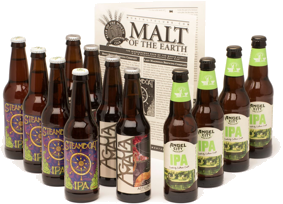
DOM = Domestic Beer Club; INT = International Beer Club; VAR = Domestic International Variety Beer Club; RB = Rare Beer Club
Lancaster County, Pennsylvania, was at one point responsible for producing seven percent of all beer brewed in the United States. The brewing tradition in the region was spurred by innkeepers who brewed beer in back rooms, but by the late 18th century, English and Scottish immigrants had become brewers on much larger scales. In the 1840s, German lagers came to town along with immigrant Germans who brought with them "new" brewing techniques and expanded the repertoire from English and Scottish ales to German lager beers (and ultimately supplanted the former). During this period, Lancaster's newspaper, The Daily Intelligencer, dubbed it the "Munich of the United States."
Even at the height of Prohibition, many brewers in Lancaster refused to stop brewing. Some did it right out in the open until forced to shut down, others set up hidden 'breweries within breweries' in order to keep the beer flowing. But all local beer production stopped in 1956, when the last of Lancaster's Pre-Prohibition breweries shut down. The town wouldn't see another until nearly 40 years later, when The Lancaster Malt Brewing Company opened its doors in April of 1995. For the past 13 years it's been continuously operating as a restaurant and brewery, although ownership, and the brewery name, changed in 2002.
Master Brewer Christian Heim has been with the brewery since it opened in 1995; his great respect for the brewing traditions of old Lancaster, coupled with his modern know-how, are largely responsible for the solid reputation LBC's beers have built.
For more information about the Brewery or their restaurant (the Walnut Street Grille), check out their web site at www.christianmoerlein.com or give them a call at (717) 391-6258.
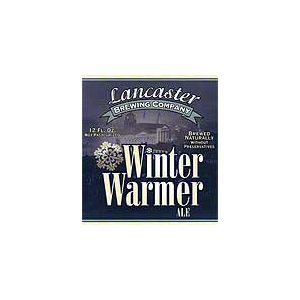
It's that time of year again: the winter warmers are in season. This one is a real 'warmer' at nearly 9% alcohol by volume—a bit on the high side for the style, but nicely balanced by its robust flavors and aromas. Expect chocolate and caramel notes, with some fruitiness and a hefty roasty character on the nose. Look for a berry- and caramel-centric flavor profile, with some dark chocolate notes, a bit of spiciness, and a balancing bitterness. With warmth, the higher ABV and dark fruit elements give the slightest impression of dark rum. We recommend settling down in front of the fireplace and enjoying this one on its own.
Serving Temperature: 50-55° F
Int'l Bittering Units: 30
Alcohol by Volume: 8.9%
Suggested Glassware: Snifter or Oversized Red Wine Glass
Malts: 2-Row Pale, Chocolate, Caramel
Hops: Cascade, Goldings
Milk stout is a somewhat rare English style of stout that is made sweeter and fuller in body by the addition of the non-fermentable sugar lactose (a type of sugar found in milk, hence this beer's name). Lancaster's example is true to style and quite a treat. This black brew gives a characteristic milk stout nose—yes, you can smell a subtle milk-like note, but this is among deep, dark chocolate and coffee notes. Flavor wise, it runs deep with coffee notes, dark cocoa, nuttiness, vanilla bean, and citrusy hop notes. Despite the added lactose, it manages to finish rather dry as a stout ought. The ideal partner to a chocolate soufflé.
Serving Temperature: 50-55° F
Int'l Bittering Units: 22
Alcohol by Volume: 5.3%
Suggested Glassware: Pint Glass or Mug (clear or opaque)
Malts: 2-Row Pale, Caramel, Chocolate, Black, Roasted Barley
Hops: Cascade, Styrian Golding
Brewmaster Cory Schroeder began homebrewing in his spare time in the late 1980s and soon realized his knack for crafting good beers. In the late 1990s, he teamed up with business partner Jim Wiesender, and the two set out to build a brewery on the Schroeder family dairy farm. A large shed served as the brewery location, with various scrounged-up materials serving as the brewing vessels, including a refrigerator semi-trailer which became the beer cooler, and pudding tanks as the mash and brew kettles.
The Sand Creek Brewing Company opened for business in 1999, marketing their ales in local taverns and restaurants and via promotion at beer festivals throughout Wisconsin, all the while working to expand and upgrade their brewing facilities.
In early 2004 they acquired the historic Pioneer Brewing Company in Black River Falls, Wisconsin, and relocated to that facility. The move expanded their beer line up to over 29 different products on a proprietary and contract level. Pioneer Brewmaster Todd Krueger has remained as Head Brewmaster and is now a partner in the new brewery operation. He is a three-time World Beer Championship gold medalist—quite an asset to the brewery.
For more information about the brewery and scheduled tours, call (715) 284-7553 or check out their web site at www.sandcreekbrewing.com.
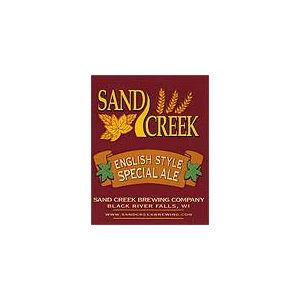
English Style Special Ale is a full-bodied, hearty ale whose complex flavors further emerge as it warms. One reviewer on our panel shared the following story about this beer: "When we first featured this beer back in 2004 I was a 'hophead' through and through. I could appreciate malt-centered beers, but only academically; none ever fully resonated with me. I was like the beer panel's hop profile specialist, and that was because I only really indulged in hop-heavy brews. That all changed when I tasted this beer. It was the first 'malt bomb' I had ever fully enjoyed—and it opened my world to what malty beers could offer. Since then, I've enjoyed living 'as the other half does' and now enjoy pretty much all types of beers, from hoppy double cream ales to doppelbocks. This was "the beer" that opened my eyes to the power of malty brew. I'll always have a special place in my fridge, and my proverbial heart, reserved for it."
Them's some pretty inspiring words, touching on an experience all of us "converts" can relate to. "The beer that did it" is a common memory among most if not all better beer drinkers. Do you remember yours? Hey, maybe this is it!
Expect a very malty aroma and flavor, with just traces of spicy hops in the background. Look for malty, nutty, chocolatey, roasty notes accompanied by dark, fruity notes like prunes and raisins, but not quite. This beer goes down with a rich fullness leaving behind big malty notes, tons of caramel, mellow pepperiness, a touch of citrus sweetness, and some maple syrup. Above all, this is a highly drinkable, brilliantly balanced, malt-accented beer. We love it paired against spicy Mexican Mole (make sure it's a spiced version—the bite works nicely with the roasty, lightly peppery hoppiness found in this beer), but it works equally well with a burger topped with pickles and super sharp cheddar.
Serving Temperature: 45-60° F
Int'l Bittering Units: 25
Alcohol by Volume: 5.0%
Suggested Glassware: Pint Glass
Malts: Special Roast, Caramel, Victory, Pale
Hops: Cascade, Tettnang
You'll have to work a bit to get the roused wheat and yeast sediment up from the bottom of the bottle, but we encourage you to go for it. Pour 2/3 of the beer into your glass, then give the bottle a few rough swirls clockwise and counterclockwise, peering into the tilted bottle to see if the layer has been brought up—then add this to your glass. The beer becomes cloudy, adding flavor and B-vitamins. On the nose, expect a great big ol' wheat twang that is just unmistakable. Go ahead and sniff out the lightly sour notes if you're not already familiar with a bold, wheat-heavy nose. Look for underripened bananas and plantains on the nose, plus cloves, lemon zest, and Granny Smith green apples. This beer is highly thirst quenching, yet still full of flavor, mirroring what hits the nose, with young banana notes (giving that characteristic light bitterness found in unripe bananas), less clove than implied by the nose but with more green apple character, and a thirst-quenching, gentle wheaty sourness, rounded out by some finishing lemony notes. Expect a spry carbonation level to intensify a light bite at the end. This beer holds up quite nicely even when approaching warmer temps, at which point bubble gum notes really blossom. Pair with a Mediterranean style salad.
Serving Temperature: 40-48° F
Int'l Bittering Units: 12
Alcohol by Volume: 4.5%
Suggested Glassware: Weizen Glass
Malts: Pale, Whole Wheat, Pilsen
Hops: Perle
Karlovacka Pivovara—Karlovac, Croatia (Northeastern Croatia)
Guided by the principles and tradition of quality, Karlovacka Pivovara (pivovara means brewery in a number of Slavic languages) has been delivering liquid pleasure to numerous beer lovers for over 150 years. The brewery, located in Karlovac, Croatia, is not only the oldest brewery in the state, it's also a beloved symbol of the town and is one of the most significant companies in the entire Karlovac county. The city of Karlovac is located on what is essentially a landlocked peninsula, flanked on three sides by four rivers which supply rich springs of pure water used in local beer production. The Karlovacka Pivovara is frequently referred to as the city's 5th river by local residents on account of the volume of beery goodness that continues to flow from its brewhouse.
That beer has been drunk in Karlovac for centuries is a regionally well-known fact, but the reality is that beer was produced here long before Karlovacka Pivovara was founded in 1854. According to recent research, the oldest documented proof of beer making puts brewing in Karlovac at 1779. A record in a tax register from that year reveals that a citizen named Georg Pürstl paid taxes as "braxtor seu questor" (beer maker and shop keeper). That means that he was producing beer over 225 years ago in Dubovac (the same part of the town where the brewery is today). Other documents indicate that a number of breweries were in operation around this same time. As is often the case, many years transpire between the inception of town brewing and the collection of taxes. It's not unreasonable to expect that more thorough research of the historic documents could move the origins of brewing in Karlovac to an earlier century, or the establishment of the Karlovacka Pivovara 75 years earlier—to 1779 instead of 1854.
For now, the official beginnings of Karlovacka Pivovara are traced back to 1854 when, according to Rudolf Strohal, a well known historian from Karlovac, "Baron Nikola Vranyczany built a special building for a new brewery, so called 'Perhovo' in Dubovac." Over the next 50 years the brewery changed hands and functions a few times (for a brief period it was converted to a pottery), until the early 1900s when it saw one of its most expansive periods of growth during Vilim Wambrechtshamer's reign as technical director. Ultimately becoming part owner of the brewery, in 1929 Wambrechtshamer sold his shares to Zagrebacka pivovara for 3.5 million dinars, a huge amount of money at the time. Fast forward to 1992 when, after the independent state of Croatia was established, Karlovacka Pivovara, became a joint-stock company owned by its employees.
Today Karlovacka Pivovara is the second leading brewery in Croatia, but the largest Croatian exporter of beer, sending their brew to Austria, Australia, Canada, Germany, Switzerland, Sweeden, USA, Slovenia, Bosnia and Herzegovina. They make no effort to hide their aspirations to regain their former title as the leading brewery in their home country, and have recently poured tremendous capital into the operation to further modernize the facility, expand production and enhance quality assurance. Theirs was the first Croatian beer we've sampled—we suspect it will be yours as well. Enjoy!
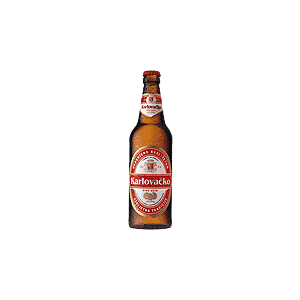
Croats have a few really nice beers available to them in their marketplace. However, since they are wedged between Italy and southeastern European nations that have traditionally gravitated toward wine consumption, the variety of available beer styles leaves a bit to be desired. Thus, like most other nations, their most popular beer style is the style that is most popular the world over: pilsner. Thankfully, they prefer the flavorful Czech variety, and the folks at Karlovacko Pivovara have grown quite adept at producing this beer over the last 150 years. Founded just 12 years after the style was created in Plzen, Bohemia, the brewery has been making this style of brew for just about as long as the style has existed. Pour this beer into a flute glass for the most impressive visual appeal. Have a quick sniff and notice how the nose presents sweetly grainy malt notes backed by mild floral and spicy hops. Look also for that distinctly clean, crisp aroma that helps define this style. Ok, once you've admired the appearance and aroma, take a sip. Expect a biscuit-like malty start that quickly turns sweet and then slides toward hoppy and spicy. The finish is quite bitter but does not linger too long as it mingles with floral hoppy elements. Overall, we found this beer to be soft, fragrant and complex with a delightfully dry finish. Great with a host of Asian-themed cuisines—from spicy curried Thai to freshly rolled sushi.
Serving Temperature: 45-48° F
Alcohol by Volume: 5.0%
Suggested Glassware: Pint Glass
Browar Lomza (Lomza Brewery)—Lomza, Poland (Northeastern Poland)
Poland has been underestimated before. A country that fiercely repelled the Russians in 1920 and battled back from later being completely wiped off the global map in 1939. Poland's constitution of May 3, 1791, was the first such document adopted in Europe and was the second in the world after the United States. Poland is the birthplace of Copernicus, Chopin, and Marie Curie (she did discover Polonium, not to mention Radium). It was Polish mathematicians who cracked the Enigma code during the Second World War, and Poland was the first Central European country to overthrow their Communist government in 1989.
It would be a mistake to underestimate the brewing heritage of this proud land and her people. Brewing history in Poland dates back 1,000 years, to the start of Polish statehood itself, and they've managed to hold on to some styles of beer that were elsewhere obliterated, like Baltic Porter. These days, Baltic Porters can be found well outside the realm of northern Europe—but that's in large part thanks to the few who kept the style alive, like Poland. Sadly, other styles have not managed to survive. Grodziskie beer, widely regarded as the only indigenous 'species' of beer born in Poland, sadly died when the last brewer to produce it shut their doors in the 1990s. Rumors abound that someone will reopen the brewery, however, so perhaps someday this unique smoked-wheat ale will return. Today Poland ranks 18th in the world for annual beer consumption at 69.1 liters per person (the USA is 13th at 81.6 liters per person, with Anheuser-Busch, or should we say InBEV (set to own A-B by the end of 2008) consuming 15% of the entire U.S. rice crop for brewing beer… what a waste of rice!)
The Polish beer we've selected this month comes from a brewery in the northeast of Poland, in the town of Lomza (brewed by the aptly named Browar Lomza.) Since being founded in 1968 they've focused on supplying just the northeast corner of Poland with their beer, but they do offer some exportation to other countries as well—a fact which we're grateful for!
If you'd like more information about Browar Lomza, check out their website at http://www.browarlomza.pl
Mocne (pronounced roughly like "Muhhtz-neh") means "strong" in Polish. You won't find this word on the U.S. labels because of bizarre alcohol labeling laws in the States—you'll see "Pelne" on the label (meaning "full-light," a difficult-to-translate term that refers to a well-hopped pale lager, often regarded as the Polish approximation to Pilsner). The term "Malt Liquor" is often used to refer to beers over 6% ABV because alcohol labeling rules for beers really take things like macro-lagers as the gold standard for what "beer" is; and any "outliers" from that are given rather strange tags based, for the most part, on gross misunderstandings of beer styles and types. If you got this beer overseas, you'd see "Mocne" in place of "Malt Liquor" (these are NOT equivalent terms), but the Lomza folks did manage to "sneak" in the term "Mocne" on the beer cap of the U.S. bottles. Citrus notes, like overripened oranges and pears, dominate the nose, with honey also quite prominent, and hints of lemony, herbal hops. Mainly malt-centered in the bouquet. If you let it warm, it will get quite boozy on the nose. If malt liquor in the U.S. tasted like this, it might not have the poor reputation it currently suffers from. The alcohol is relatively well masked in the flavor, but does leave a mild heat after the swallow and provides some belly-warming. Look for notes of honey, candied orange peel, almond syrup, sweetbread, and a general, lingering sweetness, with the slightest note of white grapes in the back. The sweetness ultimately does subside, letting a lightly herbal hop bitterness peak through, though the hops really are quite restrained and this beer is more malt and sweet-centered than hoppy. Quite nice with orange chicken or spicy General Tso's chicken from your favorite Chinese takeout place.
Serving Temperature: 38-43°F
Alcohol by Volume: 7.8%
Suggested Glassware: Pint Glass, Pokal or Mug (clear)
Translation: Antares Brewery
Country: Argentina
Regional Locale: Eastern Central Argentina
Official Language: Spanish
How To Say Beer There: Cerveza (pronounced: sir-vay-suh or sir-bay-suh)
Continent: South America
Argentina is probably better known for its tans than its beer, but interestingly, there's a rich brewing heritage there. German settlers in the mid-19th century set up numerous breweries, and today, the country's #1 beer brand, Quilmes, has its roots in a company that was founded in the late 1800s by one such German settler. Sadly, these days, it's owned by a Brazilian company that's actually headquartered in Luxembourg! Huh?! Globalization and brewery consolidation sure do make things confusing. What's not confusing is that there are many microbrewers in Argentina today who have set up their own operations to bring flavorful, local beers back to Argentina.
Many American microbrewers got their start out of necessity; having spent months overseas in brew-centered countries like Germany during military stints, they returned to the States finding no good options for beer, so they decided to brew their own. That's pretty much what happened to the Argentinian founders of Cerveceria Antares. After earning degrees in Chemical Engineering and Industrial Design, Leo Ferrari and Mariana Rodriguez headed to live in the U.S., where they met a Californian fellow who turned them on to homebrewing. When they returned to Argentina four years later, they set up a miniature brewery in the basement of an existing business—and found demand when they began selling their basement beers. In 1998, the went pro with the help of fellow Argentinian Pablo Rodriguez by setting up their own brewery in the beautiful resort city of Mar Del Plata, in the province of Buenos Aires, along the eastern coast of the country. Their brewery restaurant now serves up a Kölsch-style Ale, Scotch Ale, Porter, Honey Beer, Cream Stout, Imperial Stout, and the Barley Wine we've selected for you to try, and they've expanded to multiple brewpub locations throughout the country.
The brewery's name, Antares, refers to the supergiant red-colored star of the same name (it's represented by a big red star on the labels found on these beers in Argentina). Found in the constellation of Scorpius, it's one of the brightest stars in the sky, having guided mariners around the world through the ages. The name is fitting, as people are driven toward Antares and their various brewpub locations around the country.
For more information about their brewery and pub locations, check out their website (in Spanish only at this time) at www.cervezaantares.com.
The 10% ABV does not whomp you in the head or wreck your palate; it's somehow gently tame. We were immediately struck by how pale this barley wine is, probably the palest example of the style we've ever had. The head is big and fluffy and just off-white in color, and leaves behind a nice lace after collapsing from a massive size. On the nose, there's quite a lot going on: look for notes of orange peel, flourishes of white grapes and white wine, curacao, cognac, aspirin, deeply herbal hop notes, and something reminiscent of malt liquor, with hints of chocolate as it warms. While barley wines are typically complex, this beer flaunts its depth in a non-traditional way—many of the notes are not standard for the style. The nose clues you in that this will not taste like your traditional English or American barley wine. The flavor begins with a very grassy, herbal hop character that jabs the palate pretty good before giving way to a bleed of sweet, syrupy maltiness, cognac-like notes and sharpness, and tones of sweet white wine. Finishes with more herbal zestiness in the finish that plays against lingering, sweet, resiny malt and fruit notes. Look for notes of floral perfume to break very late, showcasing the interplay of hops and alcohol as the beer warms. Overall, quite a distinctive brew. It's not surprising, given Argentina's affinity for wine and the region's propensity for sweeter drinks, that this barley "wine" is quite vinous, evoking notes of white wine and running quite sweet. Certainly a unique beer and one that's got quite a lot happening from scent to swallow. We suggest enjoying this on its own or with rosemary-and-garlic-heavy, pan-seared white fish.
Serving Temperature: 45-50° F
Alcohol by Volume: 10.0%
Style: Barley Wine
Suggested Glassware: Oversized Red Wine Glass or Snifter
Malts: Pilsner, Munich, Caramel
Hops: Cascade (bittering), Fuggles (aroma)
Translation: Herald Brewery
Country: Czech Republic
Regional Locale: Central Western Czech Republic
Official Language: Czech
How To Say Beer There: Pivo (pronounced: pee-vo)
Continent: Europe
The history of beer brewing in the Czech Republic is much older than the country's current borders. Chronicled evidence reveals that hops from the region were exported as far back as 903 A.D., and that hop growing regions had been established by as early as 859 A.D. Bohemian hops were so prized that at one point, the penalty for cutting and exporting the hops for cultivation elsewhere was punishable by death. The first Czech brewery was built in 1118, in bold disobedience of an order by the Bishop of Prague banning brewing (the violation of which carried excommunicative consequences). The order was annulled by Pope Innocent IV when King Wenceslas negotiated the repeal on behalf of his people. Bringing beer to the people! Certainly, he earned his title "Good King Wenceslas." How ironic that he was slain by his drunken brother.
Until the 16th century, brewing was not practiced in large breweries, but rather in the kitchens and pantries of town houses. Ultimately, the noble classes began to run various sorts of business at their estates, and this shifted brewing out of local homes and into palaces and castles, which typically possessed their own on-site breweries. The beer brewed in these breweries was sold in local public houses for the serfs to enjoy. And enjoy they did; brewing became huge business, adding to the fortunes of noble families through the centuries.
One of these once-regal brewing facilities is located in a castle in the town of Breznice, located about 40 miles due south of the Czech capital, Prague. The ancient tradition of brewing in this town goes back to at least the 15th century and is chronicled in a 1454 document that names Mikes Vanek, a maltster (one who produces malted barley and/or wheat), as the Breznice village mayor. The castle at Breznice dates back to at least 1415, and the first documented reference to a brewery traces to the year 1506 (hence the date on the Herold beer labels). That makes this year their 502nd anniversary, which is an astonishing milestone if you think about it! They are one of the oldest functioning breweries in the Czech Republic.
The small brewery of the castle, now called Pivovar Herold, lies in what was originally a Gothic structure that was ultimately expanded and redesigned in renaissance and baroque styles. The estate has been owned by numerous noble families, and under them, the brewery was in nearly constant use and revitalization, even with its tumultuous turnovers. Despite the various takeovers and new owners, beer brewing remained a critical tradition (even when taken over by a devout Catholic who added to the castle a new chapel and had a Jesuit seminary constructed nearby).
Under Communist rule, the brewery was seized and taken over by the state. As with so many other trades, the communists squeezed as much money as possible out of the industry by minimizing self-investment. Interestingly, there was an unexpected positive consequence to the Communists' lack of investment in the facility: without major modernization over the years, the Herold Brewery still makes beer the old-fashioned way, using traditional methods, equipment, and ingredients. While subsequent owners have modernized certain components of the brewery, Pivovar Herold still makes most of its own malt, in the Pilsner style, from local barley—highly uncommon for most commercial breweries operating today.
So where does the name Herold come from? It was selected from the symbol of the herald, or spokesman of the king, seen on the coat of arms present at the brewery at the Breznice castle. It's appropriate because the brewery has historically been an integral part of the castle, and it's clever since the name has virtually the same meaning in most northern European languages. Given the royal heritage of the brewery, and the caliber of this beer, we agree that it suitably represents its noble past!
For more information about the brewery, check out their website at www.heroldbeer.com.
Great presentation—the label shows a crowd who's had enough and ain't afraid to advertise the coming revolution. All that discontent packaged in a wine bottle, cork-finished and caged; the parallels to the velvet revolution are obvious. Now, the idea that we'd need to dethrone the Czech Pilsner is a bit ballsy, for sure; but the brewers clearly have faith that this beer will lead people to question everything. Pours a golden straw-honey color, with a 2-finger-thick head from a hard pour. Very few carbonation jets are visible; just a few bubbles here and there rise slowly, a signal of a higher viscosity/gravity brew. Maintains an eternal covering and thick collar that laces nicely. The nose presents a big bouquet of floral, rose petal-like notes, mixed with raw honey, Muscat grapes, a hint of herbal earthiness and a kiss of must. Zero sulfur-notes to speak of in this Pilsner, and caramel blossoms as it warms, with a backing of fresh wort and grains. On the palate, there's a rush of sweetness, the amount of which is quite unexpected for a traditional Czech pilsner, but this sucker's been "imperialized" by none other than Sam Calagione, owner and founder of Delaware's Dogfish Head Brewery, a brewery known for its high-gravity, sweet, envelope-pushing, mold-busting beers. Expect notes of honey, white grapes, alcohol heat, saffron, and a Riesling-like tone wrapped in ripe red apple pie. At full warmth, there's a saltwater taffy flavor that emerges. This beer is sweet and round, but contrastingly, the sweet surge is replaced by a very dry, almost chalky, earthy hop character that really grabs the roof of the mouth, back of the throat, and front third of the tongue, drying things out nicely—which is a must for a pilsner, particularly one of this magnitude and hefty a grain bill. It all has a ghost-like whisper of the Pivovar Herold's traditional pilsner, amped up Calagione-style. Dogfish Head's own stab at the style, "Golden Shower Imperial Pilsner" (later renamed to "Golden Era"), has a similar flavor profile to this beer, but Golden Revolution is not a reformulation, it's a reinterpretation using Czech ingredients and brewing techniques. It's considerably drier than the Dogfish Head version and does stick a bit closer to the traditional characters found in well-made Czech pilsners. Substitute port with this beer, serving as a digestif.
Serving Temperature: 40-45° F
Alcohol by Volume: 9.0%
Style: Imperial Pilsner
Suggested Glassware: Pokal or Flute Glass
Malts & Hops: Not available, but it's obvious there were LOTS of each!