Past Newsletters - Jan 2009
DOM = Domestic Beer Club; INT = International Beer Club; VAR = Domestic International Variety Beer Club; RB = Rare Beer Club
Established in 1986, Abita Brewing Company is the oldest craft brewery in the southeast. Located about 30 miles north of New Orleans in Abita Springs, LA, they still brew in small batches using water from their protected wells, which deliver water so pure that it goes right into their brewkettle (many breweries have to first chemically prepare their water to eliminate chlorine or other impurities before it's fit for brewing.)
For those of us not near New Orleans, it may seem that the recovery effort must be over by now, more than three years after the storms. Sadly, this is not the case. There remains much to do; many people still have not returned to the area, and many of those who have continue to struggle. Abita B.C. has contributed well over half a million bucks to the recovery efforts thru their line of Fleur-de-lis t-shirts, hats, ribbon pins and car magnets, and their "Restoration Ale." Good beer, for a good cause.
For more information about the brewery, brewpub and/or scheduled tours, call (985) 893-3143 or check out their web site at www.abita.com. For additional details about the Louisiana Disaster Recovery Foundation, visit www.LouisianaHelp.org and consider supporting the LDRF by ordering some of Abita's Fleur-de-lis merch.
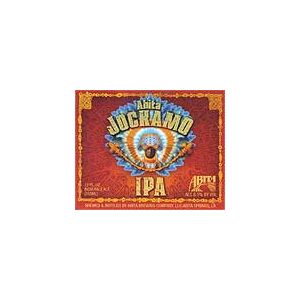
Not surprising that a New Orleans area brewery would have at least one Mardi Gras spirited brew. Jockamo IPA is a clever name that sounds like the famous Mardi Gras Indian chant "Iko! Iko! Joackamo fen ané". The meaning of this phrase is difficult to know for sure, but basically it seems to mean, "don't mess with us," and some claim it's derived from slave chants and originally meant "I'm going free one day." If you saw the movie Rain Main, or were anywhere in the 80s, you've heard the song "Iko Iko" which is just one recorded version of this song, originally penned in the 50s as a pop song. Next time you hear it, substitute in "Jockamo IPA" when singing along. Sure, you'll be the only one who gets it, but those lyrics are difficult to understand anyway, so no one will give you a hard time. Well, they may give you a hard time for singing along to that song in the first place, but who gives a rip. Seriously, go to YouTube now, punch up "Iko, Iko" and start singing. Slosh your beer around while you're at it. Good times… Expect a grainy, sweet, hoppy nose with resinous hop notes. Note a citrus fruit-like note, like a blend of grapefruit and candied apple. On the palate, look for a hefty amount of musty, grassy character, with pear notes and blonde tobacco. This beer is amply bitter, but the grain bill is big enough to deliver a matching body and sweetness, with notes of toasted bread. Aromatic floral and citrusy hop notes dominate, but the hops are well balanced considering the style. Fades out on a dry but resinous hoppy note, with a mineralized kick. This one will pair well with spicy Creole dishes.
Serving Temperature: 42-48° F
Int'l Bittering Units: 50
Alcohol by Volume: 6.5%
Suggested Glassware: Pint Glass or Oversized Wine Glass
Malts: 2-Row Pale, Caramel
Hops: Willamette, Columbus
This canine-themed brew is no mutt. It was originally crafted as a specialty beer (a purebred if you will) to celebrate the company's fourth birthday back in 1990. It met with such enthusiasm that it quickly entered Abita's series of five flagship brews. In August of 2005 it was ranked by Stuff magazine as the #1 beer made in the USA. Look for a sweet malty nose followed by chocolate and toffee flavors. Don't expect a ton of hop aroma and flavor, but do look for hops to provide a firm bitterness as they balance the big malty backbone. Overall, a full-flavored, medium-bodied malt-focused beer that will play best friend to braised lamb, marinated first for a couple hours in this beer. Never cooked with beer? You should—beer and food not only pair well together from plate to glass, they work nicely in the kitchen too.
Serving Temperature: 43-50° F
Int'l Bittering Units: 30
Alcohol by Volume: 5.5%
Suggested Glassware: Pint Glass, Mug or Stein
Malts: 2-Row Pale, Caramel, Chocolate
Hops: Willamette
The Mercury Brewing Company was founded in Ipswich, Massachusetts, in 1999 when the former brewmaster of the Ipswich Brewing Company, Rob Martin, took over from the original (1991) founders Paul Silva & Jim Beuvais. While the brewery's name may have changed, the Ipswich line of beers has been around for 16 years—and what's perhaps most intriguing about these beers is how darned good they are, considering that between these three guys, their previous vocations had little to do with beer; one was an architect (Rob), another a psychologist (Paul) and the third was working in the software industry (Jim). Bringing these roles together just screams good beer, right? It just goes to show you, if you have a passion for brewing beer (and you're at least a good homebrewer like these gents were when they started) then it makes no difference what your day job is—in fact, most domestic brewery owners found their calling after spending tens of thousands of dollars on college and then realizing they hated their day jobs!
Named after the Roman messenger to the gods, Mercury B.C. lives up to its name by delivering the message that those who seek out "good beer" really are gods on Earth! (well, that's how we look at it.)
For more information about the brewery, their beers and sodas, and scheduled tours, call (978) 356-3329 or check out their web site at www.mercurybrewing.com.
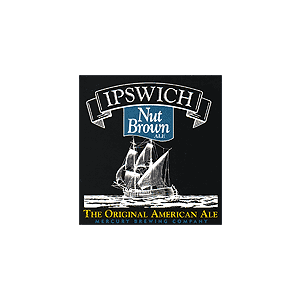
This brown's bouquet has sweet, breaddy aromas with notes of gingerbread, pumpernickel, apple pie, toasted caramel, some floral and citrus hop aromatics, and a flourish of cracked black peppercorns. Look for notes of dark tobacco (making this a great cigar beer) and roasty, grain-heavy notes on the palate that help dry out the sweetness, along with nutty (macadamia?) notes that break late. Starts sweet, finishes dry and nutty and with a touch of hop spice. Pair this one up with cheddar, either ultra-sharp or smoked sharp. The smoky notes work nicely against the roasty profile of this beer.
Serving Temperature: 45-60° F
Int'l Bittering Units: 25
Alcohol by Volume: 5.0%
Suggested Glassware: Pint Glass
Malts: Special Roast, Caramel, Victory, Pale
Hops: Cascade, Tettnang
Named one of the World's Ten Best Beers by Wine Spectator Magazine, Ipswich Original Ale is widely regarded as one of the finest American-brewed English-style pale ales in US history—and that's saying a lot. Expect a restrained but robust nose that showcases balance and complexity. Look for notes of grains, pepper, grapes, fruity esters, honey, and lightly grassy, tea-like hop notes. On the palate, we found juicy but grainy malts that were toasty but sweet, with hops mild but perfectly holding things together, working in concert with the yeast's fruity esters to provide a citrus, fruity character. Look for notes of nectarines and plums to mingle with a caramel malt backbone, and a chilled English Breakfast tea note in the finish. Overall, such a solid beer. Great balance & tons of character. We typically just savor this one all on its own, but it will pair with just about anything you throw at it.
Serving Temperature: 40-48° F
Int'l Bittering Units: 12
Alcohol by Volume: 4.5%
Suggested Glassware: Weizen Glass
Malts: Pale, Whole Wheat, Pilsen
Hops: Perle
EKU Brauerei (EKU Brewery)—Kulmbach, Germany (Northern Bavaria, a.k.a. Franconia)
A-hem, brew-students, please take your seats. Grab yourself a snifter or similar drinking vessel and pour your 1st featured international beer. Class is now in session. Let's begin with a brief history of the glorious German beers we've sent you this month.
The Northern Bavarian town of Kulmbach is known for a variety of beer styles, but the most notable is the unique beer style indigenous to Kulmbach: "eisbock." This unique style of beer is based on a variant of the traditional "bock bier" initially made famous in the town of Einbeck, Germany, located about 175 miles northwest of Kulmbach. Einbeck's unique beer was not originally known as "bock" beer. Through years of Bavarians requesting "Einbeck Bier" the name was colloquially corrupted to "Ein Bock Bier" (which in German sounds like "one bock beer"), and ultimately just "Bock Bier."
Many years after bocks hit the scene, a variation called "doppelbock," first brewed by monks in Bavaria, rose to popularity after the creation of the original doppelbock, named Salvator (and to this very day you can find Salvator on specialty beer store shelves!) Yet another, "accidental" variation on the theme developed some time later; according to local lore, a wooden barrel of doppelbock bier (in the 6.5-7.5% ABV range) was accidentally abandoned in the yard of a Kulmbach brewery in the dead of winter. Snowfall covered the barrel and it was forgotten until uncovered in the spring thaw. When it was discovered, the contents were partially frozen, and the barrel had split open enough to expel some of the original contents, though a fair amount of the original brew remained in the barrel. The encasing ice was chipped away, and the residual beer left inside was tasted (crazy brewery staff—they'll drink anything), whereupon it was discovered to be much richer and more concentrated than the original. The reason behind this phenomenal discovery is a matter of simple chemistry; water freezes before alcohol, thus, some of the beer's water content was forced out of the brew and froze, and was then removed as it was chipped away. So basically, the remaining beer underwent a relative increase in the proportion of alcohol to the remaining beer volume. This "technique" was refined, and today gives us one of the beers the region is famous for: Eisbock ("eis" means ice in German.)
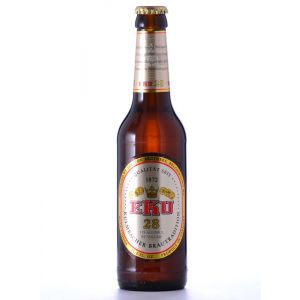
The original Bavarian Eisbock, known simply as Kulmbacher Eisbock, is brewed by the Kulmbacher Brauerei. A similar beer is EKU 28, brewed by the Kulmbacher Brewery's long time nemesis, the EKU Brauerei (also located in Kulmbach.) EKU stands for Erste Kulmbacher Union, which translates to "First United Brewery" (read the review of EKU 28 below if you want to know where the "28" comes from.) It was founded in 1872 and for nearly 125 years, the brewery competed fiercely with the Kulmbacher Brauerei, as well as other Kulmbach breweries such as Reichelbrau, Sandlerbrau and Monchshof.
Remarkably, the 'miracle' of corporate ownership has helped these breweries reconcile their differences—in 1996, these independent breweries became part of the same company, adopting the title of the simplest among them, the Kulmbacher Brauerei AG (or Kulmbacher Brewery Ltd.) While today united under the same name, each brewery continues to operate independently. That is, the original Kulmbacher Brauerei still makes the beers they built their reputation on, and the EKU Brauerei still makes the EKU 28 and EKU Pils that they've been brewing for a combined 170 years! This month, we've lined up both of these historic EKU brews for you to enjoy. Prost!
For more (German) information about EKU and Kulmbacher, check out their web site at http://www.kulmbacher.de.
EKU 28 walks the line between a true eisbock and a fortified doppelbock. Its recipe remains a secret, but it is known that while lagering for an astounding nine months, its temperature is dropped until it begins to freeze. However, the brewery claims that the amount of ice left behind is not regarded as being a significant factor in its potency. And while the recipe is under wraps, we do know that the "28" subtitle is a reference to this brew's 'degrees Plato', the German system of 'original gravity' (a measurement of the density of fermentable sugars in a mixture of malt and water with which a brewer begins each batch of beer.) In order to achieve its high alcohol levels, a lot of malt has to be used in order to supply the sugars that yeast will use as fuel in order to create alcohol. By comparison, your average beers have original gravities that range from about 8 to 10 degrees Plato, so this sucker's got about 3 times the intensity of your 'average' beer.
EKU 28 presents a huge, caramel-heavy nose. The flavor is remarkable as it slides across the tongue with notes of chewy caramel, fresh bread, very light hints of fruit, and inevitably, some alcohol (which gives a nice, belly warming effect that really hits the spot this time of year.) The finish is expertly crafted using a healthy dosing of hops which nicely balances this beer's overall sweet flavor. This is a beer for special occasions. Then again, anytime you open one, you're in for a special occasion! It is so rich that we don't recommend it with food—but after dinner as a digestif, like a port wine, is a proper application. It can also work with a variety of full-bodied cigars.
Serving Temperature: 55°F
Alcohol by Volume: 11.0%
Suggested Glassware: Snifter
EKU Pils, not surprisingly, is a Pilsner, a style of beer that has, since its inception in 1842, become the single most popular style of beer the world has ever known. Golden in color, it originated in the Czech Republic town of Pilsen. Up until that time, all beer was dark and cloudy. The Czech pilsner was the first beer to be brewed clear and golden. The Germans quickly proved to be the most passionate devotees of the new style and the name of the style was soon shortened to "Pils." The German contribution was to make the beer a bit lighter in body—better suited to everyday drinking—and to add an extra dose of hops for a refreshingly bitter zing. Expect a massive, brilliant white head to top this lucid gold, well-carbonated beer. Look for a characteristic pilsner maltiness with notes of floral and spicy hops. We found it to be highly refreshing, easy-drinking, with a crisp, clean, dry finish and slightly bitter hop-driven aftertaste. A very food-friendly beer that will partner nicely with anything from whitefish to Chicken Kiev to pizza to spicy Thai cuisine.
Serving Temperature: 48°F
Alcohol by Volume: 5.0%
Suggested Glassware: Pint Glass, Pokal or Mug (clear)
Brewery Name: Brasserie de Blaugies
Translation: Blaugies Brewery
Country: Belgium
City: Dour (Blaugies is the smaller village where they really are)
Regional Locale: Southwestern Belgium (Hainaut, Wallonia), minutes from the French border
Official Language: Dutch ("Flemish"), French & German
How To Say Beer There: In this part of Belgium, French is your best bet: Bière (pronounced: bee-yehr)
Continent: Europe
Some of the best beer in the world comes from unconventional places, like a kitchen washtub (that's basically where Hoegaarden got its start), and is brewed by some unlikely characters. The beer from this month's first featured brewery, Brasserie de Blaugies, is brewed in a two-car garage by a pair of schoolteachers. Not kidding.
Marie-Noëlle Pourtois and husband Pierre-Alex Carlier live in the small village of Blaugies (near Dour, Belgium), just a few clicks from the French border. Together, they have come up with a formula for creating world class specialty beers, with a distinct and unique flare all their own. Marie-Noëlle does the brewing, boiling up a mere 900 hectoliters per year (that's about 1,500 kegs worth of beer—very small for a "commercial" brewery.) When the grains used in the brewing process are spent, Marie-Noëlle backs the family tractor up to the garage door, shovels the grains into the back, and takes it right out to the livestock on the family farm. Pierre-Alex does the cooking in their attached farmhouse tavern. The two have been at it since 1987, and have garnered local and international praise for their inventive take on traditional farmhouse style Belgian beers. As such, it's not surprising that the Blaugies beers are discussed at some length in famous beer writer Michael Jackson's classic: The Great Beers of Belgium.
The Carlier/Pourtois family enjoys good food and beer, and consumes a lot of its own product for cooking and drinking. They're also just about the nicest folks you're likely to meet. Their beers have a distinctive character we consider to be a bit rougher and grainier than other, nearby commercial examples (like Saison DuPont) and this translates to a flavor profile that gives the impression that the brewer put the beer in the bottle just a short while before you popped the cork; fresh, family-brewed beer—this is artisanal brewing at its very best.
NOTE: Like all cork-finished beers, point away from the face (and not just yours) while opening. Belgian beers can be particularly prone to popping right as the cage is removed from the cork, so watch out! We suggest placing a rag over your hands while removing the cage and cork, to dampen the cork blast, should one occur.
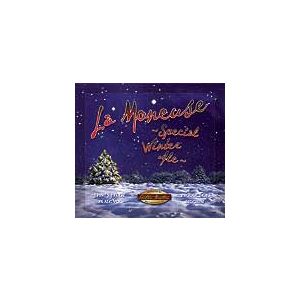
Blaugies brews a few beers, one of them a classic Saison (farmhouse ale) called La Moneuse, which is named for A. J. Moneuse (b. 1768), a famous local bandit and gang leader, and ancestor of the brewers' family. La Moneuse Special Winter Ale is a heartier, slightly less earthy version of that beer. And it's a real foamer owing to the live yeast added at bottling to condition the beer, so pour gently. Expect a hazy, peachy brass color with massive meringue-like head. For an 8% beer, the alcohol is well-hidden. The nose is not as "farm house-y" as expected for the style; expect tons of fruity esters and little must on the nose, with notes of fresh clementine oranges, cotton candy, lemon peel, just-cut pineapple and other fleshy fruits, mango chutney and aspirin dust. As it warms, some must and a touch of funk finally emerge. The evolution in aromas is worth waiting for—we spent 10 minutes just sniffing the thing before taking our first sip. It needs to warm to experience the "saison" elements on the nose. Despite all it sweet scents, this beer hits quite dry and with a slight horse-blanket and phenolic note on the palate, with spicy hop notes, giving impressions of finely ground white pepper. There are slightly funky pineapple-like notes, but between the spicy, very dry, earthy hop character and the aggressive carbonation, things never run too sweet. The sweetness is more implied by the nose than driven by the flavor. Look for a touch of clove and hints of cardamom and cinnamon. The earthy hop profile hangs on almost indefinitely on the palate, with a minor afterglow akin to pink cotton candy whipped up in a barn. A wonderful treatment of the style that nicely gives more fruit and less spice on the nose than is typical, but still gives that saison familiarity in the flavor. Pair with gamey meats like goat, venison, or pheasant, or partner with an earthy camembert cheese, which will mute the earthiness of the beer and let the 2nd tier, fruitier characteristics come to the forefront.
Serving Temperature: 45-50° F
Alcohol by Volume: 8.0%
Style: Saison
Suggested Glassware: Pint Glass or Tulip
Translation: Not applicable
Country: Denmark
City: Copenhagen
Regional Locale: Central Eastern Denmark
Official Language: Danish
How To Say Beer There: Øl (pronounced: oouhl)
Continent: Europe
The Scandinavian beer scene is exploding. There's been a surge over the past many years in the number of microbreweries, many trying to emulate the big, bold beers of the US microbrew revolution. Despite beer's high cost (expect to pay about $9 for a pint in Denmark, and as much as $15 in Norway), the scene is booming. One of the breweries that has led the charge is Mikkeller, founded in the kingdom of Denmark by Mikkel Borg BjergsØ and Kristian Klarup Keller (the name Mikkeller is a combination of their first and last names.) Not quite three years old, their rise to beer geek prominence has been meteoric. In 2006, their first year in business, Mikkeller was named Danish brewery of the year, and the fifth best brewery in the world. The secret to their success? As BjergsØ, now in the business by himself (Keller left to take a job in another field) says, "We brew the beer we like, and we don't think too much what the customer wants." Not pulling any punches there... Turns out, customers like what he's doing. Mikkeller beers are highly coveted across numerous continents, which is why we're totally psyched to be bringing you one of their newest creations this month.
While it's a bummer that the founding duo have split, BjergsØ has not quite gone it alone. He's worked with some heavy hitters, partnering up with brewing illuminati like AleSmith, Stone, De Struise, and Three Floyds, among others. Part of what's got them noticed, besides their boundary-pushing beers, is their attitude. BjergsØ prides himself on pushing the envelope, while not taking himself too seriously. With amusing names like "Gone Cold Turkey?" "It's Alive!" "All Others Pale," "Santa's Little Helper," and "Beer Geek Breakfast," they've fully, completely and totally embraced their beer geekdom. This Danish brewer is steeped with the youthful, hip elements that have also helped make bands from Denmark some of the best break-out music-makers of the past 5 years. There's a blatant intelligence, but not pompousness, and levity blended with high gravity. The fact is, Mikkeller may just about be the coolest brewery out there. There, we said it… They recently brewed "Black," which they describe as "Denmark's strongest beer and Mikkeller's 'most violent' beer to date." Hell yes!
Here are a couple examples of their "style"… http://www.youtube.com/watch?v=fqrtcQk3Ziw
http://www.youtube.com/watch?v=4UBAfWyySmk
OK, OK, we know, it's a pain to try and copy URLs like these by hand, from this newsletter, into your browser. But here's an easier way: punch this one up— www.beermonthclub.com/pastbeernews.htm and dig up this month's newsletter (it's easy, you'll find it)—where you'll be able to just click the links above, or, copy and paste them into your browser.
Mikkeller started brewing beer in their kitchen, and set out to challenge the Danes' taste buds with intense taste adventures, seeking to provoke some inventiveness in Danish beer brewing. As they put it "why not show the way?" Mission accomplished Mikkeller.
For more information about the brewery, check out their website at www.mikkeller.dk
The name "Not Just Another Wit" is a commentary on the blast-zone explosion of Belgian-style witbiers that's hit the US over the past few years. This beer really is NOT just another one of those wits, it pushes the limits of what is traditionally a modest-alcohol-level beer known for its thirst-quenching capabilities. It could be called an India Pale Witbier, Imperial Witbier, or Belgian IPW—take your pick; boundaries are being pushed and stylistic definitions defied. Pour off enough to fill a glass about ¾ full, then swirl the bottle to get the sediment roused, but watch it, it will foam out of the bottle if you're not quick about pouring it off. Expect floral-shop-meets-herb-garden scents—notes of roses, fresh cut coriander, sage, and rosemary dominate, with a touch of pine resin, lemon and orange rind, and a whisper of crème brulee and talcum powder. On the palate, this beer hits a bit more like an IPA than a traditional witbier, with hop bitterness asserting itself right away, and an ultra-dry herbal character like ground herbs (stems and all) sprinkled with aspirin-powder, providing a bitter, dry finish. When cool, the characteristic sour, tart notes found in traditional witbiers are difficult to pick up (masked by the dry bitterness), but as it warms, they do come out. This is somewhere between Belgian IPA (an emerging style) and witbier—combining the best elements of both. Tasty, and a work of creative genius.
Serving Temperature: 45-50° F
Alcohol by Volume: 8.0%
Style: Imperial Witbier/Belgian-style IPA
Suggested Glassware: Tumbler, Weizen Glass or Pint Glass