The Microbrewed Beer of the Month Club

Past Newsletters - Mar 2009

Brewery
Beers Featured
DOM
VAR
INT
RB
Harpoon Brewing Company Harpoon Hibernian Irish Style Red Ale
Check
Check
Uinta Brewing Company Anglers Pale Ale
Check
Check
Harpoon Brewing Company Harpoon Brown Session Ale
Check
Four+ Brewing Company Rype
Check
Brasserie Pietra (Pietra Brewery, France) Pietra Amber
Check
Check
Brasserie Pietra (Pietra Brewery, France) Colomba
Check
Check
Brouwerij De Ranke (Belgium) Guldenberg
Check
Brouwerij De Molen (Netherlands) Pek & Veren
Check

DOM = Domestic Beer Club; INT = International Beer Club; VAR = Domestic International Variety Beer Club; RB = Rare Beer Club

Harpoon Brewing Company

The Harpoon Brewery debuted on the Boston waterfront in 1986, quite early in the US microbrew renaissance. Before starting the brewery, the founding team traveled throughout Europe in search of various beer and brewery styles upon which they would model their own ("product research" we think they called it).

The Harpoon Brewery has always been focused on positively impacting their local community. This is an important component of the brewery and pub lifestyle that they witnessed while experiencing European traditions abroad. As they say on their website, "we learned to appreciate how much local brewers meant to their communities. They were not just manufacturers of a product; they were part of the social fabric. [Before starting the brewery] we asked each other, 'Why not do that in New England?'" The result of this initial desire has won them overwhelming approval from the locals and beyond. In fact, in 2000 they purchased a second brewery in Windsor, Vermont, to keep up with demand. 2006 marked their 20th anniversary. Way to go, guys!

For more information about the brewery or scheduled tours, call 888-HARPOON, or visit their website at www.harpoonbrewery.com.

Harpoon Hibernian Irish Style Red Ale

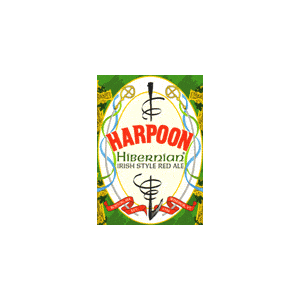
Harpoon Hibernian Irish Style Red AleThis beer is being renamed Celtic Ale, we guess because people don’t get the reference to Hibernia, the Roman name for Ireland. A true to style Irish Red Ale, it pours a clear amber with garnet hues and a sticky white head. On the nose, expect slight nutty wafts along with mainly subdued citrus hop notes, atop some crackery toastiness. Note subdued fruit notes, but mainly lightly toasted malts and a semisweet lingering character. Look for a light hop bitterness to balance out the maltiness quite nicely. We’d throw this beer at some vinegar-soaked salty French fries, corned beef and cabbage (‘tis the season), or a hearty surf-and-turf dish. Of course, it's perfectly appropriate to drink this one alone. By alone we mean, “without an accompanying meal,” not, “by yourself, with no friends.” Ah, hell, drink alone if you want—it lets you focus on the complex flavors of your microbrewed beers without distraction. That’s how the monks do it, not to mention good ol’ Henry the Harpooner, as he is known (the silhouetted man on the neck label of every bottle of Harpoon beer). He appears to be alone, except for the trusty harpoon in his right hand. His other hand blends into his shadowy figure, but we’re confident it’s wrapped around a bottle of brew. Hey, if it works for Henry, right?

Serving Temperature: 45-50° F
Int'l Bittering Units: 26
Alcohol by Volume: 5.4%
Suggested Glassware: Pint Glass or Mug
Malts: Pale, Caramel
Hops: Apollo, Willamette

Harpoon Brown Session Ale

Make no mistake; we love big, full-bodied, knock-you-on-your-arse microbrewed beers, but the extreme beer craze has made us appreciate beers like this even more: beers that have plentiful flavor but can be enjoyed in large quantities during a lengthy drinking session due to lower alcohol content (hence the term, “session beer”). This attractive brown ale pours a chestnut brown with reddish highlights. Expect a citrus-heavy nose, with a malty backbone supporting things; it’s like hops-preserves spread on a warm biscuit. Also look for notes of passion fruit and Sprite/lime, with some caramel notes emerging as it warms. The flavor closely mirrors the elements of the nose, with biscuity maltiness being quite prominent, and a faint note of watered-down scotch developing before the clean, dry, floral citrus fade from the hops. Overall, this is a clean, yet flavorful, light-bodied brown ale. Partner with a chopped chicken salad with sliced toasted almonds and raspberry vinaigrette, or put it to use in its designed application as a session beer.

Serving Temperature: 45-50° F
Int’l Bittering Units: 20
Alcohol by Volume: 4.3%
Suggested Glassware: Pint Glass or Mug
Malts: Pale, Victory, Caramel, Chocolate
Hops: Apollo, Willamette

Uinta Brewing Company / Four+ Brewing Company

The Uinta (pronounced "you-in-tah") Brewing Company was established in 1993 with the intent of crafting fresh, flavorful domestic ales in an environmentally friendly, sustainable manner. The brewery is named after a major east-west-running mountain range located in the Rocky Mountains, and the word "Uinta" comes from the Ute Indians, the tribe from which Utah derives its name.

In 2001, having outgrown their original facility, Uinta Brewing Company moved to a 26,000-square-foot state-of-the-art brewery built with energy efficiency and conservation in mind. The brewery's new nesting grounds are fully equipped with the latest in brewing technology—including systems that ensure that the facility is 100% wind powered. That's correct folks: powered entirely by nature herself! Pretty sweet, huh? Look at it this way. By enjoying Uinta beers, you're playing a part in preventing the release of 440 tons of carbon dioxide per year, the equivalent of planting 174 acres of trees, or not driving 951,270 miles per year. The new building reflects Uinta Brewing Company's efforts to be a leader in the brewing industry while remaining committed to conservation.

Then, in 2004, Four+ (read: four plus) Brewing Company was launched out of the same building. Four+ B.C. makes unique, craft-brewed beers with a youthful, playful, and witty design. The “Four” refers to the primary brewing ingredients: malted grains, hops, water and yeast. The “+” describes the unique element added by way of the brewer’s art, that certain something that turns these simple ingredients into the glorious good beer that we know and love.

For more information about the brewery and scheduled tours, call (801) 467-0909 or check out their web site at www.uintabrewing.com or www.fourplusbrewing.com.

Anglers Pale Ale

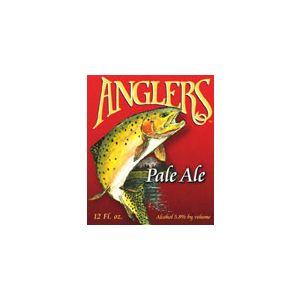
Anglers Pale AleAnglers Pale Ale has earned Uinta B.C. numerous awards, including Silver Medals at the 2001 and 2003 North American Beer Awards. And, as an export beer, it carries a higher ABV than your typical Utah brew (capped at 4% ABV if served in Utah). Expect a traditional Pacific Northwestern-styled pale ale, presenting a truly inviting nose of grapefruit and pine (hop resins.) Fresh grains peak through the hops and a faint malt sweetness, but orange characters and overall citrus notes steal the show. Predominantly citrusy, the flavor is clean and easygoing with a moderate bitterness applied in austere balance between fresh cereal grains, mild malt sweetness and grapefruit skin bitterness in the finish. A stellar example of the American Pale Ale style. Pair with a moderately spiced Indian Pork Korma.

Serving Temperature: 40-45° F
Int’l Bittering Units: 45
Alcohol by Volume: 6.8%
Suggested Glassware: Pint Glass or Mug (clear)
Malts: 2-Row Pale, Munich, Caramel
Hops: Chinook, Cascade

Rype

Many of the wheat beers that have risen to popularity recently have a hazy, murky appearance when poured, but this wheat beer is clear due to being filtered. On the nose, expect heaps of coriander, showcasing its herbal and spicy character. The herbal intensity of the aroma is high, with notes similar to rosemary and thyme, and a menthol-like tingle left in the nose, with all of this enveloped by notes of overripe oranges. These herbal and orange notes are detectible in the flavor, including a very late menthol-tingle. “Orange tingled wheat beer” says the label—we thought this was either a typo (‘tinged’) or a cute marketing gimmick, but it turns out to be an accurate description as there’s a gentle numbing effect similar to what you get when you bite through an orange rind. Finishes clean and crisp with herb garden notes in the fade. Try with a balsamic vinegar and oil-topped garden salad, followed by rosemary chicken served over saffron rice, or mint-heavy Vietnamese Spring rolls.

Serving Temperature: 45-50° F
Int'l Bittering Units: 18
Alcohol by Volume: 4.0%
Suggested Glassware: Weizen Glass or Flute 
Malts: 2-Row Pale, Malted Wheat, Caramel Malt
Hops: Cascade
Other: Spiced with Orange Peel and Coriander

Brasserie Pietra (Pietra Brewery)—Furiani, France (Northeastern mainland tip of the Island of Corsica)

The island of Corsica, in the Mediterranean, located between Italy and France, has been claimed by both nations—along with quite a few others—during its constant human occupation since the Mesolithic age. Let’s put that into context. Mesolithic means the “middle stone,” wedged between the Paleolithic (old stone) and Neolithic (new stone) ages. We’re talking about an area that’s been populated for seven to ten thousand years! Not surprisingly, there’s great national pride among native Corsicans, fostered in no small part by being “claimed” by various outside nations, a relatively brief historical stint as a sovereign nation from 1755 to 1768, and the secret sale of the island to the French by the Republic of Genoa in 1764. The announcement that it was a French territory was not made until 1768, and it triggered a civil war. Imagine if you opened the paper and read that your state was owned by and made part of another, secretly, and there was nothing you could do about it. That’s a national-pride fosterer if we’ve ever heard one. Thankfully, the conflict didn’t last too long, and the compromise seems to have been strong Corsican pride regardless of which country they were formally declared a territory of.

All of this history makes it a bit surprising that, until about thirteen years ago, Corsica did not have its own beer or brewery. Why? Location, location, location. Being wedged between Italy and France, the country’s people prefer wine to beer, and there’s also a relatively high proportion of sobriety. And, with no beers being made locally, coupled with reluctance on the part of a proud people to import beers from other nations, there was little drive to get a brewing outfit based on the island. It was, therefore, a bold move for Corsican natives Dominique Sialelli and his wife, Arnelle, to decide in 1992 to found a brewery that would brew distinctly Corsican beers. Research and fundraising (and with it, lots of “convincing”) took place for the next four years. Their first beer, Pietra Amber, began to flow in 1996. Their beers are now not only enjoyed in Corsica, they’re making a splash all over Europe. Feel the pride!

The word “pietra” is Italian for stone. So, literally, their name translates to “The Stone Brewery.” A nod to the highly regarded microbrewery from Southern California? Despite its world renown, that’s not the story behind the name. Is it a reference to the history of a human presence there since the Stone Age, or a proclamation that this young brewery plans to be around for the long term? Perhaps that’s buried in there somewhere; but, actually, it comes from the name of Dominique’s tiny native village, Pietraserena (meaning “serene stone”).

The brewery has since added a Corsican Cola to their lineup, as well as a lemonade currently in development, at least two more year-round beers, and a whisky. It would seem the dawning of a new age in Corsica’s history has begun, one full of inspiring and impressive concoctions that suit the palate, and sense of pride, in this age and beyond. Which makes us wonder . . . in 1792, famed philosopher Jean-Jacques Rousseau wrote in his work, The Social Contract, that Corsica would one day astonish Europe. Seven years later, Napoleon Bonaparte was born in Corsica. Did Rousseau’s prognostication refer to Napoleon’s legacy? That’s what many think. We submit that perhaps it was the birth of Brasserie Pietra and their expansion into Europe. A beer-centric way of thinking on our part, but what did you expect?

For more information about the brewery, visit their website at www.brasseriepietra.com.

Pietra Amber

“From birth till death, a Corsican’s whole time is lived under the influence of the chestnut tree.”

This old saying illustrates perfectly the Corsicans’ fondness for this splendid tree. Corsica has even been called “the civilization of the chestnut tree.” The island is one of the last regions in Europe where the dried fruit of the chestnut tree is still made into flour, which is then used in many different dishes. Pietra Amber, the brewery’s first beer, is made with chestnuts picked by hand and brought down from the mountains of Corsica. Some, picked from trees located in rough terrain, are transported on the backs of donkeys. The chestnuts are crushed to make a flour which is introduced to the brewing process during the mashing and boiling of the grains, instead of later as a flavoring or sweetener. This means that the beer itself is in part derived from the chestnuts, not just supplemented by them. The result is a bouquet that is unlike any other beer on the planet. Expect rich malty notes, but don’t be surprised if the beer doesn’t smell quite like chestnuts. A consequence of using this key ingredient so early in the brewing process, the chestnut character is transformed by fermentation into the very makeup of this beer, alcohol and all. Instead, look for notes of marzipan, a slight woody zestiness, minor notes of overripened (soft) dark cherries, the faintest suggestion of bubblegum, a bit of citrus fruit, and a delicate nutty character. The beer crosses the palate with an initial earthy bitterness, leaving an impression of smoked wood, followed by notes of sweet oak, nougat, caramel, wood, and fruit. Bitterness is long lasting and assertive, but not at all abrasive as it coats the tongue with a leafy hop character. This beer is best enjoyed on the warmer side. If you taste it right after pulling it from the fridge, the coldness will inhibit the full development of flavors and sensations that this beer has to offer. Enjoy at least one on its own to fully experience this unique brew. Later, try pairing with lemon-pepper chicken, steamed mussels, or smoked BBQ beef brisket.

Serving Temperature: 45-50°F
Alcohol by Volume: 6.0%
Suggested Glassware: Pint Glass

Columba

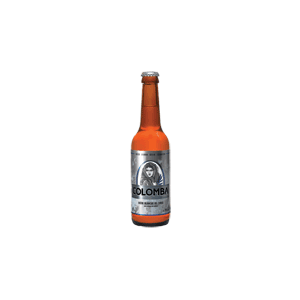
ColumbaIn 1999, Brasserie Pietra created another very unique brew: a Corsican witbier (white beer). Witbier is a classic Belgian style beer that is often spiced with herbs, typically coriander, and orange peel; and has a characteristic gentle spiciness, a mildly sour wheaty twang, and superb, refreshing drinkability. It took two years to finalize the recipe, one that includes an ambitious amount of herbs and spices sourced from the Corsican Maquis (the Corsican bush land), incorporating the unique scents of the “Isle of Beauty,” a sobriquet for Corsica. Selected herbs include tree strawberry, myrtle, rockrose, and juniper. A subtle, delicate – and secret – mix of these is placed in a large tea-ball and left to infuse in the boiling wort (the sweet liquid that eventually becomes beer, pronounced “whert”). Colomba was named after a legendary, though real-life, Mafioso daughter thought to be responsible for the deaths of more than a dozen men of all ages. Her face adorns the label of the beer—she sure looks menacing to us. Colomba pours a murky, true-to-style pineapple color with a vibrant white head. The complex herbal blend does not strongly assert itself in the aroma. There’s a subtlety at work here, with notes of orange blossoms, white pepper, rose petals, thyme, and a hint of rosemary. The herbal presence is far more prominent in the flavor than the nose. Expect a gentle, bitter, earthy, herbal quality to pervade the wheat, clove, and orange notes, offering an interesting counterpoint to the slightly sour wheat twang that marks the finish. A faint honey note emerges alongside a lilac-esque floral bitterness and aromatic rosemary-like character as the beer warms, lingering into the finish. This beer will pair with a variety of foods, but it works nicely as a marinade for grilled chicken skewers. Add some ground coriander, white peppercorns, and raw honey to the mix, marinade for 4 hours, then grill.

Serving Temperature: 45-50°F
Alcohol by Volume: 5.0%
Suggested Glassware: Tall Tumbler or Pint Glass

Brouwerij De Ranke (The Tendril Brewery)—Wevelgem, Belgium (Western Belgium, near the French border (a.k.a. West Flanders))

We could feature only Belgian beers and keep this club going for years, never needing to repeat a single beer. There are just so many world-class beers produced in this national brew haven. One such example comes to us from the Brouwerij de Ranke out of West Flanders. We’ve selected a really solid example of Belgian brewing, but the version from de Ranke is unlike most other examples for a number of reasons. First off, the production quantity is quite limited; you’d be hard pressed to find it elsewhere in the US. Secondly, it is more heavily hopped than most examples of the style, so it suits many of the craft microbrew fans in the US who have come to appreciate a heavy dose of our precious little friend, the hop. Thirdly, in the context of Belgian beer history, this beer was only recently created, yet is sweeping through Belgium with massive popularity, impressing the least impressionable of beer-loving palates, including those reluctant to appreciate native styles augmented by high hop levels.

Brouwerij De Ranke was founded in 1994 by two good friends, Nino Bacelle and Guido Devos. Their story is a classic in Belgium, where the very best craft brewing usually begins as a passionately pursued hobby, not an occupation (a similar tale is told again and again in the US as well). For Nino and Guido, brewing was literally a weekend obsession. For a few hours on Friday and Saturday each week, the historic, turn-of-the-century Deca Brewery in West Flanders was turned over to the De Ranke brewers, who made small batches of what many consider the best specialty beers of Belgium. Their beers are robust and flavorful, and known for their atypically (in Belgium) massive hoppiness, which comes from the best Hallertau and Brewer’s Gold varieties.

In 2005, after 11 years of brewing at the Deca Brewery, they built their own. Not bad for a weekend hobby—building a brewery represents no small feat (or fee!) Their story of dedication and quality is told in each delicious bottle of their beers. It is, indeed, a good read.

For more information about the brewery, learn to speak Dutch and check out their website at www.deranke.be

Guldenberg

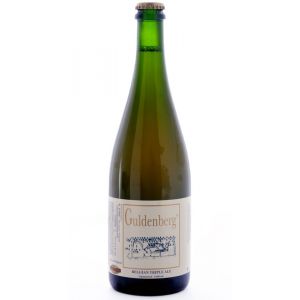
GuldenbergIt’s hard to classify this outstanding beer. Is it an example of the Belgian Strong Pale Ale? Generically speaking, yes. Though it doesn’t really fit neatly into that category, and the label actually states that it’s a Tripel, the heavy-handed addition of hops takes it to Belgian IPA territory. Set the styles aside for a moment and just enjoy! Expect this unfiltered beer to pour a hazy butterscotch, honey-gold color, topped with a massive, thick, meringue-like head. The aroma smacks of honeyish malts and some tropical fruit tones as well as a lemony zest and ample hops. Overall, the nose is bigly fruited and flowery, with flourishes of mandarin oranges and a twinge of pear skin. Complexity looms as even more notes emerge in the bouquet: honey, herbal, grassy hop tones, and a minor note of spicy phenolics and cloves. The beer goes down with yeasty and hoppy spiciness coming to the forefront. The hops not only add a spicy bite, they also have a rather drying, bitter character. Look for prominent orange flavors, with cloves, slight hints of cinnamon, and some woody notes. This is a yeast and fruit bomb! Expect the beer to finish with a lengthy arc of flowery bitterness. So complex. So rewarding. Somehow, the hoppiness does not lead to imbalance; it’s all tied together very well. Floral, fruity, yeasty, hoppy… this beer has a little something for everyone, and a whole lotta something for fans of innovative Belgian beer. World class. This beer is massively complex, and it changes as it warms, so a food pairing is a bit overkill, but pairing with whole boiled lobster served with drawn butter and lemon is a tasty combo. The rich meat and butter are cut by the sharpness and gentle acidity of this beer, and the lemon is a nice complement to the beer’s herbal hoppiness. Guldenberg will also hold up to a spicy Mongolian beef dish, and is especially nice with a fine, sharp blue or a pungent gorgonzola (you could even take it as far as limburger). If you’d like to learn about fine gourmet cheeses firsthand, consider picking up a membership to our Gourmet Cheese of the Month Club. Details may be found at www.monthlyclubs.com.

Serving Temperature: 45-50° F
Alcohol by Volume: 8.5%
Style: Belgian-style: Triple meets Belgian Strong Pale Ale meets Belgian IPA
Suggested Glassware: Snifter or Goblet

Brouwerij De Molen (The Mill Brewery)—Bodegraven, Netherlands (West Central Netherlands)

Brouwerij De Molen (The Mill Brewery) is appropriately named: it’s actually inside a 300-year-old windmill that once served as a grist mill. Now, how Dutch is that! Like all windmills in the region, it has become a symbol not only of strength and ingenuity, but also peace and happiness. In fact, that’s what earned the mill its name, the Arkduif, meaning the “Ark’s Dove,” a parallel between the dove’s symbolism as harbinger of peace and joy. And despite the small quantity of beer produced there by brewer Menno Olivier, he creates plenty of peace and joy from his mill brewery. Like so many great brewers of the world, he began brewing in his kitchen as a hobby. Bitten by the bug, he went on to work professionally as a brewer, crafting beer in Westmaas and Amsterdam, and then served as master brewer of De Pelgrim, a Rotterdam city brewery. It was during his time there that he decided to open a brewery of his own, which led him to give the garage next to his home a makeover, converting it to a microbrewery (Microbrewery de Salamander) and tasting room. As his popularity grew, relocation was necessary, so he finally set up De Molen, and the Arkduif, in the small town of Bodegraven, Netherlands.

Even though he’s stepped up his scale, his output is still extraordinarily small. His stainless steel plant has a capacity of about 130 gallons—that’s only about 8 kegs worth of beer per batch, which also means very limited quantities per year. De Molen's boilers are borrowed from the Dutch dairy industry. Olivier came up with the clever idea of recycling and adapting this machinery for his brewery after realizing that dairy processors require a sterilizing boil to kill off harmful bacteria much like the boil brewers perform to kill off infection-causing bacteria in their beer. Olivier's innovative dairy boilers keep De Molen's beer fresh, and their limited capacity means smaller batches (not to mention their secondhand use meant a less than prohibitive start up cost for Olivier—and we certainly are thankful for that).

Olivier’s focus is on preserving beer culture and promoting a return to local traditions and products. His beers reflect this commitment in their classic, historic styles and carefully chosen ingredients, all of which appear to be paying off. Ratebeer.com, a popular beer reviewing website, has a list of voters’ top 10 beers by country. Eight of ten of the “Dutch Top 10” are from Brouwerij De Molen. Quite impressive.

For more information about the brewery, check out their website at www.brouwerijdemolen.nl

Pek & Veren

Pek & Veren means “tar and feathers.” A brutal form of torture, or romanticized vigilante justice? These are the types of things you can debate with your mates after a few glasses of this deep, dark, smoky, tar-colored brew. Like all De Molen beers, this one is brewed and bottled by hand with zero automation. You can view the process for yourself by checking out the video at their website. Expect a nearly black pour with garnet highlights when held to light. On the nose, look for sweet and bold roasted malts. There’s a mild smoky character, almost like saltwater driftwood set ablaze. More like chocolate pudding than the typical espresso notes you expect in a big stout, this beer’s bouquet implies that it will be sweet-centered rather than bitter and coffee-ish. In the flavor profile, look for notes of alcohol and plum. While the beer does begin quite sweet on the palate, just wait. There’s an exceptionally protracted delay before the sweet maltiness is replaced by an almost tingling bitterness and subdued smokiness, with notes of scalded caramel. Peaty notes (from the peat-smoked malt) come through but are in the background. Deceptive in its complexity, there’s a lot going on in this beer, but all of it is astutely understated, just sort of seething beneath the surface. At full warmth, prunes and roasted black licorice emerge, along with figs, but never does the chalky, astringent bitter character change; that finish holds up throughout. It might sound like overkill, but this beer pairs wonderfully with deep, dark chocolate, such as 60%+ cacao. The bittersweetness from the chocolate lets the sweetness of the beer pop, tempering the bitter, dry finish. Cheese pairing is interesting as well; smoked sharp cheddar brings out the alcohol in the beer as it cancels the smoky peaty malt notes of the beer, while a rich, sharp cheddar complements it remarkably well.

Serving Temperature: 50-55° F
Alcohol by Volume: 8.0%
Style: Smoked Export Stout
Suggested Glassware: Snifter

C&H Internationals Logo Since 1994
Join Our Club
Gift Memberships

Membership Renewals
Reorders
Home Page
More Information
Current Selections
Past Selections
Testimonials
Other Gourmet Clubs
Corporate Gifts
Wedding Gifts
Brewery Search
Style Guide
Beer Fun Section
Industry Resources
Festivals
Print a Gift Card
Send a Virtual Brew
Refer a Friend
Send a Hint
E-Promos
Contact Us
Link to Us

1 - 800 - 625 - 8238
(Outside US call: 949-206-1904)
P.O. Box 1627, Lake Forest, CA 92609