Past Newsletters - August 2009
DOM = Domestic Beer Club; INT = International Beer Club; VAR = Domestic International Variety Beer Club; RBC = Rare Beer Club
Always look on the bright side—hey we’re talking about Florida so that shouldn’t be too hard. Fact is, Florida, for its size and population density, is the third largest beer market in the nation, but has been way behind the curve in terms of serving up better beer. But what this means is that once the groundswell of support starts to take hold there, it’s going to be meteoric. And it looks like that’s happening right now, as the craft beer market is finally growing faster than the macro beer market there. Not only that, the craft beer market has grown by 22% statewide versus a national rate of about 11%. So, they may have been behind the times, but the bright side is that they’re ‘slingshotting’ their way up there now, making up for lost time, with some great microbreweries emerging and captivating beer drinkers with better beer.
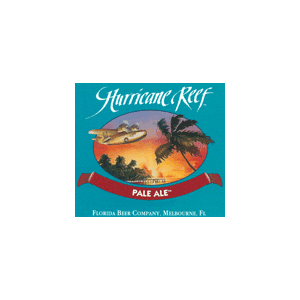
The Florida Beer Company is one such company that was founded well before craft-brewing had taken hold in the state. It’s the brainchild of company president Humberto Perez, a third-generation brewer whose grandfather founded one of the largest breweries in Venezuela—Cerveceria—in 1929. Relatively few US brewers have a family history of brewing that goes this far back, and Perez is proud of that fact. The company features a number of beer brands, with a common theme of Floridian pride evident in their beer names and label themes. Humberto's vision is to create a regional brewing presence that will bring long-sought recognition to Florida's burgeoning microbrewed beer scene. The Indian River Brewing Company, where these beers are brewed, is a small brewery, located on Florida's east coast in Melbourne. It was founded by Bruce Holt and brewmaster Jack Owen in 1977 (which makes this one of the oldest microbreweries in the country). It has since been taken over by Perez, keeping this important local brewery up and running and pumping out the good stuff. Each batch of beer is microbrewed by hand with little to no automation—reflecting the company's dedication to using traditional brewing methods to create their individualistic beers that are currently being enjoyed by an ever increasing number of Florida beer drinkers taking the plunge into better beer.
For more information about the brewery and scheduled tours, call (321) 728-4114, or visit their website at www.floridabeer.com.
On the nose, expect the Cascade hops to give off their characteristically grapefruit notes, along with some sweet fruity tones and enough of a malt presence to keep things rooted in the realm of balanced beer. Balance is there, but the hops are king here. We found that unlike many well hopped beers, where the hops seem disembodied from the maltiness of the beer, this beer blends the two quite well—they don’t battle one another for sweet or bitter prominence, they simply work together. The hop flavors are relatively earthy and slightly mineralized, and there are faint notes of powdered aspirin and very, very faint notes of dark rum. As it warms, look for an emergence of light grain notes. Expect bitterness to sweep in pretty quickly in the finish, cleaning up most of the residual sweetness and drying out quite nicely, preparing the palate for another sip. Well hopped pale ales are not generally recognized for their thirst quenching abilities in hot weather, but this Floridian beer does serve as a nice hoppy brew that’s major selling point is its balance of big flavor and refreshing nature, even on a hot summer’s day. Overall, a well made, easy to drink, nicely hopped pale ale. Suggested pairing: spicy Jamaican jerk pork.
Serving Temperature: 40-45° F
Int'l Bittering Units: 28
Alcohol by Volume: 5.1%
Suggested Glassware: Pint Glass
Malts: 2-Row Pale, Caramel
Hops: Cascade, Mt. Hood
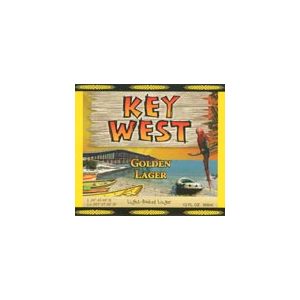
The world needs more craft-brewed lagers—thankfully, more and more brewers are bringing tasty lagers like this one to the people. On the nose, expect a citrusy yet clean aroma with notes of fresh grains and a mildly sweet malt background. Look for faint impressions of caramel, and notice that this brew is well hopped for the style. We found this beer pleasantly surprising as it goes down on the sweeter side for a golden lager, with a fuller flavor than what was expected. Expect the sweeter notes to be appropriately balanced by the floral and citrusy flavors from the German hops, with the sweetness ultimately winning out with a slight creamed corn flavor. Note the blended orange notes as it warms, somewhat reminiscent of an Orange Julius. The finish was unexpected for the style as well, with a very long arc to the bitterness initially, eventually breaking with a light-to-medium level of bitterness. Overall, plenty of classic microbrew flavor with all the drinkability of a lager. While solid enough to satisfy beer aficionados, this beer also happens to be great for transitioning your ‘yet to be converted’ friends and family off the BMC (Bud/Miller/Coors)—give it a try at your summer gatherings!
Serving Temperature: 38-43° F
Int’l Bittering Units: 17
Alcohol by Volume: 5.0%
Suggested Glassware: Pint Glass or Pilsner Glass
Malts: 2-Row Pale, Pilsner, Caramel
Hops: German Tradition
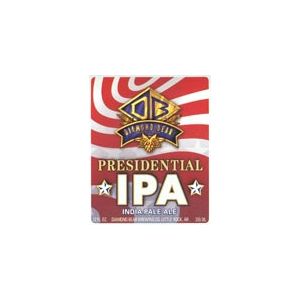
Housed in a former Studebaker dealership, this small Arkansas brewery is the only production brewery in the entire state! This place is a veritable goldmine from what was once known as “The Diamond State,” as the beers are remarkably good—there may not be many breweries in Arkansas, or a ton of places to get good local brew, but Diamond Bear B.C. has put the state on the map, making beer just as good as any other state in the union. And we have Germany, and Russ Melton, president and chief executive officer of Diamond Bear, to thank for that fact. Russ served in the military in Deutschland for four years, where he acquired a taste for fine beers (a familiar story in the annals of microbrewery founders). He and his wife, Sue Melton—both natives of Little Rock—came up with the concept of a local brewery in 1999 and, along with seven other owners, started production in the fall of 2000. The mission statement of the company is: “To provide the people of Arkansas and the surrounding region with their own local brewery, which produces great premium all natural beer products, which reflect favorably on Arkansas and the surrounding region.” Mission accomplished (really).
For more information about the brewery and scheduled tours (which begin with 2 free beers!), call (501) 708-BREW or check out their web site at www.diamondbear.com.
This IPA pours with a massive light beige head; notice that you can actually see colors in the large sticky bubbles as the hop oils refract the light. Expect a great big hoppy blast on the nose with a variety of hop characters, from floral to fruity to piney (there’s a little something for everyone). The fruity notes are complex and difficult to describe, reminiscent of apricot preserves with ample notes of caramel peaking through, but also evoking notes of orange skins rolled in pine sap. The flavor arc of this beer is protracted—give it a good minute after your first sip to let all the flavors unfurl. Expect grapefruit juice cocktail notes, bitterness, floral notes, and vibrant citrus character. There is a much appreciated complexity in the hop characteristics of this beer as it wonderfully showcases all three uses of hops: aroma, flavor and bitterness (finish). Presidential IPA presents a stately showcase of the three with a focus on the most underrepresented across hoppy styles, which is hop flavor. The finish is long-lasting and remains quite bitter with some residual fruity citrus notes and malt sweetness barely peeking through. Due to the complexity, we suggest savoring this one on its own.
Serving Temperature: 43-50° F
Int’l Bittering Units: 77
Alcohol by Volume: 7.0%
Suggested Glassware: Pint Glass
Malts: 2-Row Brewers Malt, Caramel, Cara-Pils
Hops: Amarillo, Cascade, Goldings, Fuggles
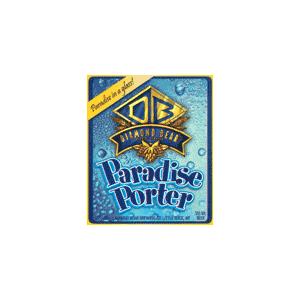
This beer pours a deep cola color with garnet highlights when held to the light. Expect a true to style nose that can is instantly recognizable as porter. You’ll find notes of roasted malts, dark chocolate, coffee, some hop spiciness, black currants and something like black licorice rolled in coffee grounds. This beer tastes much like it smells, with all of the elements on the nose represented in the flavor, with perhaps the exception of the licorice notes which are nearly imperceptible on the palate, replaced with notes of plum. Porter has many “shades” within the style, with some degree of roastiness often present. In this example, the roasty notes are quite prominent, as are coffee notes, but the bitterness contributed by the coffee notes is relatively mild. That being said, it does finish quite bitter, a result of the confluence of bitter elements from the hops and acrid, black patent malt. Look for a final note in the finish that is spicy (from the hops) and roasty at the same time with a faint lager-like cleanliness coming through, with leafy, earthy, minerally hops in the finish. A world class example of the style. Paradise Porter is a Porter Paradise!
Serving Temperature: 47-55° F
Int'l Bittering Units: 49
Alcohol by Volume: 6.5%
Suggested Glassware: Pint Glass or Mug
Malts: 2-Row Brewers Malt, Caramel, Chocolate, Black Patent
Hops: Amarillo, Glacier
Alley Kat Brewing Company-Edmonton, Alberta, Canada (Western Canada)
Alberta, Canada, is roughly the size of Texas, to give you an idea of scale, and the Alley Kat Brewing Company is Alberta’s 4th longest-running brewery. Not bad, when you consider that number one among their elders is Labatt.
Co-founder Neil Herbst had been working for the Alberta government when budgeting left his department on the chopping block. A blessing in disguise, the sudden free time allowed Neil to further indulge himself in the art of homebrewing, which ultimately led to founding the brewery. His wife Lavonne eventually bought out his original co-founding partner, so this semi-feral outfit is run by a husband and wife team—with no catfights that we know about. After all, what better elixir for a happy marriage is there than good beer?
AKBC carries a clever little slogan, “Great Brews. From Scratch.” And since alley cats are known for their savvy, survivability, and when needed, their brute fighting skills, it’s a symbol that is fitting, as they take on the big boys of brew the world over. As they say themselves, “the ultimate goal for Alley Kat, as with any microbrewery, is to stave off elimination from the market while not compromising the quality of the brews by bringing in products to emulate the no-taste success formula driven by low cost brand leaders. For now and in the long run, Alley Kat will continue to brew excellence and brew as many styles as possible offering the public a taste of how strange and wonderful each beer style can be.” It’s that ‘alley cat mentality’ that seems to be right at the heart of their success, but it is tempered by a commitment to freshness and quality, so worry not that the alley cat role model goes too far.
Their mission statement pretty much says it all: “…to introduce beer lovers to beers that are definitive examples of their styles. Using the best quality local ingredients the beers are brewed with the utmost care and attention to detail. We are a craft brewery that produces outstandingly flavorful, fresh-tasting beer of exceptional quality.” Do they deliver on that pledge? Absolutely, but don’t take our word for it—try the 1996 World Beer Championships Silver Medal winning beer that we’re featuring this month—Alley Kat Amber (which also took home the Gold in the Brown Ale style at the 2006 Canadian Brewing Awards).
For more information, visit their website www.alleykatbeer.com or give them a call at (780) 436-8922.
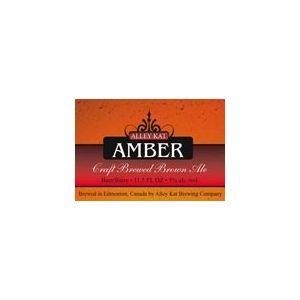
Alley Kat Amber pours, as you might expect, a deep amber in color capped by an amply sized head that begins big and fades relatively quickly to a nice covering and collar. Expect a very nutty character on the nose in this “original London-style brown ale,” with malts immediately taking charge. Amber ales can run the gamut in terms of range of flavor. This one is on the sweeter side offering notes of chocolate, faint impressions of coffee and caramel apples. Notice that the hop levels are low, but they do give off a touch of herbal spiciness which nicely balances the sweeter elements. Look for a slight lactic presence as the beer warms (giving faint impressions of chocolate milk). Also try to pick out some fleshy fruits, hinting a bit toward the tropical side (think mango). Yes, this beer goes down sweet, but not overly rich. Expect the ‘mouth-filling’ body to flood across the palate, washing the tongue in notes of apples & caramel, roasted toffee, and grassy, lightly spicy hop notes, with a somewhat floral edge. We found the flavor is expertly balanced with lightly edgy hops and roasty notes balancing the sweet bolus of malts that first greets the palate. Alley Kat Amber finishes with a light bitterness and sweet, apple-like notes. This velvety smooth beer is just so easy to drink, and at 5.0% ABV, it’s a great, flavorful, session beer that you can fill a night with without getting blitzed in the process. We suggest trying this against orange-glazed duck; the dark meat and fattiness of the duck will be cut by the sharper edges of the beer, while the malty sweetness will work well with the glaze. Enjoy!
Serving Temperature: 45-50°F
Alcohol by Volume: 5.0%
Suggested Glassware: Pint Glass
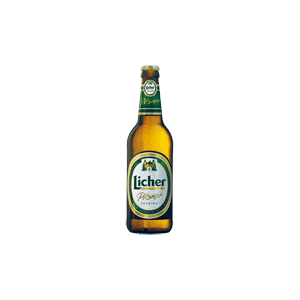
Licher Privatbrauerei-Lich, Hessen, Germany (Western Central Germany)
The Licher Privatbrauerei has a long history—with its roots going back long enough that their original method of cooling the beer was to dig massive holes in the earth and create cellars there. Ah, brewing before the age of refrigeration… it meant a lot of heavy lifting... and mud. In 1854, brewer Johann Heinrich Ihring started the J.H. Ihring Brewery in Lich am Hardtberg, in western central Germany. The site was ideal for brewing because of the natural spring nearby that was easily tapped (and soil soft enough for cellar excavation). Only four years later, in 1858, Christoph Jakob Melchior started “Zum Goldenen Stern" ("The Golden Star") guesthouse in Butzbach, where he served up his own self-brewed beer to his guests (we presume many felt like “golden stars” with that sort of treatment). Three years later the Melchior family built their own private brewery in order to spread their golden star treatment to more folks in the area. In 1896 Christoph Jakob Melchior passed away, leaving his sons Hermann and Christoph to take over the business.
Due to the close proximity of the breweries (just 10 miles apart) it was a logical step for the Ihring and Melchior families to join forces, which is exactly what they did with the forming of the fittingly named "Union Brauerei" ("Union Brewery"). However, during the first World War, the breweries were forced to split apart. In 1922 the two families came together again and reunified their breweries as "Brauerei Ihring-Melchior," which they located in the town of Lich, Mittelhesse (where a brewery remains to this day).
Remarkably, during World War II the brewery remained intact and unscathed. After the war's end, the brewery temporarily came under the control of the American occupational forces and supplied the troops located there. Sometime in the 70s, the brewery’s slogan, “Aus Dem Herzen Der Natur,” was born (translation: from the heart of nature) and to this day they focus on their people, quality ingredients, eco-friendly processes, and sustainable farming.
In 1999, the brewery was renamed Licher Privatbrauerei to reflect its regional homebase. Ten years later, in 2009, you enjoyed your first Licher beer. In 2010, you will send us heaps of cash to return the favor, and will sign up all your friends and family to our various assortment of monthly clubs. Your Aunt Bernice will adore her 6-month membership in the Fresh Cut Flower of the Month Club, while Uncle Walter will actually start talking to you again when he gets his first Premium Cigar of the Month Club shipment. Not to mention how your Mom will melt over our Gourmet Chocolate of the Month Club, or that your sister will really dig our International Wine of the Month Club, and don’t forget your spouse with our Gourmet Cheese of the Month Club, as you finally cave and treat yourself to membership in our newest club, the Rare Beer Club, as a well-deserved reward for all the joy you’ve brought to your loved ones.
This authentic German Pilsner presents a crystal clear pale straw in color with a big, nicely lacing white head. Note the ample presence of carbonation jets emanating from the bottom and lower sides of your glass [you did pour it into a glass, didn’t you? If not, now’s the time, and for future reference, if you’re sampling new beers from the bottle, you’re depriving yourself of the full experience. Would you drink wine through a straw? Of course not, so don’t drink you beer through a bottleneck (or a can for that matter). Drinking from the bottle has become an accepted norm, but really, this only works well for beers that don’t taste like much in the first place, none of which we feature in our beer clubs…]. Now sink your schnoz right into your glass and get a nice big sniff. Note the presence of soft, fresh pale grains, cradled by a light mustiness (yeast), and wafts of sliced apples. Expect the noble hops used in this beer to give off their characteristically light, almost lemony, grassy and faintly herbal notes. As with most traditional pilsners, there are some minor notes of sulfur, perfectly appropriate for the style. Expect the nose to sweeten up slightly as it warms, but always remaining balanced (now if you were drinking out of the bottle, you’d miss all of that!). On the palate, the flavor begins by showing off super clean, über-fresh grains. Ladies and gentlemen, this is what a proper pilsner should taste like. Red apple skins comprise the only fruitiness, offset by mild hoppy bitterness. Finishes clean, neat and tidy, nothing in your face—it’s just good beer, plain and simple—so relax with this one—it’s got all the flavor and balance you want as a fan of better beer, but doesn’t demand your utmost attention—just let it be, and it lets you be… Overall, refined and refreshing. Mild hop spiciness and bitterness help this one work very nicely up against weisswürst served with spicy brown mustard.
Serving Temperature: 40-45°F
Alcohol by Volume: 4.9%
Suggested Glassware: Pilsner Glass, Pint Glass or Flute
Brasserie Theillier—Bavay, France (Northeastern France)
Atop ancient remains of Roman cellars and walls sits the Theillier family home, built in 1670, within which is their very tiny but bigly revered artisanal brewery. The late, legendary beer writer Michael Jackson himself noted that “this remarkable brewery deserves to be better known.” But the brewery is already celebrated enough in their immediate region to keep the 5th generation Theillier brewer, Michel, very busy; he not only brews the beer himself, using a combination of ancient and more modern equipment, but also hand-delivers it in and just outside of town. Which is why you basically can’t get this beer outside of a 20 mile radius of the Theillier home; and it’s been that way since they started selling their beer in 1832.
As you can imagine, this one man show doesn’t do much advertising, as the beer sells itself. But it doesn’t make itself, meaning little time is left to maintain a fancy website (or any website for that matter). If you want more info, consider stopping by the brewery—it’s just across from the France-Belgium border, so you can’t go wrong with a trip to the region. They’re located at 11 Rue de Chausee, in Bavay, France (about 50 miles southeast of Lille).
Bière de Garde, which means “beer for keeping,” or “beer which has been kept,” developed within artisanal farmhouses as the only style of beer indigenous to France. The beer would be brewed in early spring, then aged in earthen cold cellars for consumption in the later, hotter months. It therefore had to be a somewhat substantial beer, in order to “keep” during that period, but needed to balance this character with a refreshing nature as workers would quench their thirsts in the summer heat. It is similar to Belgium’s equivalent farmhouse style known as Saison, but tends to be rounder and more malt focused, with a bit more cellar character than farmhouse notes. Pour this beer somewhat gently to avoid stirring up the sediment at the bottom of the bottle. Expect a medium amber beer with a thick, sticky, beige head. While beers in the Bière de Garde style are traditionally malt focused, this beer offers a beautiful bouquet of both malt and hop scents. Look for candied citrus notes (think papaya and oranges, with some apple skins), fresh dough, flower, and prickly spices coming from the hops and the yeast, all wrapped in a clean, cereal grain background. There’s a “fresh mustiness” to it if there is such a thing—a paradoxically “clean” cellar character. The alcohol heats the nostrils just a bit, amidst prominent orange and caramel notes, with a toasted edge. The hops are used mainly for aroma, as the beer is predominantly malty on the palate. What initially strikes as ‘edgy’ on the nose (hoppy, spicy notes) actually comes through very clean and refined in the flavor. The beer opens with notes of bready, doughy, toasty, caramel malts drizzled with honey. Traditional beers like this really help one understand the common expression of beer as “liquid bread,” because this is as accurate a description as any for this brew. Look for notes of tart berries and a woody spiciness, and as it warms, alcohol emerges mid-finish. As expected for the style, there is less “funkiness” or farmhouse-like (often referred to as ‘horse blanket’) notes; instead, a mild cellar quality is present (as mentioned above, this is one of the hallmark differences between Bière de Garde and Saison). La Bavaisienne ends with a bit of acidity, giving a tartness that dries things up and has the palate begging for another sip, as a mild bitterness works in tandem with the tartness to execute its superb dryness. A case study in Bière de Garde—we suggest trying this alongside a traditional Belgian Saison to compare the differences in these related yet independent styles of beer.
Serving Temperature: 45-50° F
Alcohol by Volume: 7.0%
Style: Bière de Garde (French Farmhouse Ale)
Suggested Glassware: Tulip or Oversized Wine Glass
Brasserie de Jandrain-Jandrenouille—Jandrain-Jandrenouille, Belgium (Eastern Central Belgium)
Belgium’s beer scene is steeped in tradition, and part of that tradition is brewing however they damn well see fit. Less a matter of stylistic adherence, like the doctrine of the British and the Germans, they brew what they like (and happen to have excellent taste, in our humble opinions, as we like what they brew). Still, there has been a modern emergence of Belgian brewers who wish to take things further into the unknown, branching out into unexplored ingredients and experimentation, much to the delight of beer geeks who follow such brewers in cult-like fashion, or, start breweries themselves, like Alexandre Dumont de Chassart & Arnaud Thomee did when they opened Brasserie de Jandrain-Jandrenouille. Only open since 2008, this brand new farmhouse brewery is creating a tremendous buzz (literally and figuratively) among the beer cognoscenti, and that’s just with their first beer, IV Saison. Unusual in their brewing process is the fact that they do not use Belgian Candi sugars or even spices to derive this beer’s vast complexity—only four ingredients, water, malt, hops and yeast, are used, which makes them relative outliers in the Belgian beer landscape (and they almost covertly highlight this in the name ‘IV’ Saison). Another unusual move is their use of imported American hops for dry hopping the beer, providing one of the freshest, most vibrant hop aromas in any Saison ever brewed in Belgium. Four cheers for melding tradition and ‘haute alchimie.’
If you’d like more information about the brewery, a visit to their website may, one of these days, prove fruitful (at time of print, the site was limited to the picture of the IV Saison label). They’re busy. We get it, and we don’t mind; we’d rather they invest their time in making the beer than with web-design
And the award for longest brewery URL goes to: http://www.brasseriedejandrainjandrenouille.be
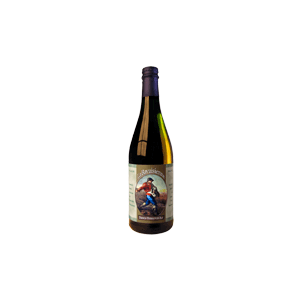
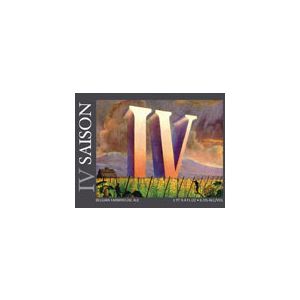
As the name implies, Saison is a style that is seasonal by design. It was developed in the countryside of the French speaking region of Belgium known as Wallonia as a beer to be brewed at the end of the cool season that would be consumed in the heat of summer. Like many farmhouse beers, Saison had to be sturdy enough to endure the extended time from brewing to consumption, yet needed above all else to be enjoyable at the end of a hot summer’s day. Saison is similar in many ways, including regional genesis, to France’s equivalent farmhouse style known as Bière de Garde; but like so many Belgian beers, Saison is naturally spicy from Belgium’s distinctive yeast strains, with more hop presence and farmhouse “funk” as well. The image on the label of IV Saison depicts the hop harvest, as mature hops are plucked from their bines (FYI for your next round of beer geek trivia: the term is hop ‘bines,’ not vines). With this style, we prefer not to rouse the sediment from the bottom of the bottle, pouring somewhat gingerly. Expect this beer to present as a pale-to-medium-straw color with a huge, brilliantly white head that remains indefinitely after sinking from epic heights. Note a tremendous amount of Saison’s characteristically mighty phenolics on the swirl—in this case these notes start less clove-like and more like hot plastic (while it might not sound appealing, it’s perfectly appropriate for the style and works within the overall spiciness of the beer). Note also a tartness, like SweeTARTS candy and under-ripened raspberries. The phenolics blend is quite robust, and even clove notes get into the mix as the beer warms (rarely does one find both potent cloves and more plastic-y notes in the same brew, and rarer still does such a combination actually work. Impressive.). A truly agrarian concoction, look also for notes of crushed aspirin, lemongrass, rosewater, fresh-cut grass and straw on the nose. What is most impressive is that no sugars or spices were used in brewing this beer. The vast complexities are due exclusively to the alchemy of brewer’s art and yeast. For all its pageantry on the nose, you cannot predict the flavor cascade and sensations that follow once it has crossed the lips. The experience of one sip lasts for minutes, so savor that first sip as the sensations and experience unfold. Expect an exquisitely floral opening, with faintly spicy hops in high presence and working their lemony, tea-like magic to the fullest. Unlike any traditional Saison out there that we know of, this beer integrates US hops (for dry-hopping), and does so beautifully as the hops are quite bold but not overpowering. This beer flirts with a Champagne-like character, partially owing to the high levels of carbonation that have risen in the bottle as the bottle-bound yeast have been munching on natural malt sugars in the beer and exhaling CO2. Notice the abundance of earthy yeast tones and bitter peach notes as it warms. IV Saison finishes bitter, but it’s a refined, elegant bitterness that is supplemented with a gentle tart quality and a growing spiciness as it comes to room temperature. Very complex, sit with this and admire the variation of experiences that each sip delivers. Do not pair with food until you have fully experienced this beer on its own, as you may deprive yourself the full expanse of the flavor profile. Later, consider pairing with an earthy Fontina or Camembert cheese.
Serving Temperature: 45-50° F
Alcohol by Volume: 6.5%
Style: Saison (Belgian Farmhouse Ale)
Suggested Glassware: Tulip, Oversized Wine Glass or Pint Glass