The Microbrewed Beer of the Month Club

Past Newsletters - September 2009

Brewery
Beers Featured
DOM
VAR
INT
RBC
Buzzards Bay Brewing Alt
Check
Check
Tallgrass Brewing Company Tallgrass IPA
Check
Check
Buzzards Bay Brewing Black Lager
Check
Tallgrass Brewing Company Tallgrass Ale
Check
Coniston Brewery—Coniston, Cumbria, England (Northwestern England) Old Man Ale
Check
Check
Salopian Brewery—Shrewsbury, Shropshire, England (West England) Entire Butt
Check
Check
Brouwerij De 3 Horne—Kaatsheuvel, Netherlands (Southern Central Netherlands) Bananatana
Check
Brasserie Thiriez—Esquelbecq, France (Northern France) Extra
Check

DOM = Domestic Beer Club; INT = International Beer Club; VAR = Domestic International Variety Beer Club; RBC = Rare Beer Club

I'm ready toPlace My Order Button

Buzzards Bay Brewing

Buzzards Bay Brewing, a family-owned brewery based in the heart of a southeastern Massachusetts farming community, is up to something. They’re using a portion of their 140 acre farm to grow hops (not to mention barley and pumpkins) for their ales and lagers. Cynics might call it a marketing move in the age of green business popularity. Optimists may think it’s an attempt to restore the region to its state of former glory (dating back to the 1800s) as growers of the finest hops in the world. But the truth is, the family behind the operation is simply committed to using local ingredients in an environmentally sustainable way, all while neutralizing their carbon footprint.

In 1998 the Russell family set up their first farm brewhouse. They began brewing ale, as it’s typically less expensive than brewing lager, which must be refrigerated for especially lengthy periods of time, consuming energy and valuable brewery space. But in 2000 they began producing lager beer alongside English style ales. The Russells brew, bottle, and package all of their microbrews at their farm brewery. Their aim is to use beer as the financial engine to help preserve and maintain over 500 acres of open space, working farmland and forest. Over 90% of their raw materials are American, with only the finishing hops grown overseas, as they attempt to source all of their raw materials close to home, helping strengthen the local economy and keep jobs in their own locale.

Breweries use a tremendous amount of energy, and by their very nature (i.e. fermentation) give off carbon dioxide. But amazingly, Buzzards Bay Brewing, using thousands of Carbon Sequestration Devices, removes all the carbon dioxide they produce through fermentation, going beyond that to also wipe out the CO2 used in shipping and processing. They’re actually storing more CO2 than they produce, making them truly carbon-negative. And, they’re on their way to being completely off the grid.

Not only are they experts in the realm of energy conservation and green business practices, and beer brewing, they're also acclaimed grape-growers and vintners. Buzzards Bay Brewing's sister vineyard and winery, Westport Rivers Winery, is well-known throughout Massachusetts.

We haven't met a brew of theirs yet that we didn't rate highly. If you can get your hands on anything from this excellent northeastern farm-brewery—buy it! They've got a great repertoire of quality beers.
For more information about the brewery and scheduled tours, call (508) 636-2288 or check out their web site at www.buzzardsbrew.com.

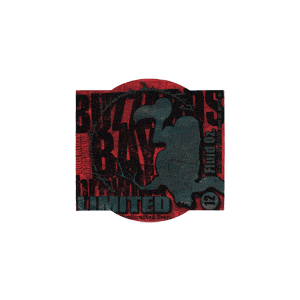
Alt

Buzzards Bay AltAlt, meaning “old” in German, refers to the fact that ale brewing was ‘the old way’ of brewing in Germany, prior to isolation of bottom-fermenting lager yeast. Now dominated by lagers, in the brewing landscape of the German hinterland,you’ll find relatively few ales. Buzzards Bay’s version of altbier has a traditional musty, yeasty, dank basement aroma livened up by aromatic hoppy notes. Look for notes of yard clippings (think fresh-cut grass) and a slightly spritzy, almost lime-like character. The beer drops a surprisingly bitter bomb on the palate. Amidst the bitterness are notes of toasted biscuit, bread, caramel, and flowery, lightly acidic citric notes from the hops. Finishes with notes of green grain (meaning young) and a general lime/lemon character that is spicy and quite herbal in nature. Pair with potato dumplings and sauerbraten (preferably lamb).

Serving Temperature: 45-50° F
Int'l Bittering Units: 26
Alcohol by Volume: 4.9%
Suggested Glassware: Stange or Pint Glass
Malts: 2-Row Pale, Crystal
Hops: Summit, Cascade

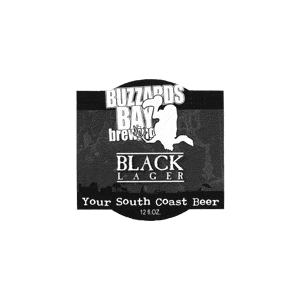
Black Lager

Buzzards Bay Black LagerRoasted malts, toasted grains, leather and a light fruitiness greet the nose on this German-style Munich Dunkel Lager. Expect the hefty malt intensity to hint at coffee and chocolate, but note that these remain subdued. Look for a faint herbal spiciness and mild Bavarian-style musty character from the yeast. This full-bodied lager has a mouth-filling presence that drops notes of treacle, faint smoked malt, cappuccino, orange peel, cola, and prunes. Watch for a very bitter finish with a woody aftertaste and final impressions of dark cherries. Overall this is a robust, dark lager that is considerably more bitter than traditional German examples of the style; however, ain’t nuthin’ wrong with puttin’ a US spin on things. Slurp this one with some oysters on the half shell.

Serving Temperature: 45-50° F
Int’l Bittering Units: 16
Alcohol by Volume: 4.9%
Suggested Glassware: Pilsner Glass, Flute or Pint Glass
Malts: 2-Row Pale, Carafa, Vienna, Munich
Hops: Summit, Perle

Tallgrass Brewing Company

The decision to found Tallgrass Brewing Company was made by Jeff Gill and his wife Tricia on April 8, 2006. Tricia had asked Jeff THAT question: “What do you want to do with the rest of your life?” Jeff had been mulling over that exact question quite a bit. “I want to start a microbrewery!” Jeff answered. He had been an avid homebrewer for six years and loved to brew beer. At that point, he and Tricia made a commitment to start a new microbrewery in Kansas. It would mean moving from where they lived at the time, Jeff giving up his career as a geologist, and Tricia changing jobs.

After the decision was made, the next 12 months were a flurry of activity: Jeff juggled a full-time job while trying to gain as much experience in the craft beer business as possible, and Tricia gave him her full support along the way. They chose Manhattan, Kansas, for the location of the brewery, and chose Tallgrass for the name. They had always wanted to settle in this area to raise their family and live near the scenic Flint Hills and Tallgrass Prairie surrounding Manhattan. It just so happened that the water near Manhattan is an excellent choice for brewing beer, too!

When the spring of 2007 rolled around, Jeff was ready to speak with friends and family about investing in their dream to start Tallgrass Brewing Company. With the money raised and a lot of hard work, the brewery was built at the edge of the Flint Hills and housed a beautiful copper-clad brewhouse. Their first beer was brewed in August 2007 and has rapidly been growing in popularity.

This just in from the brewery: “we’re not (just) in Kansas anymore, Toto!” Congrats to Jeff and Tricia; they recently began to distribute outside of Kansas, into Nebraska. We’re glad to get a chance to feature their well-made beers so early in their careers—and we’re sure we’ll be revisiting them so we can try more of their brews down the line.

For more information about the brewery and scheduled tours, call (785) 537-1131 or check out their web site at www.tallgrassbeer.com

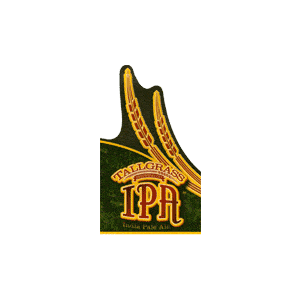
Tallgrass IPA

Tallgrass IPAOne of the first IPAs brewed and bottled in the Great Plains region! Expect a distinctly hoppy nose. While there are notes of pine and sap resins, there’s a prominent citrus character that rides the line between grapefruit and oranges—a very fruity hop profile. Look for a grainy malt backbone and whiffs of alcohol as it warms. We found it went down prickly and spicy in its hoppiness. The caramel malt backbone barely keeps things together as the hops quite nearly unbridle things with their spicy, sprucy, and very Pacific Northwest character. Look for notes of pine needles and pine tree resin, which finish with an earthy quality. Note the bitterness is quite firm and persists for minutes into the finish as final notes of Assam tea, grapefruit rind and Drambuie linger on. Pow! This just might be the hoppiest beer the Great Plains has to offer. You’re gonna need somethin’ hot and spicy to stand up to this Tallgrass brew.

Serving Temperature: 43-50° F
Int’l Bittering Units: 60
Alcohol by Volume: 6.3%
Suggested Glassware: Pint Glass or Mug (clear)
Malts: 2-Row Pale, Crystal, Munich
Hops: Nugget, Northern Brewer, Amarillo, Cascade, Willamette

Tallgrass Ale

Tallgrass AleThis beer just took home a Gold Medal in the English Brown Ale category at the 1st Annual United States Open Beer Championships. Expels deep breaths of toffee and butterscotch amidst a rich undercurrent of malty sweetness and a citrus edge provided by the American hops. As the beer reaches full warmth, look for a slightly roasted profile with faint hints of chocolate and coffee. These two will manifest themselves on the palate as well when the beer has come to cellar temperature. This medium-bodied beer is sweet and rich on the palate, leaving behind notes of caramel, toffee, salt-water taffy, and orange and pine notes. Bitterness swoops in quickly to tame the hefty malt bill with some toasty Vienna malt notes, which are some of the last to hold on into the finish as the citrusy hops dry things out. This beer reminded us of a good pancake breakfast; there are notes of brown sugar, maple syrup, and fresh oranges. Consider starting your day with this beer. Tons of flavor for a modest alcohol level brew. A fine way to kick off a weekend morn.

Serving Temperature: 47-53° F
Int'l Bittering Units: 25
Alcohol by Volume: 4.5%
Suggested Glassware: Pint Glass or Mug (clear)
Malts: 2-Row Pale, Dark Caramel, Vienna, Victory, Chocolate
Hops: Perle, Challenger, Willamette, Glacier

Coniston Brewery—Coniston, Cumbria, England (Northwestern England)

The Coniston Brewing Company, with its roots in the hotel and licensed trade, knows a thing or two about giving their discerning customers quality and service. The Black Bull Inn and Hotel was built about 400 years ago, around the time of the Spanish armada, as a coaching inn, providing accommodation for both travelers, coachmen and horses. The Inn is situated in the picturesque village of Coniston, stream-side and in the shadow of the local, picturesque ‘Old Man’ mountain. The Big Toe of the Old Man pierces the Inn itself as a large piece of stone set in the wall of the Black Bull residents lounge.

Ian Bradley, son of the owners of the famed Black Bull, having studied and graduated in the art of brewing, took the reigns of the Coniston Brewing Company when built in 1995. In 1998, Coniston's first beer, Bluebird Bitter, won the U.K.'s most prestigious beer award, claiming the title of “Supreme Champion Beer” at the Great British Beer Festival. Make no mistake, the British know their beer, particularly pub ales and “real ale,” also known as live or living beer. These beers are brewed with living yeast left in the storage vessel (be it keg, cask, or bottle), thus conditioning the beer as it sits—keeping it fresh, lively and full of flavor. Bluebird Bitter set the bar high, and their subsequent beers have managed to follow suit in terms of character and appeal.

Being a true British Publican is an art. These days, few people still participate in the process of blending beer to create unique new beers, but it was once a job requirement—the predecessor to the Porter style, for example, was made by blending different barrels, or threads of beer, locally at the pub. It’s an art that just barely survives today. But like their beers, this art is alive and well at the Coniston brewery, where they blend their Old Man Ale (featured this month) and Bluebird Bitter to make a third beer called Opium that many swear is the best of the lot. And while the U.S. government would never allow a beer by this name to be imported, the great Mahar’s Public Bar in Albany, New York, makes their own Opium by blending Old Man and Bluebird straight from their respective casks. So, you have a stateside opportunity to try this yourselves—and we recommend that you do.

Better still, visit The Black Bull yourself. In 400 years of history, many famous people have passed through the hallowed portals of the Black Bull and enjoyed it's hospitality, including Turner, the artist, Coleridge, the poet, De Quincy, author and intellectual, on his way to meet William Wordsworth (though the Opium he may have had was not the same as that described above), and more recently Donald Campbell, when attempting his water speed records in his famed “Bluebird” jet-powered water craft. The film “Across the Lake” staring Anthony Hopkins, depicting the last 60 days of Campbell's life, used the Black Bull as a venue.* All have lodged at this historic Inn and why not—the hotel provides a cozy, warm and inviting base for walking, climbing, sailing and many other activities in the English Lake District, or simply as a great place to relax and unwind. With 15 comfortable bedrooms and a world class pub serving true British ales, we can see why the Old Man decided to settle here himself.

For more information, visit their website at www.conistonbrewery.com

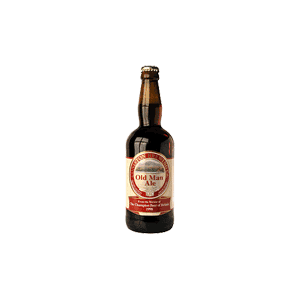
Old Man Ale

Old Man AleThe Old Man of Coniston is a mountain in the English Lake District that can be seen from the Coniston Brewery at the Black Bull Inn. This softly-rounded landmark in England’s most picturesque region is the inspiration for Old Man Ale, Coniston Brewing Company’s rich and satisfying second brew. Do not swirl the bottle when pouring, leave the sediment behind (the yeast have already done their thing, thank them for it, and move on). This ensures a clear, amber beer with coppery highlights, capped by a prodigious, off-white colored head. On the nose, expect powdery talcum, over-ripened oranges, marmalade, some juicy fruits, and a snappy floral character. Look for hints of graham crackers as it warms, with a heavy mineralized edge. On the palate, the beer is extremely toasty, crackery, with fruity notes favoring orange tones, but grounded in a robust earthiness. Superbly balanced and just beautifully done. Pub ale at its finest. Finishes with a citrusy fade, only delicately bitter with lingering after-notes of toasted bread. Overall things wrap up on the dry side, leaving the palate clean, refreshed, and ready for another sip. This is a great example of a beer you can have over serious, extended conversation; a beer for friendly debates or hatching plots (take your pick). Be sure to drink this beer at the recommended temperature (58°F), as you will miss a lot of the nuance if you consume it too cold. Pair with a ploughman’s lunch featuring English cheddar or Stilton.

Serving Temperature: 58°F
Alcohol by Volume: 4.8%
Suggested Glassware: Pint Glass

Salopian Brewery—Shrewsbury, Shropshire, England (West England)

The Salopian Brewery was established at The Old Dairy on the outskirts of the medieval town of Shrewsbury in 1995. It was at the time believed to be the second smallest brewery in the country for a commercial brewing outfit not attached to a pub.

British microbrew, we have found you…

Salopian is a term used to refer to the people hailing from Shropshire, and more specifically, from Shrewsbury. Why it took so long for the Salops to have ‘their own’ brewery, we don’t know, but better late than never as this relative newcomer has been creating some exciting, uncommon beers. This enabled the brewery to build up a good following among patrons of the more adventurous outlets for cask beer.

In a few years time, they adapted to keep some of the atypical beers, but as a supplement to more traditional offerings that have become their mainstay—a team of young, inspired brewers keep British beer alive and well, while exercising some creativity. But let’s make one thing clear, lest you think they sold out in the process—they maintain their craft nature and their experimental nature. Their porter (featured below) is a prime example; a traditional British brew, porter is, but they upped the ante by using 14 different malts and three hop varieties. The result is a blend of creativity and tradition—one which is well suited to their mission.

Clearly, producing a beer with 17 ingredients like their porter isn’t cheap. But it remains Salopian Brewery’s policy to source the best ingredients available. As they assert on their web site, “saving a few pennies on malt and hops at the expense of flavour is not a saving.” Indeed the brewery only uses expensive aroma hops to provide a more distinctive flavor than many other regional or national brewers. Clearly, they’ve been giving the people what they want; over the years the testimony received from their loyal customers has proven this, not to mention their strong showing at all the major brewing competitions.

For more information, check out their website at www.salopianbrewery.co.uk

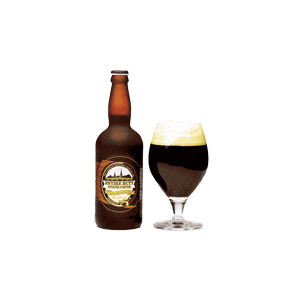
Entire Butt

Entire ButtThere’s nothing like a good butt beer. “What did I just read!?” you say in your head. OK, here’s the story on this beer’s name: butt is a common term for barrel, as in a barrel of beer. Years ago in porter’s evolution (it is believed), it was called “three threads,” and was created at the pub as a blend of beer from three different butts (or barrels)—three different beers had to be blended to achieve its flavor, until an enterprising brewer finally managed to recreate the flavors of the entire three threads in one beer, which, fittingly, became known as ‘Entire.’ Popular with London’s blue collar porter workers (as in transporters or heavy lifters/shipping folk), it ultimately bore eternal reference to them, becoming known simply as Porter.

A Silver Medal winner at the 1999 Great British Beer Festival’s Beer Champion Awards, Entire Butt is brewed with an astounding 14 different malts (listed on the bottle label). So it’s fitting that the term ‘entire butt’ bears a secondary meaning similar to “everything but the kitchen sink.” Expect a dark, cola-like brown beer with garnet highlights capped by a billowy thick tan head. The nose presents a very engaging and complex array of malty characteristics. Look for notes of chocolate pudding, rum cake, coffee grounds, chicory root, and cola. There are faint spicy hop characteristics but overall, things are weighed down by the powerful malt presence. The flavor profile is even more complex than the nose. Creamy and full in the mouth, expect a cavalcade of malty notes. We found it opened on the sweeter side of things with milk chocolate, rocky road ice cream & cocoa, and then evolved into more bitter malt characters showcasing notes of dark chocolate and coffee. There are some notes of plum, but these are minor. The beer finishes with a mild bitterness with notes of Kahluha, coffee, pudding, figs and hot cocoa and chalk dust. First enjoy on its own, then consider a shellfish pairing.

Serving Temperature: 50-55°F
Alcohol by Volume: 4.8%
Suggested Glassware: Pint Glass, Mug or Stein

Brouwerij De 3 Horne—Kaatsheuvel, Netherlands (Southern Central Netherlands)

The craft brewing scene in the Netherlands continues to impress. It’s a story not unlike that of the U.S. craft brewing movement—very grassroots, very organic, and inspired by beers that lacked inspiration. In the 1960s and ‘70s, about 99% of all beer available in the Netherlands was the ubiquitous pilsner style. But how, in a land that shares 280 miles of border with the beer haven that is Belgium, could this stand? Many Netherlanders had the same question, and so began the movement to import better beer. Classics like Duvel and Westmalle began appearing in classic Netherlands cafés, which still serve them today. It was in the ‘70s and ‘80s, similar to our own domestic craft beer evolution, that independent microbreweries came on the scene. Over the next 25+ years the struggle for market share has continued, resulting in about a 90%-to-10% Pilsner-to-everything-else ratio. Not bad, when you consider it used to be 99%-to-1%. But it’s not all about the numbers—the explosion in creativity and unbridled beery passion that belies that jump from 1%—that’s where the real story is, and it can be explored in each bottle of better brew from the Netherlands.

One could make the argument that the extreme beer movement championed by US craft-brewers that remains in full swing today has leapt overseas to re-ignite the scene in the Netherlands as more adventurous brews bubble forth. Sjef Groothius, founder of Brouwerij De 3 Horne (the Three Horns Brewery, often referred to as “Drie Horne”), is one of the numerous Dutch beer champions who is also pushing the limits of what beer is. Sjef was actually ahead of the curve to some extent, founding his tiny microbrewery back in 1991 on the heels of being a top notch homebrewer. Since then, he’s been brewing his own brands, and some for local cafés and European beer distributors, and even uses his brewery to double as a homebrew and winemaking supply shop. Gotta love this guy. Sjef is not afraid to brew out of the box—which is evident in the very unusual beer we’ve selected for you this month. Read more below, and enjoy!

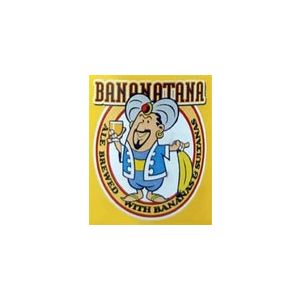
Bananatana

BananatanaBananatana, as in bananas and sultanas. Banana beer! What? Yes, but don’t freak out—this is actually a very interesting connoisseur beer that was created to showcase the concept of beer brewed with fruit rather than the syrup and extract beers that comprise much of the so labeled “fruit beers” on today’s market. Bananatana does not use extracts or fruit juice concentrates—it uses the actual fruits themselves as a major contributor of fermentable sugars, which means the sugary, extract-laden, fruit syrupy notes that you may expect in a “fruit beer” will not be found here—instead, this is a more subtle, more genuine fruit beer (or “beer with fruit” as the label is keen to point out). And it’s made with grapes, so the beer-meets-wine-meets-forget-expectations-because-there-are-bananas-too factor is in full effect here ladies and gentlemen. So, set any preconceived notions aside, and open your minds as you taste this burnished gold, butterscotch-colored hazy brew. Expect impressions of freshly peeled banana, instead of in-your-face banana esters—the beer actually has less banana notes than some hefeweizens we’ve had. Look for sultanas to contribute notes of fresh grapes. You’ll encounter some alcohol notes, similar to a weizenbock, with less banana & clove character than what you’d get by way of hefeweizen yeast. The nose is rounded out by some tart notes evoking Sweethearts candy, perhaps a bit Pez-like, with faint notes of blonde tobacco. Expect soft banana notes in the flavor profile, which take a back seat to a striking tartness, grape skins and mild cracked pepper. Finishes with mild notes of berries, gueuze, and plenty of alcohol, leaving a gin-and-grapefruit-cocktail-like character in the linger, and a nice almost wine-like acidity. This beer threw us for a big curve ball, as we really didn’t know what to expect. We thought it would be a big freaky banana bomb, but it’s really true to itself by being a tart fruit beer, truly lambic-like, using nontraditional lambic fruits. An engaging brew that brought us right back to the days when we were discovering styles for the first time. We savor moments like those on our beer panel.

Serving Temperature: 40-45° F
Alcohol by Volume: 7.0%
Style: Fruit Beer Brewed with Bananas & Raisins (Sultanas)
Suggested Glassware: Pint Glass or Tulip

Brasserie Thiriez—Esquelbecq, France (Northern France)

About 150 miles due north of Paris, at the northern tip of France, just about 12 miles south of the famous northern seaport town of Dunkerque (Dunkirk) you'll find Brasserie Thiriez. Daniel Thiriez founded his brewery in 1996 shortly after settling in this region of France, in the small town of Esquelbecq. We understand why he chose to make this area his home, with its lush hillsides in the rolling farm country of French Flanders; it's a beautiful place to live.

The brewery is housed in a rustic, rather small brick-and-beam building that harkens back to the days of true farmhouse brewing that took place here before this area was considered French or Belgian. Daniel holds a brewing degree from a Belgian university and brews his beer in a decidedly Belgian-style, with French farmhouse flair and a regionally atypical heavy hand when it comes to hops. He manages to push the envelope with some of his beers while maintaining a traditional approach to brewing.

His brewery buildings were originally those of the old Poitevin firm-brewery, which brewed on the site until 1945 (quite impressive considering that the town of Dunkerque, just a few miles away, was 80% leveled by Nazi bombings from 1940-1945). After having been home to five breweries (and a few dozen pubs), the village of Esquelbecq did not produce beer for nearly one half-century, until Daniel set up shop in 1996. Local residents were glad he did, as we're sure you'll be too. À Votre Santé!

For more information about the brewery, check out their web site: www.brasseriethiriez.com.

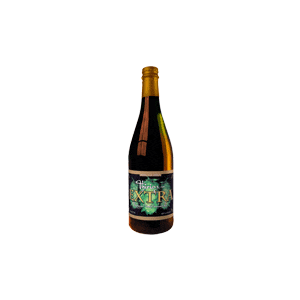
Extra

ExtraExtra is an interesting joint effort with English brewer John Davidson, founder of Swale Brewery, who now lives in France as the proprietor of the microbrewery Bièrs23 in Creuse. The French and the English, willfully working together? Behold the unifying power of craft beer. In the UK and in France, this beer is called “Les Frères de la Bière,” meaning “Brothers of the Beer,” reflecting the collaboration effort. It uses one hop varietal, a rather unusual hop grown in Kent, UK, called 'Bramling Cross.' The malt is from 2-row spring barley grown in France. The result has certain characteristics of an English bitter: not too strong, very dry, and eminently drinkable. In other words, a daftly flavorful beer at a low alcohol by volume. With the tremendous hops dosing, however, you might expect this to approach English IPA. But French brewer Daniel Thiriez is 'Belgian-oriented' by his own admission, and uses a Belgian yeast that he obtained from the Belgian brewing school where he studied. Accordingly, the beer also has a good bit of the earthy, spicy character of a saison. Take care when opening the bottle that you have your glassware at the ready, because immediately after popping the cap, the froth begins to snake out of the bottle mouth. Even with a gentle pour, you can expect that only perhaps 1/10th of what makes it into the glass is not-foam. It will take many minutes to get the beer to settle and to fill a glass, but trust us, it’s worth it! The beastly head is monstrous, frothy, and cloud-like in appearance. The beer is orange-gold in color, and hazy, with intense sticky lace all over the damned place. The bouquet is simply wonderful; expect vibrant notes of citrus with an edgy spiciness. Ample hops give off notes of fresh mint sprig (and this mint presence is quite big). The Belgian yeast strain gives some coriander and saffron-like spice notes. The sturdy malt profile holds up against the hops and provides notes of honeycomb. Finally, look for faint notes of vanilla, oranges and talcum. Look for a profoundly earthy and minerally flavor profile. There are deep layers of spiciness, with mild toasty malt notes emerging through the spice. Highly floral, lilac-esque notes peak through, ushering in a slow-to-build but ample bitterness at the back and sides of the tongue, culminating in a chalk dust-like dryness. A full-flavored, complex, yet low alcohol beer—no small feat, believe us.

Historically, farmhouse ales needed to be sturdy enough to hold up through summer when brewing was impossible, but drinkability was paramount in hot weather. How to bolster the beers stability? Turns out that hops are a great natural preservative. So is alcohol, mind you, but alcohol tends to hurt refreshment, and it seems that many beers in this style, though often at 7+% ABV these days, were once in the 3-4% ABV range, using a hefty dose of hops as a preservative. So, this beer makes the old new again; while overly hoppy by many assessments for the farmhouse ale style, it just may be more like the original examples than what has come to embody the style today.

Serving Temperature: 45-50° F
Alcohol by Volume: 4.5%
Style: French Farmhouse Ale
Suggested Glassware: Tulip or Oversized Wine Glass

I'm ready toPlace My Order Button

C&H Internationals Logo Since 1994
Join Our Club
Gift Memberships

Membership Renewals
Reorders
Home Page
More Information
Current Selections
Past Selections
Testimonials
Other Gourmet Clubs
Corporate Gifts
Wedding Gifts
Brewery Search
Style Guide
Beer Fun Section
Industry Resources
Festivals
Print a Gift Card
Send a Virtual Brew
Refer a Friend
Send a Hint
E-Promos
Contact Us
Link to Us

1 - 800 - 625 - 8238
(Outside US call: 949-206-1904)
P.O. Box 1627, Lake Forest, CA 92609