Past Newsletters - August 2010
DOM = Domestic Beer Club; INT = International Beer Club; VAR = Domestic International Variety Beer Club; RBC = Rare Beer Club
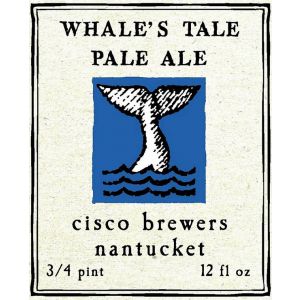
Cisco Brewers was founded when homebrewers Randy & Wendy Hudson crossed paths with Dean & Melissa Long, the founders and owners of Nantucket Vineyard. Wendy had gained experience homebrewing with friends in California, and in 1992 she met Randy after moving back to the island. Intuitively she knew Randy would be a great brewer (as well as her eventual husband) so she bought him a brew kit. As he started brewing, he found that his experience working at a local bakery gave him a certain instinct for working with yeast and grain, so after one batch using malt extract, Randy left the guidebook behind and converted a rarely used pasta roller into a grain mill. He developed new recipes that not only he enjoyed, but impressed Wendy too. It was a match made in beer heaven.
Around this time Randy and Wendy met the Longs, who had established Nantucket Vineyard on the western half of the island back in 1981. It was a fortuitous encounter; because the Longs needed help at the winery, and the Hudsons needed a home, Randy and Wendy moved in to a loft above the winery. Eventually, the Hudsons made the decision to start selling beer, and Cisco Brewers was born. Initially, their entire “nano-brewery” as Wendy refers to it, with the exception of the air-conditioned cold storage room, existed almost entirely outside in the Longs’ backyard. In 1996 they met Jay Harman, another aspiring brewer who had wanted to establish a brewery on the island until he discovered the Hudsons had beaten him to it. So Jay joined Cisco to help run the operation, and as evidence of his dedication, he personally capped sixty thousand bottles by hand in his first year alone (the “nano-brewery” was a very labor intensive operation at that time!).
Knowing that the brewery needed more room to expand, Dean had a new building constructed to house both the growing brewery and winery operation in 1996. It was also around this time that Dean began sensing the synergy between their current products and high-proof spirits. A few other craft breweries have established successful distilleries in recent years (Dogfish Head and Rogue come to mind), but Dean’s foresight at that time was impressive. After jumping through Massachusetts’ legal hoops for three years, Triple Eight Distillery began producing spirits in 2000. They now produce an excellent line of Vodka, Whiskey, Rum, and Gin.
Bailey’s Blonde Ale pours a bright golden color with a slightly off-white 2-finger head from an aggressive pour. Look for a haziness due to a fair amount of yeast in the bottle. The nose on this brew is quite aromatic, with pleasant citrusy notes atop a substrate of lightly sweet malts. We found it quite fruity with some pineapple notes and a hint of earthy yeast. On the palate, there’s a lightly sweet, somewhat bready malt character with a very firm hop bitterness hitting upfront and carrying through to the very long finish. Married to the bitterness on the midpalate is a prominent fruity quality with hints of spice. This light- to medium-bodied brew is a hop head’s Blonde Ale, and we like that. The big dose of American hops lends itself well to spicy fare. Try with curried lamb kabobs or a plate of blue and peppery cheeses.
Serving Temperature: 40-45°F
Alcohol by Volume: 6.58%
Int’l Bittering Units (IBUs): 31
Suggested Glassware: Pint Glass or Mug
Malts: 2-Row, Wheat, Carapils
Hops: Centennial, Cascade
Look for a very attractive, clear, pure copper color on this pale ale, with a light beige head. On the nose you’ll find lightly sweet malts with hints of straw, overlaid with grassy and lightly citric hop aromas. As you take a sip, the malt profile jumps to the fore and immediately impresses. Look for a firm, bready backbone with hints of moderately sweet caramel. A fruity character appears and persists to the finish, along with some alcohol notes that peek through. The malts are balanced by an ample – but purposely subdued – hop bitterness. However, we found the hop flavors to be quite prominent, with a nice spicy kick due to the beer being dry-hopped with East Kent Goldings (which gives this pale ale a very English style attitude). This beer’s flavor profile will work well with a variety of different types of cuisine. We found it delicious with angus beef burgers topped with sharp cheddar cheese, accompanied by garlic steak fries.
Serving Temperature: 40-45°F
Alcohol by Volume: 5.6%
Int’l Bittering Units (IBUs): 18
Suggested Glassware: Pint Glass or Mug
Malts: 2-Row, Carapils, Wheat, Crystal 20/80
Hops: Columbus, East Kent Golding, Tettnang
The Tied House Brewery & Cafe (Mountain View, CA)
First a little history to explain the name. In England during the 18th and 19th centuries, a pub system developed consisting of “tied houses” and “free houses”. “Free houses” were privately owned establishments and were allowed to sell any beer they wished, while “tied houses” were pubs that were owned or otherwise controlled by a specific brewery and served as an outlet specifically for that brewery’s beer. Though some things have changed over the years, this system still exists to this day.
The creation of Lou Jemison and Ron Manabe, the Tied House Brewery & Café in Mountain View, CA opened for business in 1987 as the first brewpub in Silicon Valley. Completion of the brewery and supervision of the brewing itself were led by Master Brewer Cheuck Tom, whose brewing career included a thirty-year tenure at Hong Kong’s San Miguel Brewing, and six years as brewmaster for Anheuser-Busch in Los Angeles where he was in charge of brewing, fermentation, and finishing the beer. All of Tied House’s original recipes were developed by Cheuck, who won 2 Gold, 2 Silver, and 2 Bronze medals at the Great American Beer Festival prior to his passing in 1993.
Now led by brewmaster and founder Ron Manabe and head brewer Peter Licht, formerly of Coast Range Brewery, the Tied House is still going strong twenty-three years after its founding. Offering classic brewpub style beers and food, and the occasional “Firkin Friday” during which they celebrate the English real ale tradition of drawing beer from the cask, the Tied House remains a great place to relax, connect with friends, and watch a game on one of the many large screens. Not content to sit on their laurels, they’ve recently opened a package brewery in San Jose to bottle their beers for distribution, including the Coastal Fog line.
To learn more, call 650-965-2739.
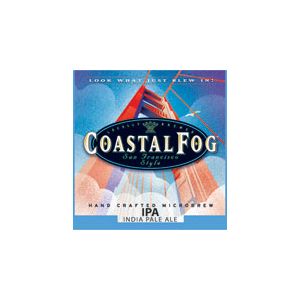
The Tied House’s Coastal Fog IPA pours a crystal clear pure copper with an off white head. The malt aromas are quite prominent on this brew, offering up a lightly sweet and doughy character, with lightly citric, lemony, and herbal hop notes. It opens on the palate with clean toasted malt flavors with slightly sweet, bready notes. The hop profile offers a citric zing with herbal, even somewhat minty, overtones likely due to the inclusion of Columbus hops. On the midpalate, light impressions emerge of a somewhat fruity quality akin in some ways to apple and grape. Bitterness is quite firm at 51 IBUs, but very clean from beginning to end. Look for a refreshing light to medium-bodied feel to this beer, with a bit of slickness from the hop oils. A versatile beer for pairing with food, we think it would go particularly well with pretty much anything you want to throw on the grill this summer. Cheers!
Serving Temperature: 42-47°F
Alcohol by Volume: 5.6%
Int’l Bittering Units (IBUs): 51
Suggested Glassware: Pint Glass or Mug
Malts: 2-Row, Crystal
Hops: Columbus, Centennial, Cascade
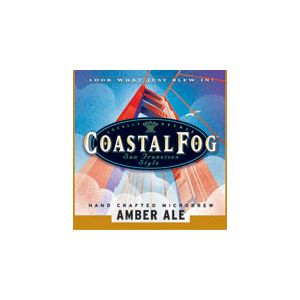
The Coastal Fog Amber Ale pours a pure, clear and – surprise! – amber color. In fact one of our panelists’ amber ring matched this brew’s hue exactly. A light beige head sits astride the beer, fading to a persistent collar that leaves some sticky lace as you go. On the nose expect big malty notes, with a pleasant citric hop aroma and prominent notes of fresh, sweet apple juice. On the palate the beer opens with a strong malt backbone, with the crystal malts providing a caramel note and the chocolate malts adding a deeper toasty flavor (as well as contributing to the color). A very pleasant breadiness is evident, as well, which increases into the finish and persists through the aftertaste. Swish it around and a candied fruit component appears, which is common, and welcome, in the style. Magnum hops provide a very clean bitterness while Cascade offers a citric zing and an herbal note as the beer warms. Be sure to drink this brew at the proper temperature; straight fridge temp is too cold and you’ll miss some of this beer’s subtleties and balance. And, not to get snobby or geeky on you, but if you’ve been drinking your craft beers from the bottle then you’re missing out on a lot too. Prost!
Serving Temperature: 43-48°F
Alcohol by Volume: 4.7%
Int’l Bittering Units (IBUs): 31
Suggested Glassware: Pint Glass or Mug
Malts: 2-Row, Crystal, Chocolate
Hops: Magnum, Cascade
Privatbrauerei Bischoff—Winnweiler, Germany (Southwestern Germany)
The craft brewing movement in the U.S. is still very much in its youth. Most of the craft breweries here are under 25 years of age, with only a handful beyond that mark. Germany, where the brewing culture goes back hundreds of years, stands in sharp contrast. In fact, our featured international brewery is 144 years old, and that’s actually not considered particularly old in Germany where many breweries have been in operation for several hundred years. Regardless, they’ve certainly had the time to get the whole brewing thing down pretty darn well.
Privatbrauerei Bischoff was founded in a part of southwestern Germany known as Nordpfalz, in an area commonly referred to as the Palatinate (“Pfalz” is German for Palatinate). The region features the imposing Donnersberg (“Thunder Mountain”) and the Palatinate Forest, which, when taken together with the contiguous forest of the Vosges area of France, makes up one of Europe’s largest wooded areas. The Bischoff Brewery is located in the town of Winnweiler, in a part of the Palatinate that has a considerably cooler climate than the area to the north; while vineyards and wineries are dotted all along the Deutsche Weinstrasse (German Wine Route) to the north, the area around Winnweiler is well known for its barley farms, traditional maltsters, and excellent beers.
The region is blessed with exceptional natural resources, including the crystal-clear spring water that Bischoff uses in all of its beers. This superb water, along with locally-farmed barley, regionally-sourced hops, and yeast sourced from Weihenstephan, has been used for five generations of brewers in the Bischoff family. It was on December 7th, 1866, when the region was still a part of Bavaria, that Christian Bischoff introduced the first beers from the brewery. 144 years later, Bischoff is the only brewery in Nordpfalz to have remained continuously owned by the same family since its founding. While the brewery began most humbly in a small barn that was converted into a brewery, the family has continuously updated the brewing equipment and added new beers to Bischoff’s lineup. In 2001, Drs. Erik and Sven Bischoff, Christian’s great-great-grandsons, joined the brewery team.
Privatbrauerei Bischoff celebrated its 140th anniversary in 2006. In that year, the brewery was awarded an impressive array of hardware from Germany’s independent food and drinks testing association, the esteemed DLG Test Center, including 2 Gold and 3 Silver Medals. What a great birthday present! In the judging, both new and older samples of each beer are sampled by a panel of ten experts who judge the purity of flavor, fullness of body, freshness, and taste stability during storage. However, not only are the beers judged on their flavor as in formal beer competitions, they’re also evaluated by rigorous laboratory analysis. Yep, the Germans take their beer VERY seriously…
It’s too bad we can’t send you all 17 beers in Bischoff’s current line up, but we did select a couple of our favourites which we hope you enjoy as much as we do. Prost!!
If you like exploring the world of German and/or Czech beers, you’ve probably seen "Ur" in many of their names. Ur is a German prefix that can mean "first," "prime," or "original," but it’s also sometimes used loosely to mean “older” or “traditional”. Certainly, Falkensteiner Ur-Weisse is not the original or first German hefeweizen, but it is brewed to emulate the traditional, older styles of hefeweizens brewed in Bavaria.
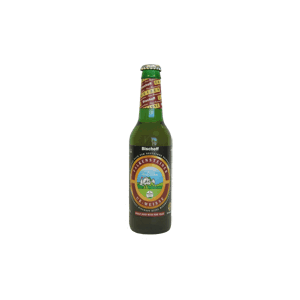
Bischoff’s Falkensteiner Ur-Weisse pours a super hazy, golden straw color with a pillowy white head. The aromatics on this brew are quite big and start filling the room with an unmistakable hefeweizen character as soon as the first drops hit the glass. Look for big clove notes atop a very pleasant sweet fruitiness including light banana-like esters, plus a notable wheat “twang” accompanied by a lightly chalky, earthy, yeast aroma. All of the aromas follow through on the palate, where the beer opens with a lightly sweet and quite bold wheat backbone with mild cracker-like notes. The cloves are apparent here again, along with lightly spicy, floral, hop notes. A moderate fruitiness builds on the midpalate, accompanied by a very subdued bitterness and an excellent earthy yeast flavor that carries through and lingers with wheat notes and a touch of lemon in the persistent finish. The panel loved both the body of this hefeweizen, which really stands out as being particularly lush and creamy for the style, as well as the superb balance among all of its flavors. We found all of the parts working in harmony in this perfect summertime brew. Try it with a grilled chicken salad with mandarin oranges, or fish tacos with mango salsa.
Note: many people reflexively add a lemon wedge to their hefeweizens. Please resist the temptation, at least until you've had at least one of these without the fruit and can sample the true flavor—there's plenty of it to stand on its own. Plus, we're pretty sure that when this beer took home the 2006 DLG Tasting Center's Gold Prize, it was served sans lemon.
Serving Temperature: 45-50° F
Alcohol by Volume: 5.2%
Suggested Glassware: Weizen Glass
The Bischoff Doppel Bock pours a dark, clear, reddish-brown mahogany color with a light beige head. On the nose, aromas of toasted grain are very prominent, along with notes of burnt caramel, hints of coffee, honeyed, ripe red apples, a touch of grapes, very light impressions of toffee or butterscotch, and a touch of the traditional German yeast mustiness. The hop profile (along with hints of alcohol) becomes more obvious with warmth, lending a grassy, hay-like, character. This beer stood out among our beer panelists because it asserts its own unique personality. Some might say it has a bit more of a schwarzbier-like nose than traditional doppelbock, but this is within the permitted profile for the style. As you take a sip, look for this beer to open with a rich maltiness and light-to-moderate sweetness that also increases as the beer comes up in temperature. Dark fruits open up on the midpalate along with toasted crackers, bread, and a lightly spicy and grassy noble hop character. The hop bitterness is more assertive than what is found in many other doppelbocks, balancing the malt very well. Look for this bitterness to persist into the finish where it lingers for a while with a pleasant, bready, aftertaste. The alcohol is relatively well-hidden, but it offers enough bite to join the hops as an effective counterpoint to the sweet and toasty malt notes. We found it medium to full bodied with a moderate carbonation, eminently drinkable, and, like Bischoff’s Falkensteiner Ur-Weisse, extremely well-balanced. Overall, this beer's got a nice kick to it and an assertive, somewhat rebel character – and it's not afraid to show it. You can even put a bottle or two aside as it should age quite nicely (try 12-18 months, kept in the dark at a cellar temperature between 45-55°F). Awarded a Silver Medal/Highly Recommended rating by the Beverage Tasting Institute in 2006, plus a Silver Medal at the World Beer Championships that same year, this double bock (doppelbock) has won over many fans – and we hope you join the ranks!
Serving Temperature: 47-52° F
Alcohol by Volume: 7.5%
Suggested Glassware: Flute Glass, Pilsner Glass, or Seidel/Mug
Microbrasserie Les Trois Mousquetaires (The Three Musketeers Microbrewery)—Brossard, Canada (Québec) (Southeastern Canada)
Microbrasserie Les Trois Mousquetaires (The Three Musketeers Microbrewery) was founded in 2004, and while they focus on creating traditional German-style beers, they definitely have applied their own North American treatment. As you'll find in the Weizen Imperiale featured this month, they're not afraid to mix tradition with creative interpretation. Part of their flexibility in this regard lies in their approach to brewing; as head brewer Jonathan Lafortune states himself, "I don't come from the microbiology branch of brewing, I'm more like a chef in a kitchen. The recipes come from my senses, my heart and my passions. I'm an Epicurean."
So then, who are the three musketeers? It’s a bit complicated… Like the heroes of Alexandre Dumas, there are in fact four of them. Jonathan we've already mentioned, though he wasn't actually onboard at the start—he joined the brewery about seven months after it was founded, as the fourth musketeer. While not technically one of the founding musketeers, his coming on board so early permitted him to develop all the beer recipes they currently brew. Sylvain Plourde, Daniel Pion and a third fellow (the original brewer who introduced Jonathan into the mix, and later left the company) were the original three "musketeers" who founded the brewery in June of 2004. The three were coworkers at the famous Imperial Tobacco Montreal. However, when the company closed its Montreal branch in June of 2003, they were all out of work. Right around the same time, they got word of a brewery for sale and decided to take the plunge into the brewing industry. These days, Sylvain handles the accounting and Daniel helps with the production and brewing process. From what Jonathan tells us, these two are mechanical geniuses—they built their own bottling line!? (Anyone who's in the brewing field or has seen these complex machine-beasts in action will realize what a feat of technical mastery this is.) The “new” fourth musketeer is a fellow named Patrice (we didn't get a last name), who is actually the brewery's first "employee," serving in the sales capacity along with Jonathan and Daniel.
Like many brewers, Jonathan Lafortune got his start in brewing as a beer connoisseur. He wanted to improve his skills in tasting the nuances of beer, so he took to homebrewing to expand his knowledge of ingredients and flavors. His entry into professional brewing happened when his friend, the original Les Trois Mousquetaires brewer, asked him if he wanted to brew professionally—he said yes, and got in on the gig. And we have to say, having gone from homebrewer to professional brewer in such a short span of time, this guy's got a real gift. In the past three years, he's created about three dozen beers, ranging from weizenbock to Sticke ("secret") Alt, smoked Scotch ale, and some claim he created a new style known as “Imperial Weizen.” Most of these beers have only been made available on draft at area bars, which makes this month’s feature even more exciting since it’s a 2009 Vintage beer that’s been in the bottle for over a year!
The label on the back of this Summer 2009 vintage ale proclaims this to be the world’s first—and still greatest—imperial wheat beer. Weizen Imperiale fills the glass with the haze of a humid summer sunrise and liquid caramel colors supporting a luscious, creamy beige head. There are some very unusual tart berry notes—reminiscent of cranberries—on the nose. The year or more spent in the bottle has mellowed this imperial wheat beer quite a bit—the big notes of cloves and bananas you might expect in a massive wheat beer have mellowed and made room for musty notes of fresh green tea, sinuous elements of herbal tea, big honey sweetness, and exotic, unfamiliar fruitiness make up the rest of the bouquet. Expect the first sips to completely coat the palate in a dressing of sweet, fruity malts. Tart berry notes then surge and open things up a bit for some bitterness to wash in. Look for a wonderful belly warming right off the bat (not unexpected for a beer that is 20 proof). Our panel felt the beer blossomed fully at 50°F, despite the high alcohol content, where it fully realized the depths of flavor that it has to offer. At that temperature, there’s definitely some heat from the alcohol, but it makes for a nice nightcap or reminder that this is not a beer to be gulped. Finishes with boozy, fruity notes, residual brown sugar sweetness, notes of vanilla bean, and a moderate bitterness. Throughout the flavor profile from first sip to full warmth, look for notes of cranberries, peach, banana, unripe apricot, green plantain, overripe mandarin orange, cranberry and lingonberry. If you ever visit IKEA, make it a point to hit up the café and grab a plate of Swedish meatballs, smothered in lingonberry jam. Fill a clean glass from your discreetly stashed flask filled with this beer, or, make the dish yourself at home (you can buy the meatballs frozen at IKEA, and can also take home some lingonberry jam, where you can pair with this beer without reprisal of drinking in public). If you don’t want to go the whole IKEA route, pair with roasted duck with a cranberry glaze. When served with food, serve the beer closer to 40°F since this will tame the alcohol and make for a more balanced pairing.
Serving Temperature: 40-50° F
Alcohol by Volume: 10.0%
Style: Imperial Weizen
Suggested Glassware: Weizen Glass
Brasserie Fantôme—Soy, Belgium (Southeastern Belgium)
There is a fermentation-friendly phantasm at work in one brewery in Soy, Belgium. Thankfully this ghost doesn’t have any malicious intent, though she can get a bit wild when she decides to spike the brewer’s recipes with a blend of secret herbs and spices. And she plays other tricks, like ensuring that the same beer is often radically different from batch to batch… She’s even been known to convert stout to a Belgian strong dark ale. More of a prankster than poltergeist, her mischief is accented by her supernatural talent for creating some truly haunting spiced farmhouse beers. More evidence of her non-demonic demeanor is that she plays well with others, permitting a human pal, Dany Prignon, to take most of the credit for these world class, award-winning beers (in exchange, of course, for having the brewery named after her). Brasserie Fantôme (the Phantom Brewery) has come to represent unabashed creative freedom of expression, and, earned itself a reputation for being, well, borderline insane. Between the ghost stories, the ‘spirited’ behavior of Monsieur Prignon, the wild variation from beer to beer, being exceptionally guarded about what spices have been used in the recipes, or experimenting to the point of acute eccentricity (mushroom beer anyone?), you can maybe understand why some people think there may be a madman involved. Hey, you know what they say, behind every good madman there’s… a phantom.
But it’s not really the reputation for zany flare that has made Fantôme’s beers highly sought after—it’s the beer. Their namesake brew, Fantôme Saison, a golden ale of 8% alcohol by volume, was rated a perfect 10 in “The Beers of Wallonia,” a worthwhile read penned by authors John Woods and Keith Rigley. The brewer (either Dany or the phantom) uses local ingredients and herbs, such as dandelions found growing outside the brewery, spicing their numerous farmhouse ale variants with such skill and panache that people have been taking notice since the brewery was founded in 1988. But it’s easy to throw a bunch of spice in a beer. Making it taste good, however, bringing out the best elements of an unusual spice without crushing the beer’s natural flavors or spooking the yeast into catatonia—that’s the real magic and mystique in the Fantôme beers. To boot, these are some of the most freshly fruity beers found in Belgium—how “they” do it we really don’t know—it really is almost paranormal. Another odd conundrum is the fact that their beers aren’t well known, even within Belgium. But for those who have had the pleasure (or occasionally, the peril) of tasting Fantôme’s concoctions, the experience is not soon forgotten.
There’s another reason the name is quite apropos; Fantôme’s beers are very difficult to find, materializing only rarely—yet so many of us beer geeks have heard the stories of their existence. When we thought we might finally have grasped the elusive Fantôme, we suited up like the Ghostbusters, donned our Proton Packs and zapped as much of the stuff as we could into our ghost traps. It’s a risky business, but you’re worth it.
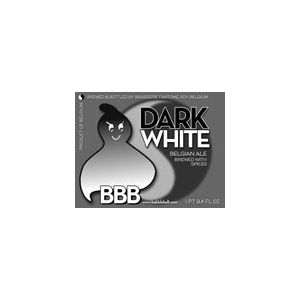
What the name means, we’re not sure. Is it dark? For a Saison, you could say so. But why white? Does it use traditional wit spices perhaps, just paired with darker malts? Your guess is as good as ours, since the brewer keeps the spice blend a secret, often saying that he has “forgotten” what he used. Ah, the Fantôme strikes again! Pours a murky dark amber capped by a small beige head that dematerializes right before the eyes, though swirling does conjure it back into existence. The vapors from this beer give off a supernaturally complex array of scents from fresh stone fruits to red grapes, chocolate, white pepper, oregano, thyme, earthy mustiness and old leather. On the palate, expect an untraditional flavor profile, marked by a tonic undercurrent of mild, floral hops to start, with the spices taking over as earthy, mineralized characteristics. Various flavors flutter about playing tricks on the senses. Is that French Thyme? Wait, cocoa? Now blackberries? Hang on, the earthy hops are back, along with a sneaky tartness. And now a bit of funkiness drying things out… When suddenly there’s a crash of biscuits and toast (ghost toast?), followed by vaporous pineapple notes and brown sugar-like sweetness. There’s a distant, eerie echo of grapefruit, and whispers of tobacco and smoky old fabric. Dark White finishes with an aftertaste and residual acidity reminiscent of orange juice, with some lingering notes of toast (perfect for breakfast!). There are definitely some spirits playing around with this beer—how else can you explain the almost constantly transmogrifying flavor profile? A beer full of intrigue and mystery, this Fantôme is remarkably food-friendly. Try with lemon-topped whitefish, shellfish, or for true indulgence, lobster. But our most highly recommended food pairing is a breakfast (or early brunch) experience, partnering this complex beer with traditional Eggs Benedict. Beer for breakfast? Hell yes! At a responsible 4% ABV, you needn’t worry about getting sauced from the alcohol—but watch those hollandaise drips.
Serving Temperature: 45-50° F
Alcohol by Volume: 4.0%
Style: Dark Farmhouse Ale with Spices
Suggested Glassware: Tulip or Pint Glass