The Microbrewed Beer of the Month Club

Past Newsletters

Vol. 11 No. 3

Brewery Beers Featured
Elmwood Brewing Company

Amber Ale

Elmwood Brewing Company Nut Brown Ale
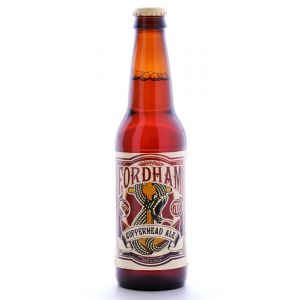
Fordham Brewing Company Copperhead Ale
Fordham Brewing Company Fordham Lager
Herold Brewery Bohemian Black Lager
Bavik Brewery Witterkerke


Elmwood Brewing Company

When it comes to beer in the States, sadly, the masses really aren't looking for something unique, memorable, or of notable quality. They want their simple, adjunct-reliant, lager impostors. That's because the masses aren't connoisseurs of our favorite malty nectar and haven't taken to the plethora of fantastic microbrewed beers currently available. No, unfortunately they gravitate toward beers that are mass produced in towns that have become known for their multi-billion barrel brewing facilities. For the rest of us, however, these well-known areas and big name brews just wont cut it. There's a definite appeal to the small town vibe when it comes to microbrewing, for it is there that local creative flare can come together with time-tested recipes and give birth to American-made interpretations of the classics, or entirely new styles not yet seen in the world of beer brewing. The small town also gives rise to local fan bases that take pride in their home town brewsand these fans often regard their favorite beers as an important commodity not simply for export and profit, but for local privilege. We applaud these small town craftspeople, and appreciate any opportunity to share their local liquid treasures.

The small town of Elmwood, IL, located about 25 miles west of Peoria, is home to the only brewery in central Illinois, the Elmwood Brewing Company. With an area of about 1.2 square miles and a population of approximately 1900 people, the EBC is one of the towns largest employers, with about 20 employees. And for quite a while, the only folks who could enjoy Elmwoods fine beers were locals and visitors who patronized EBC's Brew pub. Thankfully, the brewery has recently begun bottling their malted tonics and distribution has moved beyond the town itself, though still not readily available outside of Illinois, which makes their appearance in the Microbrewed Beer of the Month Club a special treat.

When we opened a brew pub and restaurant we always had a plan to expand the business into microbrewing, says Matthew C. Potts, brewery founder, co-owner, and Brewmaster. Like many other microbrewery founders in the nation, he got a fairly unlikely start in the business. In the summer of 1991, between graduating from the University of Illinois and attending DePaul College of Law in Chicago, Potts started drinking Killians Red instead of other cheap domestics while out with friends. As he puts it, it really opened my eyes to quality beers. Sometime after this eye-opening experience, his wife bought him a home-brew kit as a Christmas present, and his brewing experience began, along with a heightened interest in the brewing industry. In his own words, I started making beers and thought Boy, this is good stuff. Much better than anything you can buy in the store.

Once out of law school, he started practicing law with his uncle in Elmwood, IL. Though he still had the brewing bug, and began thinking about founding a brewpub in town. Over time, he developed a rapport with his clients and ultimately, a couple of them decided to invest in the brewpub concept. When a once grand building built in 1896 in the town square went up for auction in 1997, Potts purchased it. Along with principal business partner, David J. Howard, Potts began much needed renovations on the structure that would become the Elmwood Brewing Company and Brewpub. Howard, an Elmwood native who pulls triple duty serving as Chef, restaurant General Manager, and company Vice President, holds a culinary arts degree and is an award-winning chef, having won the Gold medal in the American Culinary Federation 2000 Regional Conference Culinary Competition. The completely renovated building officially opened as a restaurant in November of 2001, the same time it began offering its handcrafted brews.

Like his partner, Potts also has quite a few responsibilities. Aside from roles as company President, Co-owner, and Brewmaster, he still practices law three days a week, from Monday to Wednesday. On Thursday and Friday you can find him at the brewpub.

For more information about the brewpub, brewery and scheduled tours, call (309) 742-4200 or check out their web site at http://www.elmwoodbrewing.com.

Amber Ale

The Elmwood Brewing Company currently brews a hoppy Pale Ale, a Nut Brown Ale, a Dry Stout, seasonal brews such as Pumpkin and Apricot Ales, Strawberry Blonde, Hefeweizen, and a California Common. In addition to these is their flagship Amber Ale. Amber/Red Ales are an emerging style with many varied definitions. Some connoisseurs expect high hop bitterness, flavor and aroma, while others believe that Ambers should be defined more by malt than hops. We loved EBC's rendition and feel that, among the hoppier style Ambers, its about the best we've ever had. This dark amber-colored brew features a fairly spicy hop scent which distinguishes itself from a strong background of malty aromas that are dominated by caramel scents. There's a toffee-ish note as well, along with slight undercurrents of pear, and slightly candied essence, giving it faint impression of candied apple/pears. Flavor-wise, peppery hops are prominent in this exceptionally smooth, medium-bodied ale. Look also for a floral hop character to intermingle with the spiced hop presence, balanced by sweet malty flavors. Expect a slightly bitter finish, with a final nutty note. Great with chicken wings, a hearty stew, or a grilled chicken salad with ample amounts of fresh carrots and pecans.

Serving Temperature: 45-52° F
Int'l Bittering Units: 21.0
Alcohol by Volume: 4.6%
Malts: 2-Row, Munich, Crystal, Wheat
Hops: Chinook, Willamette


Nut Brown Ale

Illinois has a rich brewing and distilling history, which began downsizing due to national consolidation of the industry over the past 25 years. You used to see breweries in small towns all over the place, but they were wiped out by Prohibition. Were a traditional brewpub That's bottling beers in a small town and were trying to bring that back. Were trying to preserve that small town traditional brewpub, says Matthew C. Potts, President and Brewmaster of the Elmwood Brewing Company. We really enjoyed his rendition of a Nut Brown Ale. Dark brown, with garnet & red highlights, its quite malty, rich and roasty. In fact, it smells a bit like a porter with its roasty, slightly smoky scents, but with distinctly nutty flavors. Expect notes of spicy hops, subdued by the hearty malt aromas. Malts also dominate the flavor profile, but peppery hop flavors are definitely in the mix, with a back-of-the-tongue hop bitterness coming through in the end to balance the sweetness. Look for chocolate malt flavors, especially as it warms. Overall, this is a complex, flavorful brown ale and a wonderful complement to a woody, chocolaty cigar.

Serving Temperature: 45-52° F
Int'l Bittering Units: 18.0
Alcohol by Volume: 4.85%
Malts: 2-Row, Medium Crystal, Chocolate, Wheat
Hops: Goldings, Fuggles


Fordham Brewing Company

Maryland's capital city of Annapolis was first settled by the Puritans in the seventeenth century and was then known as Providence. It would later be named Anne Arundels Towne after the wife of Lord Baltimore, who owned the proprietary British colony. But it wasn't until a Royal Governor, Sir Francis Nicholson, moved the capital here from St. Mary's City that the small seaport received its present name. Sir Francis chose to honor Princess Anne, heiress to the throne of England.

The city has witnessed many important events in our nations history. The peace treaty ending the Revolutionary War, known as the Treaty of Paris, was signed here in 1783, and served as documentation of Great Britains recognition of the independence of the United States of America. And the same State House where George Washington tendered his resignation as General of the Continental Army following this same war is still, every year, host to the Maryland General Assembly.

Occupying its own unique role in the history of the city is the Fordham Brewing Company. First established in Annapolis by Englishman Benjamin Fordham in 1703 very early in the history of the regionit became very popular in the budding city. As his brewing endeavor flourished along with the Port of Annapolis, Fordham secured his own place in the history of the region, becoming one of the city's first aldermen. Unfortunately, when Fordham died in 1716, his brewery was closed almost forever.

For nearly three centuries, the Fordham brewery was closed. Or should we say, on hiatus? It was re-established in Annapolis by William Muehlhauser and Jim Lutz in 1995. In researching the history of Annapolis area breweries of days gone by, Lutz, currently president and co-owner, discovered the story of this once famed brewhouse. As he puts it, I just went back to see what breweries existed in Annapolis and ran across this Fordham Brewery. I contacted the Fordham family and asked them if we could resurrect their great-great-great-grandfathers name. The family was happy to oblige.

In 2000, the company expanded to meet growing demand and began brewing their lagers and ales at a new facility located in Alexandria, Virginia. Then, in 2003, in another effort to meet ever-growing demand, they moved to a brewing and bottling facility in Dover, Delaware. Today they are the sixth fastest growing brewery in the country, with no plans of scaling back their rapid growth. They are proud to retain their dedication to quality, authenticity and pure ingredients while also managing to appeal to a much broader market than many other domestic microbreweries.

For more information about the brewery and scheduled tours call (302) 678-4810 or check out their web site at http://www.fordhambrewing.com.

Copperhead Ale

Copperhead Ale was one of the first beers Fordham produced. Each of the three brewing facilities they have used, first in Annapolis, MD, then in Alexandria, VA and currently in Dover, DE have been created to emulate Bavarian brews. From the actual equipment used, to their proprietary yeast strains, to their German-trained Brewmaster, they have striven to produce German-style beers in America. Copperhead Ale is an authentic German-style Altbier. Alt is German for "old", referring to the older style of ale brewing, as opposed to the more prevalent lager-brewed beers of today. This beer pours a coppery orange color and emits an earthy and a slightly musty aroma characteristic of the style, with notes of light malts, hints of hops and slight yeasty fruitiness. Expect a pronounced hop bitterness at the start that is rounded out with malt flavors and very subtle notes of nutmeg and cinnamon to finish. Great with brie and bread, or an Italian sub sandwich.

Serving Temperature: 46-50° F
Int'l Bittering Units: 17.4
Alcohol by Volume: 5.3%
Malts: Ida Pils, Caramunich, Light Wheat
Hops: Nugget, Spalter Select, Tettnang


Fordham Lager

Fordhams German-style Lager is more complex than its straightforward name implies. Its actually a Helles Lager, and if you were already a member of our club and read our newsletter last month, you'll recall that Helles is German for light or pale. The term refers to the color of this beer and differentiates it from the dark or Dunkel lagers found in Germany. While Fordham originally called this beer its Helles Lager, they eventually changed it because they felt the term was confusing to American drinkers, and reported that it even scared some folks. Expect a grainy, pilsner-like nose, with a touch of floral hops. The flavor is a well-balanced combination of light Munich and Vienna malt flavors with herbal and lightly spicy hops. Hop bitterness, although mild, adroitly balances the light malt sweetness. Look for a short, clean & crisp, dry finish with a touch of light residual maltiness. Great with pizza, grilled foods, and most soups.

Serving Temperature: 45-48° F
Int'l Bittering Units: 13.0
Alcohol by Volume: 5.4%
Malts: Ida Pils, Munich, Vienna, Carafoam
Hops: Nugget, Hersbrucker, Tettnang


Herold Brewery Breznice, Czech Republic

The history of brewing beer in the Czech Republic is far older than even the countrys current borders. Chronicled evidence shows that not only were hops from the region exported as far back as 903 A.D., but hop growing regions had been established by as early as 859 A.D.. Bohemian hops were so prized at one point that the penalty for cutting and exporting the hops for cultivation elsewhere was punishable by death. The first Czech brewery was built in 1118, in bold disobedience of an order by the Bishop of Prague banning brewing, which carried excommunicative consequences. The order was annulled by Pope Innocent IV when King Wenceslas somehow negotiated the repeal on behalf of his people in the 13th century. The noble classes were particularly beer and brewery friendly, with each major palace and castle usually possessing its own on-site brewery.

One of hundreds of such facilities is located in a castle in the town of Breznice, located about 40 miles due south of the Czech capital, Prague. This southern portion of the Czech Republic is home to many fortified castles which over the centuries have served as outposts of the Kingdom of Bohemia, as well as essential defenses against the Austrian and Hungarian empires that repeatedly waged invasions of Bohemia. The castle at Breznice dates back to at least 1415 and the first documented reference to a brewery traces to the year 1506, though it is entirely possible that the brewing facility existed well before this date.

The small brewery of the castle, called Pivovar Herold, lies in what was originally a Gothic structure that was ultimately expanded and redesigned in renaissance and baroque styles (Pivovar means brewery, by the way). The entire complex has been owned by a number of noble families, and under them, the brewery has been in nearly constant use and revitalization. However, subsequent political climates influenced the entire brewing industry, Pivovar Herold included. Under Communistic rule, the brewing industry was taken over by the state, though very little was invested into the nations breweries during the period. As with so many other trades, they simply produced the product and squeezed as much money as possible out of the industry by minimizing self-investment. However on the upside, beer was very cheap and legal. This helped establish beer drinking as perhaps the single most popular hobby among Czech men. One of the Czech Republic's most famous beer drinkers, the protagonist of Jaroslav Hasek's novel "The Good Soldier Svejk" proclaimed that the government that raises the price of beer is destined to fall within one year. In 1984 the Communists almost doubled the price of beer, and though off by four years, this prognostication was fulfilled.

When Communism collapsed, the states properties were slowly permitted to return to private ownership, and the Herold Brewery again became a privately held entity. However, the owner could not keep up with the 500 year old brewerys payments and ultimately had to sell. A few years ago, a consultant on transition economies named Charles Corry became interested in the brewery. A soccer enthusiast from Virginia, Corry was alerted to the availability of the brewery by a fellow sportsman. During a period while living in Prague and working with the U.S. Agency for International Development, he gathered a group of investors and purchased the brewery.

Interestingly, there was a paradoxically positive consequence of Communist ownership that resulted from one of the most negative effects of the brewerys nationalization: the lack of investment in the facility. Without major modernization over the years, the Herold Brewery still makes beer the old-fashioned way, using only traditional methods, equipment and ingredients. The brewery makes most of its own malt, in the Pilsner style, from local barley and its beer line up includes golden, amber and dark lagers as well as some specialties such as an Altbier and a Hefeweizen wheat beer. It is currently one of the oldest functioning breweries in the Czech Republic and its lightly-distributed beers have only recently been made available outside of the country.

Bohemian Black Lager

Herold Brewerys Bohemian Black Lager is, as the name suggests, an example of a Black Lager. German varieties of this style are often referred to as Schwarzbier (Schwarze means black in German), and some could argue that this is indeed a Schwarzbier. However, the brewers have intentionally distinguished the brew from Bavarian or German varieties by boldly including the term Bohemian in the title. How ever you choose to classify it, this is a stunning, eminently delicious brew! Expect a deep, nearly black color that will display dark red hues if held to a bright light. The head has a wonderfully creamy consistency with an inviting, chocolaty-brown color. The aroma is particularly pleasant on the nose, especially as lagers go; it is full of sweet malts, roasted chocolate and coffee scents. The flavor of this medium-bodied beer also presents ample notes of chocolate and espresso, with a nearly syrupy malt taste as well. You'll notice a potently hopped, dry finish presenting additional hints of toasted, sweet chocolate. Many beer fans out there who are used to drinking lagers will be surprised at the malty, roasted character of this impressive and complex Czech lager beer quite a contrast from the world famous Pilsner style that originated in 1842 a mere 30 miles away in the town of Pilsen. Enjoyable on its own or with a variety of barbequed meats, bean soups, or venison..

Serving Temperature: 48-52° F
Alcohol by Volume: 5.2%


Bavik Brewery Flanders, Belgium

In August 1894, Flemish farmer Adolphe De Brabandere requested authorization to build a brewery in a small village in the south of Western Flanders Bavikhove. Perhaps it was the family's reputation (early documents about the family De Brabandere, dated 1280, show that they were important farmers in South Flanders, which is now part of France) that the town council granted him permission. Like most farmers of his day, Adolphe knew how to brew beer, and did so at his farmhouse, using his brew for the family's consumption. Four generations later, the Bavik Brewery is today as it was then: a family business. Despite the many corporate buy-outs of numerous Belgian breweries some as old as 500 years old the Bavik Brewery is determined to retain their independence. In so doing, they effectively guarantee the quality, character and regional specificity of their various beers. But in their 110 year history, they have not only had to face the prospect of corporate acquisition; the brewerys saga has been fraught with both tumult and good fortune alike.

The first principal brewer was Adolphes son, Joseph De Brabandere. In 1894 the number of smaller breweries in Belgium was already in decline as a result of the hugely popular Pilsner style of beer. This brew, a light colored, bottom-fermented lager, quickly superseded in popularity the local ales (a.k.a. top-fermented beers). The hard working laborers in the many factories of the region liked this new beer for many reasons one of them being cost; it was a very affordable beer. Financial appeal, coupled with the novelty of a new beer style, and the newly industrialized process of producing cheap glasses were all major factors in the success of the Pilsner beer style. For the first time, the average beer drinker could actually see the color of what he was drinking through a glass, rather than having it obscured by a pewter or wooden drinking vessel. A true entrepreneur and wise businessman, Joseph De Brabandere capitalized on this new trend in beer drinking and became the most important Pilsner brewer in his region.

Along with the brewerys Pilsner, a classic dark ale was also developed, and with these two favorite styles, the Bavik Brewery was exceptionally popular. The family business enjoyed its successful standing in the region until 1914, when the German army invaded the region and confiscated the brewery, forcing its closure during World War I. Incredibly, after the turmoil and devastation of the war, Joseph was able to restart the brewery, and benefited from the rebuilding effort of all the cities and villages in the region, many of which had been completely destroyed.

Unfortunately, in 1929 Joseph died at the relatively young age of 54. His wife Gabrielle Vandeghinste, a brewers daughter, assumed management of the brewery until 1950. Under her intendance, the brewery was considerably expanded, and enjoyed yet another period of prosperity. However, with the outbreak of the Second World War, the brewerys fate was again threatened. Miraculously, Vandeghinste was able to convince the Germans to keep the brewery open during World War IIperhaps the German army also enjoyed the brewerys nectars and saw a valid purpose in keeping it operational as a brewery rather than converting it into a part of the war machine.

Eventually, the brewery passed to Joseph and Gabrielle's children, who developed the brewery further through modernization and market expansion. In 1972 all shares of the brewery were held by Albert De Brabandere, son of Joseph and Gabrielle, and father of the current owner and manager Ignace De Brabandere. Today the Bavik Brewery is the largest brewery of West Flanders, brewing over 80,000 barrels of beer per year. It is only within the last 10 years that the brewery began exporting their fine ales and lagers, mainly to France and the Netherlands. Only since 2000 has their beer been available in the states, making it a quite sought after collection of beverages.

For more information about the Bavik Brewery, check out their web site at http://www.bavik.be.

Wittekerke

From a rich history as Flemish farmers to their current standing as world class brewers, the De Brabandere family proudly maintains their venerated reputation. We now invite you to taste one of their most popular creations: Wittekerke, an authentic Belgian Wit (or white) beer. A true Wit beer must be made of at least 25 % wheat malt in combination with barley malt. Belgian Wit beers are naturally cloudy since the yeast is not filtered out after primary fermentation, making them what is commonly referred to as a living beer (meaning that live yeast are left in the beer, and continue fermenting the beverage after bottling which is also known as secondary fermentation or bottle conditioning). Wittekerke is a fictitious name for a typical Flemish town, as hundreds of villages in Flanders have a name ending in Kerke (church) or Kapelle (chapel). The Bavik Brewery has long brewed its own authentic Wit beer under the Bavik Wit label, but the brewery chose to change the name in cooperation with the producers of a Belgian television sitcom called Wittekerke, which airs twice a week in prime-time on Belgian TV (the actors even drink Wittekerke during the show!) Through this marketing campaign, it is now the best selling Wit beer in Belgium and has been voted the best Belgian Wit beer several years running by Belgian beer connoisseurs. Expect a brilliant white, creamy head with a slightly floral, citrus (mainly lemony) aroma with notes of coriander, clove and Belgian yeast. Malts are not dominant in the mix of flavors, which closely mirror the aroma. Note the hoppy, dry, lingering aftertaste with its hints of herbal tartness. Wittekerke, like all Wit beers, is an excellent thirst quencher any time of day and is quite tasty with spicy deli sandwiches, white fish, scallops, a fresh salad or even omelets. Wittekerke should always be served cold, but in taking your time to enjoy it, you will find more flowery, perfumy flavors as it warms.

Serving Temperature: 38-45° F
Alcohol by Volume: 5.0%


Ask Murl

Hey Murl,

Before I wised up and joined the Beer of the Month Club, I used to drink a lot of well, beer that I'm sort of ashamed to admit I once passionately consumed I mean, I never used to know what a good beer was supposed to taste like. Anyway, my fridge still has quite a few old brews in it, and I am sure they are skunked after all this time any suggestions for what I should do with them? Do you know of any good uses for low quality, massed-produced and skunked beer?

Robert Grey
Manassas, VA


Whaddya say Bobby?
Ummm Bob what's up with the name of the town you're from? As much as Id love to jibe you for that, 2 things prohibit me from currently doing so. The first it's much too easy Manassas? Come on man but damn is it tempting The second reason? I've been asked by the higher ups to keep this column a little less risqué must be a bunch of families getting together and drinking with the kids or something anyway suddenly its a family show

Anyway, I do have a few suggestions for old skunky beer: 1) Revenge: next time a certain beer-bumming friend comes by, when he's not looking, shake up a can real hard, leave it in the fridge, then offer him a cold one when he opens it take cover. 2) Work on Your Throwing Arm: practice lobbing them into the dumpster. Have a friend clock your speed and aim and that pitching arm will be in shape in no time. 3) Gardening & Pest Control: Feel free to ignore the first two points if you like this one is the honest truth and a reliable technique for drawing slugs out of your garden. If you've noticed a lot of slugs in the garden, gather the following supplies: 1) some empty tuna fish cans (or similar cans cat food cans work just as well. How many you will need depends on the size of your garden), 2) your skunky beer (the slug palate is not particularly refined), and 3) a trowel (or a child's beach shovel will work as well). Using your trowel, dig evenly spaced holes in the garden that will fit the tuna cans. Place the cans in the holes that you dug, so that the top of the can is exactly level with the top of the hole. Open a can of skunky beer and pour it into the tuna cans, so that they are filled about half of the way. Leave the traps to do their duty. When you go out the next day to check your traps, you will find drowned slugs. You see, slugs are attracted to the smell of the beer and will move to find it. When they get to the trap they will crawl inside to take a drink. Even a slug mouthful of beer will cause them to become drunk and disoriented enough so that they cannot find their way out of the can and then they will drown. Hey, if ya gotta go man, its hard to imagine a better way to do it better than getting salted, eh? Ouch
Woof!
Murl

For Members Only

Give Your Friends FREE Beer, Wine, Cheese, Chocolate, Cigars & Flowers!
Through our Customer Appreciation Program

Your name has real value to your friends, co-workers, and family members! Every time a friend, family member, or anyone else you know joins any one of our clubs, [or gives a gift] for 3 months or longer, we'll give them 50% off of their first month, but only when they mention your name. And we'll also give you 50% off your next month too which can either be applied towards your current membership or you can try one of our other Clubs out! (We can add one more month to your order at 50% off for prepaid memberships!)

The Fine Print: Members giving gift memberships do not qualify for referral credits and you can't give yourself a gift to qualify! This Program is mutually exclusive of any other promotions.

RE-ORDER PRICING

Members can re-order their favorite beers

either online or toll free at:

8 0 0 - 6 2 5 - 8 2 3 8

DOMESTIC
12 PACK: $24.95
FULL CASE: $49.95
INTERNATIONAL
12 PACK: $32.95
FULL CASE: $59.95
(Mixed assortments are available upon request)


Membership Q & A

Q: What can I do if I'm having difficulty receiving my shipment at home?
A: You should consider having our discrete box delivered to your work location or to a neighbor 21 yrs. of age that can receive it for you. As your shipment requires and adult signature to receive, it's always best to ship it to a location where someone will be there to receive it for you. The box is brown corrugated cardboard and doesn't say "Beer" on it anywhere.

Q: What should I do if I'm moving or want to extend my membership?
A: Please call us prior to the 5th of the month to make all account related information changes such as address changes, membership extensions & terminations, or gift accounts desiring to continue their memberships. Address changes made after that time may require a repackaging and re-shipping charge of $12.00. Additionally, if your box is re-routed by UPS from an address different than what was originally specified, you may incur a $5.00 re-routing charge.

Q: What happens if my shipment is damaged?
A: If your shipment arrives damaged, please call us immediately toll free at 1-800-625-8238 and report the incident for a prompt resolution.

Q: What happens if my credit card is declined?
A: We will send you a courtesy notice asking for an alternative payment method, and will also attempt two more times to process the charges. If we cannot secure payment and have not been contacted by you, the order will be temporarily suspended.

Q: What happens if I join under a special incentive program and don't stay a member for the entire term committed?
A: Not a problem. Although we want to do everything we can to keep you as a member, we will allow you to cancel your subscription early; however, you will be responsible to pay for the item that was given to you as part of the promotion. If you received a discount based on a specific term, the amount discounted will be charged to your card.

C&H Internationals Logo Since 1994
Join Our Club
Gift Memberships

Membership Renewals
Reorders
Home Page
More Information
Current Selections
Past Selections
Testimonials
Other Gourmet Clubs
Corporate Gifts
Wedding Gifts
Brewery Search
Style Guide
Beer Fun Section
Industry Resources
Festivals
Print a Gift Card
Send a Virtual Brew
Refer a Friend
Send a Hint
E-Promos
Contact Us
Link to Us

1 - 800 - 625 - 8238
(Outside US call: 949-206-1904)
P.O. Box 1627, Lake Forest, CA 92609