
European All-malt Pilsener
Pilseners are the most popular style by far world wide. The style was originated in Bohemia in a town named Pilsen by the brewery Plzensky Prazdroj. Their world famous, style defining brand is Pilsener Urquell. Pilsener means "from Pilsen". Although there are some excellent Pilseners produced outside this region, this style is frequently cheapened and is the basis for many beers of lackadaisical character or just plain cheap beer.
In Bohemia there is a town named Budweis which has breweries producing traditional Pilseners. One brand is Budweiser Budvar. Since these breweries and brands were established before the days of copyright and trademark protection, Anheuser-Busch was able to successfully adopt the name Budweiser and to protect the name in following years which they applied to their flagship product. It has been reported that they are trying to purchase a stake in the brewery that bears the same name. While the Bohemian Budweiser is an all malt product, the American Budweiser uses cheap adjuncts such as rice and employs a lesser percentage of quality ingredients such as malted barley and hops. The result is a ghost of a Pilsener. Includes Bohemian All Malt and German All Malt Piseners which are described below.
Award Winning American Beers (not identified by subcategory (Stoudt Brewing), Friesian Pilsener (The Leavenworth Brewery), Condor Lager (Irons Brewing) ), Hübsch Braü Pilsener (Sudwerk Privatbrauerei), Golden Spike Pilsener (Riverside Brewing), Legacy Lager (Chicago Brewing), Garten Brau Special (Capital Brewing)
Back to topGerman Pilsener
A classic German Pilsener is very light straw/golden color and well hopped. Hop bitterness is high. Hop aroma and flavor is moderate and quite obvious. It is a well-attenuated, medium-bodied beer, but a malty accent can be perceived. Fruity esters and diacetyl should not be perceived. There should be no chill haze. Its head should be dense and rich.
Classic Producers
Jever (Fresisches Braühaus zu Jever, Germany), Bitburger (Bitburger Brauerei Teo Simon, Germany)
Complementary Foods
Eggs Benedict, spicy chicken such as cajun or Thai, various white fish, mussels, lobster, crab, creamy dressed green salads, cream of chicken soup, cream of potato soup, cream of mushroom soup
Original Gravity (°Plato): 1.044- 1.050 (11 - 12.5 °Plato)
Apparent Extract/Final Gravity (°Plato): 1.006 - 1.012 (1.5 - 3 °Plato)
Alcohol by weight (volume): 3.6 - 4.2.5% (4 - 5%)
Bitterness (IBU) (30 - 40)
Color SRM (EBC): 3 - 4 (7 - 10 EBC)
Back to topBohemian Pilsener
Pilseners in this subcategory are similar to German Pilseners, however, they are slightly more full-bodied and can be as dark as light amber. This style balances the moderate bitterness and noble hop aroma and flavor with a malty, slightly sweet medium body. Diacetyl may be perceived in very low amount. There should be no chill haze. Its head should be dense and rich.
Classic Producers
Pilsner Urquell (Plzensky Prazdroj, Czech Republic), Gambrinus (Pivovar Gambrius, Czech Republic)
Complementary Foods
Light white fish such as carp or perch, potato pancakes, ginger pork won ton soup, Russian borscht, crab, lobster, green vegetables, Chicken Kiev, creamed pork dishes, hot and sour soup, cream of chicken soup, cream of potato soup, cream of mushroom soup
Original Gravity (°Plato): 1.044- 1.056 (11 - 12.5 °Plato)
Apparent Extract/Final Gravity (°Plato): 1.014 - 1.020 (3.5 - 5 °Plato)
Alcohol by weight (volume): 3.2 - 4% (4 - 5%)
Bitterness (IBU) (35 - 45)
Color SRM (EBC): 3 - 5 (7 - 14 EBC)
Back to topEuropean-Style Pilsener
Continental Pilseners are straw/golden in color and well-attenuated beers. This medium-bodied beers is often brewed with rice, corn, wheat or other grain or sugar adjuncts making up part of the mash. Fruity esters and diacetyl should not be perceived. There should be no chill haze.
Original Gravity (°Plato): 1.044- 1.05 (11 - 12.5 °Plato)
Apparent Extract/Final Gravity (°Plato): 1.008 - 1.010 (2 - 2.5 °Plato)
Alcohol by weight (volume): 3.6 - 4.2% (4 - 5%)
Bitterness (IBU) (17 - 30)
Color SRM (EBC): 3 - 4 (7 - 10 EBC)
Back to topGerman Licht\European Low-alcohol Lager
These beers are very light in body and color. Malt sweetness is perceived at low to medium levels while hop bitterness character is perceived at medium levels. These beers should be clean with no perceived fruity esters or diacetyl. Chill haze is not acceptable.
Original Gravity (°Plato): 1.026- 1.032 (6.5 - 8 °Plato)
Apparent Extract/Final Gravity (°Plato): 1.006 - 1.010 (1.5 - 2.5 °Plato)
Alcohol by weight (volume): 2.0 - 2.6% (2.5 - 3.3%)
Bitterness (IBU) (17 - 28)
Color SRM (EBC): 2 - 4 (5 - 9 EBC)
Back to topMunchener Helles
Paulaner of Germany introduced the first Helles (light) in the 1920's. It is the term used by the people of Munich (Munchen in German) to depict a light everyday beer as opposed to some of the traditional dark styles also available from this region. This beer has a relatively low bitterness. It is a medium-bodied malt emphasized beer; however, certain versions can approach a balance of hop character and maltiness. There should not be an caramel character. Color is light straw to golden. Fruity esters and diacetyl should not be perceived.
Classic Producers
Hell Urtyr (Paulaner, Germany), Urbräu Hell (Hofbräuhaus, Germany) Award Winning American Beers Hellcat & Zepplin (Liberty Street Brewing), Bergoff Original Lager (Joseph Huber Brewing), Hubsch Lager (Sudwerk Privatbrauerei), Export Gold (Stoudt Brewing), Golden Spike Lager (Riverside Brewing)Penn Light Lager (Pennsylvania Brewing), Los Gatos Lager (Los Gatos Brewing), Adler Brau Lager (Appleton Brewing), Sun Valley Sawtooth Gold Lager (Sun Valley Brewing), Hopfen Helles Beer (Weeping Radish Restaurant)
Original Gravity (°Plato): 1.044- 1.050 (11- 13 °Plato)
Apparent Extract/Final Gravity (°Plato): 1.008 - 1.012 (2 - 3 °Plato)
Alcohol by weight (volume): 3.8 - 4.4% (4.5 - 5.5%)
Bitterness (IBU) (18 - 25)
Color SRM (EBC): 3 - 5 (7 - 12 EBC)
Back to topDortmunder\European Export
Dortmunder style beers are always labeled Export in their home city even though they are not commonly exported to other regions. Dortmunder is a golden lager that is more full in body and color than a Pilsener. It also employs less hops for bitterness and aroma. However, Dortmunders are dryer than Helles Lagers and less carbonated.
These beers are deliberately not thoroughly attenuated. The unfermented matter ads to the body. These beers represent an older style that is not as popular locally as they once were but has a strong following internationally amongst beer lovers. Both starting gravity and medium bitterness are somewhat higher than a Munchener Helles. Hop flavor and aroma are perceptible but low. The color of this style may be slightly darker, and the body will be more full but still medium bodied. Fruity esters , chill haze and diacetyl should not be perceived.
Classic Producers
Dortmunder Actien Brauerei (DAB, Germany), Dortmunder Kronen (Kronen Brauerei, Germany), Dortmunder Union Brauerei (Brau und Brunnen, Germany), Sapporo (Sapporo Breweries, Japan)
Award Winning American Beers
Gordon Biersch, Export Gold (Stoudt Brewing), Saratoga Lager , Stoudt (Stoudt Real Beer)
Complementary Foods
Chicken, spit roasted meats, salmon, ham, bacon, stew
Original Gravity (°Plato): 1.048- 1.056 (12- 14 °Plato)
Apparent Extract/Final Gravity (°Plato): 1.010 - 1.014 (2.5 - 3.5 °Plato)
Alcohol by weight (volume): 4 - 4.8% (5 - 6%)
Bitterness (IBU) (23 - 29)
Color SRM (EBC): 3 - 5 (8 - 13 EBC)
Back to topVienna Lager\Marzen\Märzen\Oktoberfest
All these terms are related to a style developed around Vienna, Austria. These beers have a soft maltiness or aroma and palate that make them an excellent beer to match and marry the flavors of a wide variety of foods. They often have a amber-red to copper color that highlights the maltiness.
During the days of the Austrian Empire this style became popular in such far off lands as Mexico where famous brands such as Dos Equis, Negra Modelo and the outstanding Christmas brew Noche Buena are based in this style, although they are lighter in body and less malty than the originals.
The terms Marzen and Oktoberfest refer to beer either brewed in March to be stored for the summer or beers produced for the Oktoberfest celebrations. Beers produced and labeled as Marzen or Oktoberfest are likely to be of the Vienna Lager style, although fest beers may be paler in color and may be higher in gravity and alcohol than the breweries regular interpretation. Includes Vienna, Marzen and Oktoberfest styles which are described below. Vienna Lager Beers in the category are reddish-brown or copper colored. They are light to medium in body. The beer is characterized by malty aroma, slight malt sweetness and clean hop bitterness. Nobel hop aromas and flavors should be low to medium. Fruity esters, diacetyl and chill haze should not be perceived.
Classic Producers
Spaten (Spaten-Franziskaner-Braü, Germany), Ayinger (Germany) Award Winning American Beers Red Bone Red Lager (Specialty Brewing), Samuel Houston's Austin Lager (Waterloo Brewing), Michael Sheas Irish Amber (Highfalls Brewing), Heckler Brau (Heckler Brewing), Brooklyn Lager (The Brooklyn Brewery), Golden Rail (Cherryland Brewing), Newman's Albany Amber (William S. Newman Brewing) Other Fine American Beers Negra Modelo (Cerveceria Modelo, Mexico), Ambier (Ambier Brewing)
Complementary Foods
Perfect for sweet spiced recipes or relatively sweet tasting meats. Very good with potatoes, minestrone soup, fennel-spiced sausages, Italian sausages, pizza, spit-roasted chicken, pork stew, loin of pork, pork ribs and chicken in mole sauce. One of the few beers that matches well with tomato based dishes.
Original Gravity (°Plato): 1.048- 1.056 (12- 14 °Plato)
Apparent Extract/Final Gravity (°Plato): 1.012 - 1.018 (3 - 4.5 °Plato)
Alcohol by weight (volume): 3.8- 4.3% (4.8 - 5.4%)
Bitterness (IBU) (22 - 28)
Color SRM (EBC): 8 - 12 (16 - 30 EBC)
Back to topMarzen/Oktoberfest
Marzens are characterized by a medium body and broad range of color. Oktoberfests can range from golden to reddish-brown. Sweet maltiness should dominate slightly over a clean, hop bitterness. Malt character should be toasted rather than strongly caramel. There should be more pronounced malt character than in Viennas. Hop aroma and flavor should be low but noticeable. Fruity esters are minimal, if perceived at all. Diacetyl and chill haze should not be perceived. Fine European Beers Luisenbraü (Germany), Salonbier (Borbecker, Germany)
Award Winning American Beers
Market Street Oktoberfest (Bohanon Brewing), Gartenbrau Oktoberfest (Capital Brewing)
Complementary Foods
Perfect for sweet spiced recipes or relatively sweet tasting meats. Very good with potatoes, Fennel-spiced sausages, Italian sausages, pizza, spit-roasted chicken, pork stew, roast loin of pork, pork chops and chicken in mole sauce, chicken salad.
Original Gravity (°Plato): 1.050- 1.056 (12.5 - 14 °Plato)
Apparent Extract/Final Gravity (°Plato): 1.012 - 1.020 (3 - 5 °Plato)
Alcohol by weight (volume): 4- 4.7% (5.3 - 5.9%)
Bitterness (IBU) (18 - 25)
Color SRM (EBC): 4 - 15 (10 - 35 EBC)
European Dark \Muchener Dark (Dunkels)
These beers evolved from regions of Germany long associated with and known for their dark beers such as Franconia and parts of Bohemia across the border in the Czech Republic. While the beers today are still dark, they are no longer ales but are produced using lagering techniques. The flavor found in these beers typically have a spicy maltiness, neither sweet nor too roasty dry.
The lager yeast produces a clean roundness of flavor. Franconia is the area to find some of the oldest and smallest breweries in Germany. Dunkel Lagers are usually not promoted widely but rather locally. The dark beers that are widely circulated from this region are usually of the stronger Bock style. These beers have a pronounced malty aroma and flavor that dominates over the clean, crisp hop moderate bitterness. A classic Munchener Dunkel should have a chocolate-like, roast malt, breadlike aroma that comes from the use of Munich dark malt. Chocolate or roast malts can be used, but the percentage used should be minimal. Noble hop flavor and aroma should be low but perceptible. Diacetyl is acceptable at very low levels. Fruity esters and chill haze should not be perceived.
Classic Producers
Altstadthof (Hausbrauerei Altstadthof, Germany), Ayinger (Brauerei Inselkammer, Germany), U Fleku (Pivovar U Fleku, Czech Republic) Fine American Beers Lakefront (Lakefront Brewery), Sprecher (Sprecher Brewing Co.)
Complementary Foods
Bread, fried mushrooms, vegetarian chili, roast chicken, spicy lobster or crab, salmon
Original Gravity (°Plato): 1.052- 1.056 (13 - 14 °Plato)
Apparent Extract/Final Gravity (°Plato): 1.014 - 1.018 (3.5 - 4.5 °Plato)
Alcohol by weight (volume): 3.8 - 4.2% (4.5 - 5%)
Bitterness (IBU) (16 - 25)
Color SRM (EBC): 17 - 20 (40 - 80 EBC)
Back to topBock Beer
Includes Classic, Helles/Mai , Eis and Doppel Bocks which are described below. Classic Bock Originating in the northern German town of Einbeck which has a long tradition of producing strong ales since the 14th century. These beers are served from fall through spring as a winter warmer and the richer examples are utilized as desert beers. Traditional Bocks are made with all malt and are strong, malty, medium- to full-bodied, bottom fermented beers with moderate hop bitterness that should increase proportionally with the starting gravity. Hop flavor should be low and hop aroma should be very low. Bocks can range in color from deep copper to dark brown. Fruity esters may be perceived at low levels.
Classic Producers
AASS (P Lauritz, Norway), Einbecker (Einbecker Brauhaus, Germany), EKU (Erste Kulmcacher Actienbrauerei, Germany), Delicator (Hofbräuhaus, Germany), Burragorang Bock (Scharer's, Australia)
Award Winning American Beers
Frankenmuth Bock (Frankenmuth Brewery), Blue River Bock (Breckenridge Brewery), Adler Brau Bock (Appleton Brewing)
Complementary Foods
Cooked carrots, ham and split pea soup, southwest posole, salmon. One of the few beers that match well with tomato based sauses.
Original Gravity (°Plato): 1.066- 1.074 (16.5 - 18.5 °Plato)
Apparent Extract/Final Gravity (°Plato): 1.018 - 1.024 (4.5 - 6 °Plato)
Alcohol by weight (volume): 5 - 6% (6 - 7.5%)
Bitterness (IBU) (20 - 30)
Color SRM (EBC): 20 - 30 (70 - 120 EBC)
Back to topHelles Bock/Mai Bock
The German word "helles" means light colored, and as such, a Helles Bock is light in color. Maibocks are also light colored Bocks. The malty character should come through in the aroma and flavor. Body is medium to full. Hop bitterness should be low while noble hop aroma and flavor may be at low to medium levels. Bitterness increases with gravity. Fruity esters should be minimal. Diacetyl levels should be very low. Chill haze should not be perceived.
Classic Producers
Hofbräuhaus Maibock (Hofbräuhaus, Germany)
Award Winning American Beers
Mai Bock (Stoudt Brewing)
Original Gravity (°Plato): 1.066- 1.068 (16.5 - 17 °Plato)
Apparent Extract/Final Gravity (°Plato): 1.012 - 1.020 (3 - 5 °Plato)
Alcohol by weight (volume): 5 - 6% (6 - 7.5%)
Bitterness (IBU) (20 - 35)
Color SRM (EBC): 4 - 10 (10 - 20 EBC)
Back to topEisbock
These Bocks are intentionally frozen to remove water from the brew. This process results in a higher gravity and alcoholic content than a regular Bock. Eisbocks are made for only a couple of weeks, at the end of August and beginning of September.
Classic Producers
Eisbock (Kulmbacker Reichelbraü, Germany) Fine American Beers Niagara (Niagara Falls Brewing, Canada)
Back to topGerman Strong Doppelbock/Doppel Bock
Doppel means double. Although these Bocks are stronger than traditional Bocks, they are not twice the strength. They were originally made by monks that wanted a full bodied, strong "liquid bread" to drink during lent. In Bavaria, any beer ending in -ator is a Doppel Bock. Malty sweetness is dominant but should not be cloying. Doppelbocks are full bodied and deep amber to dark brown color. Astringency from roast malts is absent. Alcoholic strength is high, and hop rates increase with gravity. Hop bitterness and flavor should be low while hop aroma is absent. Fruity esters are commonly perceived but at low to moderate levels.
Classic Producers
Kulminator (Erste Kulmbacher Actienbrauerei, Germany), Salvator Doppelbock (Paulaner-Salvator-Thomasbraü, Germany), Samichlaus (Brauerei Hürlimann, Switzerland)
Award Winning American Beers
Samuel Adams Doppelbock (Boston Beer Co.), Düsseldorfer Doppelbock (Weinkeller Brewery), Doppelbock (Stoudt Brewery), DeGroen's Doppelbock (Baltimore Brewing)
Tropical - Style Light Lager
Tropical Light lagers are very light in color and light bodied. They have no hop flavor or aroma, and hop bitterness is negligible to moderately perceived. Sugar adjuncts are often used to lighten the body and flavor, sometimes contributing to a slight applelike fruity ester. Sugar, corn, rice and other cereal grains are used as adjunct. Chill haze and diacetyl should be absent. Fruity esters should be very low.
Original Gravity (°Plato): 1.032- 1.046 (8 - 11.5 °Plato)
Apparent Extract/Final Gravity (°Plato): 1.004 - 1.010 (1 - 2.5 °Plato)
Alcohol by weight (volume): 2.0 - 4.5% (2.5 - 5.6%)
Bitterness (IBU) (9 - 25)
Color SRM (EBC): 2 - 4 (6 - 10 EBC)
Back to topAmerican Lager/Golden Lager
Very light in body and color, American Lagers are very clean and crisp and aggressively carbonated. Malt sweetness is absent. Corn, rice, or other grain or sugar adjuncts are often used. Hop aroma is absent. Hop bitterness is slight and hop flavor is mild or negligible. Chill haze, fruity esters and diacetyl should be absent.
Award Winning Beers
Red Dog (Miller Brewing), Old Style Lager (G. Heilman Brewing), Original Coors & Keystone (Coors Brewing), Grain Belt Premium (Minnesota Brewing), Lone Star (Lone Star Brewing) Brummond Bros. (Evansville Brewing), Brewski Brewpub Classic (Brewski Brewing), Schlitz (Stroh Brewing), Hamm's (Pabst Brewing), Stoney's Beer ( Jones Brewing), Pearl Lager Beer (Pabst Brewing)
Original Gravity (°Plato): 1.040- 1.046 (10- 11.5 °Plato)
Apparent Extract/Final Gravity (°Plato): 1.006 - 1.010 (1.5 - 2.5 °Plato)
Alcohol by weight (volume): 3.2- 3.8% (3.8 - 4.5%)
Bitterness (IBU) (5 - 17)
Color SRM (EBC): 2 - 4 (4 - 7 EBC)
Back to topAmerican Light Lager
According to the United State's Federal Food and Drug Administration regulations, when used in reference to caloric content, "light" beers must have at least 25 percent fewer calories than the "regular" version of that beer. Such beers must have certain analysis data printed on the package label. These beers are extremely light colored, light in body and high in carbonation. Flavor is mild and bitterness is very low. Chill haze, fruity esters and diacetyl should be absent.
Award Winning American Beers
Pabst Genuine Draft Light (Pabst Brewing), Bud Light & Busch Light & Michelob Light & Ice Draft Light (Anheuser-Busch Inc.), Lone Star Light ( Lone Star Brewing), I.C. Light (Pittsburgh Brewing), Special Export Light (G. Heilman), Brewski Brewpub Light (Brewski Brewing), Keystone Light & Coors Light (Coors Brewing), Stoney's Light (Jones Brewing), Lowenbrau Light & Miller Reserve Light (Miller Brewing)
Original Gravity (°Plato): 1.024- 1.049 (6- 10 °Plato)
Apparent Extract/Final Gravity (°Plato): 1.002 - 1.008 (.5 - 2.0 °Plato)
Alcohol by weight (volume): 2.8- 3.5% (3.5 - 4.4%)
Bitterness (IBU) (8 - 15)
Color SRM (EBC): 2 - 4 (4 - 7 EBC)
Back to topAmerican Premium Lager
Similar to the American Lager, this style is a more flavorful, medium bodied beer and may contain few or no adjuncts at all. Color may be deeper than the American Lager, and alcohol content and bitterness may be greater. Hop aroma and flavor is low or negligible. Chill haze, fruity esters and diacetyl should be absent. Some beers marketed as "premium"(based on price) may not fit this definition.
Award Winning Beers
Budweiser (Anheuser-Busch), Point Special (Steven's Point Brewery), Pearl Premium Lager (Pearl Brewing),1857 (The Lion Inc. ), Signature (Stroh Brewing), Leinenkugel's Limited (?), Miller Genuine Draft & Lowenbrau Special (Miller Brewing)
Original Gravity (°Plato): 1.046- 1.050 (11.5 - 12.5 °Plato)
Apparent Extract/Final Gravity (°Plato): 1.010 - 1.014 (2.5 - 3.5 °Plato)
Alcohol by weight (volume): 3.6- 4% (4.3 - 5%)
Bitterness (IBU) (13 - 23)
Color SRM (EBC): 2 - 8 (4 - 16 EBC)
Dry Lager
This straw-colored lager lacks sweetness and is reminiscent of an American-style Light Lager. However, its starting gravity and alcoholic strength are greater. Hop rates are low, and carbonation is high. Chill haze, fruity esters and diacetyl should be absent.
Award Winning Beers
Lite Ice & Icehouse (Miller Brewing), Olympia Dry (Pabst Brewing), Esquire Extra Dry (Jones Brewing), Keystone Dry & Coors Dry (Coors Brewing), Michelob Dry (Anheuser-Busch Inc.), Stoney's Extra Dry (Jones Brewing)
Original Gravity (°Plato): 1.040- 1.050 (10- 12.5 °Plato)
Apparent Extract/Final Gravity (°Plato): 1.010 - 1.014 (2.5 - 3.5 °Plato)
Alcohol by weight (volume): 3.6- 4% (4.3 - 5%)
Bitterness (IBU) (13 - 23)
Color SRM (EBC): 2 - 8 (4 - 16 EBC)
Back to topAmerican Malt Liquor
There seems to be much confusion with respect to the difference between Malt Liquors and malt beverages. Malt Liquor is really just a marketing term used to describe a category of beers that could be described as fortified American Lager. All Malt Liquors are also malt beverages as they include malted barley in their ingredients. In many states in the USA any malted beverage over 4% alcohol by volume can't be labeled as "beer". As these beers do not fit under any of the other stronger style definitions, the term "Malt Liquor" was coined. They are brewed with more adjuncts such as corn and rice, and more cheap fermentables such as various non malted barley sugars. Although malted barley and hops are used, the quantities employed are much less than those found in many quality styles.
The bottom line is cheaply produced, high octane rocket fuel. High in starting gravity and alcoholic strength, this style is somewhat diverse. Some American Malt Liquors are just slightly stronger than American Lagers, while others approach Bock strength. Some residual sweetness is perceived. Hop rates are very low, contributing little bitterness and virtually no hop aroma or flavor. Chill haze, diacetyl and fruity esters should not be perceived.
Award Winning Beers
Old English 800 (Pabst Brewing), King Cobra (Anheuser-Busch Inc.), Silver Thunder Malt Liquor (Stroh Brewing), Colt 45 Malt Liquor (Coors Brewing), Mickey's Malt Liquor (G. Heilman Brewing), Magnum (Miller Brewing), Pigs Eye Ice (Minnesota Brewing Co.), Colt Ice (Carling National Brewing), Schlitz Malt Liquor (Joseph Schlitz Brewing), Laser (Specialty Brewing Co. )
Original Gravity (°Plato): 1.050- 1.060 (12.5- 15 °Plato)
Apparent Extract/Final Gravity (°Plato): 1.004 - 1.010 (1 - 2.5 °Plato)
Alcohol by weight (volume): 5- 6% (6.25 - 7.5%)
Bitterness (IBU) (12 - 23)
Color SRM (EBC): 2 - 5 (4 - 8 EBC)
Back to topAmerican Amber Lager
American Amber Lagers are amber, reddish-brown or copper colored. They are medium bodied. There is a noticeable degree of caramel-type malt character in flavor and often in aroma. This is a broad category in which the hop bitterness, flavor and aroma may be accentuated or may only be present at relatively low levels, yet noticeable. Fruity esters, diacetyl and chill haze should be absent.
Original Gravity (°Plato): 1.042- 1.056 (10.5- 14 °Plato)
Apparent Extract/Final Gravity (°Plato): 1.010 - 1.018 (2.5 - 4.5 °Plato)
Alcohol by weight (volume): 3.8- 4.3% (4.8 - 5.4%)
Bitterness (IBU) (20 - 30)
Color SRM (EBC): 6 - 12 (15 - 30 EBC)
Back to topAmerican Dark Lager
This beer's maltiness is less pronounced and its body is light. Non-malt adjuncts are often used, and hop rates are low. Hop bitterness flavor and aroma are low. Carbonation is high and more typical of an American Light Lager than a Classic Dark Lager. Fruity esters, diacetyl an chill haze should not be perceived.
Award Winning Beers
Red Wolf & Michelob Classic Dark (Anheuser-Busch Inc.), Dixie Blackened Voodoo Lager (Dixie Brewing), Pigs Eye Red Amber Ale (Minnesota Brewing), Hefe Dunkel (Saxer Brewing), Denargo Lager (Tabernash Brewing), Lowenbrau Dark (Miller Brewing), Bergoff Dark (Joseph Huber Brewing), Henry Weinhard's Dark Beer (Blitz-Weinhard Brewing), Schwarz Hacker (Rock Bottom Brewing), Neuweiler Black & Tan (Neuweiler Brewing)
Original Gravity (°Plato): 1.040- 1.050 (10 - 12.5 °Plato)
Apparent Extract/Final Gravity (°Plato): 1.008 - 1.012 (2 - 3 °Plato)
Alcohol by weight (volume): 3.2 - 4.4% (4 - 5.5%)
Bitterness (IBU) (14 - 20)
Color SRM (EBC): 10 - 20 (25 - 80 EBC)
Back to topMore Beer Style Guides
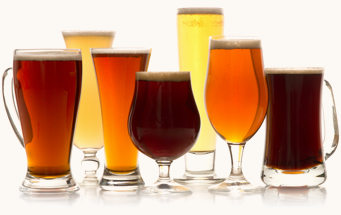
Unmatched Variety by style, brewery & country
Choose from Five different Beer Clubs offering unmatched variety by brewery,
country of origin, and beer style to suit your specific tastes.