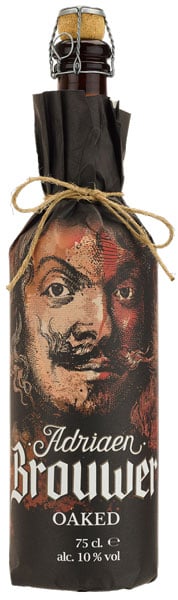
Let’s consider for a few moments the explosion of Belgian beers in the U.S. Whether it was your first Hoegaarden, perhaps a Saison Dupont, or that first magic sip of Duvel, chances are your first taste of Belgian beer left a profound impact on you, and maybe even expanded your own working definition of what beer “is.” Maybe it was the shock that a pale Belgian ale could taste so interesting, be so palatable, and carry an 8%+ ABV without any indication of its strength catching your notice in the flavor profile. Or perhaps it was your reaction to the spicy phenolics inherent to so many Belgian yeast strains. Or possibly you tried your first Trappist quad, or tart Belgian lambic!, and it tasted like nothing you’d ever sampled before.
The fact is, Belgian beers are so very different than mainstream U.S. macrolagers, and it is that difference that has helped make them so popular in the U.S. Big, interesting, flavorful and complex brews that are elegant, refined—often bottled in fancy champagne-style bottles complete with a cork and capped by a wire cage & cap. “This is beer?” “Beer can be fancy?” Obviously, yes. The Belgians have been happy to send the U.S. their beer too—it’s good for their business, of course, and we’re grateful to have them, as for many people these are the very gateways to better beer drinking that heighten people’s interest in exploring other out-there beers, and which certainly helped set the groundwork for U.S. craft brewers to find a foothold. Even macrobrewers capitalized on Belgian beer’s popularity, creating their own “Belgian-style” beers (Blue Moon, a Belgian-inspired witbier, is made by Molson-Coors).
Therein lies a problem. Now with so many Belgian-influenced beers out there, what happens to the family brewers of Belgium who really lay claim to being traditional Belgian breweries? While they remain unique and limited, the consumer can understandably be confused by the virtually ubiquitous use of the word “Belgian” on beers found at their favorite beer bar or retail store. So what’s a brewery like Brouwerij Roman, with brewing roots tracing back at least as far as 1545—making it the oldest family brewery in Belgium—do to better distinguish itself from other Belgian-ish offerings out there? For starters, well, they join up with a sort of guild of Belgian family brewers, of course. Belgian Family Brewers is a non-profit association whose members have been brewing in Belgium for at least 50 years, non-stop, and together they represent less than 10% of all Belgian brewers—with a total of more than 1,500 years of experience in traditional beer brewing. Anywhere one spots the Belgian Family Brewers logo or encounters a member brewery, this lets the consumer know that the beer is genuine Belgian beer brewed in Belgium, comes from an independent family brewery that’s been making beer for at least 50 years and is thus a traditional brewery, and that it is an original beer, meaning no copies of the recipe are sold under any other name or label. Fitting distinction for a brewery that has had 14 generations of family members at the helm, from founder Joos Roman to the current helmsmen, Carlo and Lode Roman.
Think about that for a minute—this family has been making beer since a couple decades after Cortés met Montezuma in the Aztec empire. In fact, the first commercial brewers of the family were contemporaries of Cortés—meaning they could have served him a beer (but probably didn’t… given he was in Spain when the brewery was founded). A historical span that wide-reaching is truly impressive, and we’re particularly excited by the beers that have been coming out of Brouwerij Roman as of late—combining traditional brewing techniques while continuing to evolve into the best of what contemporary Belgian brewing has to offer. For the latest news and visiting info for Brouwerij Roman, head on over to www.roman.be.