
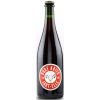


Lambiek Fabriek - Jart-Elle
-
ABV:
6.0% -
Bottle Size:
750-ml -
Serving Temperature:
45–50°F -
Suggested Glassware:
Tulip or stemmed lambic glass
Jart-Elle Oude Kriek pours a striking deep ruby to garnet red, crowned by a lively, champagne-like effervescence that lifts delicate pink foam to the surface. The aroma is immediately expressive and layered, led by bright, freshly crushed sour cherries and cherry skin, followed by subtle almond pit, red currant, and hints of rose petal. Beneath the fruit lies a distinctly lambic core—soft barnyard funk, damp oak, and earthy minerality—creating an aromatic profile that is both vivid and restrained.
On the palate, assertive natural acidity provides structure and freshness, carrying flavors of tart cherry flesh, cranberry, and pomegranate. Oak aging contributes gentle tannins and a faint vanilla nuance, while the spontaneous fermentation adds depth through notes of hay, cellar earth, and subtle leather. The beer finishes bone-dry and elegantly tart, with lingering cherry skin, mineral snap, and delicate oak bitterness. Complex yet refreshing, Jart-Elle balances vibrant fruit expression with traditional lambic nuance, rewarding slow, attentive sipping.
Jart-Elle is built for graceful aging. Over 5–10 years, expect the cherry acidity to soften while deeper, vinous notes of dried fruit, leather, and earth emerge. Fresh, it showcases vibrant fruit and sharp acidity; with time, it gains complexity and elegance.
For pairings, lean toward foods that complement acidity and fruit. Duck breast, roast pork, or pâté benefit from the beer’s tart lift, while aged cheeses such as Comté, Gruyère, or washed-rind styles pair beautifully. For dessert, dark chocolate, cherry tarts, or almond pastries echo the beer’s core flavors. Jart-Elle is a refined expression of traditional kriek—layered, expressive, and unmistakably rooted in place.
Founded in 2016 in Sint-Pieters-Leeuw, Belgium by two longtime friends, Lambiek Fabriek puts a contemporary spin on a classic style. Jo Panneels and Jozef Van Bosstraeten, who had known each other since childhood and had even worked together in Burgundy helping local winemakers with their annual grape harvests, started brewing lambic in 2006, experimenting with styles and ingredients in a converted garage. By 2015, they decided to open a commercial lambic brewery, with Jozef taking on the role of master brewer and Jo becoming the zythologist, assisting with blending and taking on all non-production roles, from finance and accounting to sales and marketing. Their venture has been quite the success, with Lambiek Fabriek racking up numerous awards, including a slew of gold, silver, and bronze medals from the prestigious annual Brussels Beer Challenge.
While wine is well-known for the concept of “terroir” – a wine’s unique character reflecting the region in which it is produced – beer is not typically thought of in this way. However, lambic is perhaps the most prominent exception in the world of beer. This traditional Belgian style relies on spontaneous fermentation using the wild yeasts in the air, creating beers that are unique to their birthplace and unlike anything produced elsewhere.
Lambiek Fabriek brews its lambic using a traditional recipe, which consists of approximately 35% wheat and 65% malted barley, along with aged pellet hops. The stainless steel coolship used at their Zuun location from 2016 to 2021 was locally made and split into two equal halves, each holding 1,200 liters, allowing a full brew to fill the entire coolship. The wort is pumped over at around 95°C and allowed to cool until it reaches about 22-23°C before being transferred to barrels. Master brewer Jozef Van Bosstraeten, assisted by Jo Panneels with blending, ensures each bottling is 5,000 liters. Bottling is semi-automated in Ruisbroek, with a capacity of 1,300 bottles per hour, and the only manual labor involved is adding capsules to the bottles.
In addition to being the master brewer, Jozef Van Bosstraeten is also a cooper. Lambiek Fabriek values having an in-house cooper to maintain barrels and foeders, avoiding reliance on external help. Many of their French oak barrels are first-fill barrels sourced from the Burgundy region in France, where they have connections with local winemakers. As of 2022, the brewery owns around 210 barrels (180 x 400 liters and 30 x 220 liters) and 12 foeders, which were purchased from Italy and Austria, with ages ranging from 30 to 40 years. The smallest 8 foeders hold 47 hectoliters each, while one holds 65 hectoliters, and the largest 3 can contain 70 hectoliters each. The geuze is a blend of lambic aged in 400-liter barrels, while the fruit lambics combine lambic aged in both barrels (of various sizes) and foeders. Some barrels are labeled with a "B" to indicate that the lambic inside is made from organic grains. The 100% organic lambic is used in brews such as "Natur-Elle" and "Organic & Wild Black-Belle."
Unmatched Variety by style, brewery & country
Choose from Five different Beer Clubs offering unmatched variety by brewery,
country of origin, and beer style to suit your specific tastes.