The Microbrewed Beer of the Month Club

Past Newsletters

Vol. 11 No. 10

Brewery
Beers Featured
Frederick Brewing Company Blueridge Porter
Frederick Brewing Company Blueridge ESB
Firestone Walker Brewing Company Pale Ale
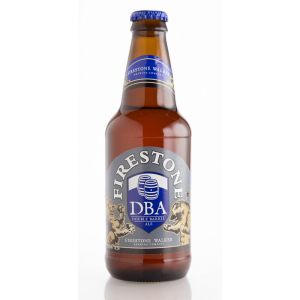
Firestone Walker Brewing Company Double Barrel Ale
EKU Brewery (Germany) EKU Pils
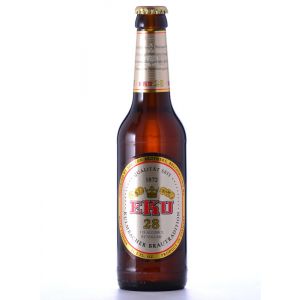
EKU Brewery (Germany) EKU 28

Frederick Brewing Company

Founded in 1993 by Kevin Brannon, a former attorney with a penchant for home-brewing, and Marjorie McGinnis, a psychology student with a genuine love of our favorite malty nectar, the Frederick Brewing Company is currently enjoying their 2nd decade of craft brewing excellence. Although the Mid-Atlantic region was their original market (as they are based in Frederick, Maryland), their distribution has expanded to include the Mid-West as well. These days, beer connoisseurs in more than 20 states enjoy their products. They have seen continued growth over the years, selling 660 barrels of their tasty brew in 1993 to 21,577 barrels in 1999. In order to keep up with demand, in 1997 they completed construction of their new brewery which bumped up their brewing capacity to 100,000 barrels per year. Obviously thinking big, they designed the facility to easily expand to a 300,000 barrels per year capacity! We hope they find themselves needing to take advantage of their forward-thinking design plans, as these guys brew some really tasty beers and are all around good people, in our humble opinions. It would seem that they are well on their way—they’re already the Mid-Atlantic’s largest craft brewery.

Between their first Brewmaster, Steve Nordahl, and their current Siebel Institute Educated Brewmaster Daniel Maerzluft, the Frederick B.C. has crafted no less than 26 styles of fresh, full flavored beers since their inception. Across all these varied styles one thing is a steadfast constant: they use only the finest barley and hops to brew their award-winning beers. As they put it themselves, “it takes first-class ingredients to make first-class brews.” And we couldn’t agree more! Exceptional flavor and superior quality have won their beers medals and top honors around the world, giving them a reputation for quality even in regions where their beer is not yet available. Case-in-point was their inclusion in Food & Wine Magazine’s 1998 editor’s choice list of America’s top breweries. In selecting the winners, the editors of the magazine said they relied upon the “informed opinions of bartenders, beer writers and editors and industry analysts.” The editors also researched the results of ten years’ worth of beer festival contests to see which breweries performed the most consistently.

As you may have surmised from our description thus far, Frederick Brewing is one of the fastest-growing craft breweries in America. And they hold the distinction of being one of only two purpose-built craft breweries on the East Coast. In other words, they are not a restaurant or brewpub; their only focus is making great beer, period. And here’s an interesting bit of American beer trivia: in 1997, Frederick B.C. came out with the first beer in America to be brewed with hemp seeds—their Hempen Ale. In the fall of that year Frederick also brewed a second beer brewed with hemp—the Hempen Gold, which is a lighter-bodied cream ale.

Frederick Brewing Company is open for tours every Saturday and we think everyone ought to visit them if ever in the vicinity of Frederick, Maryland. Their knowledgeable and friendly tour guides will be more than happy to answer any of your questions, while offering you a selection of over 10 of their fine beers to taste in their taproom. For more information about the brewery and scheduled tours, call (301) 694-7899 or check out their web site at www.frederickbrewing.com.

Blue Ridge Porter

The Frederick Brewing Company’s Blue Ridge line has won awards for many of the styles they produce, so we snatched up a couple of our long-time favorites from the line. The first is their Porter, which we’ve had at the top of our “favorite porters” list for years. We’re not alone in our affection for this brew. In 1994 it brought home the Bronze Medal at the World Beer Championships. The following year they one-upped themselves by bringing home the Silver Medal. And in 1997, Beer Connoisseur magazine awarded them the distinction of being named one of their “top 4 porters”, weighing in at an impressive 92 out of 100 points. Like their ESB (see below), this brew was crafted to emulate the traditional, early English version of the style. As the label reads, “Before the invention of black patent malt, we believed the great London brewers made Porter like this—robust and full-bodied but not overly bitter or astringent.” The nose on this beer is so alluring! Big juicy malts like you’d expect from a robust doppelbock, with a roasted character, along with definite chocolate notes. Full-bodied and rich, there’s complexity to this beer as tons of flavors evolve through the sip. It begins with a slight sharpness and notes of dark fruits. Bitterness slides in about mid-way through the flavor profile, but is very tame. It’s prominent, but very well placed as it never overwhelms. The bitterness subsides a bit to make room for flourishes of chocolate and touches of coffee. Expect a long-lasting bitter finish with some smoky elements developing late. Quite tasty with barbequed dark meats.

Serving Temperature: 50-55° F
Int’l Bittering Units: 32.0
Alcohol by Volume: 5.64%
Malts: Munich, Caramel, Black
Hops: Warrior, Cascade

Blue Ridge ESB

The national drink of England is an ale called “Bitter”, designated as “Ordinary”, “Best”, and “Extra Special Bitter”, or ESB, depending on its strength and body. Since World War II, American soldiers returned stateside knowing bitters as the most popular drink in the realm of British beer drinkers. The word “Bitter” itself is a reference to the hoppy dryness of these beers versus that of milder brews. Bitters always have a signature hoppy dryness, but also can contain a suggestion of soft-fruit. Paradoxically, not all bitters are necessarily bitter at all; in fact, they can tend toward the sweeter side, although they will most certainly possess a hop emphasis. The color of bitters can vary quite a bit from one to the next but they do share one trait: Bitters are almost always translucent in color. They’ll run the gamut from rich copper red to golden to pale bronze. When bitters are vibrantly red colored, they are sometimes compared to the red wines from Bordeaux. Blue Ridge ESB is just such a coppery red color, which instantly distinguishes it from the rest.

Expect some caramel notes and floral hops on the nose with a touch of pine and a hint of chocolate. Expect the flavor profile to follow suit with sweet, lightly toasted caramel malts and a tight bitterness in the finish along with gentle floral hop tones, true-to-style. Many domestic ESBs we’ve sampled tend to exhibit a lot of range and variation to them. As a style, there are a lot of liberties taken domestically when “interpreting” this style. The Blue Ridge ESB is a dead on, traditional, true-to-style ESB, which no doubt contributed to its recent rating of “Highly Recommended” by the Beverage Testing Institute. Enjoy with a medium-rare steak or roast, or over some spicy lobster.

Serving Temperature: 48-55° F
Int’l Bittering Units: 35.0
Alcohol by Volume: 5.91%
Malts: Munich, Caramel
Hops: Warrior, Willamette, Cascade

Firestone Walker Brewing Company

As a member of a well-known family of Santa Barbara County California winemakers, Adam Firestone stood out a bit. When gathering for family dinners, he’d be the only one who had a bottle of beer at the table. When his sister Polly married David Walker, a fellow beer lover with a keen awareness of British beer styles, the brothers-in-law started talking about getting a microbrewery founded. Their venture into beer brewing was spurred on by their area’s shortage of grapes in 1995. They used what winery supplies they had available to brew their first batch, which was made in old Chardonnay barrels. Sadly, the residue from the wine contaminated their first batch, but after switching to new American Oak barrels in a closed system based on the old British brewing method called the Burton Union system (which is rarely used today), the Firestone Union oak barrel brewing system was born…

Instead of using stainless steel tanks, Firestone Walker uses individual 60-gallon oak wine barrels for fermentation and conditioning. The improved palate, hop maturity, unique flavors and aromas imparted by the oak barrels all add up to beers of intriguing complexity. This unique process, which links winemaking and beer brewing techniques, makes them the only American Brewery that selectively ferments its ales in oak barrels.

Here are a few of their very impressive brewery accolades and distinctions (in addition to the medals won by their fine beers—some of which are listed in the beer reviews below). Both the brewery and their head brewer Matt Brynildson were named “World Beer Cup Champion Brewery and Brewmaster” for the category of Mid-Size Brewing Company (which spans all breweries with an annual production between 15,000 and 2 million barrels) at the 2004 World Beer Cup. The award follows a similar distinction at the 2004 Great American Beer Festival at which Firestone Walker B.C. was named “Mid-Size Brewing Company of The Year” while Brynildson was named “Mid-Size Brewing Company Brewmaster of The Year.”

These days, Adam’s younger brother Andrew Firestone has joined the family team in the capacity of Sales Manager. Andrew combines a similar passion for fine beer with broad experience in institutional finance, adding a new dimension to Firestone Walker Fine Ales. Some of you might recognize his name for another reason besides the well known surname of ‘Firestone’. Andrew was the star of ABC’s popular Reality TV show “The Bachelor” (season 3).

For more information about the brewery or scheduled tours, call (805) 238-2556, or visit their website at www.firestonebeer.com.

Pale Ale

This is a Pale Ale to be reckoned with. Winner of the Gold Medal at the 2004 World Beer Cup and 2003 World Beer Championships as well as silver medals at both the 2003 Great American Beer Festival and the 2002 World Beer Championships. Immediately note the big Cascade hop nose—characteristically floral, almost perfumy, with citrus scents, a result of the extensive dry hopping with Cascade, Centennial and Chinook hops. The flavor presents notes of floral and somewhat spicy hop flavors. Note the perfect balance between perfumy floral flavors and the countering bitterness. Also expect a solid malt and grain backbone. Great with steak and burgers from the grill. It’s finally Spring—time to thaw out the grill! We bid you a friendly reminder to stock up now for that much anticipated barbecue and what better way than by visiting www.winemonthclub.com and www.cheesemonthclub.com. And make sure you don’t forget to crown those patio tables with your beautiful flowers from the Fresh Cut Flower of the Month Club (www.flowermonthclub.com). Happy Spring!

Serving Temperature: 48-55° F
Int’l Bittering Units: 38.0
Alcohol by Volume: 4.6%
Malts: Canadian 2-Row, Maris Otter Pale, Carapils, Munich, Crystal
Hops: Fuggle, Cascade, Centennial, Chinook.
Additional Notes: Fermented in Oak Barrels (using their patented Firestone Walker Union Oak Barrel Brewing System)

Double Barrel Ale

An ale of distinction, right down to its uniquely shaped brown bottle, this beer has brought the Firestone Walker B.C. its share of medals: Silver Medal at the 2004 World Beer Cup, Gold in 2002 as well as Gold Medals at the 2002 & 2003 World Beer Championships. The English (East Kent Golding) and Slovenian (Styrian Golding) hops impart a clean, balanced bitterness and a fragrant, spicy aroma, while their use of an English ale yeast lends a fruity nose. The flavor possess a peppery quality that mingles with the spicy hops—but peppery and spicy are strong words—the effect is subtle and restrained. Lightly toasted malt and grains mingle with lightly floral hops and slightly fruity tones (with a note of bitter grapefruit juice). The finish is quite bitter, long lasting and very dry. Look also for the slight oaken flavor in the background of the finish. Overall, an exceptionally clean, well-balanced and unique interpretation of a British Ale and a great beer to wash down some chicken wings.

Serving Temperature: 45-52° F
Int’l Bittering Units: 32.0
Alcohol by Volume: 5.2%
Malts: Premium 2-Row, Maris Otter Pale, Munich, Crystal, Caramel, Chocolate Malt
Hops: Magnum, East Kent Golding, Styrian Golding, UK Target
Additional Notes: Fermented in Oak Barrels (using their patented Firestone Walker Union Oak Barrel Brewing System)

EKU Brauerei—Kulmbach, Germany (Northern Bavaria, a.k.a. Franconia)

So you may have noticed—if you were a member of the club in February—that we have selected another beer from the Northern Bavarian town of Kulmbach, Germany. The fact is there are so many amazing beers from this town that we could literally spend an entire year featuring brews from this region of exceptional brewing prowess. Considering the remarkable brewing heritage of Kulmbach, it’s no surprise that so many remarkable beers call this town their home. Archaeological discoveries establish that beer brewing was in practice here as early as 3000 BC, with brewing being a common industry by the mid-1300s! For these reasons, the town of Kulmbach is often said to be the birthplace of Germany’s famous beer industry; a sort of wellspring from which the Bavarian brewing traditions sprang forth.

The town is known for a variety of beer styles, but the most notable style, one indigenous to Kulmbach, is “eisbock”. This unique style of beer is based on a variant of the traditional bock style initially made famous in the town of Einbeck, Germany, located about 175 miles northwest of Kulmbach. At this point, we feel that a review is in order regarding the history of this style of beer… Here goes… The style was not originally known as “bock” beer. As it happens, this malty-sweet, rich Einbeck brew was eventually brought south to Bavaria by the Duke of Brunswick, who wished to have the famous beer of Einbeck available at his wedding in Munich. The beer was so popular there that a master brewer from Einbeck was eventually hired to produce the beer locally. Through years of Bavarians requesting “Einbeck Bier” the name became corrupted to “Ein Bock Bier” (sounding like “one bock beer” in German), and ultimately just “Bock Bier”.

But the Bavarians’ contribution to the style is not limited to coining the name. In 1780 the Elector of Bavaria granted Italian monks from the order of St. Francis of Paula the right to sell beers they had been producing for his court. You couldn’t exactly call the result unexpected, for just as a rule of thumb, any time you invite an order of monks to brew your beer, you’re going to get some pretty stiff sauce, which is exactly what was created when they developed the stronger Doppelbock (meaning double bock). The brothers of St. Francis of Paula named their beer “Salvator” after the Savior, and a direct descendant of this beer is still available today, carrying the same name.

The doppelbock style rose to popularity after the creation of the original, Salvator, and after years of being copied (right down to the actual name), the name was eventually protected. As a result, other brewers began naming their doppelbocks with the suffix “–ator”. Today, anytime you see a beer ending with the letters “ator”, you can be pretty sure you’ve got a doppelbock on your hands. But beware; the name “bock” is used quite liberally. Some so-called “bock biers” do not resemble the true bocks at all… the popular Texas brew ‘Shiner Bock’ is such an example (it’s basically a light-bodied dark lager)…

Now that we’ve reviewed where bock and doppelbock beer came from, we can return to the variant created in Kulmbach—eisbock. According to local lore, a wooden barrel of bock bier (in the 6.5-7.5% ABV range) was accidentally abandoned in the yard of a brewery right smack in the dead of winter. Snowfall covered the barrel and it was forgotten until uncovered by thawing in early spring. By the time it was found, the contents were partially frozen, and the barrel had split open enough to expel some of the original contents, but leaving behind a fair amount of the original brew. The ice that encased it was chipped away, and the residual beer left inside was tasted (crazy brewery staff—they’ll drink anything), whereupon it was discovered to be much richer and more concentrated than the original, yet still possessing an exceptionally clean taste. The reason behind this phenomenal discovery is a matter of simple physics; water freezes before alcohol, thus, some of the beer’s water content was forced out of the brew and froze, eventually being removed as it was chipped away when they discovered it. The contents remaining inside therefore underwent a relative increase in the proportion of alcohol to the remaining beer volume. This “technique” was refined, and today gives us one of the beers the region is famous for: Eisbock (eis means ice in German). Here we have the union of physics and beer history—what an educational newsletter this month, huh?

The Kulmbach beer we featured back in February is the original Bavarian Eisbock, known simply as Kulmbacher Eisbock and brewed by the Kulmbacher Brauerei. A similar beer with an even simpler name is EKU 28, brewed by the Kulmbacher Brewery’s long time nemesis, the EKU Brauerei (also located in Kulmbach). EKU stands for Erste Kulmbacher Union, which translates to “First United Brewery” (read the review of EKU 28 below if you want to know where the “28” comes from). It was founded in 1872 and for nearly 125 years competed fiercely with the Kulmbacher Brauerei, as well other Kulmbach breweries such as Reichelbrau, Sandlerbrau and Mönchshof.

Remarkably, the ‘miracle’ of corporate ownership has helped these breweries reconcile their differences—in 1996, these independent breweries became part of the same company, adopting the title of the simplest among them, the Kulmbacher Brauerei AG (or Kulmbacher Brewery Ltd.). While today united under the same name, each brewery continues to operate independently. That is, the original Kulmbacher Brauerei still makes the beers they built their reputation on, and the EKU Brauerei still makes the EKU 28 and EKU Pils that they’ve been brewing for a combined 170 years!

Interestingly, EKU 28 and Kulmbacher Eisbock competed ferociously for the title of “World’s Strongest Beer” from EKU’s creation the early 1950s through the late 1970s. At that time, each weighed in at roughly 13-14% ABV—alternatively outdoing one another in terms of alcohol content for nearly a decade. However, current brewing technologies have developed far stronger brews, such as Samuel Adams (Boston Beer Company) Utopias MMIII, which usurps Kulminator’s former title, and all others that have claimed to be the strongest beer in the world, at an astronomical 25% ABV! That’s a 50 proof beer! While no longer the world champs, Kulmbach Eisbock and EKU 28 are still exceptionally drinkable. The fact that we have featured them both offers our members a unique opportunity, providing that you took our advice when we offered the Kulmbach Eisbock a couple months ago. Back then, we suggested that you keep a few bottles of the brew to age, as it improves in quality when stored properly (continuing to mature for up to 10 years!) If you’ve still got some left, here’s a unique opportunity for you run a side-by-side taste test of these former rivals to decide for yourself! Prost!!

If you’d like more information about the EKU Brewery (and like spending your time deciphering German-only websites) check out http://www.kulmbacher.de.

EKU Pils

We decided to feature the EKU Brauerei’s EKU Pils in order to showcase the remarkable variety that exists in beer styles. As you probably know by now as a member of our club, all beer can be broken down into two categories: Ales and Lagers. Ales are fermented at warmer temperatures with yeast that work their magic at the top of the fermentation tank (which is ales are also known as “top-fermented”). The warmer fermenting temperatures that make top-fermenting yeast happy result in fruity notes and complex aftertastes (generally speaking). Contrastingly, lagers use bottom-fermenting yeast that prefer colder temperatures when converting sugars to alcohol. Due to the lower temperatures, these yeast require more time to complete their fermentation process, and are often stored away while they ferment (the word lager is derived from the German word meaning “to store”). They are generally characterized by low levels of fruity flavors and exceptionally clean, crisp aftertastes. Once you taste the beers we have featured for you, you might think, due to the remarkable differences in flavor between the two, that one is a lager (the EKU Pils) and the other an Ale (the EKU 28). The remarkable truth is that these are both lagers! They both use bottom-fermenting, lager yeast, but are brewed with such different ingredients and techniques that their flavors are polar opposites. This is part of the reason that we love hand-crafted, microbrewed beer so damn much—the sheer variety inherent in its many styles…

EKU Pils is, as you may have guessed, a Pilsner, which since its inception as a style of beer in 1842 has become the single most popular style of beer the world has ever known. Golden in color, it originated in the Czech Republic town of Pilsen. Up until that time, all beer was dark and cloudy. The Czech pilsner was the first beer to be brewed clear and golden. The Germans quickly proved to be the most passionate devotees of the new style. Towns across the land began brewing their own Pilsner beers, and the name of the style was soon shortened to the friendlier “Pils.” The German contribution was to make the beer a bit lighter in body—better suited to everyday drinking—and to add an extra dose of hops for a refreshingly bitter zing. Pils brewed in southern Germany generally has a sweeter, maltier taste, while Pils brewed in the north tends toward a hoppier bitterness. In Kulmbach, in the center of the country, the best balance between the malty and hoppy elements of a classic pils is achieved. Expect a massive, brilliant white head to top this lucent gold, well-carbonated beer. Look for a characteristic pilsner maltiness with notes of floral and spicy hops. We found it to be remarkably refreshing, easy-drinking, with a crisp, clean, dry finish and slightly bitter hop-driven aftertaste. A very food-friendly beer that will partner nicely with anything from light fish to Chicken Kiev to pizza to spicy Thai cuisine.

Serving Temperature: 48° F
Alcohol by Volume: 5.0%

EKU 28

EKU 28 walks the line between a true eisbock and a fortified doppelbock. Its recipe remains a secret, but it is known that while lagering for an astounding nine months, its temperature is dropped until it begins to freeze. However, the brewery claims that the amount of ice left behind is not regarded as being a significant factor in its potency. And while the recipe is under wraps, we do know that the “28” subtitle is a reference to the degrees Plato of this beer, the German system of ‘original gravity’ (a measurement of the density of fermentable sugars in a mixture of malt and water with which a brewer begins each batch of beer). In order to achieve its high alcohol levels, a lot of malt has to be used in order to supply the sugars that yeast will use as fuel in order to create alcohol. By comparison, your average beers have original gravities that range from about 8 to 10 degrees Plato.

EKU 28 presents a huge, caramel-sweet nose. The flavor is remarkable as it slides across the tongue with notes of chewy caramel, fresh bread, very light hints of fruit, and inevitably, some alcohol. The finish is expertly crafted using a gentle dosing of hops which nicely balances this beer’s overall sweet flavor. This is a beer for special occasions. Then again, anytime you open one, you’re in for a special occasion! It is so rich that we don’t recommend it with food—but after dinner as a digestif, like a port wine, is just fine. Also great with a variety of fuller-bodied cigars. Not a member of our Premium Cigar of the Month Club? The right beer and cigar pairing can be an amazing experience. Every month our cigar club features five ultra premium stogies and our accompanying newsletter offers alcohol pairing suggestions—often times beer. Check out www.monthlyclubs.com for more info and get your subscription (or one for a friend or family member) started today!

Serving Temperature: 48° F
Alcohol by Volume: 11.0%

ASK MURL

Hey Murl,

I’ve been thinking of getting a little beer tasting session together for some friends of mine. Hey, I might even be able to persuade them to join the club if they like what they taste! So, seeing as how you might actually benefit from my little endeavor, I was hoping you might have some suggestions for me on how to conduct the session—there are so many brews out there, I’m a bit overwhelmed as to what to serve, the timing of it all, how much to serve, the order… Pretty much the only thing I’m sure about is the fact that I want to get this tasting thing going… Can you help me?

Donna Long
Dana Point, CA

Yo Donna from Dana!

So, tips for conducting the session… well, I can say that it’s probably not a good idea to lead this thing with a pair of underwear on your head—folks rarely take ya seriously when ya do that sort of thing. And you should definitely avoid sucking helium and talking like a munchkin throughout your presentation—again, tough to really impress your audience that way. Bearing these two important starter tips in mind, here are some additional guidelines… But please be advised Donna—there are a ton of ways to conduct a proper beer tasting (and even more ways to conduct an “improper” one, if ya catch my drift). I’m enacting my executive privilege here and will provide a few suggestions in this month’s column, and some additional ideas next time around, so be sure to stick around for May’s beers (they’re solid brews, believe me, so it’s in your best interest any way you look at it).

First, how to arrange your brew order… We’ve all heard that you should progress from light beers to dark beers in a tasting, but that’s not exactly a steadfast rule. What you really want to do is start with less intense beers and build to richer, stronger brews as you go, so you don’t completely adulterate your palate. For example, some Abbey Ales or Trappist Trippels are quite light in color, especially when compared to a dark Euro-lager or Dunkel lager, but they are far more rich and robust, often with twice the alcohol content of those darker beers. Sampling a Tripel before trying a Dunkel would almost certainly knock your taste buds right out of recognizing the subtle complexities of the latter, milder beer. Know your beers before you begin and arrange them using an intensity grading rather than the potentially arbitrary color scheme.

You’ll have to decide what type of beer tasting you’re looking to conduct… If you’re trying to showcase the sheer variety of beer styles out there, using as few brews as possible, you could select a line up that varies drastically from one sample to the next (I would try this out as a good starter tasting): begin with a Chech Pilsner (floral, dry, crisp), then sample a dopplebock beer (super malty, sweet, high alcohol content). Hey—looks like you have both available right in front of you (see this month’s featured brews!) Both are lagers, but they’re dramatically different beer styles. Then contrast these with two ale selections, like a Belgian Wit (yeasty, citrus-accented, medicinal and thirst-quenching) followed by a Porter (roasty, malty, sometimes spicy and often smoky), or a German Altbier (floral, crisp, clean) followed by a Barleywine style ale (aggressively hopped, juicy sweet malts). For this type of tasting that compares and contrasts 4 beers (2 lagers, 2 ales), I’d serve up 6-8 oz. bowls, I mean, glasses. For more beers, 4-oz servings are usually a good sample size, though I am known to just sample the entire beer when the mood strikes. Be sure you’re serving each of your beers at their ideal serving temperature. I’ll give some more pointers next time Ms. Long, but I’ve given you enough for your first assignment. Class dismissed!

Woof!
Murl

Norm’s Corner

Coach: How about a beer, Norm?
Norm: Hey, I’m high on life, Coach...Of course, beer is my life.

For Members Only

Give Your Friends FREE Beer, Wine, Cheese, Chocolate, Cigars & Flowers!
Through our Customer Appreciation Program

Your name has real value to your friends, co-workers, and family members! Every time a friend, family member, or anyone else you know joins any one of our clubs, [or gives a gift] for 3 months or longer, we'll give them 50% off of their first month, but only when they mention your name. And we'll also give you 50% off your next month too which can either be applied towards your current membership or you can try one of our other Clubs out! (We can add one more month to your order at 50% off for prepaid memberships!)

The Fine Print: Members giving gift memberships do not qualify for referral credits and you can't give yourself a gift to qualify! This Program is mutually exclusive of any other promotions.

RE-ORDER PRICING

Members can re-order their favorite beers
either online or toll free at:
8 0 0 - 6 2 5 - 8 2 3 8

FEATURED BEER
Club
12 Bottles
24 Bottles
Frederick Blueridge Porter
Dom/Dom & Intl
$24.95
$49.95
Firestone Pale Ale
Dom/Dom & Intl
$24.95
$49.95
Frederick Blueridge
Dom
$24.95
$49.95
Firestone Double Barrel Ale
Dom
$24.95
$49.95
EKU Pils
Intl/Dom & Intl
$32.95
$54.95
EKU 28
Intl/Dom & Intl
$40.95
$64.95
All prices include shipping and handling. Mixed assortments are available upon request.
CA customers please add 7.75% sales tax.

Membership Q & A

Q: What can I do if I'm having difficulty receiving my shipment at home?
A: You should consider having our discrete box delivered to your work location or to a neighbor 21 yrs. of age that can receive it for you. As your shipment requires and adult signature to receive, it's always best to ship it to a location where someone will be there to receive it for you. The box is brown corrugated cardboard and doesn't say "Beer" on it anywhere.

Q: What should I do if I'm moving or want to extend my membership?
A: Please call us prior to the 5th of the month to make all account related information changes such as address changes, membership extensions & terminations, or gift accounts desiring to continue their memberships. Address changes made after that time may require a repackaging and re-shipping charge of $12.00. Additionally, if your box is re-routed by UPS from an address different than what was originally specified, you may incur a $5.00 re-routing charge.

Q: What happens if my shipment is damaged?
A: If your shipment arrives damaged, please call us immediately toll free at 1-800-625-8238 and report the incident for a prompt resolution.

Q: What happens if my credit card is declined?
A: We will send you a courtesy notice asking for an alternative payment method, and will also attempt two more times to process the charges. If we cannot secure
payment and have not been contacted by you, the order will be temporarily suspended.

Q: What happens if I join under a special incentive program and don't stay a member for the entire term committed?
A: Not a problem. Although we want to do everything we can to keep you as a member, we will allow you to cancel your subscription early; however, you will be responsible to pay for the item that was given to you as part of the promotion. If you received a discount based on a specific term, the amount discounted will be charged to your card.

C&H Internationals Logo Since 1994
Join Our Club
Gift Memberships

Membership Renewals
Reorders
Home Page
More Information
Current Selections
Past Selections
Testimonials
Other Gourmet Clubs
Corporate Gifts
Wedding Gifts
Brewery Search
Style Guide
Beer Fun Section
Industry Resources
Festivals
Print a Gift Card
Send a Virtual Brew
Refer a Friend
Send a Hint
E-Promos
Contact Us
Link to Us

1 - 800 - 625 - 8238
(Outside US call: 949-206-1904)
P.O. Box 1627, Lake Forest, CA 92609