Past Newsletters
Vol. 12 No. 1
Bringing You The Best Domestic Microbrews for 12Years Now!!
Brewery
|
Beers Featured
|
| Uinta Brewing Company | King's Peak Porter |
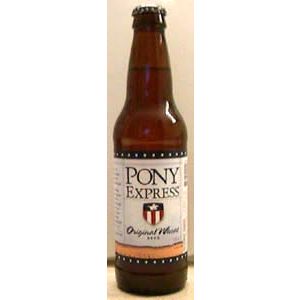
| Pony Express Brewing Company | Tornado Red Ale |
| Uinta Brewing Company | Angler's Pale Ale |
| Pony Express Brewing Company | Origional Wheat Ale |
| Brouwerij De Ranke (Belgium) | Guldenberg |
| Heather Ale Brewing Company (Scotland) | Kelpi |
Member Of The Month—Oh, the Anticipation!
Last month we announced that beginning in July we would start running our new Member of the Month feature. We’re getting a great response so far, but wanted to give everyone a shot at submitting their photos for consideration. So, we’re going to start in August. Which means you’ve still got time to get that picture of yourself enjoying your monthly shipment in to us. If you’re new to the club, here’s the deal:
Simply submit a photograph of yourself (with or without company), snapped while enjoying your monthly features, along with a few lines of text detailing the scenario to MOM@monthlyclubs.com (don’t forget to give us your name and address). If we select your picture, you’ll get a FREE one-month extension to your club membership! Not only that, but you’ll have your gorgeous mug in our newsletter and plastered all over our website! You know what that means don’t you? Instant celebrity! So line up those pints, get those cameras out and start snapping some photos—it just might earn you a free month of craft-brewed beer! Now honestly, what better payoff is there?
Uinta Brewing Company
Uinta (pronounced “you-in-tah”) is named after a major east-west mountain range located in the Rocky Mountains. The word “Uinta” comes from the Ute Indians, and in fact, this tribe also gave Utah its name. But, just as an FYI, it is unclear where the pronunciation came from, as the word Ute is sometimes pronounced "Oot", "Yoot" or “Yutah”. The Uinta Brewing Company was established in 1993 with the intent of crafting full-flavored, fresh and unique domestic ales in an environmentally friendly, sustainable manner. The names of Uinta’s product line have been inspired largely by Utah's rich heritage and inspirational landscapes.
In choosing to establish the Uinta B.C. in Utah, founder Will Hamill managed to fuse his passion for brewing with his love of the outdoors. Drawn to the rich and diverse landscapes of Utah, Will settled into a lifestyle similar to that of many Utahans that included skiing, kayaking and biking. However, Will, originally from Maine, longed for the tastes of fresh, craft-brewed beer. To satisfy his own thirst, Will became consumed with home brewing. After years of refining recipes, he created beers that kept him and his friends smiling, and was soon convinced that he had found his calling. He formally studied brewing at the University of California at Davis to further his knowledge of the industry.
In getting started, endless days and nights were spent converting an auto-mechanic’s workshop into a brewery, and initially just one employee worked for free to help get Uinta off the ground. The foremost goal was—and still is—to brew beer that satisfies the most discriminating tastes, including those of the brewery staff.
At the turn of the century, Uinta Brewing Company outgrew its original facility. A 26,000 square foot state-of-the-art brewery was built with energy efficiency and conservation in mind. The brewery’s new nesting grounds are fully equipped with the latest in brewing technology—including systems that ensure that the facility is 100% wind powered. That’s correct folks—one-hundred percent powered by nature herself! Pretty sweet, huh? Looking at it this way, by enjoying Uinta beers, you’re playing a part in preventing the release of 357,120 pounds of carbon dioxide per year—the equivalent of planting 71 acres of trees, or not driving 348,400 miles per year. The new building reflects Uinta Brewing Company's efforts to be a leader in the brewing industry while remaining committed to conservation.
For more information about the brewery and scheduled tours, call (801) 467-0909 or check out their web site at www.uintabrewing.com.
King's
Peak Porter
King’s Peak, located in the Uinta Mountains, is the single highest point
in the state of Utah at 13,528 feet. King's Peak Porter, by contrast, is the
deepest colored brew made by the Uinta Brewing Company. The medium-bodied,
malty flavor and dry, roasted body bridge the gap between traditional porter
flavors and German Schwarzbier (or black beer). Expect a healthy dose of chocolate
malts throughout. Topped with a thick tan creamy head, our beer panel concurred
that this expertly balanced beer has a more defined hop character than what
is common for this style, but we just loved it that much more for that (lots
of hop heads on our panel)! Tasting this beer, it’s no wonder that King’s
Peak swept the 2000 Gold Medals at both the Great American Beer Festival and
World Beer Cup in the German style Schwarzbier category—and the 1999
Silver medal at the World Beer Cup in the German porter category. This beer
is great with grilled salmon, Madeira steak tips or smothered pork chops.
Serving Temperature: 45-50° F
Int’l Bittering Units: 21.0
Alcohol by Volume: 4.20%
Malts: Caramel, Munich, Chocolate, Roast, Black
Hops: Chinook, Willamette, Tettnang
Anglers Pale Ale is a fine catch indeed! And as an export, it carries a higher
ABV than your typical Utah brew (see Ask Murl below for more on this). You
can expect a traditional pacific northwestern styled pale ale, offering a rich
copper color and clean, complex malt profile. Look for this medium-bodied brew
to deliver a big floral Centennial and Chinook hop nose. Note a delicate balance
of subtle maltiness and hop bitterness. We found the finish to be somewhat
malty, offering a lingering, hop bitterness. You’ll be back for more!
This beer has taken home many awards, including Silver Medals at the 2001 & 2003
North American Brewer’s Association (NABA). A tasty brew with a variety
of meals—and perfect to have on hand for that summer BBQ. Cheers!
Serving Temperature: 40-45° F
Int’l Bittering Units: 44.0
Alcohol by Volume: 5.70%
Malts: 2-Row, Caramel, Munich
Hops: Chinook, Centennial
Pony Express Brewing Company
When you think of Kansas, what comes to mind?
If you’re like most people,
you’re brain is filling with images of ruby slippers, tornados, corn
fields and the flattest U.S. landscape of any of the 50 states. But after you
try the beers we’ve selected from the Pony Express Brewing Company, we
think you’ll start associating Kansas with great microbrewed beer as
well! This heartland brewing operation was founded in 1995 by Joe Effertz,
Jr., in Olathe, Kansas. Originally a farmer with a degree in agriculture from
the University of Missouri, Effertz decided to leave his company farm to try
something different. After opening a retail liquor store, Effertz noticed a
rise in popularity of micro-brewed beers (this was right at the start of the
microbrew renaissance). He studied craft brewing techniques and, staying within
the spirit of a crafty farmer, came up with a plan to launch his own microbrewery.
He still uses the wheat grown on his family’s own farm in his beers and
sells the by-product grains to cattle farmers to use as feed.
Back in 1994, Joe met Ed Nelson and the two joined forces, eventually opening
two restaurants and a brewery in the Overland Park area of Kansas. They purchased
the Olathe building for the brewery and began working on what would become
the highly successful Pony Express brand. Joe got the name for the brewery
when he was on his way to the hospital in the back of an ambulance and someone
said, “drive fast like the Pony Express!” Together the team developed
a wide variety of beers that reflect the spirit of the American farmlands.
Today the Pony Express Brewing Company is recognized as America’s first farmer-owned brewery. TransCon AG, Inc. is a new generation cooperative owned 100% by farmers from Missouri and Kansas, and the Pony Express B.C. is one of their primary subsidiaries. Their primary focus, like any good farmer, is quality control—from initial crop planting to the finished production process. And this dedication has paid off as the locals have taken quite a liking to the Pony Express brews. But the locals are not alone; along with a Midwest distribution network, Pony Express beers were the first American microbrews to be distributed in Taiwan and China. Now that’s a long way from Kansas, Toto.
For more information about the brewery and scheduled tours, call (913) 764-7669 or check out their web site at www.ponygold.com.
Well since The Wizard of Oz made Kansas famous for its tornadic activity,
the state has been engrained in people’s minds as the land of twisters.
So, it probably comes as no surprise that this tasty brew carries a bit of
Kansas’s best known weather phenomenon in its title… Tornado Red
Ale is not only tasty—it’s the winner of the 1997 Silver Medal
at the Great American Beer Festival. Every batch of this beer—like all
of the Pony Express beers—is brewed with soy, a major crop grown in Kansas.
Yes, it turns out that soy is fermentable like barley or wheat! You can expect
a light hop aroma with some white-pepper and floral components. An unexpected
chocolate note grabbed our attention among the grassy hops and caramel malts
flavors. Overall, this is a wonderfully balanced beer and a really great red.
Perfect with chicken wings.
Serving Temperature: 45-50° F
Int’l Bittering Units: 18.0
Alcohol by Volume: 5.67%
Malts: 2-Row, Caramel-30 & Caramel-80, Munich, Muessdoerffer Munich, Crystal,
Euro-Vienna
Hops: Centennial, Hallertau
Additional: Soy flour
The Pony Express Unfiltered Wheat is brewed with a combination of two-row
Pale, Carapils, Munich, & Caramel malts as well as malted wheat and unmalted,
raw White Wheat from the Effertz family farm. Brewmasters Jung Yoon and Joe
Pickett hop it up nicely with three varieties of hops for a slightly spicy
character. Look for some yeast and wheat coming through on the nose as well
as a touch of floral hoppiness and a hint of cherry. There’s a full-bodied
creaminess that rolls out across the palate; this is partially due to the soy
used during fermentation. Expect bitter, lightly peppery hops to come in early
and mingle with malt tones and breaddy flourishes that slip into the lightly
sour yet mellow aftertaste. As it warms, expect the traditional clove and banana
elements of a solid wheat beer. Try with huevos rancheros or a Spanish omelet.
Serving Temperature: 40-45° F
Int’l Bittering Units: 16.0
Alcohol by Volume: 5.22%
Malts: 2-Row, Munich, Carapils, Caramel
Hops: Willamette, Fuggles, Cascade
Additional: White Wheat, Soy Flour
Brouwerij de Ranke—Wevelgem, Belgium (a.k.a. West Flanders, Northwestern Belgium)
For our club members who were with us last month—welcome back to Belgium! We’ve said this before, but sometimes we think about starting a separate club that features only Belgian beers; the fact is, there are so many different styles from Belgium—and multiple stunning examples of each. We could keep a club going for years and never repeat a single beer in our would-be Belgian Beer Club… But, for now, we’re going to throw in the most worthy and particularly interesting examples of Belgian brews as we find them.
One such example comes to us from the Brouwerij (brewery) de Ranke out of West Flanders. We’ve selected a really solid example of a Belgian Strong Pale Ale, but the version from de Ranke is unlike any other example for a number of reasons. First off, the production quantity is so limited, you’d be hard pressed to find it elsewhere in the US. Secondly, it is more heavily hopped than most examples of the style—so it suits many of the craft microbrew fans in the US who have come to appreciate a healthier dose of our precious little friend the hop. Thirdly, this beer was only recently created, and yet it is sweeping through Belgium with massive popularity—impressing the least impressionable of beer-loving palates. We’re talking about Guldenburg at present (and you can read more about it in the tasting notes section below), but we have a feeling we’ll be featuring more de Ranke brews down the line.
The De Ranke brewery was founded by two good friends, Nino Bacelle and Guido Devos. Their story is a classic in Belgium, where the very best craft brewing usually begins as a passionately pursued hobby, not an occupation (a similar tale is told again and again in the US as well). For Nino and Guido, brewing is literally a weekend obsession. For a few hours on Friday and Saturday each week, the historic turn-of-the-century Deca Brewery in West Flanders is turned over to the De Ranke brewers, who make small batches of what many consider the best specialty beers of Belgium. Their beers are robust and flavorful, and known for their atypical massive hoppiness, which comes from the best Hallertau and Brewer’s Gold varieties.
This brewery is too young and its production too small to get notice in any of the Belgian beer books yet, but De Ranke is earning themselves a fantastic reputation among connoisseurs in Belgium. American beer lovers may ridicule the idea that there is one “best beer” of Belgium, but Belgians themselves are given to such strongly-worded opinions—especially when it comes to De Ranke. And from a brewery only four years old!
The Brouwerij de Ranke produces their fine ales on a part time basis and in such limited quantities that they have not yet gotten around to creating their own website. So, we have no web address for you to visit to get more info on them. Thankfully, their story of dedication and quality is told in each delicious bottle of their beers. Enjoy!
Guldenberg
This outstanding beer is an example of the Belgian Strong Pale Ale style, though
it doesn’t really fit neatly into that category, and the label actually
states that it’s a Tripel. While it does possess that champagne-like
quality that makes folks wonder if they haven’t been slipped some sort
of wine instead of a beer, there are some distinct differences in the flavor
profile. Yeast obtained from the nearby Rodenbach brewery lends a distinctive
character to the beers, imparting an earthier character similar to most lambics
(Belgian fruit beers) instead of the banana like spicy esters more typical
of triples and saisons. Another difference is de Ranke’s heavy dosing
of hops in their beers. You’ll notice that this unfiltered beer pours
a cloudy, beautiful, orange-gold in the glass and has a very sturdy, thick
white head. The aroma smacks of honeyish malts and some tropical fruit tones
as well as a lemony zest and ample hops. Expect sweet maltiness, lemony, apple
and pear tart flavors that all find their way through the zesty Hallertau and
Brewer’s Gold hop finish. We found it to be extraordinarily easy to drink—so
be careful—at 8.5% ABV, this is a powerful brew. Especially nice with
Mediterranean cuisine or a fine, sharp blue or a pungent gorgonzola or even
limburger. If you’d like to learn about fine gourmet cheeses first hand,
consider picking up a membership to our Gourmet Cheese of the Month Club. Details
may be found at www.monthlyclubs.com.
Serving Temperature: 45-50° F
Alcohol by Volume: 8.5%
Heather Ale, Ltd.—Strathmore, Scotland (South Central Scotland)
Many of the indigenous beers of Scotland, with their unusual ingredients and varied flavors, slipped away into extinction ages ago. But with a multitude of very interesting styles, reflective of the various cultural and agricultural influences present in the region over the centuries, the area has a rich past of fine ales and lagers that was destined to reappear. Paramount in reclaiming these ancient beers from the deep vaults of time is Bruce Williams, a brewer and homebrew shop owner in Scotland. In 1986, Bruce began making batches of a unique Heather Ale using an astonishingly old recipe.
Heather is the flower responsible for the purple hues in the mountains of Scotland. It was used to make beer long before the first hops were ever added to ancient brewing vessels. Beer made with heather is among the oldest beer styles produced in the world. Brewed in Scotland since 325 B.C. by the Picts, a Celtic tribal race who defended their land from Roman, Saxon, Briton and Viking invasions, the history of heather in alcoholic libations goes back much further than even this ancient date. Traces of a fermented beverage made with heather flowers have been found by archaeologists dating back to 2,000 B.C.! However, it was the Picts who made this ale legendary—guarding the secret recipe, quite literally, with their very lives. In a famous legend of the Scots’ invasion of Pictish land, the local population was decimated. The final two survivors were a Pictish Chief and his son, the last individuals known to hold the secrets of the Heather Ale. The two were tortured and the chief offered the invading King of the Scots the secret recipe of the Heather Ale if their captors would agree to kill his son quickly. After the boy's body was hurled from a cliff side, the Pictish chief faced the King and said “But now in vain is the torture, fire shall never avail, here dies in my bosom the secret of the heather ale.” He then threw himself at the King, taking him down as they both fell to their deaths from the cliff.
Now don’t ask us how, but in 1986 Bruce Williams uncovered an ancient recipe for “leann fraoich” (Gaelic for heather ale). Since then he has triumphantly resurrected this and other styles which are currently enjoying widespread acclaim through a partnership with Heather Ale, Ltd., a company dedicated to the resurrection and preservation of authentic Scottish beers. Included in their current line up are revived concoctions that once passed the lips of Welsh Druids, Vikings and Celtic tribesmen. Each contains unconventional ingredients—anything from bog myrtle, meadowsweet, Scottish gooseberries, Scots pine, spruce shoots, elderberries, bladderwrack seaweed and of course, the famed heather. This month, we are proud to offer you an authentic taste of Scotland’s tasty malted heritage by bringing you an ancient ale of distinction—Kelpie—a seaweed ale that is as surprisingly delicious as it is famous.
For more information about Heather Ale, Ltd. and their many interesting, historic libations, check out their web site at http://www.heatherale.co.uk/
Kelpie
At least four hundred years ago, the coastal and island farmers of Scotland
used seaweed beds to grow their cereal crops. The firmness and netlike meshwork
provided by the seaweed reinforced the soil in which they grew their barley.
But it did more than that it seems; the barley produced in this fashion lent
very interesting flavors to the ale and whiskey they later produced. In order
to recapture some of these same flavor elements in their line of beers, Heather
Ales, Ltd. has included bladderwrack seaweed in the mash tun along with organic
barley which they have carefully roasted at their own brewery site. Note the
aroma of this deep mahogany brew—you’ll quickly get some distinctly
smoky notes on the nose, as well as a subtle note of seaweed hanging over the
nutty maltiness of a fine Scottish Ale. The flavor is quite chocolaty, with
a definite accent on big roasted malts, and a flourish of smoky sea air—almost
like the scent of smoke from a campfire fueled by driftwood.
So what is meant by “Kelpie” exactly? No, it’s not due to the fact that this seaweed beer is made with kelp, for it isn’t. The name Kelpie is the term for a type of mythical creature—one of which is said to live in each loch of Scotland. You’re probably already familiar with the best known ‘kelpie’—a.k.a. the Loch Ness Monster. The story of kelpies goes back to at least Pictish times. In fact, the symbol on the bottle of your Kelpie seaweed beer is a Pictish representation of a kelpie. This particular Kelpie should be lightly chilled and enjoyed in a wine glass with your favorite seafood dishes. Especially well-suited with oysters, caviar, mussels, sushi or crabmeat, this unique ale is also quite enjoyable on its own. Cheers!
Serving Temperature: 48-52° F
Alcohol by Volume: 4.4%
ASK MURL
Howdy Murl!
I was driving across country a few months back and during my journey along interstate 80 I passed through Salt Lake City, Utah, spending an evening there. So what did I do? Hit the bar of course! I had a few bottles of beer and on each label I read that the beer was 3.2%. Every single one of them! I asked the bartender and he instantly knew I was from out of town since I didn’t know about “3.2 beer”. What’s up with that?
Merique Escobar
Rangeley, ME
Yo Meringue,
Did you know that your initials are the same as the state in which you reside? You totally planned that one didn’t cha? Not only that, your initials spell “me”—I bet you worked a little extra to pull that one off huh? Probably left out your middle initial on purpose… Anyway—to your question, which I’ve actually been saving for a newsletter in which we’re featuring Utah brews (sorry for the wait there buddy!)…
Turns out that beer was probably a little stronger than you thought! A lot of folks don’t know this, so here’s some beery insight. There are actually two ways of measuring alcohol content—by weight or by volume. Most places in the world measure in terms of alcohol by volume (yielding the familiar abbreviation “ABV”). Alcohol by weight (ABW) turns out to be 80% of the ABV. Utah is well known for its “3.2 beer” due to state laws which 1) require that regulators use the ABW system, and 2) restrict beer alcohol content to 3.2% ABW. But, in terms of what you’re used to—it’s actually a 4.0% ABV beer, which is akin to the strength of many traditional English ales. Want to know something else interesting? Turns out that in restaurants, if you want a beer, you may only be served a malty nectar if accompanied by a meal (bars don’t require a meal—thank goodness, or we’d have a much heavier Utah I guarantee! They got some interesting rules out there in UT. But still—some truly tasty brews as well—as you’ve no doubt discovered with this month’s brews!
Woof!
Murl
Norm's Corner
Coach: How about a beer, Norm?
Norm: That’s that amber sudsy stuff, right? I’ve heard good things
about it!
For Members Only
Give Your Friends FREE Beer, Wine, Cheese, Chocolate, Cigars & Flowers!
Through our Customer Appreciation Program
Your name has real value to your friends, co-workers, and family members! Every time a friend, family member, or anyone else you know joins any one of our clubs, [or gives a gift] for 3 months or longer, we'll give them 50% off of their first month, but only when they mention your name. And we'll also give you 50% off your next month too which can either be applied towards your current membership or you can try one of our other Clubs out! (We can add one more month to your order at 50% off for prepaid memberships!)
The Fine Print: Members giving gift memberships do not qualify for referral credits and you can't give yourself a gift to qualify! This Program is mutually exclusive of any other promotions.
Members can re-order their favorite
beers |
|||
FEATURED BEER |
Club |
12 Bottles |
24 Bottles |
| Uinta Porter | Dom/Dom & Intl |
$24.95 |
$49.95 |
| Pony Express Tornado Red | Dom/Dom & Intl |
$24.95 |
$49.95 |
| Uinta Angler's Pale Ale | Dom |
$24.95 |
$49.95 |
| Pony Express Origional Wheat | Dom |
$24.95 |
$49.95 |
| Brewery De Ranke Guldenberg | Intl/Dom & Intl |
$37.95 |
$70.95 |
| Heather Ale Kelpi | Intl/Dom & Intl |
$35.95 |
$64.95 |
All prices include shipping and handling. Mixed assortments
are available upon
request. CA customers please add 7.75% sales tax. |
|||
Membership Q & A
Q: What can I do if I'm having difficulty receiving my shipment at
home?
A: You should consider having our discrete box delivered to your work
location or to a neighbor 21 yrs. of age that can receive it for you. As
your shipment requires and adult signature to receive, it's always best to
ship it to a location where someone will be there to receive it for you.
The box is brown corrugated cardboard and doesn't say "Beer" on
it anywhere.
Q: What should I do if I'm moving or want to extend my membership?
A: Please call us prior to the 5th of the month to make all account
related information changes such as address changes, membership extensions & terminations,
or gift accounts desiring to continue their memberships. Address changes
made after that time may require a repackaging and re-shipping charge of
$12.00. Additionally, if your box is re-routed by UPS from an address different
than what was originally specified, you may incur a $5.00 re-routing charge.
Q: What happens if my shipment is damaged?
A: If your shipment arrives damaged, please call us immediately toll
free at 1-800-625-8238 and report the incident for a prompt resolution.
Q: What happens if my credit card is declined?
A: We will send you a courtesy notice asking for an alternative payment
method, and will also attempt two more times to process the charges. If we
cannot secure
payment and have not been contacted by you, the order will be temporarily suspended.
Q: What happens if I join under a special incentive program and don't
stay a member for the entire term committed?
A: Not a problem. Although we want to do everything we can to keep
you as a member, we will allow you to cancel your subscription early; however,
you will be responsible to pay for the item that was given to you as part
of the promotion. If you received a discount based on a specific term, the
amount discounted will be charged to your card.