The Microbrewed Beer of the Month Club

Past Newsletters

March 2007

Brewery
Beers Featured
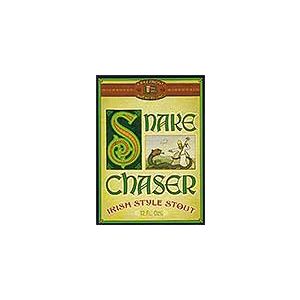
Lakefront Brewery Snake Chaser Stout
Matt Brewing Company Saranac Pale Ale
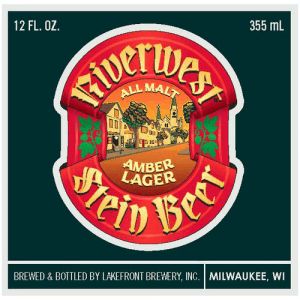
Lakefront Brewery Riverwest Stein Beer
Matt Brewing Company Saranac Black Forest
Pivovar Náchod (Czech Republic) Primátor Rytírský Blond Doppelbock
Pivovar Náchod (Czech Republic) Primátor Polotmavý Märzen

Lakefront Brewery

The city of Milwaukee, Wisconsin, resident city of beer giants Schlitz, Pabst, and Miller is better known for its large brewers, not micros. Brothers Russ and Jim Klisch are changing that. Like many microbrewery founders, these fellas formerly earned a living far removed from the beer world. Russ Klisch was a chemical engineer; Jim was a Milwaukee police officer. By the mid 1980s, Russ’s homebrewing efforts were becoming quite popular with friends and family. With the contributions of his brother and a third brewing pal, the three made some of their best beers and headed to the 1985 Great American Beer Festival. A return the following year helped them establish some industry contacts, and got them some valuable expert feedback on their homebrews. In 1987 a few of their beers won prizes in several categories at the Wisconsin State Fair. This recognition propelled them to immediately go into business.

Rustling together $15,000 for a down payment on a former neighborhood bakery, the three opened the Lakefront Brewery, so named because it sits along the Milwaukee River near downtown Milwaukee. They started with just two types of lagers: a pilsner and an amber lager, which they quickly got featured in local bars and taverns. Their 3rd partner left the business, as the brothers, who held on to their day jobs, continued to run the operation in their spare time. Two years later, Russ hired a head brewmaster, and by 1992, the brewery took in gross sales of $122,000. Quite an astonishing jump, but eclipsed by the following year when they rose to gross sales of $206,000. Not bad for a couple of bros from Milwaukee. In 1995, Russ left his day job to focus fulltime on the brewery—and in 1996 Jim followed suit to handle marketing for the brewery.
Today, the Lakefront Brewery is still a small, locally owned microbrewery specializing in handmade beers in the tradition of early, predominantly Bavarian Milwaukee brewers. We've been enjoying their beers for the past several years—and are happy to wish them a happy 2007—their 20th year in business!

For more information about the brewery and scheduled tours, call (414) 372-8800 or check out their web site at www.lakefrontbrewery.com.

Snake Chaser Stout

Lakefront Brewery Snake Chaser StoutThe name is a reference to St. Patrick, and the vintage-looking print on the label depicts the beery Saint chasing down some serpentine creatures. This is a great domestic version of a dry, Irish-style stout. Note chocolate & roasted malts on the nose, with a slight citrus backing and just a touch of figs. The dryness is appropriately chalky upfront and nicely segues to a chocolaty fullness, again with fig highlights, all balanced by a resurgent dryness that comes back in the finish to balance the moderate coffee and chocolate notes. The perfect pairing for this perfect session stout? Why, a certain holiday in March of course. Cheers!

Serving Temperature: 48-55° F
Int'l Bittering Units: 16.0
Alcohol by Volume: 5.0%
Suggested Glassware: Pint Glass or Mug
Malts: 2-Row Brewery's Malt, Belgian Dark Caramel, Roasted Barley (UK) and Chocolate Malt (Belgian)
Hops: East Kent Golding

Riverwest Stein Beer

Riverwest Stein Beer is an example of Amber (or Red) Lager. Note a rich malty nose with citrus and grape-like notes nicely contrasted against grassy hop notes with an oaken edge. Though a lager, it has a very ale-like nose that is uncommonly fruity, with subtle, woody notes of whisky/bourbon. It opens with citrusy highlights and breaks toward firm bitterness and then mellows to a lush, creamy maltiness. The finish is moderately bitter as malty smoothness sneaks past the long-lasting bitterness in the breaddy aftertaste. Great with beef stroganoff.

Serving Temperature: 40-44° F
Int'l Bittering Units: 20.0
Alcohol by Volume: 5.7%
Suggested Glassware: Stein (what else?)
Malts: 2-Row Brewery's Malt, Light, Medium and Caramel Malts imported from Belgium
Hops: Willamette, Cascade

Matt Brewing Company

Francis Xavier Matt arrived in the U.S. way back in 1878 (a mere 13 years after the conclusion of the American Civil War!) where he put in several years of brewing experience at the already established Bierbaur Brewery. Originally from the Black Forest region of Germany, "F.X." as he liked to be called, settled in the Adirondacks of New York where he founded what is today one of the oldest breweries in the United States (and the oldest in New York state).

Today known as the Matt Brewing Company, the brewery has survived numerous world-altering events, including two World Wars and Prohibition. After the days of Prohibition had passed, F.X., then 74, was joined by his sons Walter and Frank, and a tradition of family brewing ensued. Under the leadership of the third and fourth generations of the Matt Family (Nick and Fred, respectively), the Brewery has earned a reputation as one of the most respected specialty brewers in the country, producing a variety of distinctive, flavorful beers.

It's been nearly one hundred and twenty years since F.X. created the first of his brewery's malty treasures and established the legacy that is the Matt brewing tradition. Today, each of their brews is a flavorful testament to time-tested recipes and their literally generations of experience.
For more information about the brewery and scheduled tours, give them a call at 800-765-6288 or check out their web site at www.saranac.com.

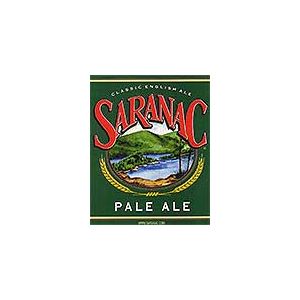
Saranac Pale Ale

Matt Brewing Company Saranac Pale AleAdirondack natives—the Iroquois Indians—give us the word Saranac, meaning "Cluster of Stars". The Matt Brewing Company bottles their Saranac line of beers from the pure water that flows from the Adirondacks and the grains that grow in its unspoiled soil. Note the inviting hop-driven aroma. Expect a flavor similar to its aroma but enhanced with apricot and grapefruit notes along with just a hint of pine. Look for caramel and bread-like flavors, accented by lightly toasty notes. Ends with a subtle yet sustained bitter hop finish. The brewery recommends a few options to pair with this brew: lamb, beef, stews, cheeses (moderate to sharp).

Serving Temperature: 39-46° F
Int'l Bittering Units: 32.0
Alcohol by Volume: 5.5%
Suggested Glassware: English Pint Glass
Malts: Crystal, English Pale Ale (& others)
Hops: Cascade, English Fuggles, English East Kent Golding

Saranac Black Forest

Since the brewery's founder was from the Black Forest region of Germany, it's no surprise that the Matt Brewing Company crafted a Bavarian Black Lager, also known as a schwarzbier, and named it Black Forest. Expect sweetish malts and caramel on the nose, with light fruitiness. This medium-bodied lager presents light caramel flavor on the palate with notes of maple syrup and a mild-bitterness breaking late, providing nice balance. The brewers recommend Chicken Mole or grilled chicken dishes with this beer. Overall, a fine domestic example of the rarely encountered schwarzbier style.

Serving Temperature: 42-50° F
Int'l Bittering Units: 20.0
Alcohol by Volume: 5.3%
Suggested Glassware: Pint Glass
Malts: 2-Row, Caramel (others)
Hops: Mt. Hood, Hallertauer

Pivovar Náchod (Náchod Brewery)—Náchod, Czech Republic (Eastern Bohemia) (North Central Czech Republic)

The Bohemian brews we've sent you have been crafted by Czech beer artisans who possess an appreciation of beer unlike that of any other nation in the world. After the split of Czechoslovakia in 1993, the Czech Republic (having a total area just smaller than the state of South Carolina) achieved a major beer victory: first place in beer consumption per capita (many Slovaks prefer to drink wine and thus pulled down the per capita values prior to the split). The results from a 1998 study completed by the German Brewers Association showed that the Czechs were not only number one in this ranking; they were number one by a large margin. The study revealed that, per capita, the Czech people drink approximately 334 U.S. pints per year! That's about a beer a day per man, woman and child (and if you consider that the youngsters probably aren't tossin' back too many of those pints, that's a heck of a lot of beer).

This proud heritage of brew drinking has a long history. Local agricultural conditions are ideal for growing hops, and their cultivation in Bohemia has been chronicled as far back as 859 A.D. These hops were exported to Germany via the Elbe River to the Hamburg hops market in 1101, and to this day the world still cherishes Bohemian Saaz hops.

The first documented account of home-brewing in the Czech territories dates back to 1088, and the first Czech brewery was born in the town of Cerhenice in 1118. The U Fleku microbrewery in Prague has been in operation since 1499! Put that in historical perspective by considering that Columbus discovered the new world just seven years prior!

This month's featured international brewery, Pivovar Náchod (pivovar means brewery in Czech), was founded in 1871, making it a relatively "young" brewery if you can believe it. Within two years the Náchod townspeople enjoyed beer from the first brewing. The popularity of Náchod's beer grew steadily enough over the following 50 years to mandate enlargement of the brewery between 1925 and 1930. However, with the invasion of the Third Reich on March 15th, 1939 many Czechs were drafted to work in coal mines, the iron and steel industry, and armaments production. Consumer goods production, dramatically abridged, was largely directed toward supplying the German armed forces. Within 4 years, all non-war-related industry was prohibited, halting the brewery's (and the industry's) development until after World War II.

Later, under Communist rule, very little was invested into the country's breweries. On the upside, however, beer was very cheap. This helped establish beer drinking as perhaps the single most popular hobby among Czech men. One of the Czech Republic's most famous beer drinkers, the protagonist of Jaroslav Hasek's novel "The Good Soldier Svejk" proclaimed that the government that raises the price of beer is destined to fall within one year. In 1984 the Communists almost doubled the price of beer. Though off by four years, The Good Soldier's prognostication was fulfilled. These days, Czech beers command top dollar from the many foreign countries that import them, and this has permitted prices to stay low for the locals.

Primátor Rytírský Blond Doppelbock

Pivovar Náchod Primátor Rytírský Blond DoppelbockPrimátor Rytírský Blond Doppelbock has the alcohol volume of a doppelbock, though it's not a traditional doppelbock in the conventional sense. It carries the name more because of the high alcohol content, but this particular style of beer is most often referred to as a European (or Euro) Strong Pale Lager. These are essentially stronger versions of pilsners, brewed with massive malt quantities yielding a much higher alcohol content. The use of only malts (as opposed to adjuncts such as corn or rice, as is common in the USA) distinguishes these beers from "malt liquor". Unfortunately, all beers marketed in the USA above a certain ABV are required by law to be labeled as "Malt Liquor"—which explains the appearance of these (dirty little) words on the label of this beer. The nose is quite fruity—melon like—with notes of baked apples and light floral tones. Expect a sweet flavor with spry carbonation, distinctly melon-like flavors and subtle notes of grape skins and chardonnay. Hop bitterness comes in late to dry out the sweetness, though sweet notes prevail. So, what's in a name? Rytírský is Czech for "Knight's" (or knightly/chivalrous). Drink more than one of these in a sitting, and it's "good night", as these babies pack quite a punch. Enjoy as a digestif after a hearty meal.

Serving Temperature: 42-47° F
Alcohol by Volume: 9.0%
Suggested Glassware: Pint Glass, Goblet or Flute

Primátor Polotmavý Märzen

Prior to the age of refrigeration it was barely possible to brew beer during European summers due to hot weather and increased likelihood of bacterial infections, so, brewing generally ended by mid-spring and resumed when fall set in. Most spring brews were brewed in the month of March (or "Märzen" in German) and were kept in cool storage over the spring and summer months. Märzenbier, as it became known, is full-bodied, rich and toasty and became the traditional beer consumed in fall during Oktoberfest. Primátor Polotmavý Märzen is a great Oktoberfest/Märzenbier—and if kept at cellar temps (or refrigerated) it will be just as good 7 months from now in October if you age these in a cool, dark place. Look for a creamy, somewhat floral nose with noble hop aromas and a hint of rosewater. Also expect some bubblegum-like notes and note how, when the beer is first poured, there's a nearly cotton-candy-like note. Expect a rich, toasty malty flavor with considerable grassy hop bitterness in the mix for balance. Note a sweetness with obvious melon character (cantaloupe). Moderately bitter, lightly zesty hops clean and refresh the palate in the finish, leaving it ready for another quaff (and another, and another). Great with fennel-spiced sausages, potatoes, pierogies or pork chops.

Serving Temperature: 45-50° F
Alcohol by Volume: 5.5%
Suggested Glassware: Stein, Mug (glass) or Pint Glass

C&H Internationals Logo Since 1994
Join Our Club
Gift Memberships

Membership Renewals
Reorders
Home Page
More Information
Current Selections
Past Selections
Testimonials
Other Gourmet Clubs
Corporate Gifts
Wedding Gifts
Brewery Search
Style Guide
Beer Fun Section
Industry Resources
Festivals
Print a Gift Card
Send a Virtual Brew
Refer a Friend
Send a Hint
E-Promos
Contact Us
Link to Us

1 - 800 - 625 - 8238
(Outside US call: 949-206-1904)
P.O. Box 1627, Lake Forest, CA 92609