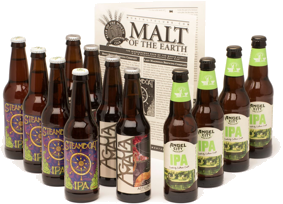
The Microbrewed Beer of the Month Club

Past Newsletters

June 2008

Brewery
Beers Featured
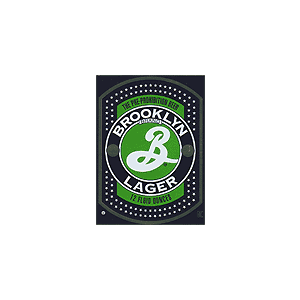
Brooklyn Brewery Brooklyn Lager
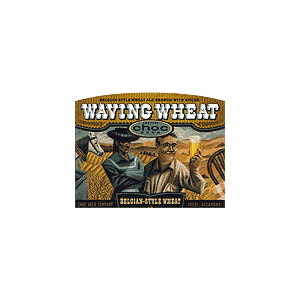
Choc Beer Company Waving Wheat
Brooklyn Brewery Brooklyn Pilsner
Choc Beer Company Miner Mishap
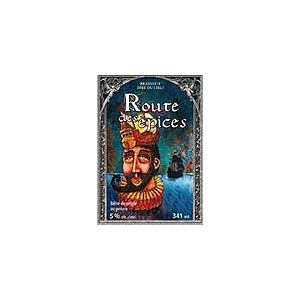
Brasserie Dieu Du Ciel! (Canada) Route des épices
Brasserie Dieu Du Ciel! (Canada) Rosée d’Hibiscus

Brooklyn Brewery

New York's famed borough of Brooklyn has a decorated brewing past. About a hundred years ago, there were nearly 50 breweries based there. Sadly, competition from the massive Midwest breweries ended their reign in 1976 when the last of them shut down. From the mid-70s through the mid-90s, there weren't many area outposts brewing distinctive ales and lagers. Mediocrity set in, and got comfortable there, as it did in most parts of the nation. But thankfully that changed in 1987 with the founding of the Brooklyn Brewery.

Spurred on a positive reception to his homebrewed beers, Steve Hindy and Tom Potter, a downstairs neighbor and fan numero uno of Steve's brews, ultimately became convinced that there was a market for Steve's brand of pre-prohibition style beers. So in 1987 they founded the Brooklyn Brewery. With the help of fourth-generation German-American brewmaster William M. Moeller, their first official commercial beer was brewed: Brooklyn Lager.

In 1994 they hired Garret Oliver, who's served since as master brewer. He's also risen to fame in his own right as one of America's foremost experts on pairing beer with food. His book, The Brewmaster's Table: Discovering the Pleasures of Real Beer with Real Food, is a must have for those interested in exploring the enhancement of food via beer (& vice versa.)

For more information about the brewery and scheduled tours, call (718) 486-7422 or check out their web site at www.brooklynbrewery.com . Be sure to check for updates on where Garret Oliver will appear next—he regularly conducts gourmet beer and food tastings to educate consumers on the virtues of good beer with good food.

Brooklyn Lager

Brooklyn Brewery Brooklyn LagerTheir first brew, this is a Brooklyn original, created in the Vienna Lager style. And it is a classic! From the first waft, the balance of this beer is evident. Expect sweet malty bread-like notes balanced by spicy, lemon-accented, gently grassy hop tones. With a nose like this, it's not surprising that this beer single-handedly resurrected Brooklyn's pre-prohibition era beer greatness. Expect toasty notes to flourish on the palate, deftly offset by grassy, moderately spicy hop notes. Look for a mineral & lemon zest quality to round out the moderately bitter finish. This workhorse brew never lets you down. World class. Pair with just about anything from ham sandwiches to pork chops to fried chicken to tacos.

Serving Temperature: 39-43° F
Int'l Bittering Units: 30.0
Alcohol by Volume: 5.2%
Suggested Glassware: Flute Glass, Mug (clear) or Pint Glass
Malts: American 2-Row, Caramel
Hops: Saphir, Hallertauer, Cascade

Brooklyn Pilsner

Unlike the mass-marketed so-called pilsners, Brooklyn Pilsner does not rely on fillers such as corn or rice as fermentables—it's brewed in accordance with the German Purity Law known as the Reinheitsgebot, which declares that all beer be made with only 4 ingredients: water, barley, hops and yeast. Expect fresh grains to greet the nose, with a soft peppery hop background and a kiss of ripe red apple skins. Goes down with an unexpected but pleasant añejo tequila-like character blended with lightly sweet malts, a touch of caramel and peppery, earthy hops. Quite nice with chicken, mussels or even salads, but assertive enough to stand up to steak or jalapeño-loaded quesadillas.

Serving Temperature: 40-45° F
Int'l Bittering Units: 28.0
Alcohol by Volume: 5.2%
Suggested Glassware: Pilsner Glass
Malts: 2-Row German Pilsner
Hops: Hallertauer, Saphir, Saaz

Choc Beer Company

Coal mining, Native Americans, craft-brewing, meatballs and prison all come together in the storied past of the man responsible for creating the beers of the Choc Beer Company. Young Pietro Piegari arrived in America from Italy in 1903, settling with his family in the coal-mining town of Krebs, Oklahoma. At just 11 years old, he signed on to work in the mines and changed his name to Pete Prichard, but before his 22nd birthday, a mining accident crushed one of his legs, permanently preventing his return to the coal mines.

In order to find work and pass the time, Pete took odd jobs and took up an interest in brewing beer. In 1919 he came across a recipe brewed by the local Native American tribe, the Choctaw, and worked on perfecting his own interpretation, which he named Choc Beer. Naturally, when other miners were on meal breaks, they headed up to Pete's place to grab a beer. It only seemed natural to Pete to begin serving them lunch to go with their beers. In 1925, he formalized this ritual by opening a restaurant in his home which served (literally) home-style, authentic Italian food. And since everyone was already calling it "Pete's place," it became permanently known by the same name.

Prohibition ended up sending Pete undercover to make his beers, brewing discreetly in his basement and continuing to sell it to customers. But ultimately, the law caught up to him and he served two federal terms in prison for violating prohibition laws. In 1995, Pete's grandson, Joe Prichard, reintroduced his family's Choc Beer recipe (legally) to the public at the family restaurant, which remains in operation to this day (they actually were brewing and selling it until 1980, when a visit from the feds finally led to the taps being shut off—"homebrewing" was actually illegal). Joe took over Pete's Place in 1984 from his father, Bill, who took over from his father (Pete) in 1964.

Today, with brewmaster Michael Lalli, Pete's Place brews (as the Choc Beer Company) four year-round beers with two more slated for release later this year: Waving Wheat, Miner Mishap, Basement Batch, 1919 ("Pietro Piegari" & "Last Laugh" are in the works). These six beers represent the six major chapters of the life of Pete Prichard—whose story is elaborated on at the Choc Beer Company's website—we encourage you to check it out, and seek out their finely crafted beers wherever you can!

For more information about the Pete's Place or the Choc Beer Company, call (918) 423-2042 or check out their web sites at www.petes.org and www.chocbeer.com .

Waving Wheat

Choc Beer Company Waving WheatWaving Wheat is a Belgian Style Witbier (aka White beer). The reference to "white" comes from the cloudy, light-coloration imbued by the high percentage of wheat used as a fermentable. This beer has been re-fermented in the bottle and has a healthy (literally, it's loaded with B-vitamins) amount of sediment at the bottom of the bottle, so pour 2/3 into your glass, then swirl the bottle vigorously to suspend the sediment then pour that last 1/3 quickly into your glass—then give the glass a few swirls to mix the haze uniformly into the beer. Don't be afraid of the cloudiness: it's choc full of goodness! (Pun intended.) The beer has a traditional Belgian witbier nose with a heartier hoppy character than we typically find in European versions (but we'll certainly take it, it smells wonderful!) Look for notes of citrus peel, cloves, bubble gum, mango and passion fruit. On the palate, expect that characteristic wheat acidity twang in this style, clear and present levels of spicy clove character, orange peels, citrus-spiked rum (or triple sec?), and a touch of blonde tobacco. Finishes with a mix of sour and bitter, which is a bit of a departure from a style which is characteristically sour in the finish, but the combo works here. A complex example of the style, with American flare. Pair with hot weather and plenty of outdoor cooking this summer.

Serving Temperature: 40-45° F
Int'l Bittering Units: 20.0
Alcohol by Volume: 5.2%
Suggested Glassware: Mug (clear) or Pint Glass
Malts: 2-Row Pale, Red Wheat, Oats, Flaked Wheat
Hops: German Perle
Other: Curaçao Orange Peel, Spices

Miner Mishap

Miner Mishap is brewed to emulate a German-style "Schwarzbier," (aka black beer) and, like the original Choc beer, it's a home-brewed recipe. This one was created by a good friend of the Pete's Place family (William Scott). Pours a deep brown with a voluminous tan head. On the nose, expect notes of toasted chocolate, currants and citrus-notes with a pumpernickel bread character. The beer goes down smooth with a full, supple mouthfeel. Currants and coffee and CHOColate all come together in the flavor profile, with a slightly lactic kick in the back. Finish lingers indefinitely with a lightly smoky character flirting with notes of cocoa. Full-flavored, to be sure, this beer will hold up well against a chargrilled flank steak or a slice of chocolate cake served with raspberries.

Serving Temperature: 43-50° F
Int'l Bittering Units: 25.0
Alcohol by Volume: 5.4%
Suggested Glassware: Flute or Pokal Glass
Malts: Pilsner, Munich, Carafa, Caramunich
Hops: German Perle

Brasserie Dieu Du Ciel!—St-Jérôme, Québec, Canada (Southeastern Canada)

The craft beer movement in the US has rippled throughout the world. One of the most exciting and emerging beer scenes is in Canada, and the seat of this appears to be in Québec. Some countries, notably those with firm traditions in brewing, have been resistant to or even dismissive of American "interpretations" and experimentation with classic styles, or the bombastic (some have said "irresponsible") amount of malts and hops used in the more extreme offerings in the American craft beer scene. But the Québecois have embraced this 'open-to-interpretation' approach to brewing, and a little brewpub called Dieu Du Ciel! (the exclamation mark is part of the name) in Montréal is a great example. The brewer who started the place began his career as a homebrewer, with no formal brewing training, but he has impeccable instincts. Those instincts have led to a recently opened production microbrewery based in St-Jérôme, Québec, and very recently, a second brewpub (attached to the new brewery).

The name Dieu Du Ciel! is a common French expletive that translates roughly to "God in Heaven!" (which these days is roughly equivalent to "oh my God!") Brewmaster Jean-François Gravel came up with the name in 1993 to describe his homebrewed beers. As he says, he likes the humorous connotation of the name—there's a certain boldness in naming the brewery after an expletive that he got a kick out of—but he also felt that it "made [appropriate] reference to the Québecois culture, dominated for so long by the clergy, and the Belgian culture of fine brewing."
In our assessment, this place is doing things just right. Not only is the beer world class and daring, the beer labels are interesting and attractive. The whole strategy here is to elevate beer and the crafting of beer to higher levels, highlighting the artistry and skill that goes into each one. Sure, you may say, if the beer tastes great, who cares about the packaging, but these folks are treating beer, from formulation to creation to distribution, with the respect it deserves. We loudly applaud them for it, and think that after checking out their distinctive beers featured below, you'll feel the same way. Enjoy!

We strongly encourage a visit to the Québec beer scene—starting in Montréal at the Dieu De Ciel! brewpub. They even offer an apartment above the brewpub for visitors to rent. Since they opened their doors in August 1998, they've brewed a staggering assortment of 73+ beers! At any one time, you can expect 15 fresh beer taps with at least one cask offering. Check out their website for more information, and plan your visit (we are!) www.dieuduciel.com.

Route des épices

Brasserie Dieu Du Ciel! Route des epicesThe label art alludes to the name, which translates from French to "Spice Route." Like the search for the spice route, the label gives plenty to discover (a close look reveals that the beard and hair of the gentleman with sailing on his mind is composed of peppercorns). The beer is brewed using black and green peppercorns, and on the nose, you can't miss their influence. The bouquet is akin to a super-peppery, well-aged tequila (if you're not familiar with this, ask your local liquor retailer for a peppery Añejo or Reposado tequila (aged tequilas) , pour a bit into a snifter (at room temperature) swirl and sniff). Behind the peppercorn notes is a mild citrusy character with a caramel backbone, a touch of spruce and almonds, and some floral hop tones as well. Like the nose, the flavor profile's most prominent character is the peppercorns. You can expect to taste a light pepperiness right up front, but over the course of about 15-30 seconds, the spice of the pepper takes hold of the tongue and mouth and intensifies slightly as it evolves, leaving a tingling sensation. It takes a few more swigs before you can really hope to process the rest of the flavors—pepper, being such an unexpected character, rises to the forefront. Look for an emergence of peppery tequila-like notes amidst a subtle floral character, notes of coriander, subtle apricot tones and a woody, spruce-like component. Note a bold, lingering peppery spice character that fills the mouth and takes hold of the back of the throat. A mild hop bitterness works to balance the heat of the spice by introducing the contrasting bitterness. It's not easy to strike balance or create a palatable beverage with a hefty dose of peppercorns in the mix, but that's exactly what brewmaster Jean-François Gravel has managed with this offering. There are many spiced beers out there (chili beers come to mind) as well as beers made with robust smoky character (such as rauchbiers); Route des épices takes a similar route and is a bit like a chili beer in that the peppercorns contribute a lingering spicy profile. We really dig it because it serves as an example of the tremendous range of flavors available in the vast spectrum that is beer. Our panel members enjoyed the following pairings: well-seasoned steak, lemon-pepper chicken, Angus burger topped with pepper-bacon and fried onions.

Serving Temperature: 45-55° F
Alcohol by Volume: 5.0%
Suggested Glassware: Tulip (preferably with etched nucleation site to create a steady stream of carbonation jets that help to fully release the beer's aroma)

Rosée d'Hibiscus

This beer won a gold medal (fifth place amongst 10 gold medal winners) at the adjudicated "MBeer" contest during the Mondial de la Bière in Montréal in 2007 (the country's largest and most respected beer festival). Another interesting, arty label ensconces this bottle. The beer name translates to "Pinkish Hibiscus," and the pink coloration comes from the hibiscus flowers added to the beer in the brewing process. The most striking color display is upon pouring—it really does look pink as it disembogues the bottle. We suggest a slow decanting of the bottle in order to preserve the clarity in the beer (since this bottle-conditioned beer has a hefty amount of (perfectly healthy) sediment that, for aesthetic purposes, ought to be left behind in the bottle, in our opinion.) Expect an amber beer with peachy, pinkish tint and a light pink frothy head. On the nose, the wheat character strikes first—this is after all a wheat beer—note the stylistically distinct, slightly sour wheat character, complemented by a touch of clove and bubblegum. Also look for a gently spicy, floral aroma to be clearly present with a touch of noble hop notes. Expect notes of malty sweetness and hint of raspberry-like tartness mixed with lime rind. The flavor is a touch on the tart side; the wheaty acidity does its job perfectly and right in sync with a light floral bitterness imparted by the hibiscus. As the beer warms, look for notes of under ripened peaches, coriander & pomegranate. This beer finishes exceptionally dry, nearly like champagne or a very dry white wine. Overall, wonderfully done. We felt the bouquet and flavor fully blossomed at around 48-50 degrees—considerably warmer than you'd typically enjoy a 5% wheat ale, but for this beer, it works. Pair with a very mature, soft charouce (cheese) or a tripel crème cheese (examples of both are featured in our Gourmet Cheese of the Month Club—check out www.cheesemonthclub.com for a full list of cheeses featured this year and next).

Serving Temperature: 45-50° F
Alcohol by Volume: 5.0%
Suggested Glassware: serve in a Stange or Flute glass (for maximum "pinkness" and concentration of volatiles)

C&H Internationals Logo Since 1994
Join Our Club
Gift Memberships

Membership Renewals
Reorders
Home Page
More Information
Current Selections
Past Selections
Testimonials
Other Gourmet Clubs
Corporate Gifts
Wedding Gifts
Brewery Search
Style Guide
Beer Fun Section
Industry Resources
Festivals
Print a Gift Card
Send a Virtual Brew
Refer a Friend
Send a Hint
E-Promos
Contact Us
Link to Us

1 - 800 - 625 - 8238
(Outside US call: 949-206-1904)
P.O. Box 1627, Lake Forest, CA 92609