The Microbrewed Beer of the Month Club

Past Newsletters

September 2007

Brewery
Beers Featured
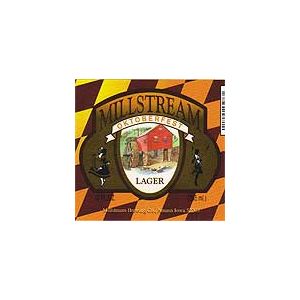
Millstream Brewing Company Oktoberfest
Mendocino Brewing Company Black Hawk Stout
Millstream Brewing Company Windmill Wheat
Mendocino Brewing Company Blue Heron Pale Ale
The Landtsheer Brewery (Belgium) Malheur 10
The King Brewery (Germany) König Pilsener

Millstream Brewing Company

The Millstream Brewing Company opened up shop in 1985 in Amana, Iowa as the area's first brewery since 1884! (and their first microbrewery ever). After 101 years devoid of local brew, this was a town very ready for a new brewery. The art of brewing came back to Amana as a result of brothers James and Dennis Roemig's & Carroll F. Zuber's strong desire to create a local brewery producing hand crafted brews reminiscent of the finest in Europe.

To help produce these European-style beers, they hired one of the country's most recognized masterbrewers, Joseph Pickett Sr., to develop their recipes. Joe formulated the Millstream Lager, Schild Brau Amber, and Millstream Wheat brands. These three top-notch beers comprised the brewery's primary lineup until the year 2000, when it was sold to Chris Priebe, Aaron Taubman, and Teresa Sly Albert. As you might expect, along with the new owners came new brews, as the threesome added a German Style Pilsner, Oatmeal Stout, and several other fantastic seasonals including a Maifest (a maibock beer), a Bavarian-style Hefeweissen, and an Oktoberfest (one of our featured beers this month). They've even added root beer and cream soda to their bag of tricks, but you'll have to buy those on your own as you won't be finding anything other than hand crafted, microbrewed nectar 'of the beer sort' in this here club!

Chris and Aaron both trained at the Siebel Institute of Brewing Technology, so rest assured, their brewing skills make the cut on paper... But hey, paper ain't the best tasting stuff, so let's move on to the tasting notes below and pour a couple of their beers for the real proof behind their brewing prowess. Just be sure you save enough Oktoberfest for your celebrations!

For more information about the brewery and scheduled tours call (319) 622-3672 or check out their web site at www.millstreambrewing.com. If you're ever in the area, stop in and visit the brewery and their gorgeous Biergarten.

Oktoberfest

Millstream Brewing Company OktoberfestIt's that time of year again! Finally, Oktoberfest!! Millstream B.C.'s Oktoberfest is a great, traditionally brewed beer that's just right for the celebration. This style of beer, known as Märzen, originated in Munich to celebrate the annual German Oktoberfest. In the old days before refrigeration, beer was brewed from the time of the fall barley harvest until the first warm month, March (Märzen in German). When the harvest came again, any of last year's beer was consumed before the first new batches were ready. The event officially became known as Oktoberfest in the early 1800s. The style of this beer is balanced between the desires to have a drinkable beer, and one that is strong enough to survive the long summer months in the cellar. Today we have modern refrigeration, but Millstream still makes this beer several months before the harvest so it can age properly. On the nose, expect Munich maltiness, toasted grains, heavy on the caramel, very bready, with a touch of floral hop notes. The flavor closely parallels the nose, with the sweet toasty malts ultimately mellowed by hop bitterness. Very drinkable! Pair with Bratwurst.

Serving Temperature: 43-50° F
Int'l Bittering Units: 30.0
Alcohol by Volume: 5.4%
Suggested Glassware: Stein, Mug or Pint Glass
Malts: 2-Row Brewers Malt, Bonlander Munich, Caramel, Red Wheat, Dark Chocolate Malt
Hops: Liberty, Northern Brewer

Windmill Wheat

Perfect for the last days of summer, this is a solid example of the American Pale Wheat Ale style. Malted wheat is carefully blended with malted barley, and brewed with German Tettnanger hops to create a "Summer Fest" beer. Light and zesty in itself, the beer is often served with a slice of lemon. There's a lot of debate out there about adding a lemon wedge to wheat beers. Bottom line is, if you like it, go for it. Stylistically, our opinion is that if you're going to add the lemon (we usually don't), American Pale Wheat Ales are better suited than Bavarian or Belgian versions, mainly due to the increased wheat-twang found in American versions. And as most American versions are filtered, the lemon wedge and light coloration make for a visually appealing presentation. This one presents a typically clean wheat nose, with a particularly present citrus note (stylistically-speaking). Expect slight wheat bitterness in the flavor, with hints of oranges and pears, and a mild acidity—look for a very light banana note and increased sweetness as it warms. We agree with the brewery that this is a great breakfast beer to pair with omelets, cheese, sausage and bacon.

Serving Temperature: 40-48° F
Int'l Bittering Units: 20.0
Alcohol by Volume: 4.5%
Suggested Glassware: Pint Glass or Weizen Glass
Malts: 2-Row Brewers Malt, Wheat Malt
Hops: German Tettnanger

Mendocino Brewing Company

Members who enjoyed last month's domestic features from the Lost Coast Brewery may recall the fact that their head brewer was inspired to start her northern California brewpub after hearing of the first brewpub opening in California—that brewpub was Mondocino Brewing Company's "The Hopland Brewery" located in, where else, Hopland, CA. Truly one of the pioneering 'microbreweries', key to the microbrewed beer renaissance, the opening of this brewpub on August 14, 1983, was a red letter date in U.S. brewing history. It was the first brewpub in California since Prohibition, and only the second in the U.S. In those days, people made the pilgrimage from all around the country to visit the little brewpub in northern California that brewed some of the country's best beers. By 1997, there were 780 brewpubs in the United States; these guys laid the foundation for many of those.

Very quickly, the brewing operation grew. Demand for their flagship beer, Red Tail Ale, and other raptor-themed ales continued to swell to the point where their original brewpub, though expanded in brewing capacity multiple times through the years, could no longer keep up with demand. In 1997, the company underwent major investment and expansion, leading to the building of their Ukiah, CA brewery and bringing the historic Olde Saratoga Brewing Company in New York into the fold as an east coast brewing base for their expanding beer line. To put things in perspective, consider that the Ukiah brewery currently operates at a capacity of about 60,000 barrels per year, while the original Hopland Brewery pumped out just 400 barrels in its first year.

It used to be that beer lovers had to trek thousands of miles for these great beers, but these days, it's a bit easier—California's first brewpub beers are currently available in 38 states.

We highly recommend a visit to their classic Hopland Brewpub in Hopland, CA, located about 110 miles north of San Francisco. While they no longer serve food there, they've made arrangements for local restaurants to deliver right to your table as you enjoy fresh beer. For hours, call (707) 744-1361. For more info about MBC, visit their web site at www.mendobrew.com.

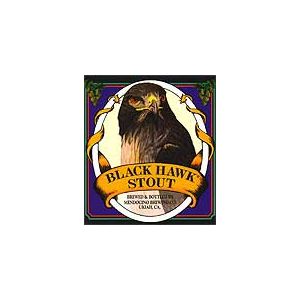
Black Hawk Stout

Mendocino Brewing Company Black Hawk StoutOne of the original brews from the August 1983 Grand Opening of the Hopland Brewery, this beer is just as good today as it was back then. Originally brewed with the intention of offering a stout that favored rich, roasty qualities rather than overtly sweet notes. That pretty much sums up the flavor, but we'll review it for ya just the same… On the nose, expect notes of roasted coffee beans and deeply kilned (roasted) malts. For any homebrewers out there, the nose smacks of black patent malted barley—straight out of the bag. The roasty character on the nose is so prominent, it's quite nearly burnt and smoky in character. Expect this beer to feel rich and full in the mouth, yet not nearly as filling as you might expect in a stout this robust. Look for a very subtle sweetness that eventually grows into a robust roasty quality with some coffee layered throughout and a flourish of medium-dark chocolate in the background. There's a very subtle fruitiness that's tough to place, perhaps the slightest hint of under-ripened plum. Not as dry as an Irish dry stout, but certainly not sweet, this is a very well-executed, balanced stout. Finishes with a mild bitterness and iced-coffee flavors. A knockout when paired with fresh or cooked shellfish, especially oysters. While the brewers might not recommend doing so, we've cracked open bottles of this beer that have been kept in cellar conditions (about 50-55 degrees, in the dark) for up to 2 years. They sweeten up and develop a Madeiralike character—very different than the beer's young profile, but quite delicious for certain. The key is proper storage.

Serving Temperature: 45-58° F
Int'l Bittering Units: 45.07
Alcohol by Volume: 5.2%
Suggested Glassware: Pilsner Glass
Malts: 2-Row Pale, Caramel, Carapils, Munich, Black Patent
Hops: Warrior, Cascade

Blue Heron Pale Ale

The label reads "Pale Ale" but this beer is brewed as an IPA. These guys really were pioneers. Back in 1985 when about 9 out of every 10 beers consumed in the U.S. were brewed by Miller, Budweiser or Coors, this beer must have caused quite a stir, given the high hop content and robust ABV. It may seem a bit tame by today's standards, but it's still a classic example of "extreme" brewing tempered by talent in the balance department. We wonder if they knew when they brewed it that it would be a hallmark of beers brewed many years in the future. There have been so many outrageous "hop bombs" brewed the past 5 years or so that we're expecting a sort of "backlash" where drinkers and brewers return to craft beers with balance in mind—and this classic beer from 1985 may be the bolt of lightning that brings us "back to the future"! On the nose, expect herbaceous, lemony hop notes balanced by fresh grains that hint at caramel. Notice the full-bodied mouthfeel that coats the mouth with a luxuriant sprawl of grassy, lemony hop notes, with a firm, gently sweet malt backbone, and notes of butterscotch as it warms. Finishes bigly bitter, yet balanced. Great with sautéed prawns served with lemon grass, mint and lime.

Serving Temperature: 45-50° F
Int'l Bittering Units: 50
Alcohol by Volume: 6.1%
Suggested Glassware: Pint Glass
Malts: 2-Row Pale,
Hops: Cluster, Warrior, Cascade

Brouwerij De Landtsheer (The Landtsheer Brewery)—Buggenhout, Belgium (Northwestern Belgium)

Members may not be aware of the alarming rate of consolidation within the European beer industry. In the past year, we've lost such greats as the Ram Brewery in London (ending 400 years of brewing history at the site) and the Hoegaarden brewery in Belgium. Many other historic breweries have closed throughout Europe at an alarming pace over the past couple of decades due to corporate brewing conglomerates undergoing massive consolidation initiatives. So, all the more reason to seek out and appreciate the 100% family-owned breweries out there that remain independent in the face of this threat to craft brewing.

A newfound favorite of ours is the Brouwerij De Landtsheer located in the heart of Flanders, in the verdant little town of Buggenhout (pronounced "Bee-gen-naat"). The brewery's founder, Emanuel "Manu" De Landtsheer, sought to restore his family's brewing practice which, with the exception of a brewing hiatus after WWII, has been a family tradition for five generations. Their brewing heritage traces back to the birth of Manu's grandfather's grandfather, Balthazar De Landtsheer in 1773. He founded a local pub-brewery known as "De Halve Maan" (The Half Moon). Today, from the roof of the current brewery founded by Manu, you can look across the fields and see the ruins of that old brewery. Manu's great-grandfather, Eduard moved the brewing operation to the current site, an existing brewery called 'T Mueleke which traces its roots back to the 1600s. Eduard named the place "De Zon" (The Sun), appropriate for a business held by a family of brewers—Eduard having taken over from his father, and his son Emmanuel (Manu's grandfather) carrying on the tradition. Emmanuel took things a step further by growing and malting his own barley!

The brewery closed just before World War II, but the family remained in the brewing field as a contract bottler for the national brewer Lamot. That brewery was later acquired by the even larger brewer Jupiler, which then became part of Interbrew, and was ultimately closed after the consolidation. With the close of that brewery, De Zon was officially out of the brewing business. However, the family continued to work as wholesalers, and importers and distributors for Pilsner Urquell, and continued to grow hops until the 1970s.

Throughout his youth, Manu's family talked of reopening their own brewery. When his father died in 1991, Manu decided it was time to honor his memory by restoring the family's brewing tradition. The current brewery, opened in 1997, occupies a building attached to their family home. You just can't get closer to home than that!

If you'd like more information about Brouwerij De Landtsheer, check out their website (in French & Dutch only) www.malheur.be. If you're ever in Belgium, call ahead and schedule a visit (Monday thru Thursday, by appointment only)—it's a rare treat to be able to have a beer in (or next to) the home of a brewery founder!

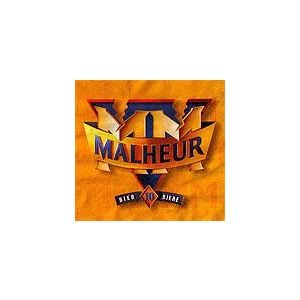
Malheur 10

The King Bewery Malheur 10Many Belgian brewers have adopted attention-grabbing names for their beers, such as Delirium Tremens (a severe physical manifestation of alcohol withdrawal which can be fatal), "Duvel" (meaning Devil), and in that vein, Satan, Lucifer, etc… Malheur is another using this trend; the name translates roughly to "misfortune". We think you'll agree with us that the only misfortune here is that we didn't discover this beer sooner! Many of the beers in the Malheur line have numbers associated with their names, such as Malheur 4 (their original beer), Malheur 6, Malheur 8, Malheur 12 and our featured beer, Malheur 10. In the case of Malheurs 6 thru 12, the number corresponds to the alcohol by volume (in Malheur 4, the first of the line, the 4 came about with a certain mystique, as it doesn't refer to the ABV, nor the ABW (alcohol by weight). The brewery founder has stated, in what seems to be tongue-in-cheek fashion, that "one could drink four of them per hour" or "from four generations of brewers" or "perhaps it means that you can drink four without feeling drunk" or "I don't know—I just wanted a number as part of the design".

On the pour, go easy, and expect a massive, frothy, cappuccino-like head. The beer itself is a murky honey color, while the head gives off an orange glow. The bouquet on this beer is as good as it gets for the style (billed as a Strong Belgian Pale Ale, we find it sort of straddles the line between that style and a Trappist Tripel and a Pacific Northwest IPA). Complex and highly distinctive, expect a highly aromatic hoppiness, with notes of pine & spruce, rose petals, orange zest, kumquat (yes, we said kumquat) and peach. Sweet malty grains fill the background but are overshadowed by perfumy, floral & citrus notes. The flavor, by contrast, is rather tame, though moderately complex, with a surprising dryness given the high alcohol content. Look for notes of spicy pepperiness, various citrus notes (orange oils), rose hips, rounded out by a brut-like champagne character. Finishes firmly bitter with herbal/green hops as the absolutely lush, supersoft feel in the mouth slides away. This beer presents a spectacular balance of sweet, soft, bitter & strong, with a well-masked alcohol content. An extraordinary find, we're thrilled to bring it to you. It may be tough to find, but if you can, seek out a traditional Afghanistanian dish known as Norange Palaw, made with delicately seasoned lamb (or chicken) served under a mound of saffron rice, topped with almonds, pistachios, orange peel strips, Rosewater and cardamom—sinfully delicious.

Serving Temperature: 52-60° F
Alcohol by Volume: 10.0%
Suggested Glassware: Tulip or Oversized Wine Glass

König-Brauerei (The King Brewery)—Duisburg, Germany (Western Germany)

Germany—where beer is King. Enough said, on to the drinKing!

OK, so maybe there's more to say than that. After all, this IS a newsletter about beer. So let's start with this: is it any coincidence that the number one producer of milk thistle, a nutrient that is widely purported to protect the liver from developing cirrhosis, is based in Germany? We think not.

Some would claim that the Germans, particularly Bavarians, have the best beer, the best brewing culture, the best beer fans and the best customs for enjoying beer (you may have never been to Germany, but you've certainly heard of Oktoberfest). And the folks most likely to make such claims would be the Germans themselves. But fear not, all this "best of the best" superiority talk is not a threat of World War III. It's simply a pride that the Germans have earned through at least a millennium of brewing. Our second international feature this month is a German beer brewed with careful attention to traditional methods, but expertly quality controlled by modern day technology.

Located in Duisburg, Germany's 11th largest city and home to Europe's largest inland port, the König-Brauerei was founded in 1858 near the confluence of the great Rhine and Ruhr waterways by Theodor König. A savvy businessman, he realized the potential for a regional brewery and the relative ease of exportation via port waterways. Today the brewery is best known for their Pilsener beer, a style which Theodor König intended to specialize in, but at the time the brewery was founded in 1858, this was a risky move. Pilsener was still an emerging, relatively complex style to brew. His instincts soon paid off when the style became the world's most popular beer style. So, at the confluence of the Rhine and Ruhr waterways was the fortunate confluence of business savvy and luck which eventually led to Germany's "King of Beers" (note the text "Das König der Biere" on the label).

If you'd like more information about the König-Brauerei, check out their website (in German only) www.koenig.de.

König Pilsener

t's September and that means Oktoberfest celebrations are starting around the world. Chances are there's an 'O-fest' scheduled near your area. We encourage you to attend. We decided not to ship a German Oktoberfest this month or next since there's likely to be some on hand in your area or at least in your local beer/liquor store (although next month we are considering a German-style Brazilian Oktoberfest because we're crazy like that). Instead, we're closing out the hot summer months with a solid German Pilsener. König Pilsener was first sold by that name in 1911 and for nearly a century, beer lovers worldwide have been enjoying this approachable, easy-drinking brew. Expect a pale straw color topped by a brilliant white frothy head. Look for a crisp, clean pilsener aroma showcasing notes of grassy, lemony hops, clean grains, and a slight kiss of honey, with a very subtle yeasty mustiness in the background. The beer presents a solid bitterness on the palate that is assertive but never sharp, with a lightly floral hop kick and like the aroma, a note of honey. Finishes clean with a subtle hop aftertaste. One of the easiest beers to pair with food, Pilseners go with just about anything you can throw at 'em. We enjoyed it with grilled halibut served in a creamy dill sauce.

Serving Temperature: 39-45° F
Alcohol by Volume: 4.9%
Suggested Glassware: Pilsener Glass, Flute or Pint Glass

C&H Internationals Logo Since 1994
Join Our Club
Gift Memberships

Membership Renewals
Reorders
Home Page
More Information
Current Selections
Past Selections
Testimonials
Other Gourmet Clubs
Corporate Gifts
Wedding Gifts
Brewery Search
Style Guide
Beer Fun Section
Industry Resources
Festivals
Print a Gift Card
Send a Virtual Brew
Refer a Friend
Send a Hint
E-Promos
Contact Us
Link to Us

1 - 800 - 625 - 8238
(Outside US call: 949-206-1904)
P.O. Box 1627, Lake Forest, CA 92609