The Microbrewed Beer of the Month Club

Past Newsletters

July 2008

Brewery
Beers Featured
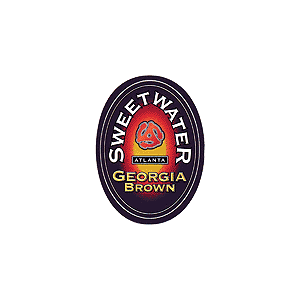
SweetWater Brewing Company SweetWater Georgia Brown
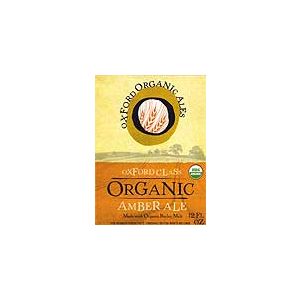
Clipper City Brewing Company Oxford Class Organic Amber Ale
SweetWater Brewing Company SweetWater 420 Extra Pale Ale
Clipper City Brewing Company Heavy Seas Red Sky at Night
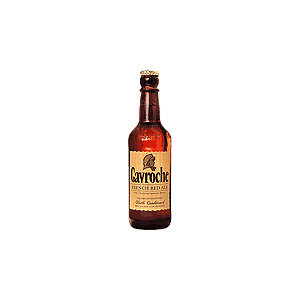
Brasserie De St. Sylvestre (France) Gavroche
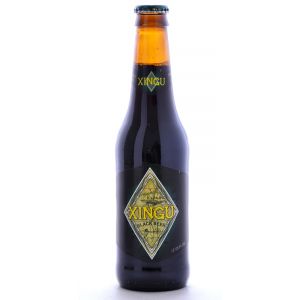
Cervejaria Sul Brasileira (Brazil) XINGU Black Beer

SweetWater Brewing Company

When Frederick Bensch and Kevin McNerney started dreaming up their brewery plans, they quickly realized that their home base in Colorado already had plenty of microbrewed beer on tap. Their workaround? Sell nearly everything they owned, pack up their few remaining worldly possessions and drive to a place with a little less competition; a state that placed 48th in the nation in terms of beer production; a market as soft as a fresh Georgia peach: Georgia, of course.

It was in Atlanta, Georgia, that Frederick and Kevin founded the SweetWater Brewing Company. Their ambition wasn't simply driven by pie-in-the-sky dreaming. These fellas worked at no fewer than 7 microbreweries in Northern California and Colorado—heartlands of microbrewed nectars—before making the journey.

The SweetWater Brewing Company opened its doors on February 17, 1997. In 2002 they were recognized as Small Brewery of the Year at the Great American Beer Festival. Need more convincing? (You haven't tried the beer yet, have you?) They were the second most decorated brewery in the world at the 1998 World Beer Cup.

For more information about the brewery and scheduled tours, call (404) 691-ALES or check out their web site at www.sweetwaterbrew.com

SweetWater Georgia Brown

SweetWater Brewing Company Georgia BrownA GABF 2001 Gold Medal winner, this brew yields a prominent aroma of fresh grains with some breaddy, caramelish notes, hints of light-bodied coffee, a nutty-note similar to almonds, and just a kiss of citrusy hops. On the palate, expect a blend of lightly bitter hops, burnt toast, and above all, a rich, sweet, nutty character (think hazlenuts and almonds). There's a ghost note of coffee at the intro to the finish, which gives way to a back-of-the-tongue bitterness that balances the sweet malty notes through the fade. Lighter bodied but full of flavor, this is actually one of relatively few brown ales that is suitable for summer weather. Enjoy with a cheese plate featuring aged gruyere, camembert, and morbier melted over pumpernickel bread wedges. If you're looking to improve your beer tasting experience, or if you're among our many members who hold regular beer (and food) tasting sessions with guests (yes, you are the life of the party!)—consider joining our Gourmet Cheese of the Month Club—cheese and microbrewed, flavorful beer complement one another extraordinarily well, many would say even better than wine and cheese. Check out www.monthlyclubs.com for more details.

Serving Temperature: 45-50° F
Int'l Bittering Units: 44.0
Alcohol by Volume: 5.2%
Suggested Glassware: Pint Glass
Malts: 2-Row Pale, Black, Victory, Crystal, Chocolate
Hops: Columbus, Willamette

SweetWater 420 Extra Pale Ale

420 Extra Pale Ale was first brewed on April 20, 1997, hence the name… We'd bet a nickel and dime that's not the complete reason behind the name, but we can't confirm. We can, however, provide you with a nugget of trivia to impress your friends: the brewery was named after a local creek. This particular beer is a lighter-bodied West Coast style pale ale with aggressive hop character in the aroma, flavor and finish. Look for piney, resinous, grapefruit notes, flourishes of sweet peach and a hint of hop spiciness. A solid malt backbone balances the hops, but gives them the final word with a crisp, bitter finish. A 2002 Silver Medal winner at the GABF, and great with lobster, mussels or clams.

Serving Temperature: 40-45° F
Int'l Bittering Units: 40
Alcohol by Volume: 5.4%
Suggested Glassware: Pint Glass or Stange
Malts: 2 Row Pale, Crystal
Hops: Cascade, Centennial

Clipper City Brewing Company

The history of the Clipper City Brewing Company goes back to the mid-1980s when Hugh Sisson, owner and founder of Sisson's, a local restaurant and bar, first recognized the potential for a small brewery in Baltimore. Upon attempting to get a license to brew beer at his restaurant, he quickly discovered that legislation prevented brewpubs in Maryland. So he began working with Senator George Della, Jr. to successfully lobby the Maryland General Assembly to pass legislation permitting brewpubs in Maryland. In 1989, Hugh began brewing at Sisson's, Maryland's first brewpub.

The move helped usher in the wave of craft brewing in Baltimore, and Hugh engrossed himself in the development and market recognition of both Sisson's brewpub and its beers, while simultaneously serving as this pioneering facility's first Brewmaster. After five years of brewpub brewing, Hugh took his craft brewing to a larger platform by starting a full-scale microbrewery. Three guesses as to who stepped in to say he couldn't do it… that's right, the state. It seems that "they" (a.k.a. "the man") took issue with his owning both a brewpub and brewery. The logic behind this legal blockade? Your guess is as good as ours—this is the business model used throughout Europe for hundreds of years. Fortunately, Hugh was undaunted by the legal challenge, did battle with the powers that be, yet again, and pulled out the win less than two years later. In early 1996, Clipper City Brewing, borrowing a Baltimore sobriquet as its name, officially began brewing on the scale Hugh was going for.

For more information about the brewery and scheduled tours, call (410) 247-7822 or check out their web site at www.clippercitybeer.com .

Oxford Class Organic Amber Ale

Clipper City Brewing Company Oxford Class Organic Amber AleThe Oxford Brewing Company was originally founded under the name British Brewing Company in Baltimore in 1986 as the first microbrewery in the mid-Atlantic. The company was sold in 1994 and renamed the Oxford Brewing Company. In 1998 it was acquired & merged with Clipper City B.C. Just this past April, they announced that their Oxford line of beers would go completely organic, with the Maryland Department of Agriculture, accredited by the USDA's National Organic Program, certifying these beers as organic products. Organic tends to be a polarizing term; the two most typical reactions are "hey, keep the granola for yourself, hippie" or "this product is better for me, farmers, and the environment, so I'll throw a few extra bucks at it". Products labeled as "Organic" must contain at least 95% certified organic raw materials. When it comes to beer, most "organic"-labeled beers have organic malt, but that's where it stops. Hops, for example, are rarely fully organic, which sneaks under the organic label radar since they account for less than 5% of the ingredients by weight. The Oxford beers, however, contain both certified organic barley malt and hops. Look for big caramel and light, milk chocolate notes combined with a note of sweet dough rolled in molasses. A hint of sweet citrus hides in the background, letting the malts hold center stage. Goes down quite easily, with a silky feel, notes of caramel, chocolate, molasses, and a roasty note, all balanced by just the right balance of hops. In fact, the hops are essentially undetectable in flavor, but the balance they provide against the sweeter elements of the malt should not be overlooked. Finishes with a lingering, lightly toasted barley grain character, chocolate and very faint notes of ripe red apples. Try this with chicken mole or green apple slices and melted cheddar.

Serving Temperature: 40-45° F
Int'l Bittering Units: 19.5
Alcohol by Volume: 5.2%
Suggested Glassware: Pint Glass or Mug (clear)
Malts: Organic Pils, Organic Munich, Organic Caramalt, Organic Chocolate
Hops: Organic Hallertauer Tradition

Heavy Seas Red Sky at Night

This is a domestic version of a Belgian farmhouse ale, a traditional style brewed by European farmers, often intended for consumption in hot weather while working on the farm. Because they were brewed on site, they were often imbued with barnyard-like notes such as horsehair, grass and earth (dirt). On the nose, expect a gently sour note, suggestions of hay, champagne, toffee and yeasty mustiness. The beer is quite refreshing in character, but offers a complex combo of slightly wild yeasty notes, toffee, mild funkiness, sparkling white wine, sweet green grapes, all offset by a sour, gently tart twang. Finishes with mild spiciness and restrained bitterness that pushes and pulls against the tartness. Alcohol warms the belly at 7.5% ABV, so do pace yourself. A highly approachable interpretation of the style, it omits most of the horsiness found in Belgian or French examples. Pair with chicken stuffed with wild mushrooms and aged parmesan cheese.

Serving Temperature: 47-55° F
Int'l Bittering Units: 18.5
Alcohol by Volume: 7.5%
Suggested Glassware: Tulip
Malts: 2-Row Pale, Wheat Malt
Hops: Warrior, Hersbrucker

Brasserie De Saint-Sylvestre (Saint Sylvestre Brewery)—Saint Sylvestre Cappel, France (Flanders Region—Northern France, along the Belgian border)

Our first featured international brewery comes from the geographically difficult to define region of Flanders. You may have enjoyed beers from Flanders before and observed that these were from Belgium. The region was defined before the modern day borders of France and Belgium were drawn, and today, the area spans the intersection of these two nations. The Flemish beer we've selected for you is from the French side of Flanders, brewed in a lovely, picturesque town called Saint Sylvestre Cappel. Today, their local brewery stands as one of merely 30 left in Flanders—a true survivor (at the beginning of the century, there were 2000 active breweries in Flanders!)

We regard the beers of Brasserie De Saint Sylvestre as some of the best in all of France, brewed by the Ricour family of brewers. Today, the brewing is done by the talented Serge Ricour, a 3rd generation brewer who, along with his brother Francois and under the tutelage of their father Pierre (who learned the trade from his father, Rémy), has seen the brewery's acclaim and distribution skyrocket. With three generations of artisinal master brewers, how can you go wrong?

According to files held at the local town hall, brewing at the Saint Sylvestre Brewery predates the French Revolution of the late 18th century, although the exact date it was founded is unknown. However, the Ricour family did not get into the brewing business until 1920, when Rémy Ricour purchased the brewery from his uncle Marcel Bacquaert, who passed along his brewing knowledge just as it was taught to him by the former family of owners who brewed there continuously since 1860. In 1939, at the age of 16, Rémy's son Pierre joined the brewery full time as the only Ricour family member until accompanied in 1983 by his fresh-out-of-brewing-school sons Francois and Serge. Over the past 23 years the brothers have created a number of truly amazing beers, one of which is reviewed below. Enjoy!

For more information about the brewery, visit their website: http://www.brasserie-st-sylvestre.com.

Gavroche

Brasserie De Saint-Sylvestre GavrocheNamed after Victor Hugo's Les Miserables young pick-pocketing character, Gavroche likewise comes in an innocuous package but might leave you a little lighter on your feet (a barely detectible 8.5% ABV can sneak right up on you and rob you of your very wits). Immediately note the aroma of this very attractive brew, with tones of tart berries—notably raspberries—with a juiciness similar to fresh apricots. Look also for a honeyed scent, with an accompanying sourness and subtle lactic note. These latter two components are the result of wild yeast commonly employed by brewers in the Flanders region. We found the flavor to be full and stunningly complex. The initial flavors present a cavalcade of melon (subdued cantaloupe) and berry (raspberry and blueberry). The sweetness presented by these is promptly tamed by a dry bitterness and distinctly farmhouse-style earthiness, but is resurrected as distinct notes of ripened apple skins. Notice the unique interplay between soured berry tartness and hoppy bitterness that marries perfectly. In the finish, lactic and tart berry notes evolve to a bitter earthy hop character that balances a flux of grains, berry juiciness, cloves, a touch of ginger, and lightly toasted malts. As it warms, the flavor profile evolves even further. What a treat! We recommend pairing this beer with a roasted chicken salad with mandarin oranges and feta cheese. Delicious!

Serving Temperature: 45-53° F
Alcohol by Volume: 8.5%
Suggested Glassware: Tulip or Oversized Wine Glass

Cervejaria Sul Brasileira (Brewery of Brazil)—Parana D'Oeste, Brazil (Southwestern Brazil)

Our second featured beer this month comes to us from Brazil. Microbrewed beer is probably not the first thing most people associate with this Portuguese-speaking land, but trust us: after you taste the famed XINGU Black Beer (pronounced SHIN-goo) you'll rethink Brazil's potential for high quality brewing. Actually, there's an emerging craft brew scene developing in South America, so we expect to see more and more fine brews from our southern neighbors—in fact, a few months back, we featured another South American brewery that was top notch indeed.
XINGU Black Beer was conceived in 1986 when Amazon, Inc. was founded in Vermont by five women who sought to prevent the extinction of some of the world's rarest styles of beer. The company of Vermont beer-seekers hired beer anthropologist Alan Eames, widely regarded as "The Indiana Jones of Beer," to research and locate native prototypes of dark, rich beers from around the world.

XINGU Black Beer as we know it was not released until February of 1988, but the earliest Western account of black beer brewed by the natives of the Amazon region dates to 1557. Many Amazon Indian tribes placed great spiritual significance on black beer as a beverage used in religious and social ceremonies. Thus, it was only natural that the search for authentic Brazilian black beer would begin in Brazil where Eames and his then-wife, Anne Latchis, president of Amazon, Inc., were aware of the history of famed black beers made by native female brewsters who fermented roots and grains and used herbs and bark as bittering agents.

The name is derived from a tributary of the Amazon River which is home to the few surviving cultures and species of native Amazonian life threatened by dam sites, over-development and exploitation. It is also the name of the region that was the homeland of the Amazon women who first brewed the original native black beers. The distinct diamond-shaped XINGU Black Beer label was painted by artist Eric Green depicting a map of the XINGU River region, bordered by anacondas, with a Txucahamei warrior and a caiman (a tropical American reptile related to the alligator).

We're very grateful to Alan Eames for his efforts—especially when you consider he trekked through such treacherous landscape in search of this historically significant, elusive brew. Sadly, Alan passed away unexpectedly in February of 2007 at the age of 59. We have many things to thank him for—from discovering what he believed to be the world's oldest beer advertisement, found in Mesopotamia, dating back to 4,000 B.C., to exposing the hallowed role of women in brewing through the ages—he was a dedicated researcher and champion of better beer—at one point he owned a store that had pretty much the best beer selection of its day in Massachusetts, and started a few well known east-coast ale houses. Please raise a pint (or stein, or oversized wine glass) in honor of Alan and his contributions to our modern day brewing culture and historical understanding of beer. Cheers!

XINGU Black Beer

XINGU Black Beer is a dark lager brewed from barley, hops, water and yeast—nothing else—which you might find surprising considering the heavy notes of anise and treacle (which is like a heavy, almost medicinal molasses). Look for flourishes of black currants and vanilla beans. The opaque blackness is a result of using a variety of black-roast malts from South American-grown barley. Rated by the Beverage Tasting Institute as "Outstanding" with a tremendous 91 points. As they put it, "in two words: black silk." Good with Latin American dark meat dishes, as well as pumpernickel & pastrami sandwiches, served with a dill pickle. Also a surefire winner with a dark, leathery, chocolate-heavy maduro cigar. And we've got plenty of them. In fact, each month, we feature 5 premium cigars in our Cigar of the Month Club—which, like our Beer of the Month Clubs, runs cigars of various different styles and flavors. A beer in one hand and a fine stogie in the other—come on now, what could be better? Visit www.cigarmonthclub.com and get a subscription for yourself or a friend. You won't be disappointed.

Serving Temperature: 45-50° F
Alcohol by Volume: 4.7%
Suggested Glassware: Pint Glass, Stein or Oversized Wine Glass

C&H Internationals Logo Since 1994
Join Our Club
Gift Memberships

Membership Renewals
Reorders
Home Page
More Information
Current Selections
Past Selections
Testimonials
Other Gourmet Clubs
Corporate Gifts
Wedding Gifts
Brewery Search
Style Guide
Beer Fun Section
Industry Resources
Festivals
Print a Gift Card
Send a Virtual Brew
Refer a Friend
Send a Hint
E-Promos
Contact Us
Link to Us

1 - 800 - 625 - 8238
(Outside US call: 949-206-1904)
P.O. Box 1627, Lake Forest, CA 92609