Past Newsletters - May 2010
DOM = Domestic Beer Club; INT = International Beer Club; VAR = Domestic International Variety Beer Club; RBC = Rare Beer Club
Few beer brands have the chutzpah to carve out a niche for themselves with the sort of irreverence that the HE'BREW beer brand has (brewed by the Shmaltz Brewing Company, based in San Francisco, CA; brewed in Saratoga Springs, NY). There is plenty of pushing the proverbial envelope in their labels and marketing. Take the tag line for all the HE'BREW beers: "The Chosen Beer," or the name of their 9th anniversary celebration beer: "Jewbelation 5766." But there's no gimmick here—their beers are truly solid and superbly well-crafted.
The brand actually got its start as an inside joke among founder Jeremy Cowan and friends who, while drinking one night in 1987, started brainstorming crazy marketing ideas for Jewish merchandise. The idea for a Kosher, Jewish-American, high holy days celebration beer called "HE'BREW," with the tag line "Don't Pass Out, Passover!" was born. In 1996, Jeremy brewed 100 cases of his first commercial batch with the goal of selling them for the Hanukah holiday; HE'BREW Genesis Ale was sold out of the trunk of his grandmother's Volvo—all 100 cases of the stuff. In 1997 he quit his day job to dedicate more time to the brand, and by 2001 he was selling 5,000 cases per year.
Around 2007, Jeremy launched his Coney Island Lagers series of beers (featured this month), inspired by the spirit, history, and future of the famed Brooklyn playground known as Coney Island. Like the HE’BREW brand, the labels on this all lager lineup are highly attention grabbing—but that’s the idea behind the freak shows that helped make Coney Island famous: to draw you in to experience something never seen before; to amaze and dazzle you (and not infrequently, to rip you right the hell off too, but trust us, these beers are the genuine article).
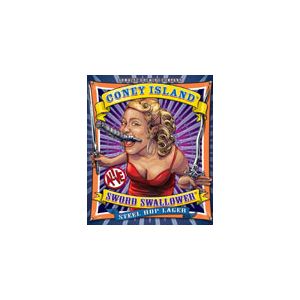
Brewed to support a good cause, proceeds from the sale of the Coney Island Lager beers support Coney Island USA, a Non-Profit dedicated to the mission of defending the honor of lost forms of America popular arts and culture. This beer really is a freak of sorts; among America’s 1500 or so craft breweries, there are very few aggressively hopped “big” pale lagers. Expect lots of citrus and piney hops to emerge from the glass, with suggestions of pine sap. You’ll notice that this is clearly a very deeply hopped lager. Look for faint notes of apricot-infused alcohol to escape from a thick malty base, but make no mistake—hops are the star attraction. From earthy to resinous—the hops fully penetrate the palate. But surprisingly, this does not go down with the sharpness expected from such a complex and hefty dose of hops—instead, the hops are very firmly rooted in the flavor and nicely tame the malty sweetness. Look for the rye malts to provide a subtle spiciness and to bolster the mouthfeel (ironically, this beer actually has a wonderfully pleasant feel in the mouth!), while pale and wheat malts and a lager yeast keep it clean. The sweet maltiness peaks quickly, while mid-to-late in the swallow, the edginess of the bitter hop profile is felt, slicing its way through the malts and leaving behind a gentle burn, more from the hops than the alcohol—but the two do amplify one another. Holds up nicely against Thai chicken green curry with bamboo shoots.
Serving Temperature: 42-48° F
Int'l Bittering Units: 70
Alcohol by Volume: 6.8%
Suggested Glassware: Pint Glass or Pilsner
Malts: Specialty 2-Row Pale, Rye Ale, Canada Wheat Malt, Vienna
Hops: Warrior, Northern Brewer, Palisade, Crystal, Fuggle, US Golding, Cascade
Dry Hopped with Cascade, Crystal, Amarillo
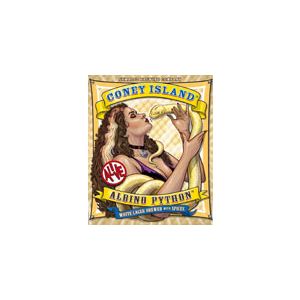
Ranks up there as just about the most phallic beer label art we’ve ever seen, but the real-life show depicted in the portrait is similarly suggestive indeed. Expect profound citrus (orange) notes, provided by the addition of sweet orange peel, and a very active lager yeast strain that has produced an ample supply of fruity esters. These notes bounce off of fennel and aniseed spice notes. Notice how the aroma is absolutely full of fennel, and this is also very big on the palate too, as are the flavors of ginger and the distinctive spice you get from raw ginger root. It is so spiced that it comes off with a slight medicinal kick, like some sort of nerve tonic you might buy off a wagon outside an old freak show. Reminds us of spiked jasmine tea with a lingering nip of mint and menthol. Very intriguing and quite complex, it’s not unlike Meetha Masala Mukhwaas herbal blends often found in authentic Indian restaurants. Not surprisingly therefore, it works nicely with Indian cuisine. The spices are pretty massive, so we recommend drinking this on the cooler side of the suggested serving temperature, as the spices can get a bit rowdy if you let it warm up too much. In other words, keep the Albino Python cool or it might crush you.
Serving Temperature: 38-45° F
Int’l Bittering Units: 15
Alcohol by Volume: 6.0%
Suggested Glassware: Pilsner Glass or Pint Glass
Malts: Specialty 2-Row Pale, Torrefied Wheat, Weyermann Acidulated, Flaked Oats, Caramel Pils
Hops: Warrior, Saaz, Summit
Lancaster County, Pennsylvania, was at one point responsible for producing seven percent of all beer brewed in the United States. The brewing tradition in the region was spurred by innkeepers who brewed beer in back rooms, but by the late 18th century, English and Scottish immigrants had become brewers on much larger scales. In the 1840s, German lagers came to town along with German immigrants who brought with them "new" brewing techniques and expanded the repertoire from English and Scottish ales to German lager beers (which ultimately supplanted the former). During this period, Lancaster's newspaper, The Daily Intelligencer, dubbed the city the “Munich of the United States.”
Even at the height of Prohibition, many brewers in Lancaster refused to stop brewing. Some did it right out in the open until forced to shut down, others set up hidden 'breweries within breweries' in order to keep the beer flowing. But all local beer production stopped in 1956, when the last of Lancaster's Pre-Prohibition breweries shut down. The town wouldn't see another until nearly 40 years later, when The Lancaster Malt Brewing Company opened its doors in April of 1995. For the past 13 years it's been continuously operating as a restaurant and brewery, although ownership, and the brewery name, changed in 2002.
Master Brewer Christian Heim has been with the brewery since it opened in 1995; his great respect for the brewing traditions of old Lancaster, coupled with his modern know-how, are largely responsible for the solid reputation LBC's beers have built.
For more information about the Brewery or their restaurant (the Walnut Street Grille), give them a call at (717) 391-6258.
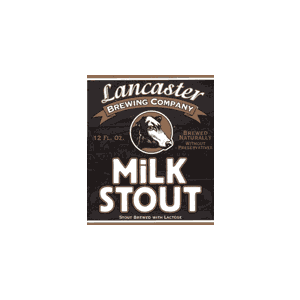
Just shy of black with a tan colored head, expect big, rich, unmistakable stout notes, with hints of dried plum, dark chocolate, coffee, and a prominent lactic edge that suggests hints of acidity. On the palate, look for a flavor progression that starts with clean, dry stout notes (coffee, dark chocolate, dark fruits) and quickly develops a lactic sweetness in the middle. Despite the name, it doesn’t taste like milk, but it has a similar faint sweetness from the lactose (milk sugar), added during brewing in this style of beer because this sugar cannot be metabolized by the yeast during fermentation, remaining in the beer and providing some natural sweetness and adding extra heft to the body. Note a pronounced coffee and dark chocolate-like bitterness and ample roasted malt notes, with a flash of vanilla bean, to close things out. Some minor orange notes and citrusy bitterness arrive as the beer warms, and upon warming further, look for notes of molasses and toffee and mild sourness in the fade. Cheers!
Serving Temperature: 50-55°F
Int’l Bittering Units: 22
Alcohol by Volume: 5.3%
Suggested Glassware: Pint Glass or Mug
Malts: 2-Row Pale, Caramel, Roasted Barley, Chocolate Malt, Black Malt (& Lactose)
Hops: Cascade, Goldings
Lancaster Strawberry Wheat Beer
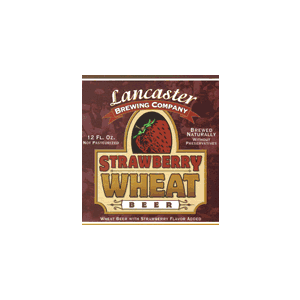
The strawberry aroma is unmistakable on this one, but it sits nicely in the overall beery flavor profile, without feeling artificial or extract-like. Along with the fruit aroma, expect some faint bubblegum and cidery, champagne-like scents. It can be challenging to separate from the prominent strawberry notes, but as you sample the beer, look for a hefty dose of cereal grains. We found the flavor profile quite interesting; it does not develop like you might expect a wheat beer supplemented by some strawberry flavors would. Instead, it’s gives hefty strawberry notes (dare we say strawBEERy?) that are gently cradled by a big, luscious body with an almost creamy feel, providing almost savory notes evocative of flavored ChapStick. There are some sweetish notes of corn, cereals, and distinctive impressions of champagne. Look for this beer to finish with a wheat twang & tartness that is gently suppressed by the prominent strawberry sweetness, and to present some final faint chocolate notes in the fade. A very interesting, unusual beer that we enjoyed far more than we thought we would. Try using it to deglaze a pan used in the preparation of a cranberry reduction for braising duck breast.
Serving Temperature: 40-45° F
Int'l Bittering Units: 16
Alcohol by Volume: 4.6%
Suggested Glassware: Pint Glass, Weizen Glass
Malts: 2-Row Pale, Wheat Malt, Caramel
Hops: Cascade, Hallertau
Wychwood Brewery—Whitney, Oxfordshire, England (Central South England)
The Wychwood Brewery (pronounced 'Witch Wood') is one of few independent breweries left in England. Perhaps their fanciful gallery of forest-lore friendlies has been what's kept them from the 'evils' of mega-brewery consolidation. Protective spirits with a Pagan-era edge, like the 'Black Wych,' 'Circlemaster' (aka scarecrow), and the 'Hobgoblin,' all seem to stand guard over this brewery, luring in fans while keeping the nasties of brewing conglomerates at bay.
We think their offbeat, somewhat irreverent tone is part of what's helped keep them independent. Take, for example, their Hobgoblin advertising campaign, launched in Spring of 2003, which we just love: "What's The Matter Lagerboy, Afraid You Might Taste Something?"
Hell, yes! We dig this Hobgoblin fellow—he clearly knows where it's at. He might not be the guy we want to throw a few back with (best to keep your full wits about you in his company), but we admire his spirit and his cause—challenging meat-headedly mindless pale yellow lager drinking.
So how did the brewery get affiliated with this cast of characters? In 1983, a German-trained English brewer named Paddy Glenny took an interest in the historic market town of Witney, in the heart of Oxfordshire's Cotswolds. He purchased Clinch's Brewery, which had been founded in 1841, and two years later, Paddy was joined by Chris Moss. The pair renamed it the Wychwood Brewery after the Ancient medieval Wychwood Forest that borders the town. In 1988 the brewery was asked to brew a special wedding beer for a local landlord, to be served at his daughter's wedding (that’s an opportunity every brewer should take, considering that Oktoberfest started in much the same way). The ale that Chris Moss created was the famed Hobgoblin Ale, which, of course, did not bear that name at the time (can you imagine the reaction of the bride or her father if their celebratory wedding ale had been called "Hobgoblin"?). After the celebrations, some ale remained and was brought to market, where it was a hit. More was brewed, and as 'legend' has it, while a firkin of the beer was briefly out of the brewer's sight, a Hobgoblin sketch had been left on it. Was it a Hobgoblin who did it? Could be. Or this might be a fun bit of brewery marketing. Regardless, the name stuck and took the brewery down the path of witches, scarecrows, goblins and the like.
Wychwood also brews organic beers for Prince Charles (yup, that Prince Charles—The Prince of Wales) under the Duchy Originals brand. In this capacity, they are the UK's number one producer of Organic Beers. Hey, if it's good enough for the Prince, right?
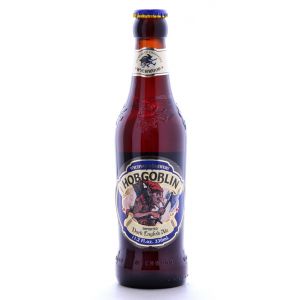
Rated exceptional (91 points) by the Beverage Tasting Institute, earning a Gold Medal in the 2006 World Beer Championships, Hobgoblin pours a deep amber (you could call it light brown) with a great pub-ale look to it with its beautiful, lacing head. Look for rich caramel, toffee, and maple syrup notes on the nose, with a nice dose of true-to-style British butterscotch character, dried dark fruits, and nuttiness. A notable feature is its woody character, almost as if it were conditioned in wood or drawn from the cask. Expect this beer to deliver a sweet yet restrained richness, held in perfect balance by lightly bitter hops, rounded out by some woody, tobacco-like notes. The primary flavors to look for are butterscotch, caramel, and raisins, but other characteristics abound. Finishes with more woody, almost musty, yeasty characteristics. Overall, Hobgoblin is a real treat and a great representation of a Dark English Ale. Enjoy with a plate of red grapes and cheddar cubes, or maybe lemon pepper chicken, and most definitely, another pint.
Serving Temperature: 50-55°F
Alcohol by Volume: 5.0%
Suggested Glassware: Pint Glass or Mug (clear or opaque)
Anadolu Efes Brewery—Istanbul, Turkey (Northwestern Turkey)
Every now and again we get mail from our readers describing their visits to the breweries we've featured. We're going to wager that we won’t get a letter describing a trip to Anadolu Efes Brewery, located in Bahüelievler-Haznedar. Now, we know what you're thinking—isn't that in New Jersey somewhere? No friends, it's in Turkey, in the historic city of Istanbul to be exact. Not that this wouldn't be a desirable brewery to visit—state of the art and always in operation, the Anadolu Efes Brewery might be a popular tourist spot for the ‘überest’ of über beer geeks, but for most of us, the remarkable historic sites of Istanbul will consume the majority of one's visit time. Not well known for its brewing trade, Turkey has a relatively young beer industry as far as private enterprises are concerned. Beer production in Turkey began in 1890 through a brewery founded in Istanbul by two Swiss entrepreneurs. This brewery was later nationalized along with another in Ankara in 1939, during which time Tekel, a state enterprise, was the only beer producer in Turkey. Following a change in the brewing regulations in 1955 that permitted private enterprises to produce beer, the first breweries of Efes Beverage Group, Erciyas Biracilik and Ege Biracilik, started their operations in 1969. Since then, the Turkish beer market has shown significant growth. At the end of 2005, annual per capita beer consumption in Turkey reached 12 liters, a three-fold increase from 4 liters in 1986. Even after this significant growth, per capita consumption in Turkey is still low compared to averages of Europe, the USA or even Eastern Europe. However, a growing tourism industry, changing consumption patterns and a developing economy are all contributing to an upswing of beer consumption in Turkey. Today, the young and dynamic Anadolu Efes group has five breweries, two malteries and one hop processing facility located within the Turkish borders. Additionally, they control ten more breweries and two more malteries across a network that spans six nearby nations in Eastern Europe and Central Asia, making them the fastest growing brewer in these, the fastest growing beer markets in the world. It would seem that as many civilizations before them have done, they too are using their strategic location in Istanbul, a city long recognized and fought over for its ideal position between the European and Asian continents, to their full advantage.
This style of beer, known today quite generically as “Euro Dark Lager,” has its origins in Franconia, Germany, as well as parts of Bohemia across the border in the Czech Republic. Efes Dark serves as a stronger, darker counterpart to Anadolu Efes’ hugely successful Efes Pilsener (that beer is found ubiquitously in its homeland). Just like their pilsener, Efes Dark is produced using bottom fermenting yeast (as all lagers are). These lager yeast give Efes Dark a characteristically clean and crisp flavor, which when combined with roasted malts, account for its distinctive, hearty flavor and deep ruby red color. On the nose you’ll notice obvious notes of roasted, caramel malts, with more subtle tones of singed molasses, dark ripened fruit, soft notes of peach and perhaps a hint of coffee. Look for a faint nuttiness and hints of Pilsner-like sulfur notes and a whiff of cellar-like mustiness, with a rim of minor mineral and metal (iron) notes. The aroma also presents a slightly vinous kick, partially due to the 6.5% ABV. The flavor is rich, malty sweet, roasted, and medium-bodied, with a chocolate undertone, notes of mild coffee, cola, and caramel. Expect this beer to sweeten a bit as it warms, at which point the alcohol presence will be more readily detectable. Overall, a very clean and flavorful brew, Efes Dark was awarded the Gold medal in the Best Beer category at 1998's Monde Selection Brussels competition. A good beer to pair with a meaty stew, and serves as a nice counterpoint to a spicy, earthy gumbo, if you’re looking for an edible counterpart. If however you are looking for a great cigar to smoke with this dark lager, try a mildly earthy, leathery cigar of moderate strength. Hey, cigars and beers literally go hand-in-hand—why not supplement your beer club membership with a subscription to our Premium Cigar of the Month Club? Each month you’ll receive five ultra-premium cigars hand picked by our panel of cigar aficionados, along with an informative newsletter which features in-depth reviews of every cigar we feature. Also included in each cigar review are suggested alcohol pairings to enhance your experience. And, if you like what you’ve received, we offer our members discounted prices on cigar reorders. One of our most popular clubs, when paired with your beer club membership, we can hardly imagine a better way to unwind at the end of a long day than with a handcrafted brew and a top notch cigar. Come to think of, we’ve earned ourselves a little break since we’ve come to the end of this month’s newsletter. Time to let Murl take over and for us to heed some of our own advice and relax with a brew and a stogie… Ahhh, the finer things in life. Cheers!
Serving Temperature: 45-50°F
Alcohol by Volume: 6.5%
Suggested Glassware: Pilsner Glass, Flute or Pint Glass
Cigar City Brewing—Tampa, Florida, USA (Western Coast of Central Florida)
It’s actually fitting that we’re up to our second Floridian beer of the year in the Rare Beer Club—great beer from Florida is a relative rarity in and of itself. But a handful of brewers in the state are laying waste to the popular notion that Florida is a beer wasteland. Cigar City Brewing was founded very recently, in 2008, by Joey Redner, a Tampa native with a thing for beer. He’s owned a bar, sold beer at the retail, brewery and import levels, and has written about beer for several publications. A free spirit by nature, Joey tends to shun things like recipes, temperature gauges and gravity readings in favor of “flavor readings.” While this keeps him happy in his home brewing pursuits it doesn't always produce a consistent product at the commercial level. This is why Joey is happy to be working with Wayne Wambles, a man who grounds unfettered enthusiasm in the foundation of sound brewing practices. In addition to beer, Joey is passionate about Cuban food and the colorful history of the city of Tampa—and the pair are working to contribute to that ongoing Tampa legacy by crafting some of the most exciting beers in the country today. In their first year of production brewing, they took home a Gold medal at the 2009 Great American Beer Festival in the Wood- and Barrel-Aged Beer category—no small feat for a new brewery competing in a crowded microbrew marketplace.
It is truly remarkable that a new entrant into the competition took home gold in a very competitive category. But we happen to think the beer that won is actually on the path to creating an entirely new style of wood-aged beer—cedar aged IPA. Aging on cedar is just not done outside of the homebrewer realm. But Cigar City brewer Wayne Wambles, a talented homebrewer turned pro, is all about creativity and experimentation. Cigar City Brewing’s small 15 barrel brewery gives him the flexibility to brew what he wants, how we wants, in very limited quantities. Capitalizing on that creativity and the mission of the brewery, he merged an element of the local traditions of Tampa, as the epicenter of cigar culture in the US, with aging beer on wood. Spanish Cedar is used extensively in the cigar industry, mainly as a lining for cigar boxes or humidors, where it has antimicrobial and anti-pest properties and helps to marry the flavor of different blends of tobacco in cigars. Each year, Cigar City Brewing takes one of its year round offerings and ages it on cedar, releasing the beer under the name “Humidor Series.” The result is unlike any beer you have ever tasted, and when we first tried it, we knew that we had to bring this new wood-aging treatment to our members.
It’s not just the cedar that makes Wayne’s beers remarkable—they are creative on many levels, and above all, are exceptionally well made. Their Hunahpu’s Imperial Stout, for example, is aged on Peruvian cacao nibs, Ancho and Pasilla chilies, cinnamon, and Madagascar vanilla beans. It’s like a chocolate mole in an 11.5% ABV beer geek’s dream. His Jai Alai India Pale Ale is a highly drinkable west-coast style IPA bursting with citrusy, hoppy notes and it was this beer that was aged in cedar to create the beer we are featuring this month—the same beer that earned them GABF Gold.
Cigar City seeks to celebrate and integrate the culture and traditions of their hometown, and in the process, they are clearly creating a legacy of their own. Quote us on that, as you’ll be hearing more about this clever little brewery from Tampa.
Jai Alai Cedar Aged Humidor Series India Pale Ale
If you are like we were, you’re not sure what to expect from this beer. This heavily hopped IPA is aged on spirals of Spanish Cedar during primary fermentation. Who ages beer on Spanish Cedar, a wood normally used in the construction of humidors and high end cigar boxes? Cigar City Brewing, that’s who—and they are, to our knowledge, the first commercial brewery to use this wood in beer aging. Which had us asking: why didn’t someone else start doing this before? Could this possibly be any good? Well if the nose is any indication, then yes, because it smells amazing. Conjures up visions of a West Coast IPA rolled into a cigar. Very alluring. But let’s back up a bit… Pours a clear, coppery orange color, capped by an enduring off white, sticky, oily head. On the nose, it’s just amazing (did we already mention that?). This will be extra appealing if you happen to enjoy the smell of a seasoned cedar humidor. The spicy, fragrant notes of Spanish Cedar are unmistakable, and if you’re not sure what Spanish Cedar smells like, just take a sniff of this beer. However, the hefty dose of citrusy American hops imparts notes of orange, and the Spanish Cedar-meets-citrusy-hops gives a distinct aroma that is not unlike the scent of Orangina soft drink. Challenge your nose to get past the obvious cedar and hops, and you’ll find the aroma of a big, sweet malt base. We also get suggestions of tobacco, but that’s probably just a sensory cross-pollination of the oft-associated cedar and cigars playing tricks on our minds. We could sniff this all day long, but let’s get to drinking the stuff. The first sip romantically assaults the palate with a cavalcade of flavors. Big cedary spice, floral, aromatic hops, sweet, juicy malts, grapefruit rind (huge grapefruit notes!), sandalwood, kumquats (there, we said it), and a huge blast of cannabis—yes, pot (there, we said that too!). If you’re not sure what pot smells like/tastes like (uhhh, huh-huh), just take another sip of this beer. As it warms, lingering notes of fresh orange pulp emerge, blending with the distinct notes of white grapefruit imparted directly by the Spanish Cedar. The finish is marked by the rise of bitter hops which grab the palate, and come very close to thrashing it, but somehow the spice of the cedar helps to clean the hops off the tongue just a bit, and these two flavor elements converge with a long-lasting bristling of spiciness that ends with a remarkably grapefruit pulp-and-rind-like flavor. Hoppy cedar burps remind you how great this beer is, even after it’s gone. A remarkable brew that uses an exciting, new form of wood aging that we fully endorse. Don’t expect notes of oak or vanilla or funk that you’ve come to associate in the current wave of mainly oak-based wood-aging—this is something else altogether and we couldn’t be more excited about bringing it to you. Sets the bar perhaps unattainably high for any cedar aged IPA that may follow.
Brewer Wayne Wambles has advised us that this beer is best consumed within two to three months. That being said, the sample that won them the Gold medal at the 2009 Great American Beer Festival in the Wood and Barrel Aged Category was about five months old, so it will hold up over time. The cedar presence remains pretty steady over time, but the other part of this beer’s appeal is the hops, and those will indeed fade with time, so, best to go for it now. So full of flavor on its own, it works nicely with super sharp cheddar cheese, yellow curry, or for a special treat, with freshly prepared, honey-drizzled baklava.
Serving Temperature: 45-55° F
Alcohol by Volume: 7.5%
Style: Cedar Aged India Pale Ale
Suggested Glassware: Oversized Red Wine Glass or Snifter
Microbrouwerij Achilles—Itegem, Belgium (Central Northern Belgium)
Most family run breweries in Belgium are very small, but Microbrouwerij Achilles, in Itegem, is downright tiny. The brewery sits in the garage of the brewer’s home, with mash tun, brew kettle, fermentation tanks and a very small bottling line all wedged into the very small space on a quiet street in this small Flemish town. From the road, you’d never know it was there. There are no signs. Yet their beer has managed to earn very limited distribution in the US. This is akin to a scenario where you or one of your homebrew buddy neighbors started selling beer out of your garage and somehow managed to attract interest in the product from abroad. That’s some good homebrew!
Just behind the “brewhouse” is a real house—one whose family living room has been converted into a small, simple, quiet café where local folk come to share beer and conversation and to support their neighbor.
That neighbor is local music teacher Achilles Van de Moer, a gentle, unassuming homebrewer who since starting the brewery in 1999 has all but left his day job to realize his dream of a self-sustaining commercial brewery. Achilles (sometimes spelled Achiel, and pronounced Ah-sheel in Flemish or French) makes simple, honest beers in his small yet sophisticated homebrewery. All of the beers are unfiltered and unpasteurized, and will referment a bit in the bottle, which of course means much more flavor, subtle complexities, and a longer shelf-life. The beer we’ve selected for you has never before been available in the US, and with the exception of a few shipping containers and warehouses thru which it passed on its way to you, it’s coming straight from the brewer himself. Achilles makes a small amount of beer, about 300 hectoliters, which is just less than 8,000 gallons. That’s about the volume of a small above ground pool or oversized hot tub. Mmmmm… a hot tub full of beer. Now that sounds like a great way to wind down the night… A more realistic way to put the cap on your work day would be to pop the cork on a bottle of this rare beer from Belgium that we managed to procure from Achilles’ very tiny stash. A santé!
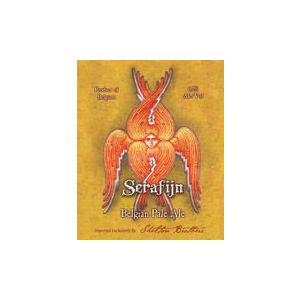
Serafijn Belgian Pale Ale pours a hazy murky amber with an off white sticky head. On the nose, expect very floral, phenolic, Belgian yeast notes to flutter out of the glass. Expect a mild tartness implied in the aroma, similar to SweeTarts candy. Talcum powder, stone fruits and ripe red grapes are present as well, with caramel and apple skin notes emerging as the beer comes up in temperature. The overall sweetness kicks up a bit at full warmth, along with some subdued clove characteristics. For Belgian beer, 6.2% ABV is beer meant for everyday drinking, and we think you’ll agree that this brew is very easy to drink indeed. After an initial burst of sweetness and apple notes, expect a dryness to set in relatively quickly, keeping the sweetness in check. Characteristic Belgian spiciness is very prominent, and comes not from the use of any herbal elements, but entirely from the yeast—and it’s clear that it was a very active yeast strain used in this beer. Notes of pear blossom with temperature, as well as suggestions of rosewater and faintly tart, unripe stone fruits. There is a hefty level of carbonation, and this helps to sharpen the overall bite of the beer, cleaning up the palate in the finish, preparing you for another fresh sip. This Belgian Pale Ale winds down with some stemmy, balsa-like woodiness and low levels of bitterness. Serafijn means Seraphim (plural form of Seraph), an order of angels that serve as caretakers of God’s throne. The name Seraphim means “the burning ones,” and it is said that such a bright light emanates from them that nothing, not even other angelic beings, can look upon them. These six-winged beings constantly shout praises to God, in the form of song, and are the highest rank of angels. A fitting symbol for the brewery of a musician and music teacher. Certainly the Serafijn beers celebrate the accomplishments of their creator, though at only 6.2%ABV, there is no burning, but there is a sublime drinkability. After a few, our beer panel was happily singing their praises. Try pairing with Lobster tail or crab-stuffed shrimp.
Serving Temperature: 45-50° F
Alcohol by Volume: 6.2%
Style: Belgian Pale Ale
Suggested Glassware: Tulip, Oversized Red Wine Glass