The Microbrewed Beer of the Month Club

Past Newsletters

Vol. 4 No. 2

Brewery Beers Featured
Pavichevich Brewing Company Baderbrau Pilsener
Pavichevich Brewing Company Baderbrau Bock
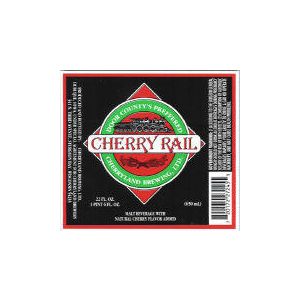
Cherryland Brewing Company Cherry Rail Lager

Pavichevich Brewing Company

The Pavichevich Brewing Company, which began producing Baderbrau Pilsener in Elmherst, Illinois in 1989, was founded by ex-Chicago Cop, Ken Pavichevich with the intent of producing world class beers that could effectively compare to those produced in Europe. After sampling Ken's Bock and Pilsener, we feel that he is well on his way to accomplishing his goal. The Baderbrau products are two out of only a handful of beers in the world that use such a high percentage of Czechoslovakian Saaz hops (95%), the most aromatic in the world.

Aside from the obvious delightful taste, Ken informed us of several additional benefits derived from consuming his products. "Triathletes train with Baderbrau as it is high in potassium, B-12, B-6 and replaces complex carbohydrates and electrolytes. A number of doctors specifically recommend one bottle of Baderbrau beer, daily, for nutritional value (Forbes, 9/92). And, you cannot receive a headache or hangover from Baderbrau products because they are not brewed with corn, corn syrup and/or rice which produce more fusel oils and higher alcohol's which promote headaches and hangovers."

Baderbrau Pilsener

Serving Temperature: 45-50° F
Original Gravity: 12.0° Plato
Final Gravity: N/A
Int'l Bittering Units: N/A
Alcohol by Volume: 4.6%

Baderbrau Pilsener has been awarded Gold Medals in various judged events including the Great American Beer Festival for 5 consecutive years now beginning in 1990. Michael Jackson, who has the enviable distinction as the world's foremost authority on beer, commented Baderbrau's Pilsener to be the finest brewed in America. (The Brewing industry refers to him as THE Michael Jackson!). Baderbrau is also the first non-German beer to be served at official functions of the German consul general. It is brewed with two-and three-row pale malts in addition to caramelized malts with give it its deep golden color. Baderbrau is hopped with 95% Czechoslovakian Saaz hops and the remaining 5%, a combination of 3 German hop varieties.

Brewer Note: Both Baderbrau beers should be poured vigorously down the center of the glass, thus creating a creamy head and an exceptionally smooth taste.

Notes From the Panel:

A very nice golden color (not a wimpy-looking Pilsener) with both hops and malt prevalent in the nose which hints at a rich pale malt character. Note a dry and clean maltiness up front with a moderately strong hop finish. This flavorful, medium-bodied, German-style Pilsener is rich in flavor and delicately balances its hop/malt profile. Very nicely done.

Baderbrau Bock

Serving Temperature: 50-55° F
Original Gravity: 13.0° Plato
Final Gravity: N/A
Int'l Bittering Units: N/A
Alcohol by Volume: 5.6%

Bock beer was traditionally prepared in the winter for use in the spring and intended to provide nutrition during the fasts of lent so that eventually Bock beer day came to herald the arrival of spring. Not so according to Pavichevich. "That's just an old wives' tale. Actually, the best grains for making beer come in the fall and the finest brewers produce the richest beers under the sign of the ram (March) that aren't to be consumed until the sign of the goat (December)." Baderbrau Bock is brewed with four types of malts, 2- and 6-row pale malts, caramel, and Chocolate malts. It is also hopped with 95% Saaz hops, however the remaining 5% is comprised of only two German hop varieties.

Notes From the Panel:

This extraordinary Bock has a rich, malty nose with a strong roasted character and dark brown color. The rich and flavorful malty-sweet body is balanced by a chocolately, roasted finish. Baderbrau Bock is hopped slightly less than a traditional German Bock-style beer. Overall, a clean and very flavorful beer.

Cherryland Brewing Company

The Cherryland Brewing Company, founded in 1987 by Mark Feld and Tom Alberts, then two local homebrewers, is located in the heart a favorite midwestern vacation destination, Sturgeon Bay, Wisconsin. The brewpub is actually a renovated distinctive railroad station. "Located amongst the scores of cherry orchards in Door County, it seemed only natural to produce a beer which is representative of our local heritage." Although Cherry Rail is by far the brewpubs most popular beer, they also produce Silver Rail (German Pilsener), Golden Rail (A Vienna-Style Amber), Cherryland Weiss (A Cherry flavored Wheat beer), Winter Porter, and Apple Bach (A seasonal, apple juice flavored mai bock). Tom and Mark have a limited distribution of their products in the midwest. Tours of the brewery are available and the brewpub serves excellent Italian and American cuisine.

For more information about the brewery and scheduled tours, call (414) 743-1945.

Cherry Rail Lager

Serving Temperature: 38-43° F
Original Gravity: 12.0° Plato
Final Gravity: N/A
Int'l Bittering Units: N/A
Alcohol by Volume: 4.2%

Cherry Rail, which was awarded a Silver Medal at the 1991 Great American Beer Festival, is a lager style beer produced with 100% real cherry juice. Cherry Rail is brewed with all two-row pale malts and is hopped once at the beginning of the boil and then again 20 minutes prior to the end of the boil with Cascade hops. Tom and Mark have experimented with many different recipes with respect to when they should add the cherry juice during the beer's production and found that it retains its original taste best when added during the beer's fermentation.

Food For Thought...

Barbecued Bader-Bits

A grill filled with these tantalizing shrimp and a bucket of chilled brew is a sure-fire way to enjoy a Sunday afternoon with friends and family. You'll only have to part with 2/3 cup of you Baderbrau Pilsener to make it happen...

  • 2 pounds of large shrimp
  • ½ cup olive oil 2/3 cup German Pilsener
  • 3 tablespoons lemon juice
  • 4 large cloves garlic, crushed
  • ¼ cup finely chopped scallion
  • 2 tablespoons fresh basil or 2 teaspoons dried
  • dash or two of Louisiana hot pepper sauce
  • bamboo skewers, soaked in water for 1 hour

Shell and clean shrimp, rinse, and pat dry. Mix oil, Baderbrau Pilsener, lemon juice, garlic, scallion, basil, and hot pepper sauce (optional), add shrimp, and coat thoroughly. cover and marinate in refrigerate 4-8 hours. Spear shrimp on soaked skewers and place in refrigerator until ready to cook. Barbecue or broil until shrimp turn pink.

Source: Great American Beer Cookbook, Brewer Publications, Boulder, CO.

Norm's Corner...
As spoken by Cheers' Norm

Woody: What's the story Norm?
Norm: Boy meets beer. Boy drinks beer. Boy meets another beer.

True Brew Facts

THE BREWER'S DIGEST - Qruze, developed by "Brewmistress" Kim Labrie, is a "clear carbonated malt beverage" that claims to be the first malt alternative beverage to be conceived. Labrie says the beverage "offers a clean and exotic taste without the foam, bite or bitterness associated with other beer and malt beverage drinks. Looks like Zima haz zum competition.

ULTIMATE BOOK OF BEER TRIVIA - Egypt and the Middle East, particularly Sumerian and Mesopotamia are the two primary regions generally recognized as the birthplaces of beer. It is estimated that the first beers were brewed there as early as 3000 BC.

BARLEY CORN - Pete's Wicked Red was just one of 55 beers at the 1994 Great American Beer Festival to use the word "red" in its name; 61 preferred the more traditional "amber" moniker. At 1993's festival, however, amber-named beers outnumbered the reds by more than two to one.

BEER: THE MAGAZINE - The Guinness Import Company took advantage of a New York Times article stating that then-president-elect Bill Clinton enjoyed a Moosehead draft at the Nugget Bar & Grill in Santa Barbara, CA. In the ensuing advertisement in the Washington Post and Arkansas Democrat-Gazette, it was pointed out that in this case, the president-elect didn't avoid the draft.

A Primer on Beer Styles ©
By Steve Johnson

There are two basic families of beers: Ale and Lager. Ales are more typical of the British Isles, lagers of Germany and Czechoslovakia.

Ales are made with a yeast which floats to the top of the beer and which works at warmer temperatures than lagers. The brewing process is shorter for an ale than it is for a lager. Because of the shorter and warmer fermentation and conditioning time, ales tend to have a fresher aroma and palate, with a unique fruitiness or yeastiness to them. Lagers tend to be smoother tasting and less aggressive in their character. Note that these are generalities. Regardless of the yeast used, a brewer can brew a very smooth ale or very robust lager. The American brewing renaissance has been for the most part, a revival of ales. This is because of the hearty flavor characteristics of an ale, and because it is more economical to brew an ale, due to their shorter fermentation / conditioning cycle.

Old Ale - A medium-strong ale, usually dark in color, lightly to moderately hopped, and full bodied. The name developed in England before improved methods of preservation were developed and almost all ales were consumed fresh. Due to their relatively high alcoholic strength, old ales could be kept for many months and, thus, were "old." Old ales and barley wines are known collectively as "strong ales."

Pale Ale - A copper-colored ale; a term frequently used to describe a brewer's premium bitter, usually in the bottled form. In recent years the term pale ale has frequently been used to describe draft bitter. the name is seemingly a misnomer, since there is nothing "pale" about pale ale. It was originally used to distinguish it from porter, a very dark ale. It is sometimes referred to as Burton Ale, because it originated in the town of Burton-upon-Trent, England. A stronger and hoppier version is known as India Pale ale or IPA. It acquired this name because it was originally brewed for export to India.

Porter - A very dark-to-black ale. Porter originated in eighteenth century London and was first popular among porters (hence, its name). It is traditionally malty and bitter. many have a dry coffee taste as well. The stronger and more bitter varieties later became known as stouts, because (it is said) they were appreciated by the "stoutest" of the London porters.

Red Ale - A largely American created category of ales whose roots seemed to have originated in Northern Ireland. As it is a developing category, there are many different interpretations of it being produced today, from bland to flavorful and malty sweet to hop bitter and everything in between.

Scotch Ale - A strong, amber-to-dark, malty, full-bodied ale, originally from Scotland. Also known as "wee heavy." It has also been brewed in Belgium for many years.

Stock Ale - A strong ale originally brewed to be stored for a long period of time.

Stout - A very dark-to-black, full-bodied ale' a stronger variety of porter. Two main subcategories exist: Dry Stout (also known as Irish Stout) and Sweet Stout (more common to England and sometimes called Cream Stout). A version of a Sweet Stout with lactose (milk sugar) is know n as Milk Stout. In addition, there are Imperial Stouts (Also known as Russian Imperial Stouts) and Oatmeal Stouts. Imperial Stout was originally brewed in England and exported to Catherin the Great's court in St. Petersburg.

Trappist Ale - A style originally brewed by Belgian and Dutch Trappist monks. A true Trappist Ale should be relatively strong, use cane sugar in the brewing process, and be bottle conditioned. They tend to be assertive and complex. Some are full bodied, with a rich and rounded palate; others are tart and fruity. Stronger versions of the same brand are frequently referred to as "double" or "triple." Also known as Abbey Ale.

Wheat Beer - Any beer using malted wheat. There are many styles. Berlinger Weisse is an unfiltered, tart, low-alcohol, light-bodied, well-carbonated beer, originally from Berlin. It is frequently served with fruit syrup. Other varieties originating from Southern Germany are variously called Weizenbier, Weisse, or Weissbier. These beers are of a more conventional alcohol strength and body, but are also tart and fruity. They are frequently served with a twist of lemon. Wheat malt content varies from 40%-80%. Bottle-conditioned wheat beers are usually called Hefe-Weizen. Witbier is a Belgian version of wheat beer with an orangy character and ahoneyish aroma.

Winter Warmer - A beer brewed for consumption in the winter, frequently dark, malty, and fairly high in alcohol content, but there are some that are light colored and emphasize hops instead.

The first question that should enter your mind when receiving a shipment from Microbrewed Beer of the Month Club is "What style of beer is this." As you develop an understanding and appreciation of the different styles, you will become "beer educated", and able to make discriminating choices when selecting beers at a restaurant or liquor store. Just as a wine connoisseur may make a selection based on the style, so too, you will hunt for your favorite beer styles, be it a porter, a pale ale or a Pilsner. The more adventurous will seek out new styles in order to broaden their horizons. Enjoy!

About the Author: Steve has traveled more than 70,000 miles throughout the U.S., Canada, Mexico, England, Scotland, and Belgium searching for good beer and researching several publications: On Tap: Guide to North American Brewpubs (2 separate guides dedicated to pubs both east and west of the Mississippi). In 1987, he began writing and publishing the World Beer Review, a bimonthly newsletter devoted to the pursuit of good beer.

For more information about On Tap publications or the World Beer Review, contact Steve at 803-654-3360 or write to him at P.O. Box 71, Clemson, SC 29633.

California Home Brewing Clubs

For those of you looking to learn how to brew your own beer, broaden your existing brewing skills, or simply meet some more people that have a similar interest in appreciating quality microbrewed beers, here's a list of home brewing clubs located in California. If nothing else, there is certainly a pure entertainment value in simply reading their names!

  • Barley Bandits Anaheim 714-630-6527
  • Shasta County Sudsers Anderson 916-365-6284
  • Delta Brewing Club Antioch 510-778-8359
  • Mad Brewers Bakersfield 805-831-3719
  • Old Capitol Brewing Club Benicia 707-644-5517
  • Stanislaus Hoppy Cappers Ceres 209-538-2739
  • S. San Diego Brewers/Vintners Club Chula Vista 619-427-2474
  • The Tandem Malty Processors Cupertino 408-946-6064
  • High Desert Trublemakers Edwards AF Base 805-258-4824
  • QUAFF El Cajon 619-447-9191
  • Yolo County Homebrewers Esparto 916-787-3615
  • Draught Board Home Brew Club Fremont 510-487-4274
  • San Joaquin Worthogs Fresno 209-264-5521
  • Foothill Fermenters Grass Valley 916-268-8181
  • Lagerheads Homebrewing Guild Inyokern 619-378-4278
  • Crown of the Valley Brewing Society La Canada 818-952-1386
  • Big Dog Homebrewing Club Livermore 510-449-5118
  • The Strand Brewers Club Long Beach 310-425-8700
  • Worts of Wisdom Mountain View 415-965-9820
  • Mad Brewers Napa 707-258-9369
  • Stanislaus Area Association of Zymurgists Oakdale 209-847-9706
  • Bay Area Mashers (BAM) Oakland 510-339-1816
  • Wild Yeast Culture Oakland 510-893-0385
  • Monterey Beer Nuts Pacific Grove 408-375-0950
  • The Brewbirds of Hoppiness Pacifica 415-355-7143
  • Hangtown Assoc.of Zymurgy Enthusiasts (HAZE) Placerville 916-626-7733
  • Brew Angels Plymouth 209-245-4379
  • Some of Upland's Diversified Zymurgists (SUDZ) Pomona 909-625-0126
  • Gold Country Brewers Assoc. Sacramento 916-361-1079
  • CA Culinary Academy Brewers Assoc. San Francisco 800-229-2433
  • San Andreas Malts San Francisco 415-885-1878
  • San Luis Obispo Brewing Society (SLOBS) San Luis Obispo 805-541-0713
  • Barley Literates San Marcos 619-753-2380
  • Santa Clara Valley Brewers Association Santa Clara 408-247-6853
  • Redwood Coast Brewers Association Santa Cruz 408-426-3005
  • Sonoma Beerocrats Santa Rosa 707-544-2520
  • Tahoe Homebrewer's Club (THC) South Lake Tahoe 916-544-5592
  • Susanville Homebrew Institute of Technology Susanville 916-257-8803
  • Temecula Valley Homebrewers Association Temecula 714-676-5250
  • Clan de Stein Ventura 805-643-4560
  • Maltose Falcons Homebrewing Society Woodland Hills 818-884-8586

For Members Only

Give Your Friends FREE Beer, Wine, Cheese, Chocolate, Cigars & Flowers!
Through our Customer Appreciation Program

Your name has real value to your friends, co-workers, and family members! Every time a friend, family member, or anyone else you know joins any one of our clubs, [or gives a gift] for 3 months or longer, we'll give them 50% off of their first month, but only when they mention your name. And we'll also give you 50% off your next month too which can either be applied towards your current membership or you can try one of our other Clubs out! (We can add one more month to your order at 50% off for prepaid memberships!)

The Fine Print: Members giving gift memberships do not qualify for referral credits and you can't give yourself a gift to qualify! This Program is mutually exclusive of any other promotions.

Membership Q & A

Q: What can I do if I'm having difficulty receiving my shipment at home?
A: You should consider having our discrete box delivered to your work location or to a neighbor 21 yrs. of age that can receive it for you. As your shipment requires and adult signature to receive, it's always best to ship it to a location where someone will be there to receive it for you. The box is brown corrugated cardboard and doesn't say "Beer" on it anywhere.

Q: What should I do if I'm moving or want to extend my membership?
A: Please call us prior to the 5th of the month to make all account related information changes such as address changes, membership extensions & terminations, or gift accounts desiring to continue their memberships. Address changes made after that time may require a repackaging and re-shipping charge of $12.00. Additionally, if your box is re-routed by UPS from an address different than what was originally specified, you may incur a $5.00 re-routing charge.

Q: What happens if my shipment is damaged?
A: If your shipment arrives damaged, please call us immediately toll free at 1-800-625-8238 and report the incident for a prompt resolution.

Q: What happens if my credit card is declined?
A: We will send you a courtesy notice asking you for an alternative payment method and your order will be temporarily suspended until we hear from you.

Q: What happens if I join under a special incentive program and don't stay a member for the entire term committed?
A: Not a problem. Although we want to do everything we can to keep you as a member, we will allow you to cancel your subscription early; however, you will be responsible to pay for the item that was given to you as part of the promotion. If you received a discount based on a specific term, the amount discounted will be charged to your card.

C&H Internationals Logo Since 1994
Join Our Club
Gift Memberships

Membership Renewals
Reorders
Home Page
More Information
Current Selections
Past Selections
Testimonials
Other Gourmet Clubs
Corporate Gifts
Wedding Gifts
Brewery Search
Style Guide
Beer Fun Section
Industry Resources
Festivals
Print a Gift Card
Send a Virtual Brew
Refer a Friend
Send a Hint
E-Promos
Contact Us
Link to Us

1 - 800 - 625 - 8238
(Outside US call: 949-206-1904)
P.O. Box 1627, Lake Forest, CA 92609