The Microbrewed Beer of the Month Club

Past Newsletters - April 2010

Brewery
Beers Featured
DOM
VAR
INT
RBC
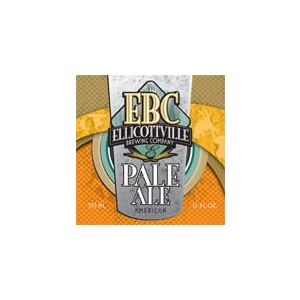
Ellicottville Brewing Company EBC Pale Ale
Check
Check
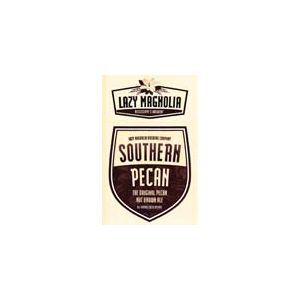
Lazy Magnolia Brewing Company Southern Pecan
Check
Check
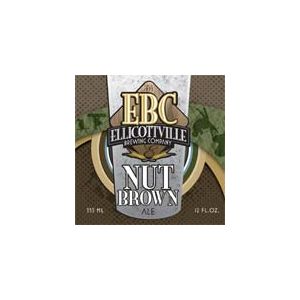
Ellicottville Brewing Company EBC Nut Brown Ale
Check
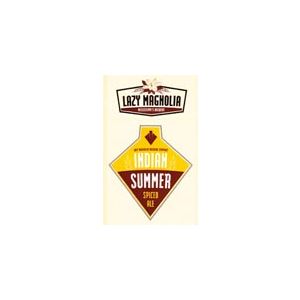
Lazy Magnolia Brewing Company Indian Summer
Check
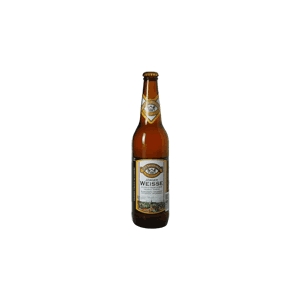
Brauerei Grieskirchen (Austria) Jörger Weisse
Check
Check
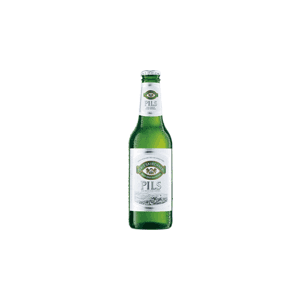
Brauerei Grieskirchen (Austria) Grieskirchner Pils
Check
Check
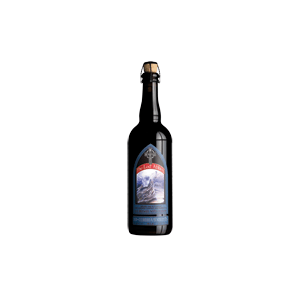
Port Brewing / The Lost Abbey (USA) Ten Commandments (2009 Vintage)
Check
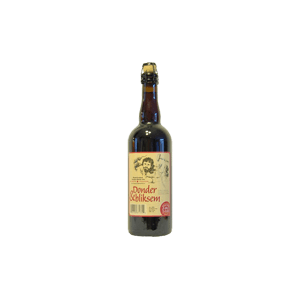
Brouwerij De Molen (Netherlands) Donder & Bliksem (2007 & 2008 Vintages)
Check

DOM = Domestic Beer Club; INT = International Beer Club; VAR = Domestic International Variety Beer Club; RBC = Rare Beer Club

I'm ready toPlace My Order Button

Ellicottville Brewing Company

What a winter we’ve had around this country! From freak snowstorms along the gulf coast to over five feet of snow in the mid-Atlantic, it was a hell of a season—which was great if you love to hit the slopes. There was so much snow, in fact, that now we have threats of flood as it all melts away. No doubt, you’re ready for spring and summer to come along, but in no time at all, you’ll be missing the cooler weather and maybe dreaming up your next winter vacation. As a ‘better beer’ lover, you know how it can be when you head out to a resort town—often, the beer selection leaves quite a lot to be desired. May we suggest you pay a visit to the village of Ellicottville in southwestern New York state, and partake of the good food and great beers found at the Ellicottville Brewing Company. Whether you’re a fan of the mountain ski slopes or you enjoy jazz and folk music festivals, or Mardi Gras celebrations, there’s always something going on in Ellicottville year round (but the skiing/snowboarding is our favorite in this ski hamlet; few things are as rewarding as settling in at the end of a day on the mountain in a great local brewpub with a tasty, warming brew).

The Ellicottville B.C. was started by co-owners Allen and Walter Yahn and Peter Kreinheder out of a desire to open a family business. The inspiration struck while on a ski trip to Vail, CO, where craft brewing got an early foothold. There was the realization that Ellicottville, sometimes referred to as the “Aspen of the East”, would be the perfect location for a craft brewery and grill. Today, EBC is considered one of the finest craft brewers in the state, receiving no less than three International World Beer Championship awards.

The EBC is a great place to have a beer, from its old Victorian, woodsy charm to its solid black walnut and granite columned bar. You can even tour their small brewery, featuring a 10 Barrel Hungarian brewing system (call ahead to be sure a tour is available the day of your visit), or, for $300 a head, take over the brewery in their “Be A Brewer For A Day” program under the tutelage of head brewer Dan Minner (call for reservations). Not to mention their impressive lineup of fresh, draft beers; depending on what’s on that day, you can find anything from the ultra hoppy to woody, oak-aged blonde ale. They offer the only open air dining in town, and their Beer Garden is full of European flowers and climbing hop bines, which makes for a wonderful place to have a beer on a hot summer night.

For more information about the brewery and scheduled tours, call (714) 699-ALES or check out their web site at www.ellicottvillebrewing.com.

EBC Pale Ale

EBC Pale AleLook for a color that is right at the intersection of straw and amber, topped by an off white head that is sticky with hop oils. Note pleasant, hoppy pine and fruit-flesh notes (think dried lemon wedges) with subtle must and peppery spice. Expect this beer to go down like an old-school microbrew: grains are celebrated and very present, with a hint of toastiness, but so is a clean beeline toward the moderately-piney, citrusy hops. We found the carbonation levels quite high, helping to sharpen the bitterness, which promptly develops after the hops and grains aver their roles. As it warms, look for the bitterness to grow more intense and grapefruit-and-crushed-aspirin-like, lingering on the palate, clinging a bit longer than when fresh out of the fridge. Overall, this is a solid session pale ale. Pairs nicely with buffalo wings and blue cheese.

Serving Temperature: 45-50° F
Int'l Bittering Units: 51
Alcohol by Volume: 5.5%
Suggested Glassware: Pint Glass or Mug (clear)
Malts: 2-Row Pale, C-60, Malted Wheat
Hops: Cascade, Columbus

EBC Nut Brown Ale

EBC Nut Brown AleEBC’s Nut Brown Ale pours a medium to dark amber in color, and is capped by a sticky off white head. Note a bouquet of ripe oranges, mangos, barley and peppery spice. Brown ale, as a style, is very diverse—you can get anything from hoppy and sweet to dry and nutty to syrupy and sugary. This brown goes down the floral, aromatic route, with some nuttiness (more of an American style brown ale). Look for a complex, layered aroma featuring figs, grapefruits, and an almost anise-like spice note. On the palate, expect a nice medium body with a plentiful spiciness that is enhanced by the perfect level of carbonation, never growing too prickly on the palate. The hops bring both spice and citrusy notes, balancing the caramel and toasty, crackery, dark bread notes. At full warmth, look for some chocolate notes to develop. Finishes with aromatic hoppy flourishes, moderate bitterness, impressions of plums and a nutty caramel quality. Overall, this is nicely fruited, with a malty center and spicy edge. A great session-style brown that will work with BBQ beef tips, Korean beef or spicy Indian chicken skewers.

Serving Temperature: 45-50° F
Int’l Bittering Units: 25
Alcohol by Volume: 5.0%
Suggested Glassware: Pint Glass
Malts: 2-Row Pale, Chocolate, Special B
Hops: English Fuggles, Chinook

Lazy Magnolia Brewing Company

Believe it or not, the great state of Mississippi has only one brewery, and it didn’t get there until about 2004, just before the first batch of Mississippi-brewed beer rolled out of the Lazy Magnolia Brewing Company in March of 2005. For those of us who enjoy craft beer, this seems a bit sad, but hey, at least their first is a craft brewery, right? It’s actually a great sign that a state which for so long had no brewery finally sprang into action with a craft brewery!

The Lazy Magnolia Brewing Company was founded by Mark and Leslie Henderson. Born and raised in Mississippi, the couple met in college and moved to the Gulf Coast in 2000 to pursue careers in engineering. The first steps toward the founding of Lazy Magnolia occurred one Christmas when Leslie bought Mark a homebrewing kit because she couldn't think of anything else to get him. We’ve all been there, right? You don’t know what to get someone, so you give something that YOU want, and hope for the best.

Mark only got to brew one batch of beer before Leslie took over the “brewing operations,” leaving Mark to put his engineering skills to work designing new equipment, tools, and gizmos to enhance the homebrewing process. It didn't take long for this hobby to take over their house and all of their free time. “We were brewing twice every weekend, and we were giving away almost everything that we brewed to friends,” laments Leslie. The house was completely overtaken with 5-gallon glass jugs, copper heat exchangers, and bubbling buckets of beer as they refined their recipes.

Family and friends were so impressed with these homemade creations that they encouraged the couple to go pro; many even offered to invest in such a venture. So Mark and Leslie started doing some serious research to answer basic questions about the legal status of breweries in Mississippi (there were none at that point) and the potential market in the state for specialty beer. Much to their surprise, all answers came back positive. The time seemed ripe for Mississippi to join the rest of the nation in the craft beer revolution.

A building was secured in September 2004 and the brewing equipment was delivered in October and fully set-up by December. The dream became a reality in January 2005, when the first batch of beer was brewed on the Lazy Magnolia system. Barely up and running, Hurricane Katrina hit, briefly shutting down operations and sadly, destroying the couples’ home, but the beer was flowing again by October.

For more information about the brewery and scheduled tours, call (228) 467-2727 or check out their web site at www.lazymagnolia.com.

Southern Pecan

Southern PecanThe brewery says this is the first beer made with whole roasted pecans. Other brewers have used pecans, but this is the only beer to use them in the grain bill, meaning the pecans get partially fermented in the brewing process and contribute to the core flavors of the beer rather than being an afterthought for adding aroma. Upfront, it smells fairly sweet and nutty, with a hint of plum, gingerbread dough, and a smidge of citrusy hops. We found plenty of malt on the nose, but a nicely balanced beer overall. Because the pecans are used as a fermentable agent (not a flavoring, per se), there’s not a heaping dose of pecan flavors, though there is a small, restrained pecan flavor, adding a delicate sharpness to the palate. The beer starts on the sweeter side but this is tempered by hop bitterness and a faintly woody, almost ashy, tobacco-like, tannic character, all hugged by a gentle citrus note and thin syrup note, with final breaths of roastiness. Pairs nicely with Edam cheese.

Serving Temperature: 45-50°F
Int’l Bittering Units: 16
Alcohol by Volume: 4.5%
Suggested Glassware: Pint Glass
Malts: 2-Row Pale, Maris Otter, Aromatic, Carapils, Wheat
Hops: Magnum, Willamette

Indian Summer

An interesting take on the style, this beer is brewed with wheat, then spiced with orange peel and coriander, yet it’s filtered and thus, doesn’t look like the cloudy Belgian wit you’d expect based on the ingredients and aroma. It’s more of a filtered American wheat ale with Belgian wit spices. Interesting. Expect big time butterscotch (diacetyl) on the nose with some floral hops, faint orange zest and some clean grains with a very faint wheat twang. Our beer tasting panel found that it drinks quite tasty despite not being a traditional representation of any beer style. Look for prominent orange zest atop a base of caramel grains. Note a snap from the hops and citrus zest in the finish, with a faint champagne-like quality, rounded out by a wheaty, thirst-quenching character—making this a great beer to usher in the warmer days of the year. Note that the wheat flavors grow stronger as it warms up, making this a fine beer even at 50-55 degrees. It’s really nice with Fontina cheese melted over sourdough bread cubes. Beer and cheese are a natural combination, and our Gourmet Cheese of the Month Club offers a tasty way to expand your knowledge of cheeses—making for a great pairing option for your microbrewed beers of the month. Also makes a great gift for people looking to have a little slice of luxury delivered each month. Check out www.monthlyclubs.com for all the details on this, one of our most popular clubs.

Serving Temperature: 45-55° F
Int'l Bittering Units: 16
Alcohol by Volume: 4.8%
Suggested Glassware: Pint Glass, Tumbler, Weizen Glass
Malts: 2-Row Pale, Wheat, Pale Ale
Hops: Magnum

Brauerei Grieskirchen—Grieskirchen, Austria (Northern Central Austria)

Last month we brought you two craft brewed beers from Mexico. This month, we have another brewery from just ‘south of the border.’ In this case, the reference point is not the USA, but Germany and the Czech Republic (great brewing nations both) and the brewery is located just south of where the borders of both nations intersect. Got your geography caps on? We are of course talking about Austria, a nation which itself is home to a mighty brewing heritage. The capital city, Vienna, can actually claim three beverages of national interest: coffee, left by the Turks in the late 17th century, a robust wine industry, and beer, which not surprisingly, is our personal favorite. The history of our favorite Austrian beverage is perhaps the most impressive of the three. At one point, an Austrian brewing family, led by Anton Dreher, controlled the largest business conducted under one management in continental Europe. And at a time when beers from Munich were still dark brown and the pale brilliance of the emerging Pilsener stood in contrast, in all its alluring novelty, Vienna featured unique beers that bore a reddish amber color, from which many brewers since have drawn inspiration. We take for granted today that beer can come in just about every shade, from ultra pale straw to inky black, but this was not always the case and the reddish amber hues found in Vienna’s beers contributed greatly to the color palate, and flavor profile, of beer.

Interestingly, there’s another link to Mexico—last month’s featured country—that can be drawn here, and that is the fact that Mexico still memorializes this famous innovation in beer in the form of a style of lager which they call “Vienna.” And any homebrewers or professional brewers out there will recognize the familiar term “Vienna malts,” which are no longer made exclusively in Vienna (or even Austria) but are still used today to contribute reddish hues and toasty notes to today’s beers. But perhaps even more important is Austria’s role, albeit contested over the years, in the development of lager beer. Until the mid-1800s, all commercially produced beer was fermented with top-fermenting (aka ale) yeast. But in 1841, the first beer brewed with bottom-fermenting (aka lager) yeast was born. And while the Czechs get credit for creating the world’s most popular style of beer, Pilsner (which is a specific type of lager created in the Bohemian town of Pilzen, hence the name), lager was born in Austria. This major brewing development came about in a spirit of collaboration between a Munich brewer, Garbriel Sedlmayr, and Anton Dreher, during a visit to Dreher’s Vienna plant in 1841. As you can imagine, this caused much debate between Munich and Vienna over the years as to the origin of lager beer, enough so that Adolph Hitler himself ordered a commission of inquiry on the matter. In 1942, the commission ruled that it was in fact Dreher who had produced the first modern lager beer. Perhaps the fact that the Nazi party owned this determination may have led to less touting of the declaration than would have otherwise ensued if a different political entity had performed the research.

Almost exactly midway between Munich and Vienna lies the small town of Grieskirchen, Austria. For over 300 years, Brauerei Grieskirchen has brewed beer here using only traditional methods and local ingredients. The flagship of the brewery is their Grieskirchner Pils, featuring local, aromatic hops—and we’re the first to bring it into the states—it’s never before been available domestically. And, while Bavaria has its famous beer purity law known as the Reinheitsgebot of 1516, the Austrians have their own purity law laid out in the Codex Alimentarius of the Hapsburg period (the Hapsburgs were the ruling family of Austria and the Austro-Hungarian empire, 1278-1918, and the Holy Roman empire from 1438-1806). Like the Reinheitsgebot, it too restricts beer to a handful of specific ingredients, but where the German law mandates that the only permissible grain is barley, the Austrian law requires that beer be made with water, hops and “cereals,” which is less restrictive and in fact, permits wheat to be used to produce beers. Even under the Reinheitsgebot, wheat beers were in high demand—but they could not legally be produced in Bavaria, so naturally a market for them sprang up in Grieskirchen, a border town just at the eastern edge of Bavaria. Thus was born a proud tradition of Austrian wheat beers, and we’ve proudly procured one of Austria’s best for you to try (only a few cases of the stuff have ever been sold in the US, so your membership in our Beer of the Month club has afforded you the chance to be among the first in the country to ever try this beer!). Enjoy both of these tasty Austrian beers, for each bottle presents the opportunity to taste a little bit of history (a small part of which is their US debut). Prost!

If you read German and would like more information about the brewery, check out their website at www.harmer.at.

Jörger Weisse

Jörger WeisseThis traditional Hefeweizen was rated 91 pts (“Exceptional”), earning a Gold Medal at the 2007 World Beer Championships. Pouring the beer gently, the beer has a thick haze, but if bottle is heavily swirled to rouse the sediment, it gets very murky, almost milk-like—and as a Hefeweizen, that’s exactly what it should look like. You can choose your own degree of “seasoning” the beer in this manner. With as much yeast and wheat sediment as possible dredged up, expect notes of  bubblegum, cloves, some banana, hay, grass, and hints of lemon and ozone. Look for a slight acidity and wheaty tartness to be implied by the aroma. Our panel found that this beer goes down with traditionally robust Hefeweizen characteristics: very heavy on the wheat, with cloves and bubblegum, and some faint, unripe banana flavors. Of course, being a Hefe, it’s loaded with yeast, and the yeast contribute not only the flavors described so far, but also a gentle blanket of spiciness. Now, the flavors aren’t, for the most part, due to the physical presence of yeast, but instead the byproducts of fermentation that the yeast have produced. However, the suspended yeast give some vitamin-like notes (think vitamin B or E tablets). Look for some sweet, almost creamy malt notes, like honey and milk, melded with a slight lemon-lime-like sourness. It’s a nice balance, instead of being the usual sweet and bitter you find in non-wheat beers. But this contrast of sweet and sour is one of the hallmarks of a well made Hefeweizen. Hefes tend to not be very highly hopped, and not overly bitter, but it turns out this is a nicely hopped wheat beer, and the hops, coupled with the yeasty spiciness, give a mint-like character in the finish instead of a bitter bite (hops are so versatile!). Finishes with a clovey, marmalade, minty fade. Try pairing with oysters on the half shell, lobster tail with lemon and butter, or ceviche.

Serving Temperature: 45-50°F
Alcohol by Volume: 5.1%
Suggested Glassware: Weizen Glass

Grieskirchner Pils

Grieskirchner PilsIn early 2010, Grieskirchner Pils won the highest European beer award: the DLG Gold, awarded by the German Agricultural Society. Just in time for its US debut, which you are a part of! Expect a medium pale straw colored beer capped by a brilliantly white head. Note that there are plenty of sulfur notes, perfectly appropriate for lager yeast; do not mistake this for “skunked” beer, these are not the same thing! If you’ve ever had a skunked beer, it smells and tastes like skunk spray—it’s unmistakable. But lager yeast put out sulfur compounds naturally and in a well made pilsner, they should give a distinct quality to the beer, blending with the clean grainy malt notes to craft that unmistakable pilsner aroma. People often confuse this with a beer having gone “skunky” [cheap macro-swill in a can comes to mind as the oft-cited example, but canned beer cannot be “skunked” unless it got that way before hitting the can (highly unlikely)—skunking is a result of hop components in beer being struck by light and the chemical conversion that takes place under those conditions, producing a chemical compound that is essentially identical to the odor compounds in skunk spray. Not that we want to defend those big, lackluster beers, but they’re NOT skunked if they’re in a can]. Note: you should drink your stash of this beer promptly—because the fresher, the better. We know sometimes you let your beers of the month linger in the fridge for a few months, and that’s fine for certain beers, but this one has a hop character that will fade quickly—when you get it fresh, there will be a very aromatic, cannabis-like hop quality (FYI – the hop and cannabis genuses are cousins within the larger family Cannabaceae). Note a slightly musty tone, with notes of wet grass, white bread dough, cardamom and a faint note of lemon pith. On the palate, the subtleties of this beer really make it what it is. It opens smooth, only mildly sweet at the start, with grains coming through as the sweetness fades. That fade continues from sweet to grainy to moderate bitterness, in perfect pilsner form, with small flashes of lemon, grass, tobacco and a slight hint of apple fruit and skins in the finish. Expect the bitterness in the finish to intensify as the beer warms. A top-notch Pilsner, the Austrians are giving the Germans and the Czechs a run for their money with this one. Pair with Weisswurst or Wiener Schnitzel.

Serving Temperature: 40-45°F
Alcohol by Volume: 4.8%
Suggested Glassware: Pilsner Glass, Flute or Pint Glass

Port Brewing / The Lost Abbey—San Marcos, California, USA (Southern California)

Most of the beer geeks in the readership will instantly recognize the names “Port Brewing” or “The Lost Abbey” or perhaps more likely “Tomme Arthur”—a gifted brewer associated with both. All have come to mean excellence in brewing, and, envelope-pushing, boundary-testing beers. Considering their development into a beer maker with religious overtones, it is perhaps ironic to discuss The Lost Abbey’s “evolution” from their common ancestor into their current form. But, on the surface, it is, at least initially, hard to reconcile the truly game-changing beers that helped put San Diego on the map as a craft-brewing force with the vibe one gets from stepping foot inside the location where it all began. Pay them a visit, and you might just see where a little faith went a very long way toward evangelizing so many to the virtues of better beer.

Walk into the original Pizza Port location in Solana Beach, CA, about 25 miles north of downtown San Diego, expecting to take in what the wellspring of San Diego’s craft-brewing scene ‘looks like’ and you might be confused. Here you find rows of picnic-style benches with mass-seating, an informal, order-at-the-counter pizza place staffed by primarily college-aged kids who seem like they are taking a short break from surfing to take your food and drink order. Looks can be deceiving—were it not for the brewing vessels visible behind the counter or the eclectic list of beers and style/flavor descriptions above the beer-order counter, you might think this place was “Budweiser and Coronas & lime only.” Instead, you see everything from younger crowds to families with kids in tow, all chowing down on great oven-fresh pizzas and drinking pitchers and pints of some truly world class beers. All served with that distinctly California laidback demeanor. “Hey Bro, can I have a righteous double IPA with those pepperoni slices?” “Yeah dude, you most certainly can—we’ve got more than one on tap today. Take your pick brah…”

So how did it come to pass that a basically beach-front pizza shop started making some seriously high gravity, intense, world-class beers? The founders and owners of Pizza Port, Gina and Vince Marsaglia, set up shop in Solana Beach 23 years ago in 1987. As hobbyist brewers, this brother and sister team got to a point where they were homebrewing more than they could consume themselves, and wanted to share the bounty with as many people as they could. So in 1992 they installed a 7-barrel brewery in their restaurant, adding handcrafted beer to their lineup of handmade pizzas. Now, pizza and beer are a natural combination, but not all beers go with pizza. Throw their signature cream ale or mild, or even their most user friendly IPA at a few slices, no problem. But would you try washing down their “Pizza Vallarta” (Canadian-style bacon, olives, onions & jalapeños) with a Belgian-inspired Quadruple or an Imperial Porter? Probably not. This is not to say that their food isn’t itself an elevation of the trade—in fact, Vince, once the man behind just about every pizza to come out of the “Port Solana,” is a very talented chef. But still, one wonders, how did these other, big, super-adventurous beers show up in a pizza shop?

Tomme Arthur started working as the Head Brewer for Pizza Port in Solana Beach in 1997 (they have since opened up 2 additional locations—each with amazing beers and excellent grub). A native San Diegan, he was proud to promote his hometown as an up-and-coming center for better beer, with his own work right at the forefront of that claim. While his professional brewing career had started less than 18 months prior to joining Pizza Port, he had already worked on brewing a beer with his former employer that brought San Diego its 2nd Gold Medal ever from the Great America Beer Festival.

In his ongoing efforts to promote San Diego as a great beer city, Tomme worked to create many unique beers and his ongoing experiments included then revolutionary techniques of oak aging beers, using fruits, herbs and spices along with numerous wild yeasts and micro-organisms. Each of these experiments further emboldened Tomme to try new processes and even some time honored processes (like barrel aging) as he and the brewers of Pizza Port Solana Beach “sought to make the most interesting beers possible.” Owners Vince and Gina were in full support of that endeavor.

During the eight plus years that Tomme was Head Brewer in Solana Beach, the brewery won an astonishing 13 Great American Beer Festival Medals, not to mention numerous medals at various regional and national competitions. In 2003 and 2004 Pizza Port Solana Beach was named Small Brewpub of the Year. Tomme Arthur was also named Small Brewpub Brewer of the year for 2003 and 2004.

After nearly 10 years brewing for Pizza Port, in 2006 Tomme became the Director of Brewing Operations for the newly formed Port Brewing—a venture that would continue to make many of the beers developed and still brewed at the Pizza Port locations, but on a scale large enough to spread them around via kegging and bottling. He kept up his winning ways. In 2007 Port Brewing was named Great American Beer Festival ‘Small Brewery of the Year’ and Tomme ‘Small Brewer of the Year’. In 2008 he and Port Brewing were named ‘World Champion Small Brewer and Brewery’ at the international World Beer Cup. Since then he’s taken home a throng of medals and been consistently noted as one of the world’s top brewers—which is why you probably already know his name.

So what then is “The Lost Abbey?” The concept started in Vince Marsaglia’s mind when he was inspired by the various Abbey beers he had tried from Europe. When Tomme Arthur joined the crew, he started brewing beers that were Belgian- and Abbey-inspired creations. Of course, to be an Abbey beer, per se, you need an Abbey. And while one could argue that Tomme Arthur is the head of a beer cult comprised of followers approaching religious devotion, there is no such secular organization affiliated with the Port Brewing beers. Hence, this is a line of beers inspired by Abbey and Belgian traditions, but with no Abbey (hence “the lost” abbey). Since many of Tomme’s most revolutionary creations were in this loose style, or better yet “theme”, a number of these beers brewed under the Pizza Port or Port Brewing name have been moved over to their new home with The Lost Abbey line, and new creations along that theme are released bearing this brand.

The world’s greatest beer writer, Michael Jackson, was a big fan of Tomme Arthur’s beers—he was particularly impressed with his Cuvee de Tomme, which he selected as a  feature some years ago in this very club. He wrote of this beer: “It’s just so complex, I could go on exploring this beer all afternoon. I am very proud indeed to offer this beer in the club because by making it available, I’m giving you the chance to taste it, the chance to share my pleasure. You don’t have to write me a thank you note, or send your name on the back of an open check or anything like that. But I really enjoy sharing my pleasures with other people. I hope you enjoy Tomme Arthur’s beer... Cheers, Tomme. It’s about time I went to San Diego.”

We’re confident that Michael would have enjoyed our latest Tomme Arthur feature, Ten Commandments (the 2009 Vintage), and that you will too. Cheers!

For more information about the brewery and the Pizza Port restaurants where it all began, check out: www.lostabbey.com and www.pizzaport.com.

Ten Commandments (2009 Vintage)

Ten Commandments (2009 Vintage)Notice the emblem of the brewery: a cross. Each arm of the cross bears a depiction representing the core elements of beer. The left is the hop, bottom is barley, right is water (waves), and the top is a single yeast cell. The center design evokes the alchemy that is the brewer’s trade which brings these four components together to create our favorite beverage. Or perhaps the middle might represent the addition of various other ingredients, as The Lost Abbey beers are definitely not playing by the rules of the Reinheitsgebot. Ten Commandments, for example, is brewed with blackened raisins, honey and rosemary (not to mention re-fermented in the bottle with Brettanomyces). The vintage of Ten Commandments that we scored for you was released in late spring of 2009, meaning that at the time it reaches you, it’s just about to celebrate its first birthday. And, it’s good for another year or more of aging if you want to pick up a few extra bottles for your beer cellar. Coupled with the fact that there is very limited distribution on this once a year brew, you’ve got a real gem here.

Ten Commandments is a dark brown beer with some ruby color when held to the light. The creamy tan head lasts permanently and drapes curtains of lace down the glass. Expect notes of plum, heaps of fresh dough, figs, raisins, some big yeast phenols from the Saison style yeast, sweet caramel, boozy fumes of alcohol and a slight acidity/sourness. We understand that sourness is a flavor-quality, but we believe you can smell it too. Look for modest Brettanomyces funk levels and dark cherry notes with a slight char. The rosemary quality, which is very prominent in the aroma when this beer is young, has mellowed considerably with the age. Rosemary is a very interesting herb; when freshly picked, it’s got a piney, almost minty edge, which fades shortly thereafter to a very savory core character that most of us will associate with the herb, yet it’s also very earthy. Expect all of these elements in this beer, but the piney, minty character is the first to fade (though at full warmth, there is just a bit left in the finish). What’s developed most prominently as the beer has aged is the “earthy” character of the rosemary, and this gets deposited on the palate in no short supply in this beer. A very full-bodied brew, it opens very musky, with notes similar to iron, making it faintly blood-like. In other words, it’s meaty. But all that fades out to let some boozy rum cake and raisin puree through, with a faint honey note developing as well. Expect an engaging interplay between sweet, sour, bitter and spicy. The savory quality of the rosemary is present, and since the Brett has eaten through a fair amount of the initial sweetness, drying things out over time, the herbal earthy dryness in the finish is further enhanced. Look for notes of ground white peppercorns in the fade. The spiciness of the yeast grows as the temperature rises, so expect increasing spice levels as it warms. And, when swirled after it’s come up in temperature, look for subtle notes of blueberries and ozone. The finish gives impressions of dark chocolate and peppery spice, all coated in a residual, raisin-like sweetness and  dark chocolate bitterness with a sugary char, with a very warming sensation in the mouth, and eventually in the belly, from the 10% ABV. We found it paired nicely with pulled Caribbean-style jerk pork and pickled red onions—but this beer easily stands alone just fine given its complexity. Enjoy!

Serving Temperature: 50-65° F
Alcohol by Volume: 10%
Style: Belgian Spiced Strong Dark Ale
Suggested Glassware: Wide-mouthed Goblet

Brouwerij De Molen (The Mill Brewery)—Bodegraven, Netherlands (West Central Netherlands)

Brouwerij De Molen (The Mill Brewery) is appropriately named—it’s actually inside a 300 year old windmill that once served as a grist mill. Now how Dutch is that! Like all windmills in the region, it has become a symbol not only of strength and ingenuity, but also peace and happiness. In fact, that’s what earned the mill its name, the Arkduif, meaning the ‘Ark’s Dove,’ a parallel between the dove’s symbolism as harbinger of peace and joy.  And despite the small quantity of beer produced there by brewer Menno Olivier, he creates plenty of peace and joy from his mill brewery. Like so many great brewers of the world, he began brewing in his kitchen as a hobby. Bitten by the bug, he went on to work professionally as a brewer, crafting beer in Westmaas and Amsterdam, and then served as master brewer of De Pelgrim, a Rotterdam city brewery. It was during his time there that he decided to open a brewery of his own, which led him to give the garage next to his home a makeover, converting it to a microbrewery (Microbrewery de Salamander) and tasting room. As his popularity grew, relocation was necessary, leading him to the small town of Bodegraven, Netherlands, and the Arkduif, where he set up De Molen.

Even though he’s stepped up the scale, his output is still extraordinarily small—his stainless steel plant has a capacity of about 130 gallons—that’s only about 8 kegs worth of beer per batch, which also means very limited quantities per year. De Molen's boilers are borrowed from the Dutch dairy industry. Olivier came up with the clever idea of recycling and adapting this machinery for his brewery after realizing that dairy processors require a sterilizing boil to kill off harmful bacteria much like the boil brewers perform to kill off infection-causing bacteria in their beer. Olivier's innovative dairy boilers keep De Molen's beer fresh, and their limited capacity means smaller batches (not to mention their 2nd hand use meant a less than prohibitive start up cost for Olivier—and we certainly are thankful for that).

Olivier’s focus is on preserving beer culture and promoting a return to local traditions and products. His beers reflect this commitment in their classic, historic, styles and carefully chosen ingredients. All of which appears to be paying off; Ratebeer.com, a popular beer reviewing website, has a list of voters’ top 10 beers by country. Eight of ten of the “Dutch Top 10” are from Brouwerij De Molen. And in early 2010, according to the users of RateBeer.com, De Molen came in 10th place on the list of 100+ Best Brewers of the World. This was a truly worldwide competition, with over 2.47 million reviews of 110,000 beers from over 9,680 brewers tallied. Quite impressive.

For more information about the brewery, check out their website at www.brouwerijdemolen.nl .

Donder & Bliksem (2007 & 2008 Vintages)

As De Molen is one of the smallest, most limited-production breweries we’ve worked with, we had to pull from two vintage batches to have enough to satisfy the club’s demand.  Damn we love vintage beer, and this time, we’ve done the work for you—enjoy this 2-3 year aged brew with no waiting! The name, Donder & Bliksem, refers not to Santa’s sleigh-pulling pals, but to thunder and lightning. It pours a tawny, chestnut hue, capped by a faint tan head that endures as long as there’s beer in your glass, and it certainly presents with a thunderous pronouncement of the might of malted barley—this is a huge malt bomb on the nose. Look for notes of raisins and rum cake, alcohol, maple syrup and brown sugar, caramel-coated apple, and a hint of walnut. Summed up, this is rich, syrupy bliss on the nose! But surprise, it is much less sweet than the nose would suggest, resulting in an almost Abbey-style Dubbel flavor profile, but slightly less candied, less spicy, and still richly malty without an overwhelming sweetness. There are also some spikes of orange-flavored chocolate, pumpernickel dough, nectarines and prunes, as well as overripe red apple skins, all offset slightly by a walnut-like drying character. At this age, it has some oxidation notes, but these work nicely in the beer as it has mellowed out and really come together very well. In this regard, expect elements of Old Ale to show up in the flavor profile—and these are perhaps the most elegant of the lot. A subtle, late-breaking acidity is among the hallmark features along that style’s plane of reference. It breathes a faint smokiness in the fade, along with a gentle tingle on the palate at full warmth. It’s also a bit like a well-aged English-style barleywine with its warming richness (just a bit light on hops to fit neatly into that style category, though the Premiant and Saaz hops do shine through in subtle manner with a slight aromatic bite in the finish). But why bother trying to assign this beer into a defined style? It truly defies categorization. And what a beautiful beer this is—refined, distinguished, and wise with all the age on it. Powerful and complex. We think this beer has a few years left in it still, but right now it seems to be peaking—this is one of the most graceful examples of success in aged beer. Get it while you can! There’s no reason to pair this beer with food or say, a cigar—you risk stepping on the subtleties that careful aging has brought. It’s a wonderful nightcap sipper or digestif that probably goes best with a good book or a lucky few of your beer geek pals. If you look this beer up on beer review sites, note that it is quite underrated in our opinion; it’s a real gem among aged beers.

Serving Temperature: 45-55° F
Alcohol by Volume: 8%
Style: Abbey Dubbel meets English Barleywine meets Old Ale
Suggested Glassware: Goblet or Snifter

I'm ready toPlace My Order Button

C&H Internationals Logo Since 1994
Join Our Club
Gift Memberships

Membership Renewals
Reorders
Home Page
More Information
Current Selections
Past Selections
Testimonials
Other Gourmet Clubs
Corporate Gifts
Wedding Gifts
Brewery Search
Style Guide
Beer Fun Section
Industry Resources
Festivals
Print a Gift Card
Send a Virtual Brew
Refer a Friend
Send a Hint
E-Promos
Contact Us
Link to Us

1 - 800 - 625 - 8238
(Outside US call: 949-206-1904)
P.O. Box 1627, Lake Forest, CA 92609