Past Newsletters
Vol 11 No 5
| Brewery | Beers Featured |
| Grand Teton Brewing Company | |
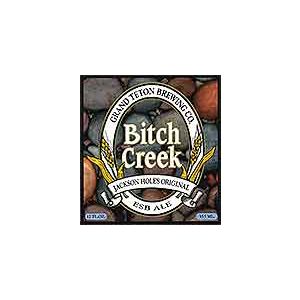
| Grand Teton Brewing Company | Bitch Creek ESB |
| Rio Grande Brewing Company | Elfego Bock |
| Rio Grande Brewing Company | Outlaw Lager |
| Greene King Brewery | Abbot Ale |
| Prague Breweries Group (Praszke Pivovary) | Kisz Classic Dark Lager |
Grand Teton Brewing Company
In a quest for full-flavored, freshly-brewed, locally-produced beers, a couple of Wyoming brothers paved the way for themselves and others to brew and sell beer in ways not seen in that state since prohibition. Charlie and Ernie Otto, brothers of German-Austrian descent, had long been familiar with great beers. In fact, Charlie had become a well-respected area homebrewer. So accomplished was he that friends and family were constantly asking him to brew more beer. Of course, the demands soon spread to others who caught wind of his fine handcrafted ales, and that got the brothers thinking about starting their own commercial enterprise. But because Wyoming did not issue licenses to homebrewers, Charlie had to muscle up and take on the law. Through an ambitious effort, he eventually helped to get a bill passed which would allow him to start selling his beer commercially. In 1988, he was awarded Wyoming brewery license “no.
1”.
And the license came in handy—the brothers had already built a small brewhouse in Wilson, Wyoming (just outside Jackson Hole)—so securing the first malt beverage manufacturers’ permit issued in the state in over 35 years made it possible for them to start selling their delicious brew. In 1988 they did just that, founding the Otto Brothers’ Brewing Company, officially the first modern microbrewery in the state of Wyoming.
They soon began presenting their original amber “Teton Ale” to local draught establishments and for the next two years their beers were only available on tap. Seeking a wider distribution through bottling, the brothers decided to get creative. In 1989 they rediscovered a long forgotten container, a European, lidded tin-pail known as a “growler”. The term Growler was originally used for the tin buckets used to transport beer from the tavern at which it was purchased. The Otto Brothers’ Brewing Company reintroduced it in a modern, 64-ounce glass jug version. “Growlers” have since become commonplace at breweries throughout the nation, and the brothers enjoy the credit for having resurrected and recreated this novel (and environmentally-friendly) idea.
So thus far we’ve learned how these brewing brothers contributed to the good of the nation by setting the stage for a new generation of Wyoming brewers to spring up, and by bringing back the growler. You’d think these accomplishments would be enough for these guys to be contented, but they had big plans in the works still! The brothers wanted to bring Wyoming its first brewpub, but again, state law prohibited breweries to act as retailers (incidentally, this is still a fairly common prohibition-era law that hampers the establishment of brewpubs across the nation). Not surprisingly, Charlie was undeterred and on the wings of previous legal triumphs he began three years of letter writing, phone calling and grass roots organizing to bring about the legalization of brewpubs in the Cowboy state. And wouldn’t you know it, the guy came through for his fellow citizens; in 1992, Otto Brother’s Brewing Company opened Wyoming’s first brewpub.
The brewpub brought a surge in popularity to the Otto Brothers’ beer line up (at that point numbering about three ales) and in 1992 they acquired a 22-ounce bottle production line. This meant higher portability and deliverability of their brews, prompting an even greater demand for their microbrews and leading the brothers to break ground for a new, high-capacity brewery at the base of the Teton Pass in Victor, Idaho in 1998. The site was chosen for its proximity to locally-grown barleys and Northwestern hops, as well as nearby Teton Glacier water.
In Fall of 2000 the Otto Brothers’ Brewing Company was officially changed to the Grand Teton Brewing Company in order to portray a more regional and recognizable marketing approach, while still retaining their proud history and tradition of beer-brewing in the region.
For more information about the brewery, brewpub or scheduled tours, call (888) 899-1656, or visit their website at www.grandtetonbrewing.com.
6 types of malts? In an IPA (which traditionally has a heavier emphasis on the hops)? Wow! This is a skillfully crafted ale to be sure. Of course, there is an obvious emphasis on hop composition as well, evident from the ingredient list above which features an impressive line up of 6 quality hop varieties, not to mention the prominent hop aromas and flavors in this beer. Expect a powerful but not overwhelming aroma characteristic of the American IPA style—piney, citrusy, grapefruit notes, with an unexpected clean, lager-like scent as well. This light-to-medium-bodied beer uses its hops wisely, holding off on the indiscriminant use of huge quantities of hops which can be overwhelming to the palate. Rather, the Charlie Otto has included what can still be considered an assertive level of hops, but it’s not overkill like a number of IPAs we’ve tried. The complex finish begins quite bitter (again thanks to the hops),
mellows a bit for a moment, and then surges again with a final, long-lasting dry bitterness. Very nicely balanced, and great with Tex-Mex cuisine or curry-heavy Indian dishes.
Serving Temperature: 50-55° F
Int'l Bittering Units: 58.0
Alcohol by Volume: 6.5%
Malts: Idaho 2-Row Pale, German Munich, Wheat, Carafoam, Belgian Caravienne, British Crystal
Hops: U.K. Goldings, Willamette, Galena, Amarillo, Czech Saaz, Cascade
Additional Notes: Dry Hopped with Cascade Hops
Bitch Creek ESB
Wyoming’s Bitch Creek flows down the west side of the Teton Mountains not far from the Grand Teton Brewing Company’s brewhouse in Idaho’s Teton Valley. Early French trappers called it “Anse de Biche” (or “Doe Creek”). Perhaps more appropriately, early valley settlers changed the name from the French “Biche” to “Bitch” because its fast flow and steep, rugged canyon cut through volcanic rock made it “a real bitch” to navigate. Today Bitch Creek is best known for its extraordinary scenery and fine fly fishing, and it gives its name to the fly depicted on this beer’s six-pack packaging (which is used to catch the variety of fish portrayed on the bottles’ upper neck label). Like the stream, Bitch Creek ESB is full of character and not for the timid. It is a medium-to-full-bodied brew with an aroma that is full of intricate notes of citrusy pine, toffee,
nuts and chocolate malts. Look for an initial spiciness in the flavor which gives way to grainy malts and a peppery, bitter hop finish. A truly great beer—full of character and presenting a most admirable complexity.
This Just In: On Saturday, October 2nd, Bitch Creek ESB received one of the highest accolades in the microbrew world. They won the gold medal at the Great American Beer Festival (GABF) Competition, the largest national beer competition which recognizes the most outstanding beers produced in the United States today. The gold medal at the GABF represents a world-class beer that accurately exemplifies the specified style, displaying the proper balance of taste, aroma and appearance. Nice work Charlie!
Serving Temperature: 50-55° F
Int'l Bittering Units: 51.0
Alcohol by Volume: 6.5%
Malts: Idaho 2-Row Pale, German Melanoidin, Belgian Special B, British Crystal, Amber, Chocolate
Hops: Galena, Chinook, Centennial
Additional Notes: Dry Hopped with Cascade Hops
Rio Grande Brewing Company
OK, we got one for ya… An English literature student, a Presbyterian minister and a brewery owner walk into a bar… this last sentence may sound like the start of joke, but actually, each of these three very real characters have played a vital role in the inception and evolution of New Mexico’s biggest microbrewery, the Rio Grande Brewing Company. Scott Moore, a California native who started brewing homemade beer as a college student at the University of California, Santa Cruz, moved to New Mexico in 1989 to begin graduate studies in English at the University of New Mexico. While there, he joined a local home brew club, the Dukes of Ale, and met other folks interested in the noble art of brewing. One of his brethren at the club would end up serving an important role in Moore’s life course—a role that would have absolutely nothing to do with English literature…
After obtaining his master’s degree in English literature, Moore abandoned his initial plans to work as a professor of higher education, citing disillusionment with the “bureaucratic bull&#!+ you have to put up with to teach at a state-rum facility.” As an alternative, he began researching careers related to the microbrew industry. Unfortunately, several business plans involving restaurant & brewery partnerships fell through. Fortunately for us, however (and the residents of New Mexico, we might add), the faltering of said plans ultimately led Moore to start his own brewery and bottling business.
In September 1993, Moore invested $200,000 to open his sole proprietor business with the help of Dukes of Ale buddy Tom Hart—the practicing Presbyterian minister we mentioned at the start of our story. This investment was used to procure the Rio Grande Brewing Company’s first operating space, a modest 2,400 square feet of light industrial space. Between the two of them, Moore and Hart held 25 years of homebrewing experience, and together they creatively built the brewery with used dairy and wine equipment.
Initial production was 75 barrels per month, but by December 1995, the brewery had increased to 100 barrels per month and expanded to 5,000 square feet. In order to streamline production, Moore automated his bottling, labeling and packaging line during the same year, thereby decreasing packaging time from a laborious three days to a painless six hours. Today, Rio Grande produces well over 300 barrels per month.
The company has since been racking up accolades. Its Pancho Verde, a unique green chili beer which is “dry hopped” with roasted chilies won silver and bronze medals at Denver's Great American Beer Festival in 1996 and 1998, respectively, and in 2001, Rio Grande's Outlaw Lager was named Best Local Microbrew in the Weekly Alibi's Best of Burque Award.
But what about the brewery owner mentioned in our introductory line you ask? That would be Mike Carver, owner of the Cabezon Brewing Company, also located in New Mexico. In 1998, Moore began contract brewing beers for the company, but after doing so for three years, Cabezon’s owner decided to drop the brewing business altogether, opting instead to sell bottled water (what!?). Moore saw an opportunity, realizing that if the already popular Cabezon beers simply dropped off the market scene, then he and his competitors would end up splitting the sales, but if he bought the brewing company, he’d get 100% of those sales. So, for a mere $10,000, Moore bought the five-year-old Cabezon in a deal which included its intellectual property—the recipes for Cabezon Stout, Sunchaser Ale and Anasazi Wheat—and its packaging materials. The move increased Rio Grande’s product line to seven beers, the most famous being its Outlaw Lager, and expanded its offerings to include both ales and lagers.
For more information about the brewpub or to make reservations, call (505) 343-0903 or check out their web site at www.riograndebrewing.com.
Rio Grande Brewing Companys cleverly named Elfego Bock pays tribute to a New Mexico man by the name of Elfego Baca. In a time when the law was as strong as the men who enforced it, Baca walked in to history in 1884 at the age of 19. The self-appointed deputy sheriff set out to restore order to the small town of Frisco, near present-day Reserve, New Mexico. Southwestern New Mexico was still untamed, ranching country. It was a time and place when cowboys did what they wanted, when they wanted. Elfego Baca arrested one of these cowboys, who had been shooting up the town, and his brothers-in-arms naturally wanted him releasedsomething Elfego Baca wasnt going to do. A standoff ensued when Baca took shelter a tiny house during a furious attack by over 80 cowhands, in which over 4,000 rounds were fired into the house. Good ol Elfego managed to kill four of his assailants and wounded eight others. Thirty-six hours
after it began, Elfego Baca walked out unharmed and into history as one of the youngest, toughest lawmen of his day. And while the Elfego Bock is a unique character as well, its possesses a much less rugged demeanor. Expect a sweet, big and bready malt aroma with a hint of floral hops on the nose and a flavor with lightly toasted malts, gently bitter hops and a big bread-flavored finish.
Serving Temperature: 46-48° F
Int'l Bittering Units: 26.0
Alcohol by Volume: 6.0%
Malts: Durst Munich
Hops: Saaz, Horizons
What good would a lawman be without his outlaws? Good ‘ol Elfego would have had a tough time chasing after this Outlaw Lager considering the way it has quickly run all over the New Mexico territories since being released by the Rio Grande Brewing Company. This beer showcases, like the Elfego Bock, the praiseworthy move recently made by brewer Scott Moore. In a recent interview with Moore, he described his decision to switch from using American malts to authentic German malts in his lagers as “one of his best business ideas.” And we’d have to agree. You’ll notice these malts in the aroma as they mingle through the wonderful grapefruity, candy-like, cherry-smelling hops, in the malty undercurrent in the flavor, and in the prominently bready finish.
We’d have to guess that part of the reason this beer is called “Outlaw” is due to the fact that in its production, its brewers break one of the primary rules of lager-brewing. It’s brewed with lager, or bottom-fermenting yeast, but fermentation is carried out at higher, ale-fermentation temperatures. The result is a lager with ale-like qualities, evident in the fruity esters present in the aroma and flavor. Interestingly, this production method qualifies this beer as a style known as “Steam Beer” or “California Common”—the only style of beer actually indigenous to the United States.
Serving Temperature: 48° F
Int'l Bittering Units: 35.0
Alcohol by Volume: 5.0%
Malts: Durst Munich, Pilsner, Pale Ale, Crystal
Hops: Northern Brewer, Horizons
Greene King Brewery—Bury St. Edmunds, England (Suffolk, Southern England)
Our first featured beer comes to us from the United Kingdom, which may explain the monarchical title of the British brew house known as the Greene King Brewery. However, to be perfectly honest, we’re not entirely certain if the word ‘King’ in the title has anything to do with the crown—it may in fact just be the last name of the business partner to a brewer named Greene. Greene, along with this elusive partner (we can’t seem to find any more information about the history of the brewery’s ownership) acquired what was once an Abbot’s brewery in the town of Bury St. Edmunds, in Suffolk. Located approximately 80 miles northeast of downtown London, the region is characterized by rural flatlands that run out to the southeastern coast of the country. This countryside region is known as East Anglia and it encompasses several counties of south England; portions of Essex, Suffolk and Norfolk, Cambridgeshire
and Bedfordshire.
The town of Bury St. Edmunds gets its name from the martyred king Edmund of Anglia (the word from which “England” originates). Born approximately 840 A.D., Edmund became King of East Anglia around the age of 15 in about 855, and in 870 he faced a horde of Viking raiders, who moved through the countryside burning churches and slaughtering entire villages. Upon reaching East Anglia, the leaders of these marauders confronted Edmund and offered him peace on the conditions that he would rule as their vassal and strictly forbid the practice of the Christian faith. Edmund refused this last condition, fought, and was captured, tortured and beheaded. He was martyred on November 20th, 870, and the town that hosted his burial place came to be known as Bury St. Edmunds, the site of what would become a powerful abbey.
Like most abbeys, this one engaged in the fine art of brewing, and ales have thus been a feature of life in the region at least as far back as 1086 (so it would seem that it’s no coincidence East Anglia is the country’s biggest growing region for malting barley). However, when Henry VIII decided to consolidate his power by abolishing the abbeys in the 14th century, the monks of St. Edmunds went into hiding, taking shelter in underground tunnels that likely gave rise to the present brewery’s cellars. The current brewery dates from at least the 1700’s. It was acquired sometime after 1799 by Greene, a brewer and progenitor of a long line of famous and wealthy Greenes, including a governor of the BBC and the novelist Graham Greene.
The Greene family has operated pubs and been actively brewing for over 200 years. Combining successful traditional ale brands with modern forward-thinking, Greene King has grown steadily from its base in Bury St Edmunds, Suffolk to become a leading pub retailer and brewer. Today, the Bury St. Edmunds site is home to what has become the largest family-owned brewery in all of the U.K.
For more information about the Greene King Brewery, check out their web site at http://www.greeneking.com/
Abbot Ale
There has been brewing in Bury St. Edmunds since at least as far back as 1086 when cerevisiarii, or ale brewers, were chronicled in the Domesday Book as servants of the Abbot. And indeed today, Greene King’s master brewers still draw their water from wells sunk deep into the chalk beds beneath Bury St. Edmunds as those early ale brewers did almost 1,000 years ago! A point of contrast to this ancient tradition is the innovative technology that has gone in to serving Abbot Ale. It is the first U.K. ale to be commercially dispensed by nitrogen/carbon dioxide push in the U.S. (if you can find it on tap, try it!) It pours as close as possible to the traditional, handpumped English ales served in Britain’s famed pubs. Serving as the company’s flagship brew, Abbot Ale was first served up during the 1950s, making it a very recognizable and enduring brew across the U.K. And we can see why it’s been around for the past
half century. Abbot Ale is simply an excellent ale. It is brewed longer than many traditional ales according to a unique recipe, giving it the full flavored, smooth and mature flavor profile that wows newcomers and enthusiasts alike. Expect tons of ripe fruit and sweet malts on the nose with an initial taste of fruity esters and deep malty undertones. The finish is characterized by masses of hop bitterness which impressively balance the malty sweetness. Note the floral flavors, fruity esters and bitter finish—some contributed by the pale crystal and amber malts, but much introduced by the use of a combination of hops—such versatile little devils those hops are! Challenger hops give this beer its bitterness and a spicy overtone while a final “late-hopping” of Fuggles hops adds the floral and fruity tones to the aroma and flavor. Try it alongside lamb with rosemary and garlic or a fully-loaded Shepherd’s Pie.
Serving Temperature: 52-55° F
Alcohol by Volume: 5.0%
Prague Breweries Group (Praszke Pivovary)—Prague, Czech Republic (Central Czech Republic)
What do you get when you combine nearly a millennium of beer brewing expertise and a desire to use that know-how to please the tastes of the American beer-drinking market? Well, if you ask us, you’ve got a bit of a conundrum on your hands. Unfortunately, asking the average American beer-drinker to put down the Miller Light in order to appreciate the work of a masterbrewer is akin to bringing preschoolers to the Italian Renaissance wing of the Louvre and demanding their appreciation. However, the creators of our second featured international beer sought to achieve this goal in the production of their beloved brew. Were they crazy!? Nope, just inspired and ambitious (and rather optimistic, we might add). The story goes like this: founder Meyer Olshin was visiting Prague with his father several years ago while, when enjoying one of the local Czech pilsners, he had an epiphany. He realized that he wanted to bring similar beers
to America. As Olshin himself puts it, “I have always been interested in, and a fan of, European beers. While traveling in the Czech Republic I was stunned by the freshness and variety of the pilsner and lager beers in many local taverns. I wanted to bring that clean taste and that heady aroma to America without cutting down on quality through importation.” His solution? The founding of Kisz Bier USA (that’s Kisz, pronounced “kiss”).
With a substantial investment from his father’s textile company, a marketing degree from Touro College in New York, and lots of persistence, he went back to Prague to find a brewery that would craft his beers. We tip our hats to him for choosing the Praszke Pivovary, or for those of us who don’t speech Czech, the Prague Breweries Group, based in—you guessed it—the Czech Republic Capitol of Prague. An impressive choice considering that as Prague’s oldest brewery, founded in 1889, Prazske Pivovary held the critical expertise required to develop an authentic Czech lager beer.
While the Prazske Pivoary has developed numerous best selling beers for sale across Europe, Kisz Bier represents its first sortie into the American beer market. So it’s true, Kisz was developed by Czech Brewmasters with the specific goal of making a beer for the American market. Not the “American beer connoisseur market” mind you, but the beer-drinking market as a whole. Now, let’s be honest, this is slightly counterintuitive to us beer-loving aficionados, since the general tastes of the American beer drinker do not gravitate toward interesting, world class beer (thus explaining the huge popularity of Bud Light, Coors and Miller). But fear not friends, the Czech brewmasters do not disappoint. They skillfully toned down some of the bitterer elements that would otherwise be present in the finish, but retained the complexity inherent in traditionally made Czech beers brewed with the finest Czech hops and malts. The result: a beer that has seen success well above and beyond anticipated projections. Kisz Pilsner was first introduced in February 2002, and despite being a relatively new market entrant, it sold over 2000 cases in its first month! At 24 bottles per case, this means that Kisz Bier USA moved 48,000 bottles in their first month—not bad for company with only six employees!
And their success continues; in less than two years since launch, they gained an incredible 4,000 distribution points in the New York metropolitan area, boasting a tremendous 85% reorder rate. So it would seem that the storied tradition of Czech brewing (it is after all, the home of the very first pilsner beer—now the single most popular style of brew across the globe) in tandem with the flavor of this delicious brew have made it impossible for imbibers to forget their first Kisz.
For more information about Kisz Beer, check out their web site at http://www.kiszbier.com.
Kisz Classic Dark Lager
It apparently wasn’t easy, but after a number of aggravating conversations, Meyer Olshin finally convinced his father Sam to invest in his very serious interest in a beer-brewing venture. In 2000, the two men were seen jet-setting like socialites back and forth between New York and Prague so often that folks were calling them “the Olshin twins”. OK, that last little “fact” may not be very “true”, but we just couldn’t resist… While in Prague they attended meetings with various breweries offering potential formulations and styles of Czech lager beer to the pair. They knew early on that Prazske Pivovary was a respected brewery, and what’s more, they loved the beers the brewery began developing for their Kisz line. After testing several of their concoctions, the pair chose a pale pilsner and a dark lager. Both beers had International Bitterness Unit (IBU) levels around 15.
This is higher than Miller (5) and Bud (10) but lower than the 25-30 IBU range typical of Bohemian and Bavarian lager beers. As it turns out, many American beer-drinkers are put off by the bitterness that comes from real, authentic, flavorful European-style beer, thus explaining the reason for toning things down a bit. Still, there’s a genuine authenticity retained in this beer, not only because it’s made by Czechs with Czech ingredients, but because it tastes like a solid Czech dark lager. We agree with Meyer Olshin when he says “I find that with Kisz Bier, my taste buds are brought back to those centuries old beer halls whenever I open a bottle.” You can expect a beautiful beer—dark brown in color which turns deep ruby-red in the light—with a nice creamy head. The aroma is bread-like, with strong notes of sweet malts. Look for a flavor that is less sweet than the aroma would have you expect, with a medium body and a clean, lager crispness and a note of pumpernickel. Great with
salami and cheddar on pumpernickel bread. Enjoy!
Serving Temperature: 48° F
Alcohol by Volume: 5.0%
ASK MURL
Dear Murl,
Before you call me a girly-man, I am an Airborne Ranger with quite a few years of combat service under my belt! Here’s my confession: I really like cream beer. Okay, there it is. And what’s worse, my wife actually prefers the heavy black stuff. As I write you, I am currently drinking Wexford Irish Cream Beer. So here’s the question: How is cream beer different from the more manly types and what is that gizmo in the can?
Rocky Mansfield
Richmond, VA
Okay Rock,
Little quid pro quo here though before I answer your question. What’s you’re real name there buddy? ‘Cause I know it can’t be Rocky! Did your mamma give you one of those (girly-boy as you so aptly put it) names like Marion or Traci that got you beat up on a regular basis? It’s cool man. You’ll feel better if you come clean. I mean, you’re whole life has been a lie thus far with the Airborne Ranger Rocky stuff, am I right? It’s cool to be in touch with your feminine side and you’re off to a good start admitting your fondness for cream ales. I myself, have painted my toenails upon several formal occasions and quite liked the experience. Usually, just the front paws though.
So…Cream Ales then. That’s actually a pretty good question, Rockster. Historically the term has been used in different ways to describe very different styles. In the good ole US of A, the phrase generally describes a cheap blend of pale lager with ale like Gennesee or Little Kings [Anyone else used to sneak Little Kings into the movies as a minor because you could fit them in your pockets?] In England, however, sweet stouts fortified with milk sugar were very popular about 100 years ago, and these were often called "milk stout" or "cream stout". Watneys Cream Stout comes to mind. These days some English and Irish brewers are also using the term with pale mild ales that are nitrogen conditioned or come in the "draught" cans with the nitrogen widget. I’m guessing they’re using he phrase now to describe the creamy nitrogen head and/or creamy texture resultant of smaller nitro bubbles. So as long as you’re not a fan of the domestic cream ales, I guess I won’t be submitting your name to “membership terminations” as unworthy! Great question. I appreciate your willingness to hang it out there, Rocko!
Woof!
Murl.
Norm’s Corner
Woody: How’s it going, Mr. Peterson?
Norm: Poor.
Woody: I’m sorry to hear that.
Norm: No, I mean pour.
For Members Only
Give Your Friends FREE Beer, Wine, Cheese, Chocolate, Cigars & Flowers!
Through our Customer Appreciation Program
Your name has real value to your friends, co-workers, and family members! Every time a friend, family member, or anyone else you know joins any one of our clubs, [or gives a gift] for 3 months or longer, we'll give them 50% off of their first month, but only when they mention your name. And we'll also give you 50% off your next month too which can either be applied towards your current membership or you can try one of our other Clubs out! (We can add one more month to your order at 50% off for prepaid memberships!)
The Fine Print: Members giving gift memberships do not qualify for referral credits and you can't give yourself a gift to qualify! This Program is mutually exclusive of any other promotions.
|
Members can re-order their favorite beers either online or toll free at: 8 0 0 - 6 2 5 - 8 2 3 8 |
|
DOMESTIC
|
|
12 PACK: $24.95
FULL CASE: $49.95 |
|
INTERNATIONAL
|
|
12 PACK: $32.95
FULL CASE: $59.95 (Mixed assortments are available upon request) |
Membership Q & A
Q: What can I do if I'm having difficulty receiving my shipment at home?
A: You should consider having our discrete box delivered to your work location or to a neighbor 21 yrs. of age that can receive it for you. As your shipment requires and adult signature to receive, it's always best to ship it to a location where someone will be there to receive it for you. The box is brown corrugated cardboard and doesn't say "Beer" on it anywhere.
Q: What should I do if I'm moving or want to extend my membership?
A: Please call us prior to the 5th of the month to make all account related information changes such as address changes, membership extensions & terminations, or gift accounts desiring to continue their memberships. Address changes made after that time may require a repackaging and re-shipping charge of $12.00. Additionally, if your box is re-routed by UPS from an address different than what was originally specified, you may incur a $5.00 re-routing charge.
Q: What happens if my shipment is damaged?
A: If your shipment arrives damaged, please call us immediately toll free at 1-800-625-8238 and report the incident for a prompt resolution.
Q: What happens if my credit card is declined?
A: We will send you a courtesy notice asking for an alternative payment method, and will also attempt two more times to process the charges. If we cannot secure
payment and have not been contacted by you, the order will be temporarily suspended.
Q: What happens if I join under a special incentive program and don't stay a member for the entire term committed?
A: Not a problem. Although we want to do everything we can to keep you as a member, we will allow you to cancel your subscription early; however, you will be responsible to pay for the item that was given to you as part of the promotion. If you received a discount based on a specific term, the amount discounted will be charged to your card.