The Microbrewed Beer of the Month Club

Past Newsletters - February 2010

Brewery
Beers Featured
DOM
VAR
INT
RBC
Sherwood Forest Brewers Ltd. Friar’s Belgian Style White Ale
Check
Check
Sweetwater Brewing Company SweetWater Georgia Brown
Check
Check
Sherwood Forest Brewers Ltd. Sheriff’s India Pale Ale
Check
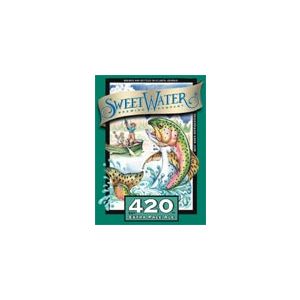
Sweetwater Brewing Company SweetWater 420 Extra Pale Ale
Check
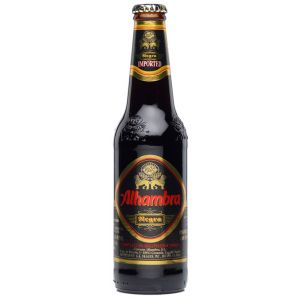
Grupo Cervezas Alhambra (Spain) Alhambra Negra
Check
Check
Brouwerij De Koninck (Belgium) De Koninck Pale Ale
Check
Check
De Proef Brouwerij (Belgium) Flemish Primitive Wild Ale 2008 Special Vintage Reserve
Check
St. Somewhere (USA) Saison Athene
Check

DOM = Domestic Beer Club; INT = International Beer Club; VAR = Domestic International Variety Beer Club; RBC = Rare Beer Club

I'm ready toPlace My Order Button

Sherwood Forest Brewers Ltd.

"…Sherwood Forest has been considered an enchanted place, home to myths, legends and many a story of honor, tradition and loyalty." So reads the website for Sherwood Forest Brewers Ltd.—explaining the meaning behind their choice in name. Since their inception in 1997 and until fairly recently, they've brewed one beer and one beer alone: Archer's Ale. Taking a cue from Sherwood Forest's number one resident, Robin Hood, the philosophy behind this beer has been to deliver precision, accuracy (stylistically), and consistency (quality), while delivering us from the evils of the tyrannical noble class (macro-brewed swill).

And like Robin Hood, this particular archer has earned itself a place in lore: it was only the 3rd microbrewed beer in the country available in a can (Sherwood Forest was just the 2nd microbrewery in the U.S. to can).

"Microbrewed beer in a can?!?" you cry with disbelief. "Why would you do that?" Well, if you haven't already taken notice of this trend, it's happening all around the world as microbrewers realize that canning microbrewed beer is a cheaper, more portable, more protective way to package their products. For years, it's been a tough sell, as people reported that canned beers had a metallic flavor. But developments in canning technology have yielded a protective lining that prevents the beer from ever contacting the metal of the can.

If you live near a park or beach or river and wanted to bring along some craft brewed beer, you'll have noticed that most prohibit glass bottles—leaving few options for microbrewed beer lovers (or, think back to your last flight; any good canned beer there? Nope). Other benefits? Turns out canning equipment is actually cheaper than bottling lines, providing a break to start-up microbreweries. But probably the best reason to can is the fact that cans offer superior protection to beer—no oxidation (from air leakage around the bottle cap) and no skunking by light strike!

We tip our hats to these guys for having the guts to can when so few would dare, and for putting something worth drinking in them!

For more information, check out their web site at www.sherwoodbrewers.com.

Friar’s Belgian-Style White Ale

Friar’s Belgian-Style White Ale LabelThe good Friar needs a good swirling to whip up the hefty sediment at the bottom of the glass—but you want to add that sediment to your glass when pouring to get the stylistically-appropriate look and full flavor characteristics that the brewer intended for this beer. A hard pour yields a cloudy butterscotch-colored beer capped by a frothy white head. On the nose we get a traditional Belgian Wit aroma: heavy on the coriander and orange peel notes with a wheaty twang and subtle sourness. The wheat aroma is very big on this brew! Also look for some leafy hops and herbal notes. This beer fills the mouth with rich wheaty flavors, full of the ‘twang’ so characteristic of the style and largely responsible for the very quenching nature that this style is known for. Look for some minor banana notes and apple skins as well as some thin caramel and biscuit notes as the beer warms, with bitter orange peel notes mingling with coriander and herbal, bitter hops. This beer has all the normal witbier notes, but is well-loaded with hops, giving it a domestic twist. Overall, a full-on wheat bomb that will go well with Brick or Edam cheese squares, or a Spinach and Feta omelet.

Serving Temperature: 45-50° F
Int'l Bittering Units: 16
Alcohol by Volume: 5.2%
Suggested Glassware: Pint Glass
Malts: 2-Row Pils, Wheat
Hops: Amarillo, Coriander, Orange Peel

Sheriff’s India Pale Ale

Sheriff’s India Pale Ale LabelA hoppy beer that is not shy about boasting its prowess, much like the Sheriff himself. Pours a burgundy orange color capped by an off-white, thick, sticky head. Expect bigly aromatic hops centered on floral, citrus notes. Note how the hoppy aromatics drift atop a big malt backbone, offering up wafts of caramel and a hint of gingerbread dough when combined with the spicy hops. Pine, orange rind, white grapefruit all come to mind. Quite mouthfilling—this is no light beer. And thank God. Watch for the hop bitterness to kick things off with a playful slap in the mouth, then things go all floral and bloomy, and then let up long enough for some sweetness from the malts to take center stage for only a moment before the hoppy bitterness unfurls anew, dropping a thick blanket of earthy bitterness all over the palate. Hops-a-plenty from the Sheriff of Hoppingham, er, Nottingham. This is a well-made IPA that will hold up against spicy chili (heavy on the cayenne and cracked black pepper).

Serving Temperature: 45-50° F
Int’l Bittering Units: 60
Alcohol by Volume: 6.3%
Suggested Glassware: Pint Glass
Malts: 2-Row Pils, Crystal, Wheat
Hops: Centennial, Cascade, Amarillo

Sweetwater Brewing Company

When Frederick Bensch and Kevin McNerney started dreaming up their brewery plans, they quickly realized that their home base in Colorado already had plenty of microbrewed beer on tap. Their workaround? Sell nearly everything they owned, pack up their few remaining worldly possessions and drive to a place with a little less competition; a state that placed 48th in the nation in terms of beer production; a market as soft as a fresh Georgia peach: Georgia, of course.

It was in Atlanta, Georgia, that Frederick and Kevin founded the SweetWater Brewing Company. Their ambition wasn't simply driven by pie-in-the-sky dreaming. These fellas worked at no fewer than 7 microbreweries in Northern California and Colorado—heartlands of microbrewed nectars—before making the journey. They may also have been major potheads, but we’re not sure… Hmmm… Working in Northern California? References to the brewery as their “pipe dream”? Naming their flagship beer ‘420 Extra Pale Ale’? The fact that the brewery opens for tours each day at exactly 4:20pm? Or the fact that it took six requests for their slacker asses to send us the specs on their beers? Well, they deny any connection and chalk it all up to the fact that the references to this stoner code for pot are actually due to the fact that the beer was first brewed on April 20th, 1997. Did they choose that date accidentally? If there’s any connection, they’re not owning up to it.

The SweetWater Brewing Company opened its doors on February 17, 1997. In 2002 they were recognized as Small Brewery of the Year at the Great American Beer Festival. Need more convincing? (You haven't tried the beer yet, have you?) They were the second most decorated brewery in the world at the 1998 World Beer Cup.

For more information about the brewery and scheduled tours, call (404) 691-ALES or check out their web site at www.sweetwaterbrew.com.

SweetWater Georgia Brown

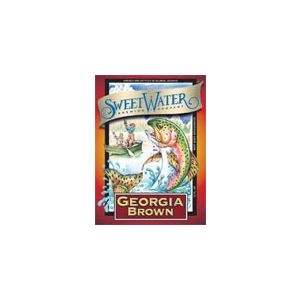
SweetWater Georgia Brown LabelA GABF 2001 Gold Medal winner, this brew yields a prominent aroma of fresh grains with some bready, caramelish notes, maple syrup, hints of coffee, a nutty-note similar to almonds, and just a kiss of spicy, citrusy hops. On the palate, expect a blend of lightly bitter hops, burnt toast, and above all, a rich, sweet, nutty character (think hazelnuts and almonds). There's a ghost note of coffee at the intro to the finish, which gives way to a back-of-the-tongue bitterness that balances the sweet malty notes through the fade. Lighter bodied but full of flavor. Enjoy with a cheese plate featuring aged gruyere, camembert, and morbier melted over pumpernickel bread wedges. If you're looking to improve your beer tasting experience, or if you're among our many members who hold regular beer (and food) tasting sessions with guests (yes, you are the life of the party!)—consider joining our Gourmet Cheese of the Month Club—cheese and microbrewed, flavorful beer complement one another extraordinarily well, better than wine and cheese according to many. Check out www.monthlyclubs.com for more details.

Serving Temperature: 45-50°F
Int’l Bittering Units: 44
Alcohol by Volume: 5.2%
Suggested Glassware: Pint Glass or Mug
Malts: 2-Row Pale, Black, Victory, Crystal, Chocolate
Hops: Columbus, Willamette

SweetWater 420 Extra Pale Ale

SweetWater 420 Extra Pale Ale Label420 Extra Pale Ale was first brewed on April 20, 1997, hence the name… We'd bet a nickel and dime that's not the complete reason behind the name, but we can't confirm. We can, however, provide you with a nugget of trivia to impress your friends: the brewery was named after a local creek. This particular beer is a lighter-bodied West Coast style pale ale with aggressive hop character in the aroma, flavor and finish. Look for piney, resinous, grapefruit notes, flourishes of mangoes, passion fruit and Clementine oranges and a hint of hop spiciness. Some sweet caramel grains keep the hoppy aromatics in check in this very well balanced beer. Note how the bitter hops and sweet malt play off each other during the first few moments ultimately fading to let a semi-bitter finish take over. The hoppiness is a bit less citrusy than implied by the nose and actually offers up a slightly peppery spicy bitter bite, but this never runs amuck due to the malty backbone. A 2002 Silver Medal winner at the GABF, and great with lobster, mussels or clams. Superbly drinkable at any time of the day.

*Side Note: When mixed in equal proportions, the Georgia Brown and the 420 EPA combine to create a third very tasty beer with some of the hoppy aromatics of the EPA tempered by the Sweet Georgia Brown ale notes and the sweeter notes from the brown ale being sharpened a bit by the hoppy pale ale. Give it a try!

Serving Temperature: 40-45° F
Int'l Bittering Units: 40
Alcohol by Volume: 5.4%
Suggested Glassware: Pint Glass or Stange
Malts: 2-Row Pale, Crystal
Hops: Cascade, Centennial

Grupo Cervezas Alhambra—Granada, Andalucía Province, Spain (Southern Spain)

The Alhambra, perched on a hill that overlooks Granada, Spain, is an expansive palace-citadel made up of royal residential quarters, court complexes, official chambers, beautiful fountains, baths and a mosque. So regarded for its beauty and splendor, the entire city has been declared a national monument. It rests at the foot of Spain’s largest massif, the Sierra Nevada (coincidence that there’s good beer to be found there? We think not!). Its construction was begun in the 13th century by Ibn al-Ahmar, founder of the Nasrid dynasty that once ruled the region. With its unique style and stunning majesty, this palace of Granada’s Moorish kings is today regarded as an architectural wonder. It is believed, based on ancient inscriptions, that it was the physical realization of descriptions of Paradise in Islamic poetry.

To name a beer after this fabled lair of kings and rulers—this Paradise on the mountain—the brewers at Cervezas Alhambra must have had great passion for their malty nectars. It was back in 1925 when the brewery was founded by two acknowledged brewers, Carlos Bouvard, owner of the famous La Moravia brewery, and Antonio Knorr, member of a family with a long heritage in the brewing industry. Their collaboration laid the groundwork for this wonderful brewery to flourish. Through their 80 year history, controlling ownership of the brewery has changed hands, capacity has been increased, and equipment has been modernized. Today known as Grupo Cervezas Alhambra, the brewery is owned by Andalucía’s first independent brewery group, and they have striven to create a unique brand identity for the Alhambra line where beer lovers not only associate these beverages with great taste, but also with great times. Their philosophy revolves around the concept that there are unique occasions and moments that warrant the pairing of exceptional beers to suit those special times. You’ve got the exceptional beer—special times anyone?

For more information about the brewery, check out their website at www.cervezasalhambra.es.

Alhambra Negra

Alhambra Negra BottleNote the Moorish lions on the label, a reminder of the regional heritage from where this beer is produced. This dark brown, reddish-hued lager presents a creamy, nutty nose, with caramel notes and a mild roasted malt character that is just all around inviting. Expect a creamy backbone and some slightly roasty, caramel notes, with a distinct flavor of dark rum. Look for subtle notes of anise and licorice, and enjoy the clean, caramel finish with lingering rum notes. Overall, Alhambra Negra is very pleasant beer that’s not too challenging but also possesses ample complexity to keep the connoisseurs interested. This dark lager will go down nicely with a variety of smoky, grilled meat dishes, particularly those with a Spanish or Catalonian flair. This is some of Spain’s best beer, and we wouldn’t be surprised to see this one on more shelves in the states as popularity grows with exposure. Enjoy it now while it’s still hard to find, and spread the word to your friends, especially those who appreciate beers on the darker side of the spectrum. Remember, sharing is caring!

Serving Temperature: 42-50°F
Alcohol by Volume: 5.4%
Suggested Glassware: Pint Glass, Pilsner Glass or Mug (clear or opaque)

Brouwerij De Koninck—Antwerp, Belgium (Flanders—Northern Belgium)

The history of the Brouwerij De Koninck began in 1827 when Joseph Henricus De Koninck bought 'De Plaisante Hof,' a coach house which stood on the boundary between Antwerp and Berchem, Belgium. On this site there stood a stone boundary post with a sculptured hand. This boundary post can still be seen today opposite the Brouwerij De Koninck (and on bottles & labels from the De Koninck Brewery).

Sadly, Joseph died very young. His widow, Elisabeth Cop, remarried in 1833. Her second husband was warehouse foreman Johannes Vervliet, who decided to convert the coach house into a brewery under the name "Brouwerij De Hand," after the sculpture on the border post. That hand has been immortalized since then as the brewery logo.

In 1845 Carolus De Koninck, the eldest son from Elisabeth's first marriage, took over the business. Around 1900 there were still about 25 working breweries in Antwerp. However, the popularity of bottom-fermented (mainly pilsner) beers, the stricter permit regulations, and two world wars were to have a devastating influence on the brewing industry.

In 1912 the "Brouwerij De Hand" was renamed the "Brasserie Charles De Koninck," run by Florent van Bauwel. After WWI he reopened the brewery with help from Joseph Van den Bogaert. The 2nd Joseph in the brewery leadership came from a well-known brewing family in Willebroek, Belgium, and as a graduate of the agriculture and brewing college in Leuven he had all the technical knowledge necessary for the new brewery. The partnership of Florent & Joseph launched spectacular growth of the business.

Modeste, the son of Joseph Van den Bogaert, joined the brewery in 1949 and would go on to lead the company for more than 50 years. Today the Brouwerij De Koninck is run by Modeste's two sons, Bernard and Dominique Van den Bogaert, as technical and commercial director, respectively. They guarantee the independent, family and artisanal character of the brewery (thanks, guys!).

For more information about the brewery, check out their website at www.dekoninck.be.

De Koninck Pale Ale

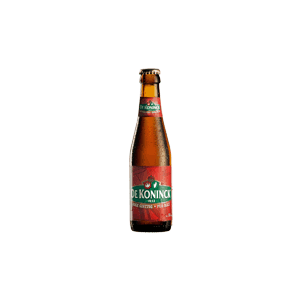
De Koninck Pale Ale BottleThis Belgian pale ale is medium-amber in color with a crème-brûlée toned head. You may notice a hefty amount of sediment in the bottom of the bottle before you pour it. While it's a matter of personal taste, our panel members felt that for this style of beer, it was preferable not to swirl the bottle to rouse the sediment; we left about ¼ inch of beer behind in the bottle to achieve this. But we encourage you to do a side-by-side taste test: one from a bottle with the sediment roused and poured into the glass, one from a bottle that didn't have the sediment disturbed, and see which you prefer. There are no firm rules on this—again, it's a matter of doing what works best for you, your palate, and your aesthetic inclinations. Upon sniffing, the instant impression is “Belgian yeast”. That characteristically fruity, phenolic profile leaps out of the glass and screams “Belgian ale!” There are some minor floral, Noble hop aromas coming from the Saaz hops that are subdued by the sweet bready malts as well as a mild tart acidity. Look for notes of plum, red apples and black cherries. The Belgian yeastiness also emits a slightly spicy character, which couples with a gently spicy hop aroma in the background. The beer goes down with a multi-tiered flavor profile. First, sharp and bitter, then immediately soft and sweet, transitioning to fruity and floral and ending bready and rich. One really should allow a minimum of thirty seconds after taking the first sip to fully focus on the evolving flavor cascade before taking another sip. A re-sniff after sampling reveals notes of apple cider, a bit of which also comes through in the flavor profile. Along with apple comes notes of sweet green grapes and faint impressions of golden raisins. A somewhat powdery finish ensues, developing into flutters of floral tones and a gentle balancing Noble hop bitterness. One of the definitive examples of Belgian pale ale. This beer is deceptively complex. Go too quickly, and you risk speeding past its layered complexity. An impressive beer. Try pairing with whitefish and baked red-russet potatoes, heavy on the rosemary.

Serving Temperature: 45-50°F
Alcohol by Volume: 5.2%
Suggested Glassware: Goblet or Pint Glass

De Proef Brouwerij (The Professor Brewery)—Lochristi, Belgium (Northern Central Belgium)

Announcement: This Is A Notice Of An Ensuing “De Proef Debut!”

Rare Beer—that’s what this club is all about. And this month, we have again lined up a beer not before found in the country. As a member, you’re going to be the first in the country to taste a very unusual brew created in Belgium by world renowned Belgian Brewmaster Dirk Naudts. Brewer extraordinaire and well-regarded brewing innovator and educator, Naudts is the proprietor of De Proef Brouwerij, located in the brewing haven of Western Flanders, Belgium. His nickname, “The Prof” (as in professor), is well-deserved and worn as a badge of honor, serving as the moniker for his highly respected, über-scientific brewery. Never shy about experimentation or collaboration, he is a scientist by nature, and an artisan by trade. Brewers from around the world have contacted The Prof in the interest of collaboration and recipe development. Last year, we featured the results of one such collaboration between De Proef and Bell’s Brewery.

Among Dirk Naudts’s other notable collaborators are Tomme Arthur of Port Brewing & The Lost Abbey, Jason Perkins of Allagash Brewing, Spike Buckowski of Terrapin Beer Company and numerous others. People are clamoring to work with The Prof. But it’s not just brewers—better beer distributors, Shelton Brothers, launched a project with De Proef back in 2004. Like the commissioned work of a painter in which multiple panels are produced, the beer that was the subject of this artful experiment came in six different versions. Known as “Flemish Primitive Wild Ale,” the beer is built upon a base of rich golden continental malts, fermented with several strains of Brettanomyces (wild yeast) and hopped with a generous amount of local hops. The difference between the six versions comes down to different hop varietals and hopping rates as well as the “Flemish Primitive” artwork of master painter Hieronymus Bosch that adorns each bottle. This artwork, which is highly accomplished and anything but primitive, was produced in the late 15th and early 16th centuries and showcases, albeit in often haunting, nightmarish imagery, the mastery of the brush that helped push the late medieval period into the Renaissance.

After commissioning the lineup of six beers, Shelton Brothers was thirsty for something more—a beer that went a few steps further toward “primitive”—and thus, a seventh beer was born. This was to be a beer in which about 5% of the malts were smoked, since malt kilning of this period would have doubtless been achieved over burning wood, imparting a smokiness to the grains. Also, hops were not widely used as the bittering agent in beer until perhaps around the mid-16th century. Instead, various spices were employed to offset the sweetness of the malt. This blend of spices, called gruit [pronounced “groot” (like ‘root’) or “grew-it”] consisted of various botanicals, from pine needles, dandelions, heather, bog myrtle (sweet gale), rosemary, yarrow, juniper berries, spruce and just about everything in between. So, to honor tradition, but without going all-gruit, this beer has about 25% of the finishing hops replaced with a gruit mixture.

And after the seventh beer, De Proef rested. Or, perhaps, fell asleep at bottling time is more like it, because it turns out the brewery slapped on the label for version #6 of the Flemish Primitive series (affectionately known as “Rat Rider” due to the label artwork). Due to the smoked malt and gruit, this beer is completely different than “Rat Rider” (aka Version #6), and because of the label mix up, Shelton Brothers decided not to sell it on account that it would be confusing to consumers. So, there was beer #7, the most intriguing of the lot, all packaged and mislabeled and needing to be sorted out… What happens when you have a uniquely awesome wild-ass lightly smoked gruit beer that you can’t sell? You warehouse the stuff, let it age and get funky with the Brett bottle-conditioning in full swing while you figure something out (yeast are such good workers!). And if you’re very busy with your stated mission of hand-selecting the best beers on Earth, as Shelton Brothers so often is, then you might not even get to figuring out your mislabeled beer problem for a couple of years. That’s exactly what happened with this beer, which we’re calling Flemish Primitive Wile Ale 2008 Special Vintage Reserve. Brewed in January of 2008, it has been aging now for over two years—and we’ve snatched up all but about 30 cases of the only supply on Earth for you, our members, meaning you’ll not only get it first, you’ll be just about the only folks in the world to have access to this truly special, unusual beer. And, the 30 cases left for the rest of the world—well that too will dwindle if you order some extra bottles. Don’t worry about dipping into the tiny remaining stash—Gruit to it!

Flemish Primitive Wild Ale 2008 Special Vintage Reserve

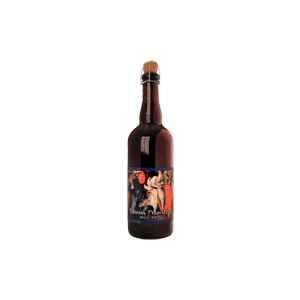
Flemish Primitive Wild Ale 2008 Special Vintage Reserve bottleThis baby has been “cooking” in the bottle, undergoing a tertiary or quaternary fermentation (it was fermented two, possibly three times before leaving the brewery) for over two years now. If your sample has been sitting, cooling for a while after receipt, then it won’t blow up on you when you pop the cork, however, the pressure loss will permit the C02 to come out of solution and the beer will send its froth out of the bottle on its own, looking for you, ready or not… so have your glass ready after you pop it and start your pour right away. The beer appears a rather hazy golden butterscotch color with a tight-bubbled sticky head clinging to the sides of the glass as it decays from towering heights. It greets the nose with a complex blend of tart citrus, currants, honeyed malts, faint Brett funk (some barn and beef broth notes), and a multitude of spices. Despite the reduction in finishing hops and inclusion of a gruit spice mix, this beer still manages to smell quite a bit like a traditionally-hopped Belgian farmhouse ale—impressive since there are so many alternative ingredients in the gruit blend. Notes of heather, yarrow and spruce come to mind. But it’s on the palate that the gruit influence becomes apparent. Expectedly, the beer goes down on the spicier side—much of it actually due to the very active yeast strains used to ferment this beer. What’s really different though is that it doesn’t follow the normal 3-stage progression of start, middle and finish. We found that it almost instantly strikes with its opening flavor profile, and that profile holds steady until the flavor fades over a very lengthy period as more complex spices and stemmy, root-like, fruit rind bitterness grip the tongue and don’t let go. Expect some floral elements to develop as well, with the bitterness hitting mid-to-back of the tongue and not quite like the bitterness you expect from hops. As it begins to warm, look for notes of spearmint, ginger, spruce, lemon seeds (as in that deep, woody, root-like bitter bite you get from chewing on them), mugwort (bog myrtle), juniper, and perhaps some caraway. As it warms further, the botanicals will continue to grow, and a bit of faint smoked malts peak through, which when paired with the minty qualities, suggest an almost mentholated tobacco quality. At full warmth, look for notes of nearly spoiled orange juice, like a low-budget Vegas mimosa. Ah Brettanomyces, you crazy drunken buffet-loving beast. Remarkably, for a lesser-hopped beer, the bitterness is harder to shake than some of the most imperial of IPAs we’ve had… The aroma hops are very faint since the gruit is added late in the brewing process in place of aroma hops, but the bitterness is huge—if a bit late-breaking. Overall, a fascinating beer that you should horde. Pair with authentic preparations of Chicken Franchaise, Veal Piccata with pickled capers, or some fully loaded Dolmas.

Serving Temperature: 50-55° F
Alcohol by Volume: 9.0%
Style: No existing style describes this beer, but if you want to label it something, try “Belgian Strong, Lightly Smoked, Wild Gruit Ale”
Suggested Glassware: Tulip, Pewter Mug or Ideally, a Leather Drinking Vessel

Saint Somewhere Brewing Company—Tarpon Springs, Florida, USA (Western coast of Central Florida)

There are certain “good beer hot spots” in the country, where craft brewing is at the forefront of the local brewing culture and people are taking notice. Florida is not one of them. But perhaps that is changing with the likes of Saint Somewhere setting up shop and creating the insanely good beers they’ve been crafting. Their focus is traditionally brewed, small batch, handcrafted Belgian-style ales. And small they are: in 2009 they produced about 178 barrels of beer. That’s just about 5,600 gallons of beer. To put that into perspective, many people use more than that volume of water in their monthly household use.

Founder and owner Bob Sylvester got his brewing start in 2001 on one of those “Mr. Beer” homebrew kits that you may have seen at Bed, Bath & Beyond. Now, if you can make good beer on one of those “systems,” the good Lord may just be telling you that you’ve got talent. Spurred on by his early homebrew efforts, Bob joined a homebrewing club near his home in the Tampa Bay area and honed his skills. Entering one of his beers (a tough-to-homebrew Flemish-style Red Ale) into the Best Florida Beer Competition, he beat out over 300 Florida homebrews, by winning the category and taking home Best of Show!

A mere five years after that first Mr. Beer brew, Bob went pro, leaving behind an over twenty-year history working retail in men’s clothing, and starting the Saint Somewhere Brewing Company. He wanted the company to be very Florida-centric but to brew beers that fit into a Belgian-style sort of style spectrum. The name “Saint Somewhere” comes from a lyric in a Jimmy Buffett song called “Boat Drinks”:
“Lately, newspaper mentioned cheap fare… I gotta fly to saint somewhere…”

It’s a clever reference not only to the beach and island lifestyle that comes with Floridian life, but the “Saint” reference marries that to the famous Abbey-style ales of Belgium. In fact, the label imagery on every bottle of the Saint Somewhere beers was taken from a sort of “Florida tourism brochure” printed in the early 20th century, evoking images of tropical paradise, fairies and the land of milk and honey. Other Floridian themes are peppered throughout his work, from his website to the names of his beers (read more on this in the review of Saison Athene below)—not surprising as Bob (and his wife) are Florida natives. Bob’s choice in imagery recalls the Golden Age of Florida, before it became known more for Disney World and Spring Break than as a grand getaway for the nation’s elite. A penchant for the old world is evident in the packaging and the brewing of his beers—and both work toward elevating the perception of beer as a gourmet product.

As the sole employee of the company, Bob has complete creative control and LOTS of work; the man makes his own candi sugar for goodness sake (a key ingredient used in brewing numerous Belgian ales). His brewery is a straightforward assemblage of used dairy equipment and open top wine fermenters. Improvisation, baby! There is nothing electronic in his brewing apparatus; everything is done manually. This is basically a scaled-up homebrew system that uses open fermentation, where the beer is left to ferment in unclosed containers, permitting some ambient, wild yeast to take root, and letting Bob visually check the fermentation at every stage. It’s a traditional Belgian technique, as Bob is very fond of authenticity in his approach, even paying more to import only Belgian malts (the same ones used for nearly all Trappist brews) and European whole leaf hops. And he even adds Brettanomyces (basically “wild yeast”) while bottling his beers, giving a slight funky character that nicely dries out the beers, and naturally conditions (carbonates and matures) the beer while it sits in the bottle waiting for the lucky sipper to embark on their own journey to St. Somewhere.

Their website was recently launched (www.SaintSomewhereBrewing.com), but it’s still a bit light on info—though it is full of historic photos of Tarpon Springs and Tampa from the early 20th century and nice to look at. They do have a presence on Myspace that they update regularly, so go make friends with them there: www.myspace.com/saintsomewherebrewing. And if you’re in their area, near Tampa Bay, you may be asked (via Myspace) to help Bob bottle any of his current lineup of three beers—he often is in need of volunteers, and will give you free beer for your trouble!

Saison Athene

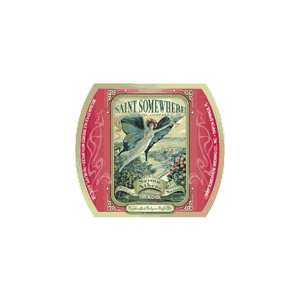
Saison Athene labelThe reference to Athena, goddess of Wisdom and War, is actually a discreet nod to Tarpon Springs and Florida. Tarpon Springs has the highest percentage of Greek-Americans of any city in the US—so a beer with a Greek theme is perfectly at home here. But there’s also a more subtle subtext: the Burrowing Owl, scientific name Athene cunicularia, endangered in most other areas of the country where it once flourished, is not quite endangered in Florida—a fact well known by Bob’s wife who is a Florida Master Naturalist. Working the local/Florida theme—nothing wrong with being proud of your home!

Saison Athene pours a sunny, orange color, befitting a Floridian brew, topped with a massive mousse-like off-white froth that literally ‘sticks around’ for quite a while. Despite being brewed in a small industrial space on Florida’s west coast, this beer smells Farmhouse fresh. Perhaps the only giveaway is that it’s not as ‘barnyardy’ as many Saison examples out there—but this is in part due to the fact that we are reviewing a ‘young’ sample of this beer. The Brett is added at bottling time and its funk-inducing character will yield a more ‘wild-smelling’ beer as it matures. As a style, Saison seems to come in two basic categories—the funky, horse-blanket type, and the freshly-hopped “barnyard IPA”—both retain a superb drinkability as a hallmark feature. This one we’d have to put in the latter category (when young), as it’s hopped with bigly aromatic, peppery, spicy hops, but Bob tells us that even at two years in the bottle, the beer still drinks great and will have developed plenty of funk, if that’s your thing! Expect notes of savory spice; the rosemary does make its way into the aroma, but it’s coddled by a hoppy bosom. As it warms, look for woody notes, almost like cedar but more reminiscent of sandalwood incense, fleshy orange, white grapefruit, faint cracked pepper and an overall yeasty spiciness. Kicks off mildly sweet, with a bit of tartness quickly replacing the sweetness and then evolving to deeply dry bitterness—what a ride! Fresh herbal hops evoke the impression of wet-hopping, which, we imagine, wasn’t unheard of in the brewing of farmhouse ales. There’s a spicy character that calls to mind the aromatic bite that you get in thick, raw carrots—difficult to describe, but you’ll know it when you taste it (try it—carrots are good for ya…). Our tasting panel experienced quite a remarkable procession of sensations, persisting beyond the usual duration of the finish as this beer has a very long-lasting fade where the spices have the last say—the chamomile, rosemary, and the very spicy yeast strain work in tandem with a high level of carbonation to leave behind a gentle nipping on the tongue and lips not unlike what you might expect from raw ginger. Like the nose, the finish gives more of the sandalwood notes, all the while a cornucopia of fruit notes offering peach, apricot, apple and orange fluttering about on the palate. There are virtually no obvious alcohol notes, yet there is a bit of warming in the belly. Lemony. Woody. Herbal. Spicy. Lingering. Leaves an impression, that’s for sure. Masterfully pleasant with some obvious, and many subtle, complexities. Pair with roasted lamb or chicken, prepared with some thyme and rosemary.

This beer will age nicely, with some of the latent spicy notes mellowing out over time if it happens to be a bit too “hot” for you now (hot as in the spice-levels, not the alcohol). Bob tells us that the color develops into a deeper golden hue, with increased levels of Brett and, almost paradoxically, it manages to get richer over time instead of drying out. Bob says you can age this beauty for at least two years—if you can handle the wait… Better pick up some extra bottles this month!

Serving Temperature: 48-55° F
Alcohol by Volume: 7.5%
Style: Saison spiced with Chamomile, Rosemary and Black Pepper
Suggested Glassware: Tulip or Oversized Wine Glass

I'm ready toPlace My Order Button

C&H Internationals Logo Since 1994
Join Our Club
Gift Memberships

Membership Renewals
Reorders
Home Page
More Information
Current Selections
Past Selections
Testimonials
Other Gourmet Clubs
Corporate Gifts
Wedding Gifts
Brewery Search
Style Guide
Beer Fun Section
Industry Resources
Festivals
Print a Gift Card
Send a Virtual Brew
Refer a Friend
Send a Hint
E-Promos
Contact Us
Link to Us

1 - 800 - 625 - 8238
(Outside US call: 949-206-1904)
P.O. Box 1627, Lake Forest, CA 92609